Games Beaten 2026

Anything that is gaming related that doesn't fit well anywhere else
User avatar
ElkinFencer10
Next-Gen
Posts: 8984
Joined: Fri Aug 13, 2010 8:34 pm
Location: Elkin, North Carolina
Contact:

Re: Games Beaten 2026

Post by ElkinFencer10 »

Games Beaten in 2026 - 16
* denotes a replay

January (2 Games Beaten)
1. Metal Slug 2 - Neo Geo - January 20*
2. Metal Slug X - Neo Geo - January 25*
February (1 Game Beaten)
3. Metal Slug 3- Neo Geo - February 23*
March (3 Games Beaten)
4. Star Trek: Voyager - Across the Unknown - Switch 2 - March 2
5. Resident Evil: Requiem - PlayStation 5 - March 5
6. Pokemon Pokopia - Switch 2 - March 19
April (2 Games Beaten)
7. Pokemon FireRed and LeafGreen - Switch - April 6
8. Choo-Choo Charles - PlayStation 5 - April 16
May (2 Games Beaten)
9. Hyrule Warriors: Age of Imprisonment - Switch 2 - May 25
10. Metroid Prime 4: Beyond - Switch 2 - May 30
June (5 Games Beaten)
11. Fallout: London - PC - June 6
12. Mario Tennis Fever - Switch 2 - June 7
13. Baldur's Gate 3 - PlayStation 5 - June 19
14. Yoshi and the Mysterious Book - Switch 2 - June 20
15. Star Fox - Switch 2 - June 30
July (1 Game Beaten)
16. Divinity Original Sin II - Series X - July 1

Image

I first bought Divinity Original Sin II several years ago to play with a few friends who had played it before but never finished it. Well, as is often the case when you have a group of adults trying to play the same co-op game while living in different cities, we never finished, either. We never got past Act 1. I never touched it after that because I couldn't really get into it. I didn't "get" CRPGs, so I hadn't been enjoying it that much. Years down the line, however, and I've now played a lot of DnD which got me into Baldur's Gate III which, as a CRPG, was when the genre finally clicked with me, so I decided to revisit Original Sin II after I finished Baldur's Gate.

Image

I haven't played the few games in the series that released prior to this, so going in with zero franchise context, the premise is basically that anyone who can use Source (magic) is rounded up and sent off to a concentration camp island called Fort Joy by the Magisters - basically a cross between the Knights Templar and the Gestapo. This is because they're blamed for the appearance of "Voidwoken," big monster bugs from another dimension. It's believed that using Source attracts the Voidwoken, so we have to contain you for the good of world, they claim. You and up to three of six main characters set off on an attempt to break the collars that prevent you from using your powers, hijack a Magister ship, and escape the island. As with most CRPGs, you have a number of ways of getting yourself to that end goal, and as with most games of any genre that I play, I chose to go full chaotic good and kill every single Magister I saw because they're basically just fantasy Nazis. That's Act 1. The three subsequent acts have you investigate the powers calling the shots and eventually, because this is the endgame of every RPG, opposing the Big Bad Evil Guy and saving the world.

Image

My game disc obviously says Xbox One, but I only ever actually played the Series X version, so that's all I can personally attest to, but it looks fantastic and runs beautifully on Series X. I've seen footage of the Switch and Switch 2 versions, and while the Switch version definitely looks like one to avoid with how blurry the graphical cutbacks made it, it looks like a pretty solid port on Switch 2, so Nintendo gamers aren't left out in the cold here. Switch 2 actually seems like a pretty ideal platform for this kind of game, I think, because it's a BEEFY RPG that took me around 80 hours to beat, and being able to play anywhere I have a little time would be a big boon. It is, sadly, only available digitally on Switch and Switch 2 (unless you want to cough up $175 for a copy of Limited Run's Switch printing), but that's increasingly unavoidable these days.

Image

When you start the game, you can either choose one of the pre-existing main characters to play as, or you can make your own custom character. Most people on Reddit seem to suggest picking a pre-made character because that way you get to go through four character-specific quest lines instead of only three, but I always go with a custom character when it's an option. Since I'd just finished Baldur's Gate III, I just remade that character; the dragonkin Vorkath Ironscale became the lizard Vorkath the Virtuous. I definitely get the point the folks on Reddit were making when they suggested playing a pre-made character, but for me, part of what immerses me in an RPG is playing a character is my own creation, so that's always going to be the preferable option for me personally.

Image

If you don't have any experience with CRPGs like Baldur's Gate, the old school Fallouts, or Tides of Numenera, Divinity Original Sin II might take some acclimation to get a feel for. It definitely did for me. After having Torment: Tides of Numenera and Baldur's Gate III under my belt, though, I started to appreciate the genre and was able to get fully immersed in Original Sin II. It's not a masterpiece - I ran into a few bugs I had to quickload to fix, and the quests are a bit too easy to miss and lock yourself out of for my taste - but it is excellent. It's definitely got me eyeing eBay for a copy of the previous Original Sin game, that's for sure.
Patron Saint of Bitch Mode
User avatar
ElkinFencer10
Next-Gen
Posts: 8984
Joined: Fri Aug 13, 2010 8:34 pm
Location: Elkin, North Carolina
Contact:

Re: Games Beaten 2026

Post by ElkinFencer10 »

Games Beaten in 2026 - 17
* denotes a replay

January (2 Games Beaten)
1. Metal Slug 2 - Neo Geo - January 20*
2. Metal Slug X - Neo Geo - January 25*
February (1 Game Beaten)
3. Metal Slug 3- Neo Geo - February 23*
March (3 Games Beaten)
4. Star Trek: Voyager - Across the Unknown - Switch 2 - March 2
5. Resident Evil: Requiem - PlayStation 5 - March 5
6. Pokemon Pokopia - Switch 2 - March 19
April (2 Games Beaten)
7. Pokemon FireRed and LeafGreen - Switch - April 6
8. Choo-Choo Charles - PlayStation 5 - April 16
May (2 Games Beaten)
9. Hyrule Warriors: Age of Imprisonment - Switch 2 - May 25
10. Metroid Prime 4: Beyond - Switch 2 - May 30
June (5 Games Beaten)
11. Fallout: London - PC - June 6
12. Mario Tennis Fever - Switch 2 - June 7
13. Baldur's Gate 3 - PlayStation 5 - June 19
14. Yoshi and the Mysterious Book - Switch 2 - June 20
15. Star Fox - Switch 2 - June 30
July (2 Games Beaten)
16. Divinity Original Sin II - Series X - July 1
17. Final Fantasy VII - PS1 - July 4*

Image
Screenshots are from the Switch release

Final Fantasy VII, along with Legend of Zelda: Ocarina of Time, is one of those games that defined gaming in the late 1990s and is still looked upon with abject reverence today. With the remake trilogy close to wrapping up, I figured I should revisit the original game before diving into Remake and Rebirth so that I can better appreciate, for good or ill, the changes and additions the remake games offer as well as just revisit this classic with the benefit of age as I last played this in 2011 when I was in college. My findings - it's a great game, but a lot of the reverence is due to nostalgia glasses.

Image

Final Fantasy VII, in addition to being the first game to appear on a competitor's system instead of a Nintendo console, also marked the series's shift to 3D. The story, put overly simplified, is about ecoterrorists waging a campaign against an oppressive and environmentally destructive corporatocracy. As events unfold and the plot progresses, you discover a planetary threat much greater than the Shin-ra company and shift your quest from fighting the capitalist pigs to fighting a psychotic demi-god intent on destroying the planet. It was a darker tone than previous Final Fantasy games, and a lot of that is down to presentation. Midgar is depicted as a dark, dirty urban sprawl of a city, and that dark and foreboding aesthetic helps reinforce this idea that the Shin-ra corporation is, if not inherently evil, at least maliciously apathetic and negligent.

Image

The game's graphics have not aged well, especially the pre-rendered backgrounds and heavily compressed video clips, but the music remains, in my opinion, the best of the series and, after Persona 4, the best video game soundtrack of all time. The battle theme, the title theme, and One-Winged Angel are genuine OST classics, and even almost thirty years after the game's release and fifteen years after my first playthrough, One-Winged Angel still gives me goosebumps every single time. Final Fantasy has always had superb music, but Final Fantasy VII is in a league of its own. In terms of aging as a game from 1997 played in 2026, it hasn't aged well overall, but that's largely down to the visuals and performance which I'll get to in a moment. I think the character models are just fine - I've never had an issue with the blocky polygonal 3D models of the PS1, N64, and Saturn, and character models do highly benefit from the increase in resolution - but the heavily compressed video and the pre-rendered backgrounds that sometimes make it hard to see where you need to where you're supposed to go and what's a wall vs what's a ladder hinder the overall smoothness of the experience a lot more than I remembered.

Image

When talking about graphics and sound, I always mention performance, too, and that's my big problem with this game. The modern releases, since no body in the 90s bothered saving any game's source code, apparently, are emulated, so you get a more or less straight replica of the PS1 experience. That great from the standpoint of experience the game authentically as the developers intended, but there are lot of potential benefits from running old games on new hardware that you lose when you're using an emulation solution that you can't tweak and modify. The big problem here isn't loading times - those aren't a problem at all - but the frame rate. The game runs at 15 fps. Combat takes place with a version of the Active Time Battle system, so while it's not truly turn based, it's close enough that the frame rate doesn't hinder your ability to play effectively. It does, however, feel very stuttery and just off. I'm not sure why the decision was made to put the battle frame rate at 15 fps. The overworld and most exploration is at 30 fps, so it's not all bad news, but that does make the drop to 15 fps in battle feel even more jarring. Modern releases allow you click the left thumb stick to run the game at 3x speed, and that feels infinitely smoother, but the trade-off is that things happen a bit too fast and you have a hard time seeing what attack or spell an enemy used or how effective your attack was.

Image

Revisiting Final Fantasy VII was a strange experience for me. In my head, it sits on this pedestal of JRPG divinity, but when I replayed it 29 years after its release, it just did not hold up to how I remembered it. That's probably partly because my previous playthrough was back when the Wii was my primary console, so I was more used to the somewhat blurry backgrounds and low frame rate. Part of it, I think, though, is that it just wasn't aged well. Don't get me wrong, it's still a fantastic game that I thoroughly enjoyed replaying. I just didn't enjoy it as much as I expected to. Since the story is one of my favorite parts of it, knowing what happens already probably dampened some of that, but I really can't stress enough how jarring that frame rate drop when you enter battle is and how frustrating to navigate some of the pre-rendered backgrounds can be. Thankfully, this game is cheap and playable on every piece of modern gaming hardware there is, and I do recommend giving it a play. It's okay if you don't finish it - it's a solid 35 to 50 hour RPG depending on how much you grind and how many of the game's side quests you make a point to finish - but I firmly believe that any JRPG fan ought to experience at least the Disc 1 of the game.
Patron Saint of Bitch Mode
User avatar
Ack
Moderator
Posts: 22604
Joined: Tue Mar 18, 2008 4:26 pm
Location: Atlanta, GA

Re: Games Beaten 2026

Post by Ack »

1. Doom 3: Resurrection of Evil (FPS)(PC)
2. Doom 3 (FPS)(PC)
3. V Rising (Adventure)(PC)

4. Teardown (Action)(PC)
5. Control: Ultimate Edition (Action)(PC)
6. Peak (Adventure)(PC)

7. The Exit 8 (Horror)(PC)
8. The Elder Scrolls V: Skyrim (RPG)(PC)
9. Killing Time: Resurrected (FPS)(PC)
10. Darkenstein 3D (FPS)(PC)
11. Metal Garden (FPS)(PC)
12. Caput Mortum (Horror)(PC)

13. Corridor 7: Alien Invasion (FPS)(PC)
14. Extraneum (FPS)(PC)
15. Dead Trash (FPS)(PC)
16. Dead Trash: Operation Yellow Snow (FPS)(PC)
17. Withering Rooms (Action)(PC)

18. Green Hell (Adventure)(PC)
19. Stray (Adventure)(PC)
20. Post Void (FPS)(PC)
21. Kiosk (Horror)(PC)
22. Gnomdom (Puzzle)(PC)
23. Librarian: Tidy Up the Arcane Library (Puzzle)(PC)
24. Shooty Shooty Robot Invasion (FPS)(PC)
25. Vital Shell (Action)(PC)
26. Warhammer 40,000: Fire Warrior (FPS)(PC)

27. Slayers X (FPS)(PC)
28. PO'ed (FPS)(PC)
29. Marathon 2: Durandal (FPS)(PC)
30. Green Hell: Spirits of Amazonia (Adventure)(PC)
31. Call of Duty: World at War (FPS)(PC)

32. Sniper Elite (Action)(PC)
33. Duke Nukem Forever (FPS)(PC)
34. REVEREND (FPS)(PC)

35. PowerSlave Exhumed (FPS)(PC)
36. Idols of Ash (Horror Adventure)(PC)


PowerSlave Exhumed

PowerSlave Exhumed is the Nightdive remaster of PowerSlave in the US, Exhumed in Europe. The title is a cheeky mixture of the two names (Japan apparently has a totally different name, but it doesn't roll off the tongue as well). But it's also a nice call out to what's in the game, a fusion of the Sega Saturn and Sony PlayStation versions of the title. Because PowerSlave had three versions, all of which were unique: the PC release is more straightforward like classic Doom, while the console versions were more open ended but offered differing level design. The PlayStation title was more cramped, the Saturn had larger open spaces in which to fight. Nightdive decided that it would fuse the two console titles together, so in a single level you may see architecture from the PlayStation and wide open rooms of the Saturn to fight in. The two also had a couple of unique enemies, like red spiders for Saturn and blue scorpions for PlayStation that operate functionally similar; they're both here, because this is a love letter to all things PowerSlave.

So what is this game? Well, it's a first person shooter with a distinctly Egyptian theme, a few years before Serious Sam ever considered stepping foot inside a pyramid. Some kind of hostile force has appeared in the peaceful Egyptian village of Karnak, and the one survivor who managed to flee gives a terrible tale of genocide, slavery, and monstrosity before succumbing to his wounds. The world's militaries dive headlong and get their butts kicked, so they send in a mercenary on a recon mission. That's you. Your chopper gets shot down, you've only got your machete, and then you stumble across the grave of Ramses II...and hey, turns out he's a god. You're up against aliens, they're draining the powers from Ramses II's corpse, and the Egyptian gods are banding together to give you info and advice to direct you to their sacred tools so you can bring the fight back to the alien scum. Of course, you'll still have to do all the killing and bleeding yourself; you're effectively now a slave to the gods.

The world of PowerSlave is a large map of interconnecting levels. As you progress, you find new items which provide mobility options to open up new passages through the world. While it's still a relatively straightforward experience, the game does offer some open-ended exploration, and each map holds many secrets. It's a lot like a first person Metroidvania from 1996. You also find some weapons hidden along the way, from conventional arms like a revolve and an M60 machine gun to a magic ring, staff, bracers, and yes, Egyptian god hand grenades...which are also your means of launching yourself. Grenade jumping is a think in this version, brought to you from the Saturn version. Most of your arsenal is also pretty dang fun to use, with the M60 being your primary workhorse, though don't sleep on that Ring of Ra; filling a hallway with bouncing fireballs is a great way to ruin the day of anything lurking within.

I had a wonderful time with PowerSlave Exhumed. I'm not completely done with it, as there are two endings, more difficulties, and a few challenge run ideas I haven't done. But I'm very pleased with what I've gotten.


Idols of Ash

You're descending down a pit. This pit used to be your village. You have a grappling hook, and when it connects (if it connects...), you can climb up or down and swing yourself towards other ledges. You're trying to get to the bottom of the pit and relive your memories of how you left the village and why, but the pit is crazy, with architecture going every which way, and if you make a poor choice of your path, well, falling to your death is definitely a thing, as is spinning like crazy while you fall, so grappling to save yourself gets way harder.

But hey, this is a horror game, so you're also not alone in the pit. You're being hunted. And the thing coming after you is a chittering centipede of humanoid flesh and horror that wants to eat your face. Quite literally, it will climb down your rope to get you with its jaw open wide if it's close enough. So not only do you need to climb down precarious ledges, you need to do it fast, because the creature is following you, and once it gets its blood up, it's not gonna stop.

Thankfully, it's not that long of a game, and once you have a general idea of the paths to take, you have an advantage in knowing which way to go. But that's ok, because Idols of Ash is about replayability, with new modes unlocking as you win. Your first time through, you have save points you can find that make the climb easier by giving you checkpoints. Your second is Nightmare mode, where the creature is a better hunter and there are no checkpoints. Do it all in one run or don't do it at all. Beat that, and you unlock the inverted Nightmare mode, where you're not going the other direction, everything is backwards. And then there are also the Kiln of Ash variant levels, which I haven't even touched yet. In all, the game has 5 variant climbs along with a sandbox mode to enable practice. The speedrunners who get through it simply get good at throwing themselves off ledges and hooking things in mid-air. Throw caution to the wind here, folks, because it's a mad rush.

I like what I've played of Idols of Ash. So far I have only beaten Normal and Nightmare mode, and I'm looking forward to Nightmare (Inverted). Hopefully I don't die too much...but I will die in my horrible spelunking attempts, I just know it.
Image
User avatar
PartridgeSenpai
Next-Gen
Posts: 3187
Joined: Mon Dec 14, 2015 9:27 am
Location: Northern Japan

Re: Games Beaten 2026

Post by PartridgeSenpai »

Partridge Senpai's 2026 Beaten Games:
Previously: 2016 2017 2018 2019 2020 2021 2022 2023 2024 2025
* indicates a repeat

1~50
1. Final Fantasy XII (PS2)
2. We Were Here (Steam)
3. We Were Here Too (Steam)
4. Tales of Graces f (PS3) *
5. Retro Game Challenge (Switch) *
6. We Were Here Forever (Steam)
7. Tales of Hearts R (PSVita) *
8. Ghostbusters: The Video Game Remastered (PC)
9. Mega Man 11 (PC)
10. Gravity Circuit (PC)
11. Mario Party DS (DS)
12. Ghost of Tsushima (PS5)
13. Ghost of Tsushima: Iki Island (PS5)
14. Astro's Playroom (PS5)
15. Michael Jackson: The Experience (PSP)
16. Sackboy: A Big Adventure (PS5)
17. Control (PS4)
18. White Album (PS3)
19. Super Mario Advance 2: Super Mario World (GBA)
20. Kirby's Epic Yarn (Wii)
21. Breath of Fire III (PSP)
22. Sly Cooper and the Thievius Raccoonus (PS2) *
23. Sly 2: Band of Thieves (PS2)
24. Army of Two (Xbox 360)
25. Sly 3: Honor Among Thieves (PS2)
26. Jak II (PS2)
27. Jak 3 (PS2)
28. Uncharted: Drake's Fortune (PS3)
29. Pokemon Sapphire (GBA)
30. Watch_Dogs (PS4)
31. Watch_Dogs: Bad Blood (PS4)
32. Legend of Hero Tonma (TG16)
33. Alan Wake: American Nightmare (PC)
34. Banjo-Tooie (N64) *
35. Ratchet & Clank: Size Matters (PSP)
36. Super Robot Spirits (N64)
37. Animal Crossing: City Folk (Wii)
38. Tales of Arise (PS4)
39. Crash Bandicoot: The Wrath of Cortex (PS2)
40. Crash Bandicoot 4: It's About Time (PS5)
41. Battlefield 1 (PS4)
42. Quantum Break (Xbone)
43. Battlefield V (PS4)
44. Balloon Fight GB (GBC)
45. Lemmings (PSP)
46. Uncharted 2: Among Thieves (PS3)
47. Uncharted 3: Drake's Deception (PS3)
48. Turnip Boy Robs a Bank (PC)
49. Dr. Mario (Famicom)
50. Max Payne 2: The Fall of Max Payne (PC)
51. Jimmy and the Pulsating Mass (PC)
52. Blasphemous 2 (PC)
53. Max Payne 3 (PS3)
54. Lemmings (SFC)
55. Jikkyou Pawafuru Puroyakyu 3 (SFC)
56. Crash Twinsanity (PS2)
57. Coded Arms (PSP)
58. Poy Poy (PS1)
59. Tobal No.1 (PS1)

60. Game Center CX: Arino no Chousenjou 2 (Switch)

Being a big fan of GCCX, this is a game I’ve had my eyes on for a while, and I even bought the special edition of the DS version years back before the Switch compilation was announced (but naturally never got around to playing it <w>). After finishing the first game via this Switch collection earlier in the year, I finally sat down to play through the second one. I’d heard some things about this second GCCX game, especially since the English fan translation came out a little while back, but the only specifics anyone ever mentioned were that this was a decidedly stronger game than the first one. As much as I enjoyed it, the first game was hardly free of flaws or annoyances, and I can happily report that this game is definitely stronger than the first (even if it’s probably not going to win anyone over who wasn’t already a fan of the first game).

Unlike the first game, you don’t actually need to beat every game to get the credits in this one. However, I was having so much fun that I decided to finish all 9 games in this collection anyhow (as there is a post-credits final challenge to complete them all anyhow. It’s just not a condition to *get* the credits in the first place this time). Generally not using the in-game magazines or hints to skip content or get shortcuts (other than in the puzzle game or the RPG), it took me around 22 hours to beat all nine games playing with my Switch Pro Controller. (I’d say how long it took me to just get credits, but I was already frequently completing games as I went under the assumption that I’d need to do that to get credits anyhow, so I don’t have a good record of how long getting credits would’ve taken me just doing the in-game required challenges).

Known as “Game Center CX: Arino no Chousenjou” over here in Japan (but I’ll be referring to them via the international “Retro Game Challenge” or “RGC” for brevity’s sake) was a licensed game for the titular show, Game Center CX. The conceit was that the host, Arino Shinya, had all the negative thoughts he had while playing games on the show float up into the universe and manifest into the evil demon king Ariinoh. Ariinoh attacks you and sends you back in time to 1984 to hang out with Arino (the host) when he was a kid (because he had no friends XD). Unless you completed the specific challenges he gave you playing these fictional old retro games, you’d never be able to return home. With kid Arino’s help (largely in the form of buying you hint magazines, buying the games themselves, and giving color commentary as you play), you managed to defeat all of Ariinoh’s challenges and make it back home (kinda)!

So then, with a conceit like that to build on, what’s the story of this second game? The story of Retro Game Challenge 2 is basically the exact same as the first game XD. The opening title crawl describes how, even though you defeated Ariinoh the first time, real life Arino’s negative thoughts while playing games on the show continued nonetheless. This has brought the evil demon king Ariinoh back into the world stronger and more powerful than ever, and he’s... attacked you again! And sent you back to 1984 again! And you’re stuck with kid Arino doing challenges in fictional retro games... again! XD. It’s a humorously shameless replay of the first game’s premise even down to kid Arino never even acknowledging the events of the first game. It’s hardly anything new, of course, but this is very much a case of something not being broken, so it doesn’t need fixing. The comedy and tone of Ariinoh’s taunts and kid Arino’s chats with you about this fictional past of the game industry are as funny and entertaining as ever, and it’s once again a big love letter to Japan’s video game culture of the 80’s as well as GCCX as a show itself. If you loved the writing in the first game, there’s no doubt you’ll love the writing here just as much if not even more~.

As for mechanics, it’s the same overall formula as the first game. You have a fictional retro game to play, Ariinoh gives you a succession of four challenges to complete in that game, and completing all four will unlock you another new fictional retro game to repeat the process again all over with. Kid Arino buys issues of Game Fan Magazine (an in-game parody of the real life Famitsuu gaming magazine) you can read as well. Not only do they harken back to old gaming magazines from the 80’s, but they also give hints, tips, and sometimes very powerful cheat codes to help you through the challenges if you’re having stuck. I ended up only needing to consult these a few times, as the games are generally put together well enough that you don’t really need those kinds of tricks to succeed, but I definitely can’t say I never used them at all. Especially if you’re looking to not just clear all the challenges but *beat* every game, the super hints and cheat codes they give you are godsends as ever for being able to see the end of games whose genre you may struggle with.

The big question I’m sure you’re asking, though, is “but what games are there to play?” RGC 1 had 8 games (or more like 7 if we count the two identical Rally King games as one game), and this game brings that total up to 9 (or 8, if you count both halves of the adventure game as one game) as well as oodles of extra goodies on top of that. Not only are there more games, but they’re bigger and better than ever as well as delving into new genres that the first RGC never had a chance to explore.

First off, there’s the very funnily named Wiz-Man, which is a Pac-Man-like maze game that takes a lot of cues from Nintendo’s own Devil World. Then you’ve got Mutekiken Kung Fu, a fighting game/brawler that’s very reminiscent of Nintendo’s Kung Fu on the NES. There’s Demon Returns, a Nintendo/Capcom-inspired, though mostly the former, action platformer. Spread across the first game “Zenpen” and the second game “Kouhen”, there’s Kacho wa Meitantei, which is a series of two old adventure games much like the many you saw on the old Famicom Disk System, appropriately enough released in two halves just like these sorts of games did back then. GunDuel is a really fun Blazing Lazers-style shmup, and Triotos is a falling block puzzle game that’s something like a mix of Tetris and Panel de Pon, and both of these have added multiplayer support in this Switch release. On the bigger end, you’ve got Guadia Quest Saga, which is a successor to RGC 1’s Dragon Quest-like RPG (even if it’s not quite as impressive this time around), and the final game is Super Demon Returns, which is a Nintendo/Capcom-inspired, though more so the latter, action platformer.

The general quality of the games is pretty darn good. Much like the titles in RGC 1, they do a good job of evoking the feeling of old games while thankfully eschewing the more headache inducing aspects of player-hostile design that defined most games in the 80’s. That said, they’re not afraid to be pretty darn tough. The secrets and cheat codes the magazines give you can help a lot, but beating most of these games is still going to come down to skill and practice at the end of the day. Just because you’ve got a cheat to do a level select and have 99 lives doesn’t mean the game will beat the final stage *for* you, after all ^^;. The games I found hardest were definitely Guardia Quest Saga (which has some pretty brutal bosses even if you’re using the shortcut to see the credits early) and Triotos (which has a pretty brutal Vs. CPU mode with 10 battles and no continues XP). While I overall enjoyed every game, my favorites were definitely Wiz-Man (which is a super fun maze game) and the Kacho wa Meitantei games (which capture the tone, humor, and dialogue of the show wonderfully by feeling like a giant playable GCCX skit). I’m not sure any of them are outright 10/10 all time greats, but I’d say they all live pretty comfortably in the 7/10~8/10 range. Even if none of these will be a new all time favorite in the genre, they’re almost certainly going to be a game you enjoy unless you just can’t stand that genre even a little.

Not only does this game have a "daily challenge" feature where you can do a special unique challenge in one of the collection's games to earn points (that'll unlock voice clips to use in games as well as more T-shirts for kid Arino to wear), but one more bonus that this game has over the first RGC is that it actually brings back most of the first game’s retro games via the in-game store. Now, you can’t actually buy anything at this store, but much like game stores in 80’s Japan actually had, there’s a kiosk with a TV and some games that customers can try at their leisure, and those games are a handful of spins on RGC 1’s fictional retro games. Most of them are just score attack versions with some new graphics (like Haggleman 1, Rally King, and Star Prince, and even an enhanced version of this game’s own Triotos), and then there are some like Cosmic Gate which gets a whole new version of the game with new content and all. Heck, you could even say Guardia Quest Saga is just an enhanced version of the first Guardia Quest since so many of the same maps and dungeons (it just swaps their orders around). None of these games have associated challenges with them, and you’re still missing some games like Haggleman 2 and 3 entirely, so this hardly invalidates RGC 1 entirely (not to mention on the Switch collection you’ve already got all of RGC 1 whenever you want anyhow), but it’s still a really cool addition to give this sequel that much more play value with some of the biggest stars of RGC 1~.

The presentation is really good, and it’s a fun upgrade from the first game. Hanging out in kid Arino’s room looks pretty similar, but with the changing times and new non-Famicom-like consoles you have to mess around with, it’s still got some fun new surprises to see. The games have all got great graphics and music, though, and I’d say they’re at least as good if not better than RGC 1’s games, too. Rather than just the in-universe Famicom stand in like the first game had, you’ve got a lot more “consoles” to play around with. The devs have done a really good job of evoking the various styles of these consoles and making them “upgrade” as time passes, so you really feel like games are getting “bigger and better” despite the hardware you’re playing them on technically not changing at all. There’s a ton of love on display for 8-bit hardware & 16-bit hardware as well as consoles & handhelds, and it’s a great, silly, nostalgic trip crafted by some folks who clearly love these sorts of retro games just as much as the people making and watching GCCX do.

Verdict: Highly Recommended. This is a game that’s kinda tricky to recommend because its conceit is so unusual, but for what it is, I think this game is stellar. It’s a fantastic upgrade to the first RGC, and it does such a better job at realizing the various premises of its retro games than that game did. They focus a lot more on crafting fun games and challenges rather than making fun/silly jokes and homages to GCCX and gaming culture of the 80’s (which isn’t to say this game doesn’t have those so much as they’re more so relegated to the Kacho wa Meitantei games than the larger product of RGC 2 as a whole), and it pays off in dividends. This game’s whole is definitely more than the sum of its parts, and (much like the first game) while I’d say that being a fan of GCCX in the first place will help you enjoy this a lot, I would by no means say it’s a requirement to enjoy it. Even more so than the first game, I’d say that the quality of the games and the strength of the writing do a lot to stand on their own even if you’re not as big a fan of GCCX like I am. If you’re a fan of retro games, and you’re someone who tends to enjoy a wide variety of genres, then RGC 2 will be a game you have a ton of fun with even if you’re not finding any new favorite games among the bunch.
I identify everyone via avatar, so if you change your avatar, I genuinely might completely forget who you are. -- Me

User avatar
RobertAugustdeMeijer
64-bit
Posts: 328
Joined: Fri Sep 02, 2022 10:15 am

Re: Games Beaten 2026

Post by RobertAugustdeMeijer »

38: Desert Strike

There is something exciting about having a large map in front of you, and not being sure if you'll find enough resources to complete it all. Stuck between the arcade sensibilities of the 80's, and the world-conquering sensibilities of the 90's, Desert Strike does require a lot of trial and error. As you make notes of how the battleground is structured, and get better at combat (mind you, the gameplay is nothing to write home about), you'll eventually complete missions avec bonus goals and be rewarded with cheesy images American patriotism/imperialism. If you can stomach it. The Genesis might have a wider field of view, but the Super Nintendo has strafe controls, making it the better option.

4/10
User avatar
MrPopo
Moderator
Posts: 24226
Joined: Tue Aug 26, 2008 1:01 pm
Location: Orange County, CA

Re: Games Beaten 2026

Post by MrPopo »

1. Dead Space (2023) - PC
2. Dead Space 2 - PC
3. Dead Space 3 - PC
4. The Legend of Heroes: Trails Beyond the Horizon - PS5
5. Stellar Blade - PS5
6. Dragon Quest VII Reimagined - Switch
7. Silent Hill 2 (2024) - PC
8. Silent Hill f - PC
9. Resident Evil Requiem - PC
10. Teenage Mutant Ninja Turtles: The Hyperstone Heist - Genesis
11. Sins of a Solar Empire II - PC
12. Starship Troopers: Ultimate Bug War! - PC
13. Gauntlet Dark Legacy - GC
14. A Street Cat's Tale 2: Outside is Dangerous - Switch
15. Teenage Mutant Ninja Turtles IV: Turtles in Time - SNES
16. Dragon's Crown - PS3
17. Dungeons & Dragons: Tower of Doom - PS3
18. Dungeons & Dragons: Shadow Over Mystara - PS3
19. Shadow Hearts - PS2
20. Diablo 4: Lord of Hatred - PC
21. Shadow Hearts: Covenant - PS2
22. Dark Cloud - PS2
23. Mechwarrior 5: Mercenaries: Chaos Reign - PC
24. Dark Cloud 2 - PS2
25. Arkos 2 - PC
26. Metal Gear - MSX
27. Metal Gear 2: Solid Snake - MSX
28. Metal Gear (NES) - NES
29. Snake's Revenge - NES
30. The Adventures of Elliot - Switch 2
31. Star Fox (2026) - Switch 2
32. Metal Gear Solid - PS1
33. Metal Gear Solid 2: Sons of Liberty - PS2
34. Metal Gear Solid 3: Snake Eater - PS2

Snake Eater is an evolution of the Metal Gear formula, expanding your options for a stealth approach. It also brings the story back to a more grounded footing; it has the expected twists and turns of a spy story, but it's closer to the MGS1 story, rather than the insanity that is MGS2's final act.

The game is set in the 60s, and follows a man named Naked Snake, who is voiced by David Hayter and looks suspiciously like Solid Snake. If you're up on your lore, you'll realize this is a mission starring the man who would one day go by the moniker Big Boss. The game begins with a simple mission to extract a Soviet scientist who wants to defect. However, the mission goes south when your backup, a woman known as The Boss, double crosses you and defects to the Soviet Union. In the chaos, a Davy Crockett nuke is launched into Soviet territory. You now have a new mission to stabilize the East/West relationships: extract the scientist, kill The Boss, and stop whatever plot the perpetrators are hatching.

The first very obvious difference is the game starts in the jungle. A significant portion of the game is in jungle terrain, rather than facilities. This is actually drawn from the NES games, specifically Snake's Revenge, and it's not the only thing this game takes from those. Being in the jungle means you need to pay attention to your use of camouflage; changing your uniform and face paint can make it harder for enemies to see you, which is handled as a detection radius change. Your rate of movement also affects this; moving fast makes your camouflage less effective.

On the flip side, the game removes the radar, since this is set before Metal Gear 1, and it didn't show up until Metal Gear 2. This significantly increases the challenge of staying hidden, especially in the jungle segments, as the sightlines are less obvious and the guards tend to blend into the terrain. The jungle also is much harder to disengage enemies in, as you don't have convenient vents or closets to break contact in. About midway through the game you'll be finished with the jungles (aside from two screens in the end game), and at this point the game gets easier, as your old reflexes and approaches will start to work again.

Another aspect of the game is a survival system. No longer do you heal from eating rations; instead you heal over time based on your stamina bar. The stamina bar also sets the capacity of your oxygen and grip when required. Stamina goes down over time and is replenished by eating food. You can find rations, but the bulk of your food comes from animals and plants in the jungle that you can harvest. Another system is the wound system; sometimes when taking damage you get a long-term wound applied which prevents you from healing a certain amount; you need to perform battlefield surgery on yourself to undo the damage. It mostly ends up being busy work, as the healing resources are plentiful.

Overall, I found it to be one step forward, one step back when compared to previous games. A few of the boss fights were quite fun, requiring a more methodical approach that fit in with the general stealth nature, rather than the stand-up fights of previous games. But many segments of the stealth felt hard due to the game's interface and level design not giving you the right tools. More than any of the other games I've played in the series (other than Snake's Revenge), trying to do a low detection run requires a ton of memorization and understanding of AI limitations.
Blizzard Entertainment Software Developer - All comments and views are my own and not representative of the company.
User avatar
Note
Next-Gen
Posts: 1570
Joined: Thu Feb 05, 2009 4:39 pm
Location: NYC

Re: Games Beaten 2026

Post by Note »

1. Dungeons & Dragons: Tower of Doom (SAT)
2. Castle Crashers Remastered (NSW)
3. Soul Calibur (DC)*
4. Final Fantasy VII (PS1)
5. Alien Storm (GEN)
6. Captain America and the Avengers (GEN)
7. Final Fight 2 (SNES)
8. Mighty Morphin Power Rangers: The Fighting Edition (SNES)
9. Grandia (PS1)
10. Dinosaurs for Hire (GEN)
11. Run Saber (SNES)

Image

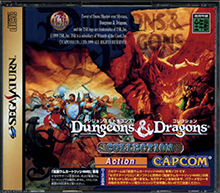
12. Dungeons & Dragons: Shadow Over Mystara (SAT)

As a fan of beat 'em ups, I had heard a lot of good things about this game over the years. I initially played it on the Xbox 360 via the Xbox Live Arcade years ago; however, my fiancee and I didn't beat the game at that time. Once I saw the game mentioned in the Together Retro thread earlier in the year, I wanted to give it another go, but this time I was aiming to check out the Saturn port, as my 360 is packed away.

D&D: Shadow Over Mystara was originally released in arcades in 1996 and is a sequel to Capcom's D&D: Tower of Doom. The game includes some great features for a beat 'em up, including six character classes to choose from. For this playthrough, I played as the Thief and my fiancee played as the Elf. Shadow Over Mystara also includes a ton of items to find and purchase at shops between levels, and an inventory system using a circle menu that works pretty well during gameplay. There are also a ton of branching paths, and it will take a good amount of playthroughs to see everything the game has to offer. The extensive move set, inventory system and ability to equip items, and the branching paths all make for some very fun gameplay.

In regard to the graphics, the game looks great for a 2D game released on a 32-bit console. I was genuinely impressed by the look of the characters, the enemies, a good portion of the stages, and especially the boss designs. There are some great looking bosses in this game, and a few that take up a good portion of the screen. There are also some cutscenes between levels, which are also well done. My fiancee who can be a bit picky when it comes to retro games also agreed that it looked great. Music wise, the Shadow Over Mystara has some great tunes, that I enjoy enough to listen to them outside of the game. Some of my favorites are "Time of Determination" which you here early on in the adventure. Another song I like is "

I do have a nitpick to mention about this port of D&D: Shadow Over Mystara. It has to do with the loading, which I had heard was an issue in the game. I was fine with the loading between levels, cutscenes, or the transition from the shop to the next level or scene, but the loading that bothered me was when one of our characters would die and the game had to load to respawn one of us back into the action. This was a bit of a pain, as both players were stuck waiting around while one respawned.

Overall, D&D: Shadow Over Mystara is a great beat 'em up. Once we finished it, we both agreed that we would like to play it again to see some more of the different paths. With all the features included and great gameplay, I think this title has to be up there as one of the best beat 'em ups of all time. If you're a fan of this genre or the Sega Saturn in general, I highly recommend this one! I'm looking forward to giving it another go and seeing some more of this great game.
User avatar
RobertAugustdeMeijer
64-bit
Posts: 328
Joined: Fri Sep 02, 2022 10:15 am

Re: Games Beaten 2026

Post by RobertAugustdeMeijer »

39: Command & Conquer

While it's a huge leap forward from Dune II, it's also far from the perfection of StarCraft. For those experienced in the genre, it's all a bit simple. But for those getting into it, this might be good for practicing your shortcuts and fundamental RTS strategies. Its simplicity has a certain charm to it. As do the cheap cutscenes played between missions. At the time of its release, an instant classic, 9/10 stuff. But since you're better off getting into later entries, this is nowadays best left as a YouTube compilation.

6/10
User avatar
PartridgeSenpai
Next-Gen
Posts: 3187
Joined: Mon Dec 14, 2015 9:27 am
Location: Northern Japan

Re: Games Beaten 2026

Post by PartridgeSenpai »

Partridge Senpai's 2026 Beaten Games:
Previously: 2016 2017 2018 2019 2020 2021 2022 2023 2024 2025
* indicates a repeat

1~50
1. Final Fantasy XII (PS2)
2. We Were Here (Steam)
3. We Were Here Too (Steam)
4. Tales of Graces f (PS3) *
5. Retro Game Challenge (Switch) *
6. We Were Here Forever (Steam)
7. Tales of Hearts R (PSVita) *
8. Ghostbusters: The Video Game Remastered (PC)
9. Mega Man 11 (PC)
10. Gravity Circuit (PC)
11. Mario Party DS (DS)
12. Ghost of Tsushima (PS5)
13. Ghost of Tsushima: Iki Island (PS5)
14. Astro's Playroom (PS5)
15. Michael Jackson: The Experience (PSP)
16. Sackboy: A Big Adventure (PS5)
17. Control (PS4)
18. White Album (PS3)
19. Super Mario Advance 2: Super Mario World (GBA)
20. Kirby's Epic Yarn (Wii)
21. Breath of Fire III (PSP)
22. Sly Cooper and the Thievius Raccoonus (PS2) *
23. Sly 2: Band of Thieves (PS2)
24. Army of Two (Xbox 360)
25. Sly 3: Honor Among Thieves (PS2)
26. Jak II (PS2)
27. Jak 3 (PS2)
28. Uncharted: Drake's Fortune (PS3)
29. Pokemon Sapphire (GBA)
30. Watch_Dogs (PS4)
31. Watch_Dogs: Bad Blood (PS4)
32. Legend of Hero Tonma (TG16)
33. Alan Wake: American Nightmare (PC)
34. Banjo-Tooie (N64) *
35. Ratchet & Clank: Size Matters (PSP)
36. Super Robot Spirits (N64)
37. Animal Crossing: City Folk (Wii)
38. Tales of Arise (PS4)
39. Crash Bandicoot: The Wrath of Cortex (PS2)
40. Crash Bandicoot 4: It's About Time (PS5)
41. Battlefield 1 (PS4)
42. Quantum Break (Xbone)
43. Battlefield V (PS4)
44. Balloon Fight GB (GBC)
45. Lemmings (PSP)
46. Uncharted 2: Among Thieves (PS3)
47. Uncharted 3: Drake's Deception (PS3)
48. Turnip Boy Robs a Bank (PC)
49. Dr. Mario (Famicom)
50. Max Payne 2: The Fall of Max Payne (PC)
51. Jimmy and the Pulsating Mass (PC)
52. Blasphemous 2 (PC)
53. Max Payne 3 (PS3)
54. Lemmings (SFC)
55. Jikkyou Pawafuru Puroyakyu 3 (SFC)
56. Crash Twinsanity (PS2)
57. Coded Arms (PSP)
58. Poy Poy (PS1)
59. Tobal No.1 (PS1)
60. Game Center CX: Arino no Chousenjou 2 (Switch)

61. Game Center CX: Sanchoume no Arino (3DS)

I’ve been a fan of Retro Game Challenge 1 longer than I’ve even known about Game Center CX itself. As a result, this is actually a game I’ve owned for a very long time, but I’ve just never gotten around to playing. Having just finished the second GCCX: Arino no Chousenjou game on my Switch, I wasn’t super sure on what I’d play next, so it seemed as good a time as any to finally use this momentum to knock out this longtime member of my backlog. I’d heard for a long time that this game was the worst of the three GCCX games, but I didn’t want to just live off of that assumption before I’d at least played it myself. Unfortunately for me, I was soon to discover that this game’s reputation is actually incredibly well deserved, and I can verify right now that it’s easily the weakest of the three GCCX games by a very significant margin XD. Not doing any post-game stuff (or really much of anything more than was necessary to see the credits), it took me about 14.5 hours to beat every challenge in the main story and beat the game playing on my Japanese 2DS XL (so I couldn't test any 3D stuff, of what seemingly little there is).

The first two Arino no Chousenjou games (which I’ll be referring to hereafter to their English monikers, Retro Game Challenge or RGC for simplicity’s sake) were made by IndiesZero, but they were busy when it came time to make this third game, so this was made by G.rev instead. G.rev have taken a fairly different approach to the RGC formula than IndiesZero did, and that applies to the story as well. Rather than you, the player character, getting attacked by Demon King Ariinoh and thrown back in time to the 80’s to hang with kid Arino, this time it’s backwards. As the “Sanchoume no Arino” (Arino of Third Street) title implies (or rather doesn’t), this time Arino is thrown back to the 80’s to the little town of Third Street, which is where you live. You’re told by a magical voice in the sky that Arino has amnesia, and he can only regain his memories by completing the various challenges given to you in the (fictional) retro games you’ve got to play. It’s certainly very different in literal content to the previous games, but I don’t want to knock this points *just* for being different.

What I *will* knock it points for is that it’s just all around a less well executed conceit for a story. The town of Third Street is populated by a bunch of wacky characters all based on regulars from the GCCX show. It’s a pretty big cast, so it means we get a lot of representation from the various producers, staff, and ADs from the show’s first decade, but that’s a double-edged sword. So many characters means no one gets all that much screen time, so most characters are just boiled down to one or two memorable jokes that repeat each time they appear (from cameraman Abe’s coolness to the unfunny-every-time fat jokes about Watanabe). It’s a *lot* of in-jokes for fans of the show, and the game even provides a sort of encyclopedia to reference from the title screen that’ll explain them to you as you unlock each new one. It’s a neat touch for fans of the series, but it ultimately still adds up to a lot of shallow reference comedy. I normally wouldn’t criticize a licensed game for leaning on its license like this so much, but given how well the earlier two RGC games do their comedy without needing to lean entirely on the source material like this, I can’t help but compare this unfavorably to what came before. If this had just been the first GCCX game, I would’ve called this a noble enough effort to bring the humor of the show to an interactive medium, but given that it’s the *third* entry in this series, I cannot find it reasonable to be that soft on it.

Sadly, that extends to the quality of the in-game fake retro games as well, and to a far greater extent. Just like the earlier RGC games, there are eight 80’s-inspired retro games that G.rev have made that you’ll need to complete challenges for to complete the game. The main difference between the older RGC games and this one, however, is that where the first two RGC’s fake retro games were *inspired* by Famicom era games, trying to evoke the fun and fashion of them while adding polish and refinements from the intervening decades, G.rev’s fake retro games seem to misunderstand the assignment. RGC 3’s fake retro games don’t so much feel like they’re polished, modern reimaginings of classic retro titles so much as they feel like they’re trying to evoke the feeling of classic retro games as they were, warts and all. G.rev have recreated too accurately the feeling of mid-tier 80’s video games, and they’re appropriately not actually that fun to play. The overwhelming feeling of playing virtually all of them is what it feels like playing wannabe titles on the Master System, PC-Engine, early Mega Drive, or even the Famicom itself that were very clearly just trying to ape the most popular titles available on the Famicom without actually understanding what made those games fun in the first place.

There’s Roomie, which is a Mario Bros.-like arcade game that’s got a clever gimmick but is ultimately way too unforgiving and awkward to play to be nearly as addictive or fun as its inspiration. Then there’s Wing Hero which is a pretty unimpressive but competent sidescrolling shmup. Given that G.rev’s specialty is arcade-style shmups, it makes sense that the games they’re best at here are in that genre too. Zouma’s Hidden Treasure starts off as a fun sort of mix between a maze game and Tower of Druaga, but it’s far too slow and plodding to actually be anything but tedious beyond the first two minutes. Saurus Boy is a competent enough action game, but it gets repetitive and boring very fast because the movement and stage design are so lifeless and dull. Breakshoot is one of the few standout games in the collection, in that it’s actually worth talking about. This is a fake Neo Geo game that’s basically a combo of Breakout and Wind Jammers, and even though the single player mode leans a bit too much into the former (so it drags a fair bit), this is a game that’d probably be great fun in multiplayer due to the similarities to the latter. Then there’s Zoliates, which is a decent enough vertical shmup even if it’s nowhere near as good as something like GunDuel from RGC 2. Finally, you’ve got your Final Fantasy-inspired RPG, Blood of Dragon, and your Zelda-style action/adventure game Nejima Kingdom.

While it’s a neat idea on paper to make a more FF-style RPG in a RGC game after the previous two went for Dragon Quest-inspired RPGs, in actual practice, it demonstrates very adequately why the previous two games did DQ-like games. Blood of Dragon is a very mechanically bland turn-based RPG that also has a TON of story. There is so much story to read so constantly that it ends up dragging out the experience by a TON, and this game seriously outstays its welcome. The challenges for this game take so long that I ended up playing this game for over 6.5 hours, so it was nearly half of my entire play time of RGC 3 all on its own. It commits a ton of sins of old mediocre FF-wannabes (padded dungeon design, poorly balanced encounter designs & wild swings in difficulty, and a far too high miss rate to name a few) and, to its credit, really accurately recreates the vibe of playing an old, mediocre RPG. It just doesn’t have the excuse to make all the mechanical missteps it does because it was released in 2014 and not 1991.

Nejima Kingdom is a Zelda-like, and a totally adequate one. It reminds me of competitors to Zelda 1 that I’ve played such as Neutopia. It’s got some issues with backtracking, sure, but it’s definitely one of the stronger games in the collection if only because there’s nothing glaringly tedious or bad about it, but that’s not exactly high praise (maybe it just seems that much better after going through a slog like Blood of Dragon). I could go on about the various issues in these games for a lot longer, but pretty much all of the pains of playing them come back to the same fundamental problems. It’s a lot of “that thing you’re already familiar with but with more”, but the “more” very rarely leads up to anything approaching “better”, let alone even “good”. What you’re left with is a collection of underwhelming games that are very wanting in both charm and fun, and the challenges you have to clear rarely do anything but badly exacerbate the existing issues with these games.

An innovation (if you can even call it that) between this game and the previous two is that you’re sometimes actually given more than one challenge possible to complete at a time. This seems quite convenient and a great quality of life improvement, but then the reality of the implementation sets in. In a far worse version of a not unheard of problem from earlier Retro Game Challenge games, the challenges in RGC 3 are serially too focused on earlier parts of the game as well as too respectively time consuming. You’re also kicked out of the game upon completing a challenge, so there’s ultimately not a ton of point to having multiple open at once between the slight convenience of needing to redo very slightly less content. This doesn’t matter much in the grand scheme of things, because this still amounts to replaying the earlier parts of these already slow-paced games ad nauseum. It makes it that much harder to ignore how repetitive and frustrating the games are when you’ve gotta bash your head against their earlier sections over and over again, and this is only made worse by the increasing number of challenges per game as things progress (while you get away with only three challenges in the earlier games, you’ve got to put up with five per game by the end of it all).

There’s also the new approach to challenges this game brings, because in a big change from previous games, the challenges in RGC 3 are just that: challenging. I was routinely surprised at just how merciless some of these challenge requirements were given how hard/unfair the games themselves already felt, and that never really lets up as you progress from one game to another. Like in earlier RGC games, there are *some* cheats codes or secrets that you can learn in-universe on how to make things a bit easier if you’re struggling, but in usual fashion for this game, it’s somehow far worse than ever. For starters, unlike in the previous games, you can’t reference any of the hints you’ve been given while you’re mid-game. In older RGC games, you could back away from the TV and reference manuals, magazines, or Arino himself for info on how to get past where you were stuck, but RGC 3 makes that completely impossible.

In fact, you can’t just not reference the information you’ve collected mid-game. You can’t reference *anything* mid-game. If you want to look at the “manual” (basic controls share a menu with your learned secrets, as this game doesn’t have actual manuals or magazines to look through like the previous games did), check how a code is input, or even just check what the challenge you’re currently working on even *is*, you’ve got to completely quit out of the game, most likely resetting your current progress, to check it. This turns into quite the trap for early players as well, as many challenges are actually remarkably unintuitive by only looking at their name. It’s frequently totally impossible to actually understand the requirements of a respective challenge by the title of it alone, so if you don’t look at the detailed description asap, you’re going to be doing nothing but wasting your time trying to complete it right away. If you’re anything like me, that’ll happen a good few times before you’re done with the earlier parts of the game and realize that poorly described challenge titles are the rule, not the exception.

It’d be *more* of a pain to not be able to access cheat codes or such while you’re mid-game if this were either of the previous RGC games, but this game actually has very few cheat codes, secrets, or such staples of retro gaming. While there’s two or three in total across all games, the much more common method of making things easier for yourself is just having the game do it for you. This is a very negative change from the earlier games, but it takes two forms. One is in the form of automatically scaling difficulty. Some challenges will just get easier the more times you fail them, and you have no way of turning that off or affecting it. For example, if you’re struggling in the rather merciless (and tedious) high score challenges in Zoliates, the high score you’re meant to beat will just gradually go down each time. While I did somewhat appreciate this, as it’s a very repetitive series of very difficult challenges replaying the same in a rather middling shmup, it felt like the opportunity to actually improve, to just play the game more, was being taken away from me with no choice on my part. Sure, I didn’t enjoy playing Zoliates first level or two over and over again trying to do a series of timed score bonuses perfectly, but I would’ve at least preferred the *option* to make it easier rather than the game just deciding that for me.

One thing the game does let you decide whether to use or not is the latter form of challenge assistance: just doing it for you. The in-universe explanation for this is that (much like Arino sometimes does on the show) one of your friends (kid versions of the show’s various ADs) will offer to just play the game for you. You’ll get a summary of what they managed to do (whether just doing the level grinding for you or getting you past a particularly difficult part), and then you have the controls handed back to you. While I don’t think this is, in theory, a poor idea, it’s such an aggressive step down from the earlier games’ methods of making games/challenges more approachable that I can’t help but dislike this lack of effort on the game’s part. For starters, the former method, the automatically adjusting difficulty, is just a clumsy way of making up for the poor/overly difficult challenge and game design in the first place.

Second and more importantly, the latter method is a really bad-feeling way to progress in something you’re struggling with. In previous games, yeah, you had secrets and cheat codes you could choose to use, but it was still *you* who had to do them. You got them from magazines just like you would’ve back in the time period this game is harkening back to (and taking place in), and it was up to you to utilize them in a way that would still let you win. You may’ve had a level select, secret level warp, or 99 life code, but you still had to get to that ending yourself. It was a much more elegant and player-centric way of letting you choose how difficult you wanted a respective challenge to be, and RGC 3’s method completely throws that away.

Letting the game just skip the “boring/bad parts” for you begs the question of why they even bothered putting in those boring/bad parts in the first place. More than that, letting an in-universe CPU solve a problem for you is a completely different experience from letting a real-world friend you’re going through a game *with* get you past a difficult part. One is an aspect of community in gaming, working cooperatively with a real person to achieve a goal together, and the other is just telling the video game that you want to play it less and receiving a positive answer in return. I never used any of these “play the game for me” options because I wanted the fresh experience of how bad or difficult something was. Yeah, it’s absolutely true that I would’ve had a better/faster time playing Blood of Dragon had I just let the game play itself for me, but if I’m going to just let the game play itself for me, then why am I playing the video game at all (fun or not)? In short, the bumbling of accessibility options to make the quite hard challenges/games easier is an embarrassing leap backwards from earlier games, and even just reusing RGC 2’s method of “you have the ability to skip a challenge you’re struggling with if you want to” would’ve been far better than this.

The aesthetics of this game are a mixed bag. For the fake retro games themselves, they’re largely alright. Most are passable graphically, even if some like Saurus Boy take a more uncanny valley approach of “graphics like newer consoles, animations like older consoles” which make them look less than nice. The actual town of Third Street and everyone in it, however, I frankly think look quite poor. Everything is flat and weirdly washed out, and it's the kind of thing that'd make me think something was wrong with my TV were I not playing it on a handheld where that kind of thing isn't possible. They’ve gone for a sort of paper craft-looking design for everyone, but it mostly looks more like a cheap, low-animation style chosen for cost-saving measures than it does a more dedicated graphical style. I’m not saying that was the reason they chose it, mind you, but that’s certainly how it comes off with just how bad it looks. However, as negative as I’ve been towards so much of this game, one thing I can’t be negative about is the music. The tunes in this game are largely quite solid, and it’s a testament to their quality that, no matter how bored I so often was, I almost never had a podcast or something on in the background because the music was just that solid.

Verdict: Not Recommended. This isn’t just worse than the other two GCCX games. It’s a bad time, full stop. It’s a tedious, frustrating experience that lives deeply in the shadow of its two older siblings in both the design of its games and the use of its license. G.rev seem woefully out of their depth in designing these fake retro games. They have terribly misunderstood the assignment at hand and made a collection of games sometimes that, while charming in its references (like the coin machines you can play at the candy shop, just like Arino always does in the show), is never close to adequate when it comes to the actual execution. Game after game feel like just a series of boxes were ticked to put them together without any meaningful thought given to what actually makes that particular genre appealing (either from the perspective of gamers in the 80’s or from a modern viewpoint). This a game people were correct to be unhappy with, and the English-speaking reviewers who advised this game be avoided were absolutely right.
I identify everyone via avatar, so if you change your avatar, I genuinely might completely forget who you are. -- Me
User avatar
RobertAugustdeMeijer
64-bit
Posts: 328
Joined: Fri Sep 02, 2022 10:15 am

Re: Games Beaten 2026

Post by RobertAugustdeMeijer »

40: Mixtape

When a work of art attempts to capture a place and moment in time, you can't help wonder how authentic it is to the creators' own experiences. Mixtape simply fails at this. Perhaps the incorrect pencil turning of the cassette tape is on purpose, to notify us that there will be incongruities. It's best to embrace this 'game' as part of a retro fawning movement which aims to capture what memories of the past feel like, instead of what it actually was like. An aesthetic historicism if you will. The irony is that the main character is obsessed with encapsulating moments by coupling them with music, aesthetically enhancing them like in the movies. And thus, instead of living in the moment, her goal is to immediately turn reality into a simulacrum. Predictably, her well-planned final day of childhood goes off track, and now her conceptual mixtape must be improvised and in turn, life becomes all the more real. The layer of video game exaggerates feelings, like floating backwards at the tune of Smashing Pumpkins after a guilt-ridden mishap, and at times this works. One can continue to skip stones over water, mirroring the timelessness of teenage summers. Or how smashing home runs out of larger and larger stadiums reflects a character's potential as professional athlete. But more often do the gamey tangents feel superfluous, if not overdrawn. There's a lot to admire there, as the craft and detail are spectacular. Just don't see this as a substitute for having lived through mid 90's suburbia.

6/10
Post Reply