21: Spider-Man (2018)
There's always something intriguing about seeing your home town distilled into a video game map. Sony's attempt at Manhattan is the most ambitious recreation of any game. And yet, sacrifices were made. You won't see any scaffolding, you can't take your favorite subway line, you'll never see a banner for the Knicks on MSG, and what the heck happened to Harlem? Seeing and understanding how compromises were made is both fascinating and disheartening. The same goes for many other quirks, most famously, how it's possible to dunk a basketball but not shoot through hoops.
One can opt into a predictable AAA showcase, with rudimentary stealth, whack-a-mole combat, lackluster film scenes, and even simple puzzles representing Peter Parker's career as a scientist. But that is best avoided, as one can enjoy dozens of Spider-Man comics in the time it takes to work your way through this gesampt"kunst"werk.
4/10
Games Beaten 2026
-
PartridgeSenpai

- Next-Gen
- Posts: 3187
- Joined: Mon Dec 14, 2015 9:27 am
- Location: Northern Japan
Re: Games Beaten 2026
Partridge Senpai's 2026 Beaten Games:
Previously: 2016 2017 2018 2019 2020 2021 2022 2023 2024 2025
* indicates a repeat
1. Final Fantasy XII (PS2)
2. We Were Here (Steam)
3. We Were Here Too (Steam)
4. Tales of Graces f (PS3) *
5. Retro Game Challenge (Switch) *
6. We Were Here Forever (Steam)
7. Tales of Hearts R (PSVita) *
8. Ghostbusters: The Video Game Remastered (PC)
9. Mega Man 11 (PC)
10. Gravity Circuit (PC)
11. Mario Party DS (DS)
12. Ghost of Tsushima (PS5)
13. Ghost of Tsushima: Iki Island (PS5)
14. Astro's Playroom (PS5)
15. Michael Jackson: The Experience (PSP)
16. Sackboy: A Big Adventure (PS5)
17. Control (PS4)
18. White Album (PS3)
19. Super Mario Advance 2: Super Mario World (GBA)
20. Kirby's Epic Yarn (Wii)
21. Breath of Fire III (PSP)
22. Sly Cooper and the Thievius Raccoonus (PS2) *
23. Sly 2: Band of Thieves (PS2)
24. Army of Two (Xbox 360)
25. Sly 3: Honor Among Thieves (PS2)
To round out the trilogy, it only made sense to go right on to Sly 3 after finishing Sly 2. While I hadn’t exactly enjoyed Sly 2 very much, it made little sense to turn back now after already going so far (especially with what great trouble it was to import a copy in the first place). After all, maybe it’d actually be good this time? X3. I didn’t do any of the extra challenges (as they seemed really not fun at all), but it took me around 13.5 hours to beat the English version of the game.
Sly 3 picks up a bit after Sly 2 leaves off, but we actually start in media res this time. In the middle of a huge coordinated break in on Dr. M’s base, everything goes horribly wrong and Sly begins to see his life flash before his eyes. It’s in this flashback where basically all of the game takes place as you see how this huge heist got set up in the first place. An old thieving buddy of Sly’s late father tells Sly about an island holding the legendary Cooper family vault where all of the collected riches of his ancestors lay stored. However, the nefarious and mysterious Dr. M has been trying to break into the vault himself for years now, and it’ll take a heck of a dream team to ever dream of getting past the myriad of defenses that he’s got set up around the island. The end of the previous game led to Murray leaving the team and Bentley being bound to a wheelchair, but that hasn’t stopped Sly or Bentley from chasing after this dream. One new team member at a time, they’re committed to reclaiming Sly’s family legacy and kicking this Dr. M guy to the curb.
The story still isn’t anything incredible, but it is *such* a massive step up from the previous games that I cannot help but laud it for that. For the first time in a Sucker Punch game, we actually have fun dynamics, banter even, between characters! Bentley and Sly both have far more life and personality than they ever had before, and that extends to the rest of the cast (both new and old) as well. Sucker Punch have actually managed to make a game that’s fun and funny to hear the characters talk in, which I had frankly totally given up on given how all their earlier games were written up to this point. It makes the game way more fun and entertaining to play as a result, and it’s such a welcome change from the shallow snore-fests that the previous two games largely were.
However, we’re still sadly far from free from the eternal specter of Sucker Punch’s writing habits. The casual sexism is still there, of course, but the casual racism they delve into so often is REALLY bad in this game. While it’s no big deal with all the silly Italian accents in Venice, of course, it comes off as *way* more gross and distasteful when we get to how they handle Aboriginal Australians (especially with how they don’t even bother to let the Aboriginal Australian team member speak in real language :/ ). The China stuff is also far from unproblematic either, but even with how bad their track record up to the present day has been, this is easily the worst of any of their older games.
All that said, though, this is ironically enough incredibly good disability representation at the same time. Bentley actually manages to be really great representation of a character in a wheelchair, even going as far as to have a proper conversation with another character about how conflicted he feels about not being able to walk anymore. It’s not going to win any Pulitzers any time soon, of course, but I was absolutely blown away that a game this habitually thoughtless towards minority groups managed to have such good representation for one kind of them regardless. They’ve also got some deeper narrative themes they take swings at, but it all comes off as so underdeveloped that it ends up feeling weird yet easily ignored rather than some albatross around the game’s neck (as the Australia stuff already does very well instead :/ ). Sly 3’s writing has some really glaring, awful weak spots, but I think the good just about manages to outshine the bad (though I wouldn’t fault someone else for feeling otherwise).
The gameplay is still very similar to Sly 2’s, but the year in between the two has clearly been very well worthwhile. There are still issues around combat here and there, and the “press O to parkour” stuff is still rather imperfect. Boss battles in particular are a lot clunkier than they probably needed to be due to the former, but the latter is a lot less bad thanks to overall far improved level design. Another great boon is a general very significant polishing up of the activities the game has you doing, and the game flows far better as a result. Eliminating any optional objectives like the collectible clues in Sly 2 helps with this as well, but the better map design, greater and better polished variety of missions, and the extra playable characters help give a direly needed improvement to the gameplay loop’s pacing, and it pays off basically the whole game. Hacks as their writing team very often are, Sucker Punch were clearly studying a lot with the mistakes of Sly 2, and the results frankly speak for themselves. I’m not going to say that there were never any parts where I was throwing my hands up in frustration because the rules on exactly what I was meant to do were just that unclear, but much like with the writing, this is the first Sly game where I can earnestly say I enjoyed playing darn near the whole thing rather than just the occasional bright spot.
The presentation is very good very much like Sly 2’s was. We’ve reused a ton from that game, from the engine to a lot of character animations, and it still looks as great as it ever has. There are only six hub worlds this time around rather than eight, but just how massive and varied the locations so often are makes up for that more than enough, and they all have very distinct flares to them as well. The music is overall pretty darn good here too and so are the voice performances. Sly’s voice direction is still really weirdly flat compared to other characters’, but the better script writing thankfully makes that far more easily ignored a problem than Sly 2 had it as.
Verdict: Recommended. While still not a perfect game, Sly 3 manages to be a pretty damn good time that’s actually worthy of the (somehow) good reputation this whole series seems to carry these days. While the other games are ones where I can only really say “I can see why these were popular when they were new”, Sly 3 actually still holds up pretty darn well in most regards. This is a very strong game on the PS2 still worth playing. It’s got its fair share of missteps, especially in regards to the writing, but if you were going to play *any* Sly Cooper game, you’re far better off only playing this one and skipping the others, because this is the one time they *really* got it right.
Previously: 2016 2017 2018 2019 2020 2021 2022 2023 2024 2025
* indicates a repeat
1. Final Fantasy XII (PS2)
2. We Were Here (Steam)
3. We Were Here Too (Steam)
4. Tales of Graces f (PS3) *
5. Retro Game Challenge (Switch) *
6. We Were Here Forever (Steam)
7. Tales of Hearts R (PSVita) *
8. Ghostbusters: The Video Game Remastered (PC)
9. Mega Man 11 (PC)
10. Gravity Circuit (PC)
11. Mario Party DS (DS)
12. Ghost of Tsushima (PS5)
13. Ghost of Tsushima: Iki Island (PS5)
14. Astro's Playroom (PS5)
15. Michael Jackson: The Experience (PSP)
16. Sackboy: A Big Adventure (PS5)
17. Control (PS4)
18. White Album (PS3)
19. Super Mario Advance 2: Super Mario World (GBA)
20. Kirby's Epic Yarn (Wii)
21. Breath of Fire III (PSP)
22. Sly Cooper and the Thievius Raccoonus (PS2) *
23. Sly 2: Band of Thieves (PS2)
24. Army of Two (Xbox 360)
25. Sly 3: Honor Among Thieves (PS2)
To round out the trilogy, it only made sense to go right on to Sly 3 after finishing Sly 2. While I hadn’t exactly enjoyed Sly 2 very much, it made little sense to turn back now after already going so far (especially with what great trouble it was to import a copy in the first place). After all, maybe it’d actually be good this time? X3. I didn’t do any of the extra challenges (as they seemed really not fun at all), but it took me around 13.5 hours to beat the English version of the game.
Sly 3 picks up a bit after Sly 2 leaves off, but we actually start in media res this time. In the middle of a huge coordinated break in on Dr. M’s base, everything goes horribly wrong and Sly begins to see his life flash before his eyes. It’s in this flashback where basically all of the game takes place as you see how this huge heist got set up in the first place. An old thieving buddy of Sly’s late father tells Sly about an island holding the legendary Cooper family vault where all of the collected riches of his ancestors lay stored. However, the nefarious and mysterious Dr. M has been trying to break into the vault himself for years now, and it’ll take a heck of a dream team to ever dream of getting past the myriad of defenses that he’s got set up around the island. The end of the previous game led to Murray leaving the team and Bentley being bound to a wheelchair, but that hasn’t stopped Sly or Bentley from chasing after this dream. One new team member at a time, they’re committed to reclaiming Sly’s family legacy and kicking this Dr. M guy to the curb.
The story still isn’t anything incredible, but it is *such* a massive step up from the previous games that I cannot help but laud it for that. For the first time in a Sucker Punch game, we actually have fun dynamics, banter even, between characters! Bentley and Sly both have far more life and personality than they ever had before, and that extends to the rest of the cast (both new and old) as well. Sucker Punch have actually managed to make a game that’s fun and funny to hear the characters talk in, which I had frankly totally given up on given how all their earlier games were written up to this point. It makes the game way more fun and entertaining to play as a result, and it’s such a welcome change from the shallow snore-fests that the previous two games largely were.
However, we’re still sadly far from free from the eternal specter of Sucker Punch’s writing habits. The casual sexism is still there, of course, but the casual racism they delve into so often is REALLY bad in this game. While it’s no big deal with all the silly Italian accents in Venice, of course, it comes off as *way* more gross and distasteful when we get to how they handle Aboriginal Australians (especially with how they don’t even bother to let the Aboriginal Australian team member speak in real language :/ ). The China stuff is also far from unproblematic either, but even with how bad their track record up to the present day has been, this is easily the worst of any of their older games.
All that said, though, this is ironically enough incredibly good disability representation at the same time. Bentley actually manages to be really great representation of a character in a wheelchair, even going as far as to have a proper conversation with another character about how conflicted he feels about not being able to walk anymore. It’s not going to win any Pulitzers any time soon, of course, but I was absolutely blown away that a game this habitually thoughtless towards minority groups managed to have such good representation for one kind of them regardless. They’ve also got some deeper narrative themes they take swings at, but it all comes off as so underdeveloped that it ends up feeling weird yet easily ignored rather than some albatross around the game’s neck (as the Australia stuff already does very well instead :/ ). Sly 3’s writing has some really glaring, awful weak spots, but I think the good just about manages to outshine the bad (though I wouldn’t fault someone else for feeling otherwise).
The gameplay is still very similar to Sly 2’s, but the year in between the two has clearly been very well worthwhile. There are still issues around combat here and there, and the “press O to parkour” stuff is still rather imperfect. Boss battles in particular are a lot clunkier than they probably needed to be due to the former, but the latter is a lot less bad thanks to overall far improved level design. Another great boon is a general very significant polishing up of the activities the game has you doing, and the game flows far better as a result. Eliminating any optional objectives like the collectible clues in Sly 2 helps with this as well, but the better map design, greater and better polished variety of missions, and the extra playable characters help give a direly needed improvement to the gameplay loop’s pacing, and it pays off basically the whole game. Hacks as their writing team very often are, Sucker Punch were clearly studying a lot with the mistakes of Sly 2, and the results frankly speak for themselves. I’m not going to say that there were never any parts where I was throwing my hands up in frustration because the rules on exactly what I was meant to do were just that unclear, but much like with the writing, this is the first Sly game where I can earnestly say I enjoyed playing darn near the whole thing rather than just the occasional bright spot.
The presentation is very good very much like Sly 2’s was. We’ve reused a ton from that game, from the engine to a lot of character animations, and it still looks as great as it ever has. There are only six hub worlds this time around rather than eight, but just how massive and varied the locations so often are makes up for that more than enough, and they all have very distinct flares to them as well. The music is overall pretty darn good here too and so are the voice performances. Sly’s voice direction is still really weirdly flat compared to other characters’, but the better script writing thankfully makes that far more easily ignored a problem than Sly 2 had it as.
Verdict: Recommended. While still not a perfect game, Sly 3 manages to be a pretty damn good time that’s actually worthy of the (somehow) good reputation this whole series seems to carry these days. While the other games are ones where I can only really say “I can see why these were popular when they were new”, Sly 3 actually still holds up pretty darn well in most regards. This is a very strong game on the PS2 still worth playing. It’s got its fair share of missteps, especially in regards to the writing, but if you were going to play *any* Sly Cooper game, you’re far better off only playing this one and skipping the others, because this is the one time they *really* got it right.
I identify everyone via avatar, so if you change your avatar, I genuinely might completely forget who you are. -- Me

Re: Games Beaten 2026
1. Doom 3: Resurrection of Evil (FPS)(PC)
2. Doom 3 (FPS)(PC)
3. V Rising (Adventure)(PC)
4. Teardown (Action)(PC)
5. Control: Ultimate Edition (Action)(PC)
6. Peak (Adventure)(PC)
7. The Exit 8 (Horror)(PC)
8. The Elder Scrolls V: Skyrim (RPG)(PC)
9. Killing Time: Resurrected (FPS)(PC)
10. Darkenstein 3D (FPS)(PC)
11. Metal Garden (FPS)(PC)
12. Caput Mortum (Horror)(PC)
13. Corridor 7: Alien Invasion (FPS)(PC)
14. Extraneum (FPS)(PC)
Extraneum is another boomer shooter FPS, pulling directly from the likes of Wolfenstein 3D and Doom with its total lack of jumping or ducking. It does require reloading, and there are unlockable alternate firing methods to build out the arsenal, but at its core, it is about going a world without a z-axis, guns blazing, and making every foe you face sincerely regret their life choices.
You're a security guard, which explains your weapons training. You work for some kind of massive corporation working on mining and mutagenics in a futuristic, cartoonish pixel-art town. Mutants get loose. Kill them all. Sure, you could point out there are collectable discs with plot info about a mad scientist turning all the employees into mutants and zombies, but...you have a minigun? Why are we even talking?
Extraneum also offers some secret levels, which require you find enough of the hidden info discs, insert them into special doors, and then seek the alternate exits beyond. These levels often house your alternate fire mods for weapons, so they're worth seeking. And the final one offers a pinball table, because if there is ANY reason to stop firing, it's to play pinball.
I really liked Extraneum, because it doesn't offer you too much extraneous crap. It's simple: get guns, shoot enemies, explore levels. Eventually kill boss and move to next episode. Guns feel good, enemies are satisfying to kill, alls right with the world.
2. Doom 3 (FPS)(PC)
3. V Rising (Adventure)(PC)
4. Teardown (Action)(PC)
5. Control: Ultimate Edition (Action)(PC)
6. Peak (Adventure)(PC)
7. The Exit 8 (Horror)(PC)
8. The Elder Scrolls V: Skyrim (RPG)(PC)
9. Killing Time: Resurrected (FPS)(PC)
10. Darkenstein 3D (FPS)(PC)
11. Metal Garden (FPS)(PC)
12. Caput Mortum (Horror)(PC)
13. Corridor 7: Alien Invasion (FPS)(PC)
14. Extraneum (FPS)(PC)
Extraneum is another boomer shooter FPS, pulling directly from the likes of Wolfenstein 3D and Doom with its total lack of jumping or ducking. It does require reloading, and there are unlockable alternate firing methods to build out the arsenal, but at its core, it is about going a world without a z-axis, guns blazing, and making every foe you face sincerely regret their life choices.
You're a security guard, which explains your weapons training. You work for some kind of massive corporation working on mining and mutagenics in a futuristic, cartoonish pixel-art town. Mutants get loose. Kill them all. Sure, you could point out there are collectable discs with plot info about a mad scientist turning all the employees into mutants and zombies, but...you have a minigun? Why are we even talking?
Extraneum also offers some secret levels, which require you find enough of the hidden info discs, insert them into special doors, and then seek the alternate exits beyond. These levels often house your alternate fire mods for weapons, so they're worth seeking. And the final one offers a pinball table, because if there is ANY reason to stop firing, it's to play pinball.
I really liked Extraneum, because it doesn't offer you too much extraneous crap. It's simple: get guns, shoot enemies, explore levels. Eventually kill boss and move to next episode. Guns feel good, enemies are satisfying to kill, alls right with the world.


Re: Games Beaten 2026
1. Dungeons & Dragons: Tower of Doom (SAT)
2. Castle Crashers Remastered (NSW)
3. Soul Calibur (DC)
4. Final Fantasy VII (PS1)
5. Alien Storm (GEN)
6. Captain America and the Avengers (GEN)
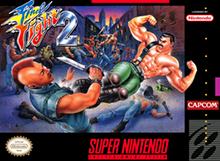
7. Final Fight 2 (SNES)
After playing through the first and third games in the Final Fight series over the past few years, I was interested in tracking down the second title, which I had trouble finding in my area for quite a while. I finally came across a copy of it last month. As a beat 'em up fan, I'm always glad to add another one to my selection of games. Final Fight 2 is a title that eluded me when it was released, so while I've played the other games in the series, this one would be new to me.
Gameplay wise, the game is very similar to the first Final Fight on the console. You have access to three characters, with only Haggar returning from the first game. The newly introduced protagonists are Maki and Carlos. For this particular playthrough, I went with Carlos, who seems to be the more well rounded character of the bunch. You have a standard move set here, consisting of a regular attack, jump, grapple, and special attack. There are six levels in the game, so it's a bit on the shorter side. Unlike the first game, which takes place in Metro City, the sequel takes a cue from Street Fighter 2, and all the levels are based on real world locations. It's cool to see some of these places interpreted in 16-bit form.
The graphics are really well done for the most part. The character sprites are large and well animated. The background levels look really good too, and there's some interesting details included in the various stages. I wish we received some short cutscenes between stages though, as opposed to just text on a black screen. That's one of the only visual items that I think falls short. Also, I thought it was funny that the Netherlands level was made to be this dreary and dark place, when it's probably one of the prettiest places I had the opportunity to visit. Soundtrack wise, I found the tunes in the game be more mediocre. I didn't think they were painful, but at the same time, they didn't do a lot for me either.
Overall, I enjoyed my time with Final Fight 2. While I wouldn't consider it a top tier beat 'em up on the system, I think if you're a fan of the first game, you'll find some fun here as well. Check it out, if you haven't already!
2. Castle Crashers Remastered (NSW)
3. Soul Calibur (DC)
4. Final Fantasy VII (PS1)
5. Alien Storm (GEN)
6. Captain America and the Avengers (GEN)
7. Final Fight 2 (SNES)
After playing through the first and third games in the Final Fight series over the past few years, I was interested in tracking down the second title, which I had trouble finding in my area for quite a while. I finally came across a copy of it last month. As a beat 'em up fan, I'm always glad to add another one to my selection of games. Final Fight 2 is a title that eluded me when it was released, so while I've played the other games in the series, this one would be new to me.
Gameplay wise, the game is very similar to the first Final Fight on the console. You have access to three characters, with only Haggar returning from the first game. The newly introduced protagonists are Maki and Carlos. For this particular playthrough, I went with Carlos, who seems to be the more well rounded character of the bunch. You have a standard move set here, consisting of a regular attack, jump, grapple, and special attack. There are six levels in the game, so it's a bit on the shorter side. Unlike the first game, which takes place in Metro City, the sequel takes a cue from Street Fighter 2, and all the levels are based on real world locations. It's cool to see some of these places interpreted in 16-bit form.
The graphics are really well done for the most part. The character sprites are large and well animated. The background levels look really good too, and there's some interesting details included in the various stages. I wish we received some short cutscenes between stages though, as opposed to just text on a black screen. That's one of the only visual items that I think falls short. Also, I thought it was funny that the Netherlands level was made to be this dreary and dark place, when it's probably one of the prettiest places I had the opportunity to visit. Soundtrack wise, I found the tunes in the game be more mediocre. I didn't think they were painful, but at the same time, they didn't do a lot for me either.
Overall, I enjoyed my time with Final Fight 2. While I wouldn't consider it a top tier beat 'em up on the system, I think if you're a fan of the first game, you'll find some fun here as well. Check it out, if you haven't already!
-
RobertAugustdeMeijer
- 64-bit
- Posts: 328
- Joined: Fri Sep 02, 2022 10:15 am
Re: Games Beaten 2026
The Dutch love Final Fight 2 for its portrayal of our country, especially the mountains in the background!
-
TheSSNintendo

- 128-bit
- Posts: 669
- Joined: Mon Jul 11, 2011 10:27 pm
Re: Games Beaten 2026
1. Deja Vu: MacVenture Series
2. Deja Vu II: MacVenture Series
3. Earthworm Jim 2 (SNES/Switch Online)
4. Crash Banidcoot: The Huge Adventure (Gameboy Advance)
5. Metroid Prime 4: Beyond (Switch)
6. Lego Batman: The Video Game (Steam)
7. Ys III - Wanderers from Ys (SNES)
8. Suikoden II HD Remaster (Switch)
9. Technobabylon (GOG)
10. Crystalis (NES/Switch Online)
11. Mega Man II (Game Boy/Switch Online)
12. Teenage Mutant Ninja Turtles II: Back from the Sewers (Game Boy/Cowabunga Collection)
13. Prison City (Steam)
14. Mega Man X2 (SNES/Mega Man X Legacy Collection)
15. Tunic (XBox One)
16. Ducktales 2 (NES/Steam - Disney Afternoon Collection)
17. Talespin (NES/Steam - Disney Afternoon Collection)
18. Freddy Pharkas - Frontier Pharmacist (GOG)
2. Deja Vu II: MacVenture Series
3. Earthworm Jim 2 (SNES/Switch Online)
4. Crash Banidcoot: The Huge Adventure (Gameboy Advance)
5. Metroid Prime 4: Beyond (Switch)
6. Lego Batman: The Video Game (Steam)
7. Ys III - Wanderers from Ys (SNES)
8. Suikoden II HD Remaster (Switch)
9. Technobabylon (GOG)
10. Crystalis (NES/Switch Online)
11. Mega Man II (Game Boy/Switch Online)
12. Teenage Mutant Ninja Turtles II: Back from the Sewers (Game Boy/Cowabunga Collection)
13. Prison City (Steam)
14. Mega Man X2 (SNES/Mega Man X Legacy Collection)
15. Tunic (XBox One)
16. Ducktales 2 (NES/Steam - Disney Afternoon Collection)
17. Talespin (NES/Steam - Disney Afternoon Collection)
18. Freddy Pharkas - Frontier Pharmacist (GOG)
Last edited by TheSSNintendo on Sun Apr 19, 2026 10:30 am, edited 1 time in total.
-
PartridgeSenpai
- Next-Gen
- Posts: 3187
- Joined: Mon Dec 14, 2015 9:27 am
- Location: Northern Japan
Re: Games Beaten 2026
Partridge Senpai's 2026 Beaten Games:
Previously: 2016 2017 2018 2019 2020 2021 2022 2023 2024 2025
* indicates a repeat
1. Final Fantasy XII (PS2)
2. We Were Here (Steam)
3. We Were Here Too (Steam)
4. Tales of Graces f (PS3) *
5. Retro Game Challenge (Switch) *
6. We Were Here Forever (Steam)
7. Tales of Hearts R (PSVita) *
8. Ghostbusters: The Video Game Remastered (PC)
9. Mega Man 11 (PC)
10. Gravity Circuit (PC)
11. Mario Party DS (DS)
12. Ghost of Tsushima (PS5)
13. Ghost of Tsushima: Iki Island (PS5)
14. Astro's Playroom (PS5)
15. Michael Jackson: The Experience (PSP)
16. Sackboy: A Big Adventure (PS5)
17. Control (PS4)
18. White Album (PS3)
19. Super Mario Advance 2: Super Mario World (GBA)
20. Kirby's Epic Yarn (Wii)
21. Breath of Fire III (PSP)
22. Sly Cooper and the Thievius Raccoonus (PS2) *
23. Sly 2: Band of Thieves (PS2)
24. Army of Two (Xbox 360)
25. Sly 3: Honor Among Thieves (PS2)
26. Jak II (PS2)
----
27. Jak 3 (PS2)
Previously: 2016 2017 2018 2019 2020 2021 2022 2023 2024 2025
* indicates a repeat
1. Final Fantasy XII (PS2)
2. We Were Here (Steam)
3. We Were Here Too (Steam)
4. Tales of Graces f (PS3) *
5. Retro Game Challenge (Switch) *
6. We Were Here Forever (Steam)
7. Tales of Hearts R (PSVita) *
8. Ghostbusters: The Video Game Remastered (PC)
9. Mega Man 11 (PC)
10. Gravity Circuit (PC)
11. Mario Party DS (DS)
12. Ghost of Tsushima (PS5)
13. Ghost of Tsushima: Iki Island (PS5)
14. Astro's Playroom (PS5)
15. Michael Jackson: The Experience (PSP)
16. Sackboy: A Big Adventure (PS5)
17. Control (PS4)
18. White Album (PS3)
19. Super Mario Advance 2: Super Mario World (GBA)
20. Kirby's Epic Yarn (Wii)
21. Breath of Fire III (PSP)
22. Sly Cooper and the Thievius Raccoonus (PS2) *
23. Sly 2: Band of Thieves (PS2)
24. Army of Two (Xbox 360)
25. Sly 3: Honor Among Thieves (PS2)
26. Jak II (PS2)
27. Jak 3 (PS2)
I identify everyone via avatar, so if you change your avatar, I genuinely might completely forget who you are. -- Me
Re: Games Beaten 2026
RobertAugustdeMeijer wrote: ↑Sun Apr 12, 2026 5:18 pm The Dutch love Final Fight 2 for its portrayal of our country, especially the mountains in the background!
It's good to hear the portrayal is appreciated! It is cool to see real life locations in the game, I just thought some of the areas in the Netherlands level looked a bit dreary. Maybe my perception is skewed, as I was there for a summer.
-
PartridgeSenpai
- Next-Gen
- Posts: 3187
- Joined: Mon Dec 14, 2015 9:27 am
- Location: Northern Japan
Re: Games Beaten 2026
Partridge Senpai's 2026 Beaten Games:
Previously: 2016 2017 2018 2019 2020 2021 2022 2023 2024 2025
* indicates a repeat
1. Final Fantasy XII (PS2)
2. We Were Here (Steam)
3. We Were Here Too (Steam)
4. Tales of Graces f (PS3) *
5. Retro Game Challenge (Switch) *
6. We Were Here Forever (Steam)
7. Tales of Hearts R (PSVita) *
8. Ghostbusters: The Video Game Remastered (PC)
9. Mega Man 11 (PC)
10. Gravity Circuit (PC)
11. Mario Party DS (DS)
12. Ghost of Tsushima (PS5)
13. Ghost of Tsushima: Iki Island (PS5)
14. Astro's Playroom (PS5)
15. Michael Jackson: The Experience (PSP)
16. Sackboy: A Big Adventure (PS5)
17. Control (PS4)
18. White Album (PS3)
19. Super Mario Advance 2: Super Mario World (GBA)
20. Kirby's Epic Yarn (Wii)
21. Breath of Fire III (PSP)
22. Sly Cooper and the Thievius Raccoonus (PS2) *
23. Sly 2: Band of Thieves (PS2)
24. Army of Two (Xbox 360)
25. Sly 3: Honor Among Thieves (PS2)
26. Jak II (PS2)
27. Jak 3 (PS2)
28. Uncharted: Drake's Fortune (PS3)
----
29. Pokemon Sapphire (GBA)
Previously: 2016 2017 2018 2019 2020 2021 2022 2023 2024 2025
* indicates a repeat
1. Final Fantasy XII (PS2)
2. We Were Here (Steam)
3. We Were Here Too (Steam)
4. Tales of Graces f (PS3) *
5. Retro Game Challenge (Switch) *
6. We Were Here Forever (Steam)
7. Tales of Hearts R (PSVita) *
8. Ghostbusters: The Video Game Remastered (PC)
9. Mega Man 11 (PC)
10. Gravity Circuit (PC)
11. Mario Party DS (DS)
12. Ghost of Tsushima (PS5)
13. Ghost of Tsushima: Iki Island (PS5)
14. Astro's Playroom (PS5)
15. Michael Jackson: The Experience (PSP)
16. Sackboy: A Big Adventure (PS5)
17. Control (PS4)
18. White Album (PS3)
19. Super Mario Advance 2: Super Mario World (GBA)
20. Kirby's Epic Yarn (Wii)
21. Breath of Fire III (PSP)
22. Sly Cooper and the Thievius Raccoonus (PS2) *
23. Sly 2: Band of Thieves (PS2)
24. Army of Two (Xbox 360)
25. Sly 3: Honor Among Thieves (PS2)
26. Jak II (PS2)
27. Jak 3 (PS2)
28. Uncharted: Drake's Fortune (PS3)
29. Pokemon Sapphire (GBA)
I identify everyone via avatar, so if you change your avatar, I genuinely might completely forget who you are. -- Me

Re: Games Beaten 2026
Previous Years: 2015 2016 2017 2018 2019 2020 2021 2022 2023 2024 2025
1. Dead Space (2023) - PC
2. Dead Space 2 - PC
3. Dead Space 3 - PC
4. The Legend of Heroes: Trails Beyond the Horizon - PS5
5. Stellar Blade - PS5
6. Dragon Quest VII Reimagined - Switch
7. Silent Hill 2 (2024) - PC
8. Silent Hill f - PC
9. Resident Evil Requiem - PC
10. Teenage Mutant Ninja Turtles: The Hyperstone Heist - Genesis
11. Sins of a Solar Empire II - PC
12. Starship Troopers: Ultimate Bug War! - PC
13. Gauntlet Dark Legacy - GC
14. A Street Cat's Tale 2: Outside is Dangerous - Switch
15. Teenage Mutant Ninja Turtles IV: Turtles in Time - SNES
16. Dragon's Crown - PS3
17. Dungeons & Dragons: Tower of Doom - PS3
18. Dungeons & Dragons: Shadow Over Mystara - PS3
19. Shadow Hearts - PS2
Shadow Hearts is a JRPG with a timing-based battle system that landed fairly early in the PS2's life. It stands out with its setting; it takes place right before World War I, rather than being its own fantasy world. It's got some decent ideas, but it also lacks some depth and has some frustrating design choices.
The game begins in Russia, on the Trans-Siberian railroad. The main heroine, Alice, is attacked by the big bad. Fortunately, our hero Yuri is there and decides to step in and save her. They escape the train and make their way to civilization. However, as they move through the countryside they get caught up in a bunch of occult stuff going on in China. And there is still the lingering matter of the big bad wanting Alice for some reason.
The first half of the game is in China, and you linearly go from one map to the next, with no ability to backtrack. The second half is in Europe, and there you can revisit everywhere (and is required for all the end game equipment). The game still uses the prerendered environment style that was popular on the PS1, and it continues to sometimes be hard to read. In hostile areas you can encounter random enemies and get tossed into turn based combat.
In battle you have your standard array of basic attack, magic, and items. This game utilizes a system where whenever you select an action, the game presents you with a ring with one or more highlighted areas. A line will then sweep through the ring, and you need to press the button in each highlighted area. Basic attacks are always three areas, with the first hit being full power and the next two being half power follow ups. Magic will depend on how powerful the spell is. And items have a single activation point. That's right; you need to time things to use an item (which can be a problem if you're affected by a status that affects the ring system itself). The game also occasionally will have you needing to do this in exploration mode, such as activating a plot-relevant device. These can always be repeated, so it ends up just being annoying.
Combat actually ends up having a surprising dearth of options. The cost of your magic is always extremely high, so you really can't use it often outside of boss fights. Non-boss enemies die in a couple of full-power attacks, so there's no incentive to explore things like status effects (which you don't get many of and they are unreliable). And you have very limited access to stat-increasing effects (and zero stat-decreasing effects). As a result, combat comes down to spamming attack and occasionally spells on enemies that avoid attacks. The one wrinkle is that each character has a third resource bar (besides health and mana) that ticks down when their turn comes up. This only matters for boss fights, and even then, not for every character (as some just naturally have higher amounts).
The game's dungeon design is complicated in a bad way. Every dungeon is fairly mazelike with a lot of circling back and forth on itself, rather than a series of dead-end side-branches for items. The final dungeon is especially egregious, as it has a maze of invisible teleporters with no rhyme or reason to what sends you where. You just have to trial and error it.
Overall, I found things to get rote by about the midway point. You don't really get new options past that point in combat, you just deal more damage. The story is mildly interesting, given the recent setting and the occult themes that is unusual to see in JRPGs. Fortunately, the game doesn't overstay its welcome, and you can do some very mean things to the final boss if you save up the couple of busted self-buff items for him, which is a nice bit of catharsis.
1. Dead Space (2023) - PC
2. Dead Space 2 - PC
3. Dead Space 3 - PC
4. The Legend of Heroes: Trails Beyond the Horizon - PS5
5. Stellar Blade - PS5
6. Dragon Quest VII Reimagined - Switch
7. Silent Hill 2 (2024) - PC
8. Silent Hill f - PC
9. Resident Evil Requiem - PC
10. Teenage Mutant Ninja Turtles: The Hyperstone Heist - Genesis
11. Sins of a Solar Empire II - PC
12. Starship Troopers: Ultimate Bug War! - PC
13. Gauntlet Dark Legacy - GC
14. A Street Cat's Tale 2: Outside is Dangerous - Switch
15. Teenage Mutant Ninja Turtles IV: Turtles in Time - SNES
16. Dragon's Crown - PS3
17. Dungeons & Dragons: Tower of Doom - PS3
18. Dungeons & Dragons: Shadow Over Mystara - PS3
19. Shadow Hearts - PS2
Shadow Hearts is a JRPG with a timing-based battle system that landed fairly early in the PS2's life. It stands out with its setting; it takes place right before World War I, rather than being its own fantasy world. It's got some decent ideas, but it also lacks some depth and has some frustrating design choices.
The game begins in Russia, on the Trans-Siberian railroad. The main heroine, Alice, is attacked by the big bad. Fortunately, our hero Yuri is there and decides to step in and save her. They escape the train and make their way to civilization. However, as they move through the countryside they get caught up in a bunch of occult stuff going on in China. And there is still the lingering matter of the big bad wanting Alice for some reason.
The first half of the game is in China, and you linearly go from one map to the next, with no ability to backtrack. The second half is in Europe, and there you can revisit everywhere (and is required for all the end game equipment). The game still uses the prerendered environment style that was popular on the PS1, and it continues to sometimes be hard to read. In hostile areas you can encounter random enemies and get tossed into turn based combat.
In battle you have your standard array of basic attack, magic, and items. This game utilizes a system where whenever you select an action, the game presents you with a ring with one or more highlighted areas. A line will then sweep through the ring, and you need to press the button in each highlighted area. Basic attacks are always three areas, with the first hit being full power and the next two being half power follow ups. Magic will depend on how powerful the spell is. And items have a single activation point. That's right; you need to time things to use an item (which can be a problem if you're affected by a status that affects the ring system itself). The game also occasionally will have you needing to do this in exploration mode, such as activating a plot-relevant device. These can always be repeated, so it ends up just being annoying.
Combat actually ends up having a surprising dearth of options. The cost of your magic is always extremely high, so you really can't use it often outside of boss fights. Non-boss enemies die in a couple of full-power attacks, so there's no incentive to explore things like status effects (which you don't get many of and they are unreliable). And you have very limited access to stat-increasing effects (and zero stat-decreasing effects). As a result, combat comes down to spamming attack and occasionally spells on enemies that avoid attacks. The one wrinkle is that each character has a third resource bar (besides health and mana) that ticks down when their turn comes up. This only matters for boss fights, and even then, not for every character (as some just naturally have higher amounts).
The game's dungeon design is complicated in a bad way. Every dungeon is fairly mazelike with a lot of circling back and forth on itself, rather than a series of dead-end side-branches for items. The final dungeon is especially egregious, as it has a maze of invisible teleporters with no rhyme or reason to what sends you where. You just have to trial and error it.
Overall, I found things to get rote by about the midway point. You don't really get new options past that point in combat, you just deal more damage. The story is mildly interesting, given the recent setting and the occult themes that is unusual to see in JRPGs. Fortunately, the game doesn't overstay its welcome, and you can do some very mean things to the final boss if you save up the couple of busted self-buff items for him, which is a nice bit of catharsis.
Blizzard Entertainment Software Developer - All comments and views are my own and not representative of the company.