Partridge Senpai's 2026 Beaten Games:
Previously: 2016 2017 2018 2019 2020 2021 2022 2023 2024 2025
* indicates a repeat
1. Final Fantasy XII (PS2)
2. We Were Here (Steam)
3. We Were Here Too (Steam)
4. Tales of Graces f (PS3) *
5. Retro Game Challenge (Switch) *
6. We Were Here Forever (Steam)
7. Tales of Hearts R (PSVita) *
8. Ghostbusters: The Video Game Remastered (PC)
9. Mega Man 11 (PC)
10. Gravity Circuit (PC)
11. Mario Party DS (DS)
12. Ghost of Tsushima (PS5)
13. Ghost of Tsushima: Iki Island (PS5)
14. Astro's Playroom (PS5)
15. Michael Jackson: The Experience (PSP)
16. Sackboy: A Big Adventure (PS5)
17. Control (PS4)
18. White Album (PS3)
I previously reviewed this game a good few years ago now after playing through just one route of 7. This game’s sequel, White Album 2, is my spouse’s favorite game ever, so playing through this 2010 remake of the old 1998 original White Album, once it finally came out in English, was an obvious choice for her. We both played through that first route back then, and we left it at that because it was just so emotionally heavy that neither of us had the strength to continue. We then dipped into it again to do another route or two last year, but we still didn’t finish it. Well, as of a week or so ago, she was finally feeling keen to finish the rest of the routes she hadn’t done. I really love talking about this with her (and I’d really enjoyed what I’d played of it so far as well), so I decided that I’d finish it right alongside her. Even with a head start, she finished a good few days before me, but I saw it through to the end too! Playing the Japanese version of the game, including the previous two sessions of going through other earlier routes, the game took me about 79 hours to see the ending of all 7 character routes. (Fair warning, I’ll be getting into at least a little bit of spoiler territory with this review because there’s really no way to meaningfully talk about the strengths and weaknesses of the narrative otherwise).
White Album follows four months in the life of Toya Fujii. A first-year university student, his great conundrum in life comes from the fact that he’s dating the pop star Yuki Morikawa. She asked him out in high school, and they’ve been dating ever since, but that really glosses over the problems present in their relationship. Around the time they started university together, Yuki was scouted by one of the hottest talent agencies in the industry. Ever since, she’s had virtually no time at all for her relationship with Toya, and the past year and a half have been rather draining for both of them with just how little they get to see of each other. The loneliness is reaching a boiling point for them both, and this winter season will see if the two of them end up sticking it out or flowing apart despite their continued feelings for one another.
The original White Album (in addition to being a PC-only 18+ game) comes from back in the weird time where visual novels as a genre hadn’t quite divorced themselves from dating sims and adventure games quite yet. However, unlike most other games in that dating sim-adjacent genre, your player character starts this game already having a girlfriend. Yuki’s continued presence (in spirit, if not in physical proximity) colors all of Toya’s actions throughout the story, and it ultimately forces a rather uncomfortable but incredibly engaging lens onto every route you can take through the game. However, as interesting and novel as that may be, not every route is made equal, and some really suffer for having to coexist with this initial premise of “ultimately, you are cheating on your girlfriend (in an 18+ game)”.
Some of the routes are really exceptional. What you could call the game’s main route, the one that follows Toya’s attempts to stay together with Yuki, is a really beautiful love story. Not just Toya, our perspective character, but Yuki too has been really struggling with the loneliness that her career has forced them into. It was extremely touching seeing Toya overcome his constant feelings of inferiority to his girlfriend’s career and better-connected supporters/friends, and it’s easily one of the strongest routes in the game as a result. Similarly, the route where you pursue not Yuki, but her rival pop star Rina is also a great counterpart route to Yuki’s. Where Yuki has *some* support network outside of Toya, Rina really doesn’t have any, and it’s a really beautiful love story seeing her get the support she needs to be more than just a pop star (while also giving more interesting angles to Yuki’s character as well in how she deals with all of this).
In terms of the more minor route’s, Yuki’s agent Yayoi is another really great one that I never would’ve expected could be done this well in a game from 1998. It’s hardly ethical polyamory, but seeing a game so delicately and wonderfully handle the subject of being deeply in love with more than one person at once (even someone of the same sex!) was really touching to see as a polyamorous queer person myself. Then you have Toya’s childhood friend Haruka’s route, which is another one of my biggest favorites alongside Rina’s. Whereas basically all the other routes give some kind of closure to Toya and Yuki’s relationship troubles, Haruka’s boldly refuses to do so. Haruka’s troubles, much like Toya’s, aren’t ones that the other can simply step in and solve for the other. Their loneliness is certainly helped by the intimacy and presence of one another, but they can’t replace the people the other have lost/will lose, and exploring the utterly unsolvable melancholy so well mixed with the queer-platonic intimacy of their relationship really struck a chord with me (as a person with no shortage of queer-platonic-tinged relationships myself).
Then, you’ve got the less good routes. Misaki, Toya’s senpai and mutual friend with Yuki, has a route that I can only describe as feeling unfinished. It tries to explore the guilt that both her (someone who’s held feelings for Toya for a long time but held back out of consideration for Yuki) and Toya (someone who, ya know, is cheating on his girlfriend with their mutual friend) feel in regards to their relationship, but it feels like the author just either didn’t have the time or ability to really follow through on it. It ends up feeling incredibly half-baked, and this is especially true when everything kinda decent it manages to pull off is overshadowed significantly by far better versions of those things in other routes like Rina’s and Haruka’s.
Mana, the high school senior that Toya is tutoring, has the worst route of all, though. It was honestly so bad that I nearly dropped the game right then and there because it was just so torturous to go through. This is definitely the route that feels most thoroughly poisoned due to this game originally being an 18+ release. All of the 18+ content has been edited out, though there is still sex in this story. It’s just edited out so you only see the before and after (effectively). Granted, while the game usually handles sexual relationships between consenting adults very maturely and with great tact, that just isn’t the case at all in Mana’s route. It’s a route that feels far more apt in being an exploration of platonic love even with the specter of romance lurking around it, but because they HAVE to date in the end, the narrative just can’t let itself do that (despite at least one other route seemingly having never had sexual content in the first place!). Mana clearly has a crush on her tutor, and Toya seems to never really reciprocate those feelings even a little until he suddenly does it all at once. It’s incredibly clumsy, and the romance writing overall feeling so incredibly sloppy (on top of never even trying to explore the themes of loneliness that the rest of the game generally involves itself with so well) leaves her route feeling like an unmitigated disaster on all levels for me. Not just unfinished, Mana’s route feels like it didn’t understand the nature of the assignment in the first place, and if you’re gonna skip any route in the game, it should definitely be this one (especially with how relentlessly long it is despite being so vapid).
That’s it for all of the heroines in the original 1998 game that were ported over to this game. I’ll admit that I’m far from terribly familiar with the particulars of that story’s twists and turns, but I do generally understand this to be largely faithful to the original’s text and content but with the explicit 18+ scenes removed because this was originally a PS3 release. However, this remake also added a whole new heroine to the bunch: another pop star named Sayoko. Hers is definitely the route I have the most conflicted feelings about. On one hand, I think it's a really well written story, and they do a lot of smart narrative decisions to branch away from how the original game's stories were told in order to compliment their new heroine's focus. Toya realizing he really enjoys such an active relationship with consistent contact like this makes for a vibe very different than the other routes because Toya (our feckless weenie who's usually led by the nose either emotionally and/or physically by the respective heroines) is now a helper rather than one who is helped.
On the OTHER hand, this route ends up being *so* different that it feels like a very strange fit for a route in the game White Album. While Sayoko is a really charming character who I had a lot of fun with (even if her design does kinda come off as comically Hot Girl™-coded to be as aesthetically appealing as possible to as wide an audience as possible), the story ends up being far more about her than it ever does about Toya. In particular, this is a VERY weird route to be the singular one in the game where Toya never explicitly cheats on Yuki, and he and Sayoko are (arguably) just close friends at the end rather than lovers in any sense. We explicitly deny them going farther than just friends several times, and while I do think that that's the best possible choice they could've used for the story (as it smartly denies her the possibility of using Toya's status as her boyfriend as an escape from her real problems), it also denies *Toya* any sort of meaningful conclusion on his issues. This is the one route where Toya never confronts Yuki on the continued troubled status of their relationship in any meaningful way, and I think you need to push a lot of existing factors of the story out of your head to make this route make much sense in the end (either literally or especially thematically). I do want to reiterate that I don't think this route is bad at all. I liked it quite a bit! It's just that, for all its cleverness, I do wish it were in a game that it were a better fit for rather than being so awkwardly inserted into White Album 1.
The game just overall seems to have a very bizarre relationship with consistent quality. The game really runs the gamut between “excellent grasp of setup and payoff & subtlety is done very well” and “barely even competent as fetish content”, and it can’t even succeed at the latter because this version stripped all of the explicitly 18+ content out. If I didn’t already know that only one writer were credited for the original game, my base assumption would’ve been that a route like Mana’s was written by a writer other than the one who handled the main scenario who was totally unused to doing deeper thematic work. You thankfully don’t actually need to deal with the more poorly written routes at all if you don’t want to due to a general lack of content gating, but it’s still so weird to me that the more poorly executed and conceived routes managed to be here at all with just how stark the gap between them and the good stuff is.
In terms of the game’s mechanics, that’s a whole other bag of worms. As I mentioned earlier, the original White Album is a visual novel from 1998, but it’s still got a lot of DNA tied up with the more adventure game-like approach to the genre that was so prevalent back then. There are a lot of choices to make in the larger, more bespoke scenes, but there are also choices to make every day for where Toya is going to go. You can make him stay home and do nothing, or you can choose a location where another side character or heroine (even one other than the route you’re pursuing) is to go chat with them. Sometimes these chats lead into those bespoke events that each character has, and sometimes you even get special chat options related to events you’ve already done, but a lot of it is just casual chatting. Chatting more in a subject will let you do more high-level chats with characters as it levels up that topic’s ability, but it’s not a very straightforward system, frankly.
The banter between characters is generally pretty strong, even on the poorer routes, but this adventure game focus is easily the weakest aspect of this whole experience. Granted, most anyone playing a visual novel of any kind these days is going to be using a guide from the very start 99 times out of 100 anyhow, but White Album 1 necessitates that quite strongly with just how twisted and strange so many events can be. Most routes are no more complicated than “go hang out with a girl whenever she’s available and pick the choice that gets you heroine points”, but even that is far easier said than done. Quite a few routes ultimately require high enough levels in a particular conversation topic to properly ask the girl about it for a necessary story-related event later on. However, these and other special topics related to events you’ve already done are almost never actually indicated as existing in the first place, making playing the game blind an incredibly awkward and annoying game of trial and error to get the results you’re looking for. Some routes even require you to hang out with completely unrelated people at some points because you run into that route’s heroine in passing during it (or later on), and it’s a ton of stuff that I have no idea how a normal player would ever encounter this stuff unless they were just trying any possible combination of options at any given time because they were bored and just wanted to brute force the whole game.
All of the adventure game aspects and daily schedule stuff make for a rather awkward and unnecessarily clunky experience, especially for a playthrough not using a guide. A more modern and linear (or linear-adjacent) flow to the story would almost assuredly make for a much more engaging pace to basically every route, but I also can’t imagine how you’d possibly make that conversion in a simple fashion. This remake undoubtedly kept that old system because it’s *so* tied up in all of the existing routes and dialogue of the 1998 original that removing this mechanical structure would require a very dramatic rewrite of the entire game from the ground up. Mercifully, it is far less insanely trial-and-error time wasting nonsense than the original game had, but it's still not exactly idiot-proof. The routes as they existed are far too siloed off from one another to possibly be woven more closely together like a more modern, linear visual novel without some very significant sacrifices to the amount of content included. With just how good the better written routes are with the game as is, it’s ultimately no huge surprise to me why Aqua Plus didn’t want to take that path no matter how much better of an overall play experience it no doubt would’ve given.
The aesthetic of the game is quite nice overall, if not more than a little odd in some place compared to a lot of other more recent games. Rather than static (or mostly static, such as ones that only blink at you) sprites for each character, this remake uses Motion Paint, an engine that gives characters a more dynamic presence on the screen. They don’t just blink and move their lips when they’re talking, but you even have cool little tricks like tears appearing in their eyes when they cry or visible breath when they’re outside and it’s cold. However, this is far from totally perfect because of the breathing that it also makes them do. It’s not an issue if you don’t start directly at it, but the weird way their bodies sort of inflate and deflate looks very unlike any actual breathing, and it can look incredibly uncanny (especially combined with the hilarious jiggle physics on some characters like Misaki, omfg). I overall rather like the way the game looks (especially compared to the overly cutesy original version), but I’m not gonna deny that the visuals can look very jank at times.
The sound design is thankfully great, though. The voice cast they got for the remake has a lot of huge names, and they really bring the power that they need to for the respective characters (even if it sucks that they’ve chosen to do like so many games in this genre do and not voice the main protagonist). The soundtrack is also excellent. Vocal tracks like the titular White Album or Sound of Desitny are really fun pop tracks (I say as someone who quite likes pop songs), and the other insert songs and instrumental tracks are fantastic at providing the atmosphere the story needs. They do a killer job at tying particular songs to strong emotional beats, and I’m not sure I’ll ever be able to hear Kimi no Kawari or the piano ballad version of White Album without crying XD
Verdict: Highly Recommended. Even with all of the issues this game’s worse routes have and all of the adventure game nonsense you’ve gotta deal with to play the darn thing, I can’t help but love this game to pieces. While RPGs are much more my expertise in terms of story writing in 90’s narrative-focused video games, at least from my experience, White Album 1 is an incredibly well written narrative for a video game of its time. Even for the current day, I’d say the good routes are still really worth playing because they’re still so good at exploring these awkward, messy, emotional parts of the human condition. While I certainly can’t recommend playing *every* route, the content is thankfully spread out enough that you don’t have any reason to do any more than you absolutely want to. If you’re a fan of romance stories and well written narratives, then I cannot recommend (the good parts) of White Album 1 enough, because it’s still a fantastic emotional ride even nearly 30 years later (especially with all the old mechanics sanded down to the point of reasonable accessibility like this X3).
Games Beaten 2026
-
PartridgeSenpai

- Next-Gen
- Posts: 3187
- Joined: Mon Dec 14, 2015 9:27 am
- Location: Northern Japan
Re: Games Beaten 2026
I identify everyone via avatar, so if you change your avatar, I genuinely might completely forget who you are. -- Me

Re: Games Beaten 2026
Previous Years: 2015 2016 2017 2018 2019 2020 2021 2022 2023 2024 2025
1. Dead Space (2023) - PC
2. Dead Space 2 - PC
3. Dead Space 3 - PC
4. The Legend of Heroes: Trails Beyond the Horizon - PS5
5. Stellar Blade - PS5
6. Dragon Quest VII Reimagined - Switch
7. Silent Hill 2 (2024) - PC
8. Silent Hill f - PC
9. Resident Evil Requiem - PC
10. Teenage Mutant Ninja Turtles: The Hyperstone Heist - Genesis
11. Sins of a Solar Empire II - PC
Sins of a Solar Empire was a pretty unique game when it launched; it mixed 4X and RTS mechanics to give you a nice, epic space conquest game. It's been almost two decades and now we have a sequel. A pretty safe sequel, to be honest; it's really just an update to modern technology with some minor tweaks, rather than making any major changes to the final form in the Rebellion release.
Sins of a Solar Empire is about the stellar wars between three races, each with two sub factions. The TEC are the human faction; a loose collection of trading companies in a mutual defense pact. The Advent are a human offshoot; a religious colony that was expelled from human space and came back with psychic powers and rage. The Vasari are the vanguards of an alien race that have entered human space trying to escape "something"; they don't know what it is, but it's caused their worlds to go dark. Each race has two sub factions that represent doctrinal differences; in gameplay terms this translates to some tech differences and a different super capital ship.
The game map is set up as one or more stars surrounded by one or more planets each. These planets will be connected to their host star and each other through dedicated phase lanes, based on proximity. These form the natural choke points where your fleets will transit out of and into. You can transit from one star to another at the star itself (once you gain the requisite tech), forming another choke point. The planets serve as colonizable resources, which produce your income and the structures that fuel your research and ship production. One change in Sins II is that the planets are modeled rotating around the star. Because they move at different rates, this movement causes the phase lanes to change over time. In practice this mostly affects how you manage your fixed defenses, as the timing for it to affect one of your attacks is vanishingly small.
The game features the standard 4X tech tree and diplomacy system. The tree is split into two, one for civilian infrastructure and one for your ships. The ships tree lets you research new ship types, upgrades for your ships, and increases to the population cap. The civilian infrastructure has all your economic boosts and your ability to colonize more exotic planets. On the diplomacy end you've got the standard ability to trade with other powers and enter into treaties, as well as the ability to interact with minor factions which only ever own one planet and can be bribed to give you benefits or attack other civilizations.
The meat of the game is to build out your fleets and push your way across the galaxy. There is a variety of ships, from smaller frigates that accomplish your basic tasks to larger cruisers that can provide some more interesting support effects (or just bring big guns). There are also five classes of capital ships, and these serve as your hero units. They gain experience and levels and have a Warcraft 3-style system of three regular abilities that can level up three times plus an ultimate that you need to be level 6 to take. The capital ships require far more resources than the basic ships, but they also have a much larger amount of health. They don't do as much damage, but they serve as an important centerpiece of your fleet actions. When you get into the late game you also can build a titan; a singular ship that is built by a dedicated facility and is to capital ships what capital ships are to cruisers.
The game is still skirmish-only, with a wide variety of maps available (plus random generation for various setups of connections and number of players). The DLC plan does have some single player content coming at some point, but for now it's just you vs. the CPU or you doing a multi-hour match against other humans. It only has very minor changes compared to the first game, so right now the only real reason to get it if you have the first is for the update to the backing technology so it's prettier on a modern system. That might change with the DLC.
1. Dead Space (2023) - PC
2. Dead Space 2 - PC
3. Dead Space 3 - PC
4. The Legend of Heroes: Trails Beyond the Horizon - PS5
5. Stellar Blade - PS5
6. Dragon Quest VII Reimagined - Switch
7. Silent Hill 2 (2024) - PC
8. Silent Hill f - PC
9. Resident Evil Requiem - PC
10. Teenage Mutant Ninja Turtles: The Hyperstone Heist - Genesis
11. Sins of a Solar Empire II - PC
Sins of a Solar Empire was a pretty unique game when it launched; it mixed 4X and RTS mechanics to give you a nice, epic space conquest game. It's been almost two decades and now we have a sequel. A pretty safe sequel, to be honest; it's really just an update to modern technology with some minor tweaks, rather than making any major changes to the final form in the Rebellion release.
Sins of a Solar Empire is about the stellar wars between three races, each with two sub factions. The TEC are the human faction; a loose collection of trading companies in a mutual defense pact. The Advent are a human offshoot; a religious colony that was expelled from human space and came back with psychic powers and rage. The Vasari are the vanguards of an alien race that have entered human space trying to escape "something"; they don't know what it is, but it's caused their worlds to go dark. Each race has two sub factions that represent doctrinal differences; in gameplay terms this translates to some tech differences and a different super capital ship.
The game map is set up as one or more stars surrounded by one or more planets each. These planets will be connected to their host star and each other through dedicated phase lanes, based on proximity. These form the natural choke points where your fleets will transit out of and into. You can transit from one star to another at the star itself (once you gain the requisite tech), forming another choke point. The planets serve as colonizable resources, which produce your income and the structures that fuel your research and ship production. One change in Sins II is that the planets are modeled rotating around the star. Because they move at different rates, this movement causes the phase lanes to change over time. In practice this mostly affects how you manage your fixed defenses, as the timing for it to affect one of your attacks is vanishingly small.
The game features the standard 4X tech tree and diplomacy system. The tree is split into two, one for civilian infrastructure and one for your ships. The ships tree lets you research new ship types, upgrades for your ships, and increases to the population cap. The civilian infrastructure has all your economic boosts and your ability to colonize more exotic planets. On the diplomacy end you've got the standard ability to trade with other powers and enter into treaties, as well as the ability to interact with minor factions which only ever own one planet and can be bribed to give you benefits or attack other civilizations.
The meat of the game is to build out your fleets and push your way across the galaxy. There is a variety of ships, from smaller frigates that accomplish your basic tasks to larger cruisers that can provide some more interesting support effects (or just bring big guns). There are also five classes of capital ships, and these serve as your hero units. They gain experience and levels and have a Warcraft 3-style system of three regular abilities that can level up three times plus an ultimate that you need to be level 6 to take. The capital ships require far more resources than the basic ships, but they also have a much larger amount of health. They don't do as much damage, but they serve as an important centerpiece of your fleet actions. When you get into the late game you also can build a titan; a singular ship that is built by a dedicated facility and is to capital ships what capital ships are to cruisers.
The game is still skirmish-only, with a wide variety of maps available (plus random generation for various setups of connections and number of players). The DLC plan does have some single player content coming at some point, but for now it's just you vs. the CPU or you doing a multi-hour match against other humans. It only has very minor changes compared to the first game, so right now the only real reason to get it if you have the first is for the update to the backing technology so it's prettier on a modern system. That might change with the DLC.
Blizzard Entertainment Software Developer - All comments and views are my own and not representative of the company.
-
Markies

- Next-Gen
- Posts: 1614
- Joined: Fri Mar 27, 2015 4:29 pm
- Location: St. Louis, Missouri
- Contact:
Re: Games Beaten 2026
Markies' Games Beat List Of 2026!
***Denotes Replay For Completion***
1. Mario & Luigi: Superstar Saga (GBA)
2. Knights of the Round (SNES)
3. Fight'N Rage (NS)
4. Time Stalkers (SDC)
***5. Final Fantasy X/X-2 HD Remaster (PS3)***
6. OutRunners (GEN)
***7. Midtown Madness 3 (XBOX)***
8. Phantasy Star Online: Episode I & II (GCN)
9. Pikmin 3 (WiiU)
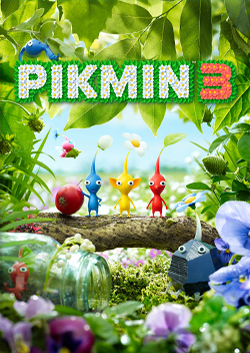
I beat Pikmin 3 on the Nintendo WiiU this evening!
Back in 2017, I beat the original Pikmin game on the GameCube and I loved it. In early 2020, I beat Pikmin 2 and I did not like it as much. It was more combat heavy and I remember not liking going into dungeons as well. Well, I remember everybody raving about Pikmin 3 when it came out, especially the fruit and juice aspect that when I got my WiiU in 2022, it was one of the first games I picked up for the system. It sat on my shelf for a couple of years and I felt a little bad for that. This year, I decided to play through it when it came time to play through a WiiU game.
It's funny, but I have the same arc in every Pikmin game. At first, I don't really like it. I get frustrated trying to do too much with the time constraint. Then, I decide to just screw it and play it at my own pace and then I absolutely love the game. Pikmin 3 is no exception. Once I decided to slow down and not try to accomplish too many things in one day, I really began to enjoy the game. Speaking of time constraint, I think Pikmin 3 has the best system. You find fruit lying around and you can harvest them for juice. You drink juice once a day, so as long as you have juice, you can keep playing. It was really addictive finding the fruit along with the other things in the level. I went into the final area with 36 Bottles of Fruit, so I felt real safe. Rock Pikmin and flying Pikmin are introduced in the game and they both serve their purpose really well.
I am horrible at multitasking. This time around, you have three Captains instead of just one. I mostly kept my group as a giant blob, but switching between groups was a pain. Also, the WiiU implementation is really underutilized. I used a Pro Controller and it really didn't make a difference. But, the biggest pain is the final area. The last level and final boss are absolutely miserable and left a sour taste in my mouth. It changes the game and both are incredibly frustrating.
Overall, I would say I had a good experience playing through Pikmin 3. Besides the final level and boss, I really enjoyed my time with the game and I really enjoyed discovering the fruit. That juice looked so delicious that I never wanted to drink juice more in my life. It builds on the previous games and kind of throws you into it rather quickly. So, I would recommend for fans of the series as I think the first Pikmin is the best starter game.
***Denotes Replay For Completion***
1. Mario & Luigi: Superstar Saga (GBA)
2. Knights of the Round (SNES)
3. Fight'N Rage (NS)
4. Time Stalkers (SDC)
***5. Final Fantasy X/X-2 HD Remaster (PS3)***
6. OutRunners (GEN)
***7. Midtown Madness 3 (XBOX)***
8. Phantasy Star Online: Episode I & II (GCN)
9. Pikmin 3 (WiiU)
I beat Pikmin 3 on the Nintendo WiiU this evening!
Back in 2017, I beat the original Pikmin game on the GameCube and I loved it. In early 2020, I beat Pikmin 2 and I did not like it as much. It was more combat heavy and I remember not liking going into dungeons as well. Well, I remember everybody raving about Pikmin 3 when it came out, especially the fruit and juice aspect that when I got my WiiU in 2022, it was one of the first games I picked up for the system. It sat on my shelf for a couple of years and I felt a little bad for that. This year, I decided to play through it when it came time to play through a WiiU game.
It's funny, but I have the same arc in every Pikmin game. At first, I don't really like it. I get frustrated trying to do too much with the time constraint. Then, I decide to just screw it and play it at my own pace and then I absolutely love the game. Pikmin 3 is no exception. Once I decided to slow down and not try to accomplish too many things in one day, I really began to enjoy the game. Speaking of time constraint, I think Pikmin 3 has the best system. You find fruit lying around and you can harvest them for juice. You drink juice once a day, so as long as you have juice, you can keep playing. It was really addictive finding the fruit along with the other things in the level. I went into the final area with 36 Bottles of Fruit, so I felt real safe. Rock Pikmin and flying Pikmin are introduced in the game and they both serve their purpose really well.
I am horrible at multitasking. This time around, you have three Captains instead of just one. I mostly kept my group as a giant blob, but switching between groups was a pain. Also, the WiiU implementation is really underutilized. I used a Pro Controller and it really didn't make a difference. But, the biggest pain is the final area. The last level and final boss are absolutely miserable and left a sour taste in my mouth. It changes the game and both are incredibly frustrating.
Overall, I would say I had a good experience playing through Pikmin 3. Besides the final level and boss, I really enjoyed my time with the game and I really enjoyed discovering the fruit. That juice looked so delicious that I never wanted to drink juice more in my life. It builds on the previous games and kind of throws you into it rather quickly. So, I would recommend for fans of the series as I think the first Pikmin is the best starter game.

Re: Games Beaten 2026
Previous Years: 2015 2016 2017 2018 2019 2020 2021 2022 2023 2024 2025
1. Dead Space (2023) - PC
2. Dead Space 2 - PC
3. Dead Space 3 - PC
4. The Legend of Heroes: Trails Beyond the Horizon - PS5
5. Stellar Blade - PS5
6. Dragon Quest VII Reimagined - Switch
7. Silent Hill 2 (2024) - PC
8. Silent Hill f - PC
9. Resident Evil Requiem - PC
10. Teenage Mutant Ninja Turtles: The Hyperstone Heist - Genesis
11. Sins of a Solar Empire II - PC
12. Starship Troopers: Ultimate Bug War! - PC
Ultimate Bug War is a throwback FPS that seeks to feel like it was developed shortly after the Starship Troopers film came out. And it hits that target brilliantly. It's not particularly deep, but it is fun, and hits all the notes you want it to.
The game is presented as an in-universe game to boost Federation recruitment. They got Casper Van Diem to reprise his role as Johnny Rico, now a grizzled general in the Federation service. In between missions are a bunch of FMV segments that hit the various notes the interstitial segments of the original movie did. You play as a different trooper, now a major, during the events of the film. Your story is parallel to the film, and you will hit up several planets the film visited.
Each mission is in a fairly large map, with multiple objectives that can be completed in any order. These objectives are some sort of localized conflict, like setting charges, activating defenses, or holding back a bug wave. There are lots of NPC troopers around and you can have some of them follow you. The NPC AI is extremely rudimentary, but they do distract enemies, which helps. There's a good variety of bugs, requiring you to stay on your toes as you make your way through.
There's also a bug campaign; you get to do a mission on each planet from the perspective of a special bug who can enlist other bugs to swarm Federation bases as you take out key defenses to let the rest in. It's presented as simulations, because after all, to defeat the bug you must understand the bug.
My only complaint is the game is short. You can finish it in an afternoon. But that's probably for the best; there's not enough depth to extend the run time much further, and the source material isn't deep enough to really extend things out without feeling inauthentic. The game knows exactly what it's supposed to be, and it delivers on it.
1. Dead Space (2023) - PC
2. Dead Space 2 - PC
3. Dead Space 3 - PC
4. The Legend of Heroes: Trails Beyond the Horizon - PS5
5. Stellar Blade - PS5
6. Dragon Quest VII Reimagined - Switch
7. Silent Hill 2 (2024) - PC
8. Silent Hill f - PC
9. Resident Evil Requiem - PC
10. Teenage Mutant Ninja Turtles: The Hyperstone Heist - Genesis
11. Sins of a Solar Empire II - PC
12. Starship Troopers: Ultimate Bug War! - PC
Ultimate Bug War is a throwback FPS that seeks to feel like it was developed shortly after the Starship Troopers film came out. And it hits that target brilliantly. It's not particularly deep, but it is fun, and hits all the notes you want it to.
The game is presented as an in-universe game to boost Federation recruitment. They got Casper Van Diem to reprise his role as Johnny Rico, now a grizzled general in the Federation service. In between missions are a bunch of FMV segments that hit the various notes the interstitial segments of the original movie did. You play as a different trooper, now a major, during the events of the film. Your story is parallel to the film, and you will hit up several planets the film visited.
Each mission is in a fairly large map, with multiple objectives that can be completed in any order. These objectives are some sort of localized conflict, like setting charges, activating defenses, or holding back a bug wave. There are lots of NPC troopers around and you can have some of them follow you. The NPC AI is extremely rudimentary, but they do distract enemies, which helps. There's a good variety of bugs, requiring you to stay on your toes as you make your way through.
There's also a bug campaign; you get to do a mission on each planet from the perspective of a special bug who can enlist other bugs to swarm Federation bases as you take out key defenses to let the rest in. It's presented as simulations, because after all, to defeat the bug you must understand the bug.
My only complaint is the game is short. You can finish it in an afternoon. But that's probably for the best; there's not enough depth to extend the run time much further, and the source material isn't deep enough to really extend things out without feeling inauthentic. The game knows exactly what it's supposed to be, and it delivers on it.
Blizzard Entertainment Software Developer - All comments and views are my own and not representative of the company.
-
RobertAugustdeMeijer
- 64-bit
- Posts: 328
- Joined: Fri Sep 02, 2022 10:15 am
Re: Games Beaten 2026
17: Quake
Remembered more for its engine than its campaign, the first Quake still has a lot going for it as a single player experience. Ironically, its lack of cohesive theme (a mixture satanic middle ages, dystopian science fiction, and Cthulu influences) fits the level design well, especially the the final two missions. As the difficulty ramps up, so does the sadism of the level designers. The unsettling art direction fits the uncomfortable challenges the later levels throw at the players. With only shooting, running, and jumping at your command, the designers had to come up with ingenious ways to make the player interact with the world in exciting ways. In turn, a world was made that constantly keeps you maddeningly on your toes as you trudge through the horrors that ID brewed for you. Oh, and it's also exhilarating to go back to a shooter that's so brisk and to the point.
7/10
Remembered more for its engine than its campaign, the first Quake still has a lot going for it as a single player experience. Ironically, its lack of cohesive theme (a mixture satanic middle ages, dystopian science fiction, and Cthulu influences) fits the level design well, especially the the final two missions. As the difficulty ramps up, so does the sadism of the level designers. The unsettling art direction fits the uncomfortable challenges the later levels throw at the players. With only shooting, running, and jumping at your command, the designers had to come up with ingenious ways to make the player interact with the world in exciting ways. In turn, a world was made that constantly keeps you maddeningly on your toes as you trudge through the horrors that ID brewed for you. Oh, and it's also exhilarating to go back to a shooter that's so brisk and to the point.
7/10
-
PartridgeSenpai
- Next-Gen
- Posts: 3187
- Joined: Mon Dec 14, 2015 9:27 am
- Location: Northern Japan
Re: Games Beaten 2026
Partridge Senpai's 2026 Beaten Games:
Previously: 2016 2017 2018 2019 2020 2021 2022 2023 2024 2025
* indicates a repeat
1. Final Fantasy XII (PS2)
2. We Were Here (Steam)
3. We Were Here Too (Steam)
4. Tales of Graces f (PS3) *
5. Retro Game Challenge (Switch) *
6. We Were Here Forever (Steam)
7. Tales of Hearts R (PSVita) *
8. Ghostbusters: The Video Game Remastered (PC)
9. Mega Man 11 (PC)
10. Gravity Circuit (PC)
11. Mario Party DS (DS)
12. Ghost of Tsushima (PS5)
13. Ghost of Tsushima: Iki Island (PS5)
14. Astro's Playroom (PS5)
15. Michael Jackson: The Experience (PSP)
16. Sackboy: A Big Adventure (PS5)
17. Control (PS4)
18. White Album (PS3)
19. Super Mario Advance 2: Super Mario World (GBA)
I've beaten Mario World on SNES tons and tons of times, but I've never really played this version of it too meaningfully, because this was the one Super Mario Advance game I never owned. I tried it out on the Switch Online GBA service a few weeks back out of curiosity, but put it down pretty quick because the control just did not feel right. However, I recently got gifted a ton of games from my partner, games she had when she was younger, and this was among them. This seemed like a great chance to finally give this game a proper shot on original-ish hardware. it took me around dead-on 4 hours to get all the exits on every stage playing the English version of the game via my GameCube's GameBoy Player.
The story is Mario World as it's ever been, for the most part, save for a new intro cutscene. Luigi and Mario have gone to Dinosaur Land to save both their buddy Yoshi and his friends as well as Princess Peach. No real change here from the original game, but you can also play as Luigi in the game properly now, so that's more than just a cosmetic change on the intro. Luigi has his traditionally slightly different controls from Mario, jumping a bit higher in exchange for less traction when running, and you can switch between the two on the map screen whenever you want.
The whole game's construction is just like the original sans for some issues that will likely be very familiar to anyone who's played the original. Unlike the other Super Mario Advance games, there's really not much here in terms of extra content outside of slight balance changes to make the game easier. Not only can you now save anywhere (rather than only after beating a castle, ghost house, or switch palace), but lots of levels now have extra checkpoints where they didn't use to as well. You also keep a persistent extra life total between powering off the game, which is nice, though given that you can save anywhere, game overs matter very little outside of possibly cheating you out of your mid-level checkpoint. Additionally, the biggest change towards easier difficulty is that they've given Mario World the (North American) Mario 3 system of damage taking. No longer does getting hit while big *always* reduce you to little Mario status. Now, if you have an extra power up like fire balls, you'll just get turned down to normal big Mario. It's not a level of easier gameplay that I particularly felt like I needed, but it'll definitely be a godsend for anyone not so familiar with 2D platformers (or this game in general).
The more negative differences between this and the original game are things that will be very familiar to anyone who's played ports of SNES games on the GBA. The most consistently annoying is screen crunch. The SNES had a larger resolution than the GBA's screen does, and it means the point of view you've got is always zoomed in compared to the original game. While you can thankfully still scroll the camera around by holding L like you could in the original game, this still makes the general play experience a lot more frustrating than it needs to be because of how often the momentum of play requires you to make leaps of faith to place you cannot properly see.
On top of that, as someone who's played SO much of the original game, the controls here just feel wrong. The latency is *just* barely worse than the SNES version. It's only by a frame or two, admittedly, but there were still tons of times where Mario would just not do what I needed him to because I couldn't make him move quickly enough. Hit boxes are also definitely different in a lot of places. Mario feels just a touch bigger than he used to be, so there were a good few deaths I took because I simply got bopped by something I felt I was safe from. That was nowhere near as common a cause of death than the screen crunch or the wonky controls, but it was still something hard to ignore quite frequently.
The aesthetics of the game are still (kinda) as good as they've ever been, because this is Mario World, but it's also Mario World *on the GBA*, so some meaningful compromises have been made to the original. Visually, it's actually more or less fine. The color palette is a bit washed out due to trying to get it to display properly on the original super dark GBA screen, but the enemy designs, animations, and all that good stuff are all as good as ever. The only really meaningful change is that Luigi now looks more like he actually should (taller and thinner) rather than just a green Mario like he did in the original SNES game.
However, the BIG drawback, as I'm sure pretty much anyone familiar with this sort of GBA port could guess, is with the music. While some tracks like the athletic theme have managed to be ported onto the GBA with relatively little pain, but far from all are so lucky. While a lot of songs sound a lot wimpier and thinner because of the weaker sound tech on the GBA, some songs like the ghost house theme just sound *awful*, straight up unfinished, because they've been put together so haphazardly. I'll admit, I did get a certain amount of joy from just how hecked up some arrangements are, but that doesn't really make the songs good representations of the originals regardless XD
Verdict: Not Recommended. While this still isn't a bad game, and it certainly would've been fine back when it came out, with just how easy it is to play Super Mario World in its proper format in the present year, I could not possibly say someone should play this version over that one. I guess if you're looking for a bizarre challenge run format for Mario World to spice things up a bit, this will definitely give you a harder, more varied experience than just playing the SNES version again. For anyone else just looking for a good time, you're way better off simply playing the SNES version instead <w>
Previously: 2016 2017 2018 2019 2020 2021 2022 2023 2024 2025
* indicates a repeat
1. Final Fantasy XII (PS2)
2. We Were Here (Steam)
3. We Were Here Too (Steam)
4. Tales of Graces f (PS3) *
5. Retro Game Challenge (Switch) *
6. We Were Here Forever (Steam)
7. Tales of Hearts R (PSVita) *
8. Ghostbusters: The Video Game Remastered (PC)
9. Mega Man 11 (PC)
10. Gravity Circuit (PC)
11. Mario Party DS (DS)
12. Ghost of Tsushima (PS5)
13. Ghost of Tsushima: Iki Island (PS5)
14. Astro's Playroom (PS5)
15. Michael Jackson: The Experience (PSP)
16. Sackboy: A Big Adventure (PS5)
17. Control (PS4)
18. White Album (PS3)
19. Super Mario Advance 2: Super Mario World (GBA)
I've beaten Mario World on SNES tons and tons of times, but I've never really played this version of it too meaningfully, because this was the one Super Mario Advance game I never owned. I tried it out on the Switch Online GBA service a few weeks back out of curiosity, but put it down pretty quick because the control just did not feel right. However, I recently got gifted a ton of games from my partner, games she had when she was younger, and this was among them. This seemed like a great chance to finally give this game a proper shot on original-ish hardware. it took me around dead-on 4 hours to get all the exits on every stage playing the English version of the game via my GameCube's GameBoy Player.
The story is Mario World as it's ever been, for the most part, save for a new intro cutscene. Luigi and Mario have gone to Dinosaur Land to save both their buddy Yoshi and his friends as well as Princess Peach. No real change here from the original game, but you can also play as Luigi in the game properly now, so that's more than just a cosmetic change on the intro. Luigi has his traditionally slightly different controls from Mario, jumping a bit higher in exchange for less traction when running, and you can switch between the two on the map screen whenever you want.
The whole game's construction is just like the original sans for some issues that will likely be very familiar to anyone who's played the original. Unlike the other Super Mario Advance games, there's really not much here in terms of extra content outside of slight balance changes to make the game easier. Not only can you now save anywhere (rather than only after beating a castle, ghost house, or switch palace), but lots of levels now have extra checkpoints where they didn't use to as well. You also keep a persistent extra life total between powering off the game, which is nice, though given that you can save anywhere, game overs matter very little outside of possibly cheating you out of your mid-level checkpoint. Additionally, the biggest change towards easier difficulty is that they've given Mario World the (North American) Mario 3 system of damage taking. No longer does getting hit while big *always* reduce you to little Mario status. Now, if you have an extra power up like fire balls, you'll just get turned down to normal big Mario. It's not a level of easier gameplay that I particularly felt like I needed, but it'll definitely be a godsend for anyone not so familiar with 2D platformers (or this game in general).
The more negative differences between this and the original game are things that will be very familiar to anyone who's played ports of SNES games on the GBA. The most consistently annoying is screen crunch. The SNES had a larger resolution than the GBA's screen does, and it means the point of view you've got is always zoomed in compared to the original game. While you can thankfully still scroll the camera around by holding L like you could in the original game, this still makes the general play experience a lot more frustrating than it needs to be because of how often the momentum of play requires you to make leaps of faith to place you cannot properly see.
On top of that, as someone who's played SO much of the original game, the controls here just feel wrong. The latency is *just* barely worse than the SNES version. It's only by a frame or two, admittedly, but there were still tons of times where Mario would just not do what I needed him to because I couldn't make him move quickly enough. Hit boxes are also definitely different in a lot of places. Mario feels just a touch bigger than he used to be, so there were a good few deaths I took because I simply got bopped by something I felt I was safe from. That was nowhere near as common a cause of death than the screen crunch or the wonky controls, but it was still something hard to ignore quite frequently.
The aesthetics of the game are still (kinda) as good as they've ever been, because this is Mario World, but it's also Mario World *on the GBA*, so some meaningful compromises have been made to the original. Visually, it's actually more or less fine. The color palette is a bit washed out due to trying to get it to display properly on the original super dark GBA screen, but the enemy designs, animations, and all that good stuff are all as good as ever. The only really meaningful change is that Luigi now looks more like he actually should (taller and thinner) rather than just a green Mario like he did in the original SNES game.
However, the BIG drawback, as I'm sure pretty much anyone familiar with this sort of GBA port could guess, is with the music. While some tracks like the athletic theme have managed to be ported onto the GBA with relatively little pain, but far from all are so lucky. While a lot of songs sound a lot wimpier and thinner because of the weaker sound tech on the GBA, some songs like the ghost house theme just sound *awful*, straight up unfinished, because they've been put together so haphazardly. I'll admit, I did get a certain amount of joy from just how hecked up some arrangements are, but that doesn't really make the songs good representations of the originals regardless XD
Verdict: Not Recommended. While this still isn't a bad game, and it certainly would've been fine back when it came out, with just how easy it is to play Super Mario World in its proper format in the present year, I could not possibly say someone should play this version over that one. I guess if you're looking for a bizarre challenge run format for Mario World to spice things up a bit, this will definitely give you a harder, more varied experience than just playing the SNES version again. For anyone else just looking for a good time, you're way better off simply playing the SNES version instead <w>
I identify everyone via avatar, so if you change your avatar, I genuinely might completely forget who you are. -- Me
-
TheSSNintendo

- 128-bit
- Posts: 669
- Joined: Mon Jul 11, 2011 10:27 pm
Re: Games Beaten 2026
I finished Quake towards the end of the last year (the Enhanced version). You're not kidding when you talk about the challenges of the later levels. I don't know how many times I had to save my game in a level just to avoid having to do certain parts over.RobertAugustdeMeijer wrote: ↑Wed Mar 18, 2026 7:02 am 17: Quake
Remembered more for its engine than its campaign, the first Quake still has a lot going for it as a single player experience. Ironically, its lack of cohesive theme (a mixture satanic middle ages, dystopian science fiction, and Cthulu influences) fits the level design well, especially the the final two missions. As the difficulty ramps up, so does the sadism of the level designers. The unsettling art direction fits the uncomfortable challenges the later levels throw at the players. With only shooting, running, and jumping at your command, the designers had to come up with ingenious ways to make the player interact with the world in exciting ways. In turn, a world was made that constantly keeps you maddeningly on your toes as you trudge through the horrors that ID brewed for you. Oh, and it's also exhilarating to go back to a shooter that's so brisk and to the point.
7/10

Re: Games Beaten 2026
1. Doom 3: Resurrection of Evil (FPS)(PC)
2. Doom 3 (FPS)(PC)
3. V Rising (Adventure)(PC)
4. Teardown (Action)(PC)
5. Control: Ultimate Edition (Action)(PC)
6. Peak (Adventure)(PC)
7. The Exit 8 (Horror)(PC)
The Exit 8 is a weird game. It's a small psychological horror game that's little more than a walking sim, but you have to understand when to turn around and go back to go forward. It's a game about recognizing when something is off. Maybe you don't know what is off, but if you spot it, you must turn around, or else you restart.
You're a traveler in a Japanese subway system. You start by passing through section 0. The object of the game is to get to the exit at 8. To do this, you must navigate around a corridor that always appears the same. The same posters. The same doors. The same man walking the opposite direction. Only sometimes it isn't the same. If you spot a difference, you must turn around and go back to advance. Otherwise, you end up back at 0. Turn when there isn't something different, and you also end up at 0. It's simple, just spot the differences.
Like maybe the security camera light is on, and it's focused on you. Or sometimes the man walking down the hallway looks at you. Or maybe there's an extra poster on the wall. Or just maybe thean walking down the hallway has no face, or someone is watching you from a crack in the door, or one of the posters is of a mutilated face, or someone has painted their body to look like the far wall and is waiting for you to get just close enough...
Did I mention you could die in this game? You can die in this game. And you end up back at 0.
The horror of The Exit 8 is in the uncanny, the not knowing what lies around the bend; will it be right? Will it be correct? Did you miss something, maybe something you would never notice? How long have you been staring at the walls, trying to understand what you missed? Because change is terrifying, but more terrifying is being stuck in the endless rut, not understanding the change, not realizing that that poster is watching you as you walk past, unaware of what quietly surrounds you until it's too late, and you're back at the beginning again. Back at 0.
I liked The Exit 8. I also escaped via exit 8. It's a simple thing to do, but maybe it isn't that simple.
2. Doom 3 (FPS)(PC)
3. V Rising (Adventure)(PC)
4. Teardown (Action)(PC)
5. Control: Ultimate Edition (Action)(PC)
6. Peak (Adventure)(PC)
7. The Exit 8 (Horror)(PC)
The Exit 8 is a weird game. It's a small psychological horror game that's little more than a walking sim, but you have to understand when to turn around and go back to go forward. It's a game about recognizing when something is off. Maybe you don't know what is off, but if you spot it, you must turn around, or else you restart.
You're a traveler in a Japanese subway system. You start by passing through section 0. The object of the game is to get to the exit at 8. To do this, you must navigate around a corridor that always appears the same. The same posters. The same doors. The same man walking the opposite direction. Only sometimes it isn't the same. If you spot a difference, you must turn around and go back to advance. Otherwise, you end up back at 0. Turn when there isn't something different, and you also end up at 0. It's simple, just spot the differences.
Like maybe the security camera light is on, and it's focused on you. Or sometimes the man walking down the hallway looks at you. Or maybe there's an extra poster on the wall. Or just maybe thean walking down the hallway has no face, or someone is watching you from a crack in the door, or one of the posters is of a mutilated face, or someone has painted their body to look like the far wall and is waiting for you to get just close enough...
Did I mention you could die in this game? You can die in this game. And you end up back at 0.
The horror of The Exit 8 is in the uncanny, the not knowing what lies around the bend; will it be right? Will it be correct? Did you miss something, maybe something you would never notice? How long have you been staring at the walls, trying to understand what you missed? Because change is terrifying, but more terrifying is being stuck in the endless rut, not understanding the change, not realizing that that poster is watching you as you walk past, unaware of what quietly surrounds you until it's too late, and you're back at the beginning again. Back at 0.
I liked The Exit 8. I also escaped via exit 8. It's a simple thing to do, but maybe it isn't that simple.

-
TheSSNintendo
- 128-bit
- Posts: 669
- Joined: Mon Jul 11, 2011 10:27 pm
Re: Games Beaten 2026
1. Deja Vu: MacVenture Series
2. Deja Vu II: MacVenture Series
3. Earthworm Jim 2 (SNES/Switch Online)
4. Crash Banidcoot: The Huge Adventure (Gameboy Advance)
5. Metroid Prime 4: Beyond (Switch)
6. Lego Batman: The Video Game (Steam)
7. Ys III - Wanderers from Ys (SNES)
8. Suikoden II HD Remaster (Switch)
9. Technobabylon (GOG)
10. Crystalis (NES/Switch Online)
11. Mega Man II (Game Boy/Switch Online)
12. Teenage Mutant Ninja Turtles II: Back from the Sewers (Game Boy/Cowabunga Collection)
13. Prison City (Steam)
14. Mega Man X2 (SNES/Mega Man X Legacy Collection)
15. Tunic (XBox One) - I got the "bad ending", and sometime down the line I might try for the good one.
2. Deja Vu II: MacVenture Series
3. Earthworm Jim 2 (SNES/Switch Online)
4. Crash Banidcoot: The Huge Adventure (Gameboy Advance)
5. Metroid Prime 4: Beyond (Switch)
6. Lego Batman: The Video Game (Steam)
7. Ys III - Wanderers from Ys (SNES)
8. Suikoden II HD Remaster (Switch)
9. Technobabylon (GOG)
10. Crystalis (NES/Switch Online)
11. Mega Man II (Game Boy/Switch Online)
12. Teenage Mutant Ninja Turtles II: Back from the Sewers (Game Boy/Cowabunga Collection)
13. Prison City (Steam)
14. Mega Man X2 (SNES/Mega Man X Legacy Collection)
15. Tunic (XBox One) - I got the "bad ending", and sometime down the line I might try for the good one.
-
RobertAugustdeMeijer
- 64-bit
- Posts: 328
- Joined: Fri Sep 02, 2022 10:15 am
Re: Games Beaten 2026
18: Final Fantasy VII: Remake
It's tragic when a game's best moments are when it reminds you of another game. Does the "remake" improve on the original in any way? Jessie's extra screen time gives her room to radiantly shine. Barret also gets to show off his gloriously angry yet justified personality. The cinematics are up there with Hollywood's best. And maybe hacking away at enemies is a bit more fun than simply waiting for your ATB gauge to fill. But overall, this is a worse package. The tremendous background camerawork is replaced with your typical 3rd person affair. Grinding is replaced with brain-dead side quests. Worst of all, the pace is two to three times as slow. Oh, and in case you didn't know, the "Remake" refers to a new story, but this doesn't really start until 95% into this part. And the new bits aren't memorable in the slightest. But the old bits? Damn, they're still some of gaming's greatest moments.
6/10
It's tragic when a game's best moments are when it reminds you of another game. Does the "remake" improve on the original in any way? Jessie's extra screen time gives her room to radiantly shine. Barret also gets to show off his gloriously angry yet justified personality. The cinematics are up there with Hollywood's best. And maybe hacking away at enemies is a bit more fun than simply waiting for your ATB gauge to fill. But overall, this is a worse package. The tremendous background camerawork is replaced with your typical 3rd person affair. Grinding is replaced with brain-dead side quests. Worst of all, the pace is two to three times as slow. Oh, and in case you didn't know, the "Remake" refers to a new story, but this doesn't really start until 95% into this part. And the new bits aren't memorable in the slightest. But the old bits? Damn, they're still some of gaming's greatest moments.
6/10