Games Beaten 2025

Anything that is gaming related that doesn't fit well anywhere else
User avatar
Note
Next-Gen
Posts: 1555
Joined: Thu Feb 05, 2009 4:39 pm
Location: NYC

Re: Games Beaten 2025

Post by Note »

1. Streets of Rage 3 (GEN)*
2. Iridion II (GBA)*
3. Final Fantasy III (SNES)
4. Tenchu: Stealth Assassins (PS1)
5. Shockman Zero (SNES)
6. Suikoden (PS1)
7. Chiki Chiki Boys (GEN)
8. Altered Beast (GEN)
9. Jewel Master (GEN)
10. Fight'N Rage (NSW)
11. Lunar: Silver Star Story Complete (PS1)
12. Phantasy Star (SMS)
13. Super Metroid (SNES)
14. Double Dragon (Arcade)
15. Final Fight (Arcade)
16. Street Fighter II Turbo: Hyper Fighting (SNES)
17. Virtua Fighter 2 (SAT)
18. Yoshi's Story (N64)
19. Crusader of Centy (GEN)
20. Koudelka (PS1)
21. Castlevania: Bloodlines (GEN)
22. Super Mario Land 2: 6 Golden Coins (GB)
23. Brawl Brothers (SNES)

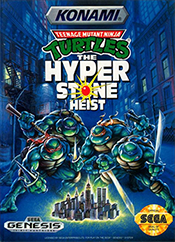
Image

24. Teenage Mutant Ninja Turtles: The Hyperstone Heist (GEN)

TMNT: The Hyperstone Heist is one of those titles I totally missed out on, as I didn’t get a Genesis console until about a year after the game was released, and I somehow didn’t see coverage of it in magazines I had access to, nor did I hear about it from family or friends. It wasn’t until much later that I realized Konami had released a TMNT beat ‘em up on the Genesis. As a big fan of Turtles in Time, I wanted to check out what Konami had to offer on the rival 16-bit console. I purchased the game from Blu a few years back, so thanks to Blu for a nice deal on it! For this playthrough, I played as Raph.

The Hyperstone Heist has a simple control scheme consisting of your normal attack, a jump, and a dash. I found the dash being mapped to a button as opposed to just tapping forward twice a bit awkward, and ended up not using it much. You do have access to a few different attacks while dashing and a special attack by pressing both A and B simultaneously, which will drain a bit of life if used. The game consists of five levels, with each level being slightly longer than the norm for a beat ‘em up. However, the fourth level of the game is a boss gauntlet, which is a bit disappointing to not only include this, but to have it in the middle of the game, which feels like a lazy way to make the title longer.

Graphics wise, the color palette is a bit different than what we’re used to seeing for the Turtles, but the sprites still look good here. There’s also a nice variety of colorful backgrounds, from traversing through the sewers, to the city, to the ocean and ghost ship, and Shredder’s hideout. Due to a technical limitation with the Genesis, you won't be seeing any foot soldiers get thrown towards the screen here. In regards to the soundtrack, a lot of the Turtles songs that many of are familiar with from other titles are included, and Konami did the tunes justice, as they sound pretty great coming from Sega’s console. Also, I just want to take a moment to mention the cover art, which is an awesome illustration. If I saw this in a store around the release date, I probably would have been sold on the art alone.

My main criticism of the game is with the shorter amount of levels and the boss gauntlet. I’m glad that Konami gave gamers something unique for the Genesis release, but with so many elements to leverage from the previous console and arcade titles, I feel like the developers could have put a bit more effort into designing a few more levels. In general, I’m not a fan of boss gauntlets, but especially not in the middle of a game.

Overall, TMNT: The Hyperstone Heist is a fun and solid beat ‘em up on the Genesis, that fans of the console or the IP should give a look. I do think that the SNES release of Turtles in Time has an edge over it, but if you’ve played Turtles in Time a lot and are looking for something different from the 16-bit era, this is worth your time. I’d love to play this with a friend in co-op at some point. Check this one out!
User avatar
TheSSNintendo
128-bit
Posts: 666
Joined: Mon Jul 11, 2011 10:27 pm

Re: Games Beaten 2025

Post by TheSSNintendo »

Doom 64 (Switch). The last level is a real pain if you don't have the demon artifacts.
User avatar
MrPopo
Moderator
Posts: 24190
Joined: Tue Aug 26, 2008 1:01 pm
Location: Orange County, CA

Re: Games Beaten 2025

Post by MrPopo »

Oh yeah, it is night and day on that level depending on your artifact completion. Also, you have to know that you need to manually put them in the slots. My first try at the level I did not know that.
Blizzard Entertainment Software Developer - All comments and views are my own and not representative of the company.
User avatar
PartridgeSenpai
Next-Gen
Posts: 3173
Joined: Mon Dec 14, 2015 9:27 am
Location: Northern Japan

Re: Games Beaten 2025

Post by PartridgeSenpai »

Partridge Senpai's 2025 Beaten Games:
Previously: 2016 2017 2018 2019 2020 2021 2022 2023 2024
* indicates a repeat

1~50
1. Arc Rise Fantasia (Wii)
2. Return of the Obra Dinn (PC)
3. Battlefield: Hardline (PS3)
4. Call of Duty: Black Ops (PS3)
5. Call of Duty: Black Ops II (PS3)
6. Dead Nation (PS3)
7. Kileak, The Blood 2: Reason in Madness (PS1)
8. Paro Wars (PS1)
9. in Stars and Time (Steam)
10. Tetris Battle Gaiden (SFC)
11. Super Tetris 3 (SFC)
12. Battlefield 4 (PS3)
13. Call of Duty: Modern Warfare 2 (PS3)
14. Call of Duty: Modern Warfare 3 (PS3)
15. Call of Duty: Black Ops III (PS4)
16. Call of Duty: Infinite Warfare (PS4)
17. Call of Duty: WWII (PS4)
18. Resistance 3 (PS3)
19. Tearaway: Unfolded (PS4)
20. Grow Home (PS4)
21. Grow Up (PS4)
22. Ratchet & Clank (2016) (PS4)
23. Dark Sector (Steam)
24. Nagano Winter Olympics '98 (N64)
25. Multi-Racing Championship (N64)
26. Super Smash Bros. (N64)
27. Puyo Puyo Sun 64 (N64)
28. Shin Nippon Pro Wrestling: Toukon Road - Brave Spirits (N64)
29. Jikkyou Pawafuru Puroyakyuu 6 (N64)
30. Let's Smash (N64)
31. Mario Tennis 64 (N64)
32. Ucchannanchan no Honō no Challenger: Denryū Iraira Bō (N64)
33. Jikkyou Pawafuru Puroyakyuu 4 (N64)
34. FIFA: Road to the World Cup 98 (N64)
35. Jikkyou Pawafuru Puroyakyuu 2000 (N64)
36. Jikkyou Pawafuru Puroyakyuu 5 (N64)
37. Time and Eternity (PS3)
38. Pokemon Red (GB)
39. Dr. Mario 64 (N64)
40. Shining Force Neo (PS2)
41. Chou Kuukan Nighter: King of Pro Baseball (N64)
42. Tales of Destiny 2 (PS2)
43. Star Wars: Episode I - Racer (N64)
44. ChoroQ 64 (N64)
45. F-Zero X (N64)
46. Homefront (PS3)
47. Ape Escape: Pumped & Primed (PS2)
48. F-Zero (SNES)
49. Castlevania: Lament of Innocence (PS2)
50. Castlevania: Curse of Darkness (PS2)
51~100
51. Wave Race 64 (N64)
52. Bakushou Jinsei 64: Mezase! Resort-ou (N64)
53. Mother (Famicom)
54. Famista 64 (N64)
55. Weird and Unfortunate Things are Happening (PC)
56. Kirby and the Rainbow Curse (Wii U)
57. Mario Kart Wii (Wii)
58. Wario Land: Shake it! (Wii) *
59. Mario Party 8 (Wii) *
60. Zack & Wiki: Quest for Barbaros' Treasure (Wii)
61. SimCity 2000 (N64)
62. Prototype (PS3)
63. Prototype 2 (PS3)
64. Final Fantasy X (PS2) *
65. Final Fantasy X-2 (PS2)
66. Grand Theft Auto: Vice City (PS2)
67. Crackdown (Xbox 360)
68. Crackdown 2 (Xbox 360)
69. Alan Wake (Xbox 360) *
70. Dead to Rights (Xbox)
71. Medal of Honor (PS3)
72. Mario Kart 8 (Wii U)
73. Donkey Kong Country Returns (Wii) *
74. Mario Party 9 (Wii) *
75. Dragon Ball Z: Budokai 2 (PS2)
76. Splashdown (PS2)
77. R4 Ridge Racer Type 4 (PS1)
78. Super Smash Bros. Brawl (Wii) *
79. Star Fox (SNES)
80. Kamen Rider: Battride War (PS3)
81. Mario Kart: Double Dash!! (GC) *
82. Final Fantasy VII: International Edition (PS1)
83. Final Fantasy VIII (PS1)
84. Final Fantasy IX (PS1) *
85. Pac-Man World (PS1)
86. Super Ghouls'n Ghosts (SFC)
87. Disney's Aladdin (SNES)
88. Mega Man: Wily Wars (MD)
89. The Magical Quest Starring Mickey Mouse (SNES)
90. The Great Circus Mystery Starring Mickey & Minnie (SNES)
91. Mickey to Donald Magical Adventure 3 (SFC)
92. Disney's The Little Mermaid (NES)
93. Little Nemo: The Dream Master (NES)
94. Gunman's Proof (SFC)
95. Blaze & Blade: Busters (PS1)
96. Void Stranger (Steam)
97. Fortune Street (Wii)
98. Max Payne (PS2)
99. Momotaro Dentetsu V (PS1)
100. Shodan Morita Shogi (SFC)
101. Rayman 2: The Great Escape (N64)
102. Bio Miracle Bokutte Upa (Famicom)
103. Panic Restaurant (NES)
104. Mr. Gimmick (NES)
105. Bucky O'Hare (NES)
106. Wheel of Fortune (N64)
107. Resident Evil 2 (PS1)
108. Dragon Quest VI (SFC)
109. Ninja Gaiden (NES)
110. StarTropics (NES)
111. Parody World: Monster Party (Famicom)
112. Super Mario Bros 2 (NES)
113. Kamen No Ninja Hanamaru (Famicom)
114. Power Blade (NES)
115. Power Blazer (Famicom)
116. Metroid (NES)
117. Kid Icarus (NES)
118. New Super Mario Bros. U (Wii U) *
119. Ganbare Goemon 3: Shishi Juurokubee no Karakuri Manjigatame (SFC)
120. Hitman: Blood Money (Xbox 360)
121. Super Bonk (SNES)
122. Plok (SNES)
123. Batman: The Video Game (NES)
124. Power Blade 2 (NES)
125. Ninja Gaiden II: The Dark Sword of Chaos (NES)

126. Phantasy Star (SMS)
I’ve never had a ton of experience with the Phantasy Star series. I’d attempted briefly and very quickly bounced off of the second game many years ago, and I’ve certainly heard no small amount about how the second and third games are very wanting in many aspects of quality. However, I’d heard consistent praise for this first entry and the fourth, so they’ve always been on my radar to play eventually. Non-Saturn retro Sega stuff is pretty hard to come by out here, but thankfully for me, Sonic’s Ultimate Genesis Collection (which I had to import, admittedly) on the PS3 has all three Mega Drive entries in the series, and has this first one as an unlockable extra too. It ultimately took me around 17 hours to beat the English version of the game without using save states but looking at walkthroughs a little bit and using dungeon maps online very extensively.

Phantasy Star’s story follows Alys, a young woman in the Algol star system living on the plant Palma. Her brother Nero is killed for plotting against the evil king Lassic, and Alys takes it upon herself to avenge his death and take down Lassic herself. As with most 8-bit RPGs (especially ones as early as this), it’s got a fairly rudimentary story that’s very light on character development and much more focused on just elaborating the long sequence of things happening in the story. Having so many sci-fi elements as well as a female main character, it’s very novel for when it came out, but that novelty is really all it has going for it these days. However, if you’re the sort who’s going back to play 8-bit RPGs in the first place, you’re probably not that bothered by the lack of a deep, introspective narrative in the first place X3

Being a game *so* early in the lifespan of JRPGs, the gameplay is quite rudimentary as well, but it’s also got some very interesting aspects compared to its (remarkably few) contemporaries. In terms of the more typical aspects, it’s got turn-based battles with your party fighting the enemy party from a first-person perspective, and it really doesn’t try and reinvent the wheel there. Honestly, compared to other games of the time like the first two Dragon Quest games or Final Fantasy 1, it’s got remarkably few bells and whistles in its battle system. While I certainly appreciate the lack of annoyances like instant death spells that those games just listed love so much, Phantasy Star 1 nearly lacks status effects of any kind. There are a couple of buff spells and a temporary stun effect, but this game doesn’t even have a poison status effect. Given that this game also lacks any kind of revival upon death mechanic, I’m frankly quite glad that it lacks vindictive aspects to its gameplay like this, but it does mean that battles can get a bit repetitive after a while.

Phantasy Star understandably but unfortunately falls into a lot of pitfalls of early RPG design. This is one of those games where you’re *so* weak at the start that you’ll need to heal at the inn (which is thankfully free in the first town) after literally every battle for your first few levels if you want to survive at all. That thankfully gets better after a while, but it’s a recurring annoyance as this is also the sort of game where every new party member you acquire joins at level 1. Their gear usually means they’re balanced well enough that they won’t immediately die upon joining you, but the level grinding in this is still quite tedious. In a somewhat nice twist of fate, as bad as the level grind is, the grind for money is FAR worse, and I nearly never needed to grind for levels because I was already grinding for money so much that I was always perfectly fine for levels XD

Grindy and relatively simplistic as they are, one nice thing this game’s random battles do is tell you the HP values of all of your enemies. You only fight one of enemy at a time in packs of 1 to 8 at a time. It means it’s a lot easier to judge how much of a resource to use in battle, or at least it would in theory. The damage values in battle vary WILDLY based on random numbers totally out of your control. From the start of the game to the very end, you’ll have no idea if the hit you’re about to land will do the theoretical maximum it seems to do or just do a pitiful 1 or 2 damage instead. Enemies thankfully operate with these same wildly varying damage values, but with how much grinding you’ve already got to do, this level of randomness just makes battles drag on that much longer and adds to the existing tedium of the experience.

The game’s difficulty curve isn’t all together too bad, but it’ll likely be a lot harder if you’re mapping out dungeons yourself. In an attempt to flex on the Famicom (which couldn’t do them natively as easily, apparently), this game has first-person 3D dungeon crawling rather than a top-down perspective as DQ or FF have. Dungeons aren’t nearly as happy with secret pitfalls as a series like Shin Megami Tensei is, but there are more than enough of them to be annoying anyhow. More than that, dungeons get absolutely massive quite quickly too. Healing MP outside of resting at an inn is completely impossible, and your inventory isn’t big enough to carry many healing items even if truly good healing items existed in the first place (which they sadly don’t). Your party’s MP values are very low compared to how expensive their spells are, so you’ll be saving most MP for either healing or for damage-rushing down bosses.

While resource management problems like this are absolutely nothing new or unfamiliar in RPGs even as new as the PS1, it’s particularly irksome here in Phantasy Star because of the sheer scale of these dungeons. If you’re mapping out dungeons yourself rather than looking up maps online like I did, you’re going to be exiting back to town a LOT to heal as you meticulously find every dead end, pitfall, and trapped chest in these dungeons. I would posit that this game would’ve easily taken me twice as long to beat if I weren’t looking up dungeon maps because they’re just so massive. This is an 8-bit game, so the environments in a dungeon all look so similar that it’s not like you can just navigate by familiar landmarks or something, and enemies are both so numerous and so strong by the end of the game that they’ll be whittling you down the whole time as well. The run mechanic is thankfully quite reliable, and I used it very liberally once I didn’t need money for gear anymore, but dungeons still got boring-levels of long even with using maps for them.

Wrapping back slightly, though, those trapped chests are something I actually haven’t mentioned yet that I really should. A player-hostile, awful design element that Phantasy Star takes from the old Wizardry games that not even other old, mean series like SMT or DQ were ever bold enough to reuse is trapped chests. While it’s true that this game has so few total items that there’s not much possible to find good loot in dungeons in the first place, I’d say that *maybe* 5% of chests you’ll find in dungeons have anything remotely worthwhile if they don’t also have a mean trap that will shave half the health off of one or all of your party members. However, on top of the useless fixed chests, *all* enemies drop chests rather than simply rewarding you the item at the end of battle. *All* of these chests dropped by enemies have a chance to be trapped to, and with just how scarce your healing resources are, you’re going to have to think long and hard about if you actually need money badly enough to be opening chests deep in a dungeon you’re not keen to go all the way through again.

However, the one saving grace that Phantasy Star 1 has among ALL of this time-wasting junk is a save anywhere mechanic. Much like Pokemon, you can just open your menu and save anywhere (with the choice of multiple save files too!) as long as you’re not in battle. If you’re keen to spend the time doing it, there’s nothing stopping you from saving after every successful battle and before every newly discovered chest to make it so you never need to unnecessarily eat a blast or an arrow from a trap. That’s immensely tedious menu management because this is an old 8-bit RPG with clunky awful menus (the same clunky awful menus you’ll need to navigate over and over for healing magic and item use), but it’s at least something you *can* do, and it helps make up a decent bit for the lack of a respawn upon death mechanic.

Overall, I’d say the battle and dungeon part of the game is very much a product of it’s time, and it’s either going to be something you’re already a fan of or something you have the wherewithal to tolerate if you’re going to make your way through this game. The signposting in the adventure aspects is fairly well done, especially for an English localization of an originally Japanese game for the time. The information to solve every puzzle (or rather just knowing where to go in the first place) is available *somewhere* in the game if you’re taking notes as you talk to the many NPCs (and conversable monsters) that populate the Algol System. It’ll still be helpful to have a guide handy in case there’s something you missed or just wasn’t obvious enough for you, but the adventure aspect being relatively straightforward is a nice counterpoint of easy difficulty compared to all of the clunky aspects of the mechanical design.

Aesthetically, Phantasy Star is a quite exceptional game for late ’87. The music selection is fairly sparse, but a relatively small track list isn’t anything uncommon for 8-bit RPGs of that era (just look at FF1, for example). The music here wasn’t ever really something I found particularly engaging or nice compared to contemporary tracks in DQ or FF, but it’s fit for purpose well enough I suppose. The graphics, though, are really impressive for an 8-bit machine. There were a lot of clever tricks to get it to work, but monster sprites this big and detailed are not something you see on 8-bit RPGs very often, and certainly not as far back as ’87. While I’m hardly the most familiar with the Master System’s library, I’ve seen this pretty commonly called the best-looking game on the system, and given what I’ve already seen in it, I’m very inclined to believe that.

Verdict: Hesitantly Recommended. This is a VERY hesitant recommendation, but if you’re a fan of RPGs *this* old (and you’re okay with the first-person dungeon crawling), then this is a game you will probably enjoy. If you’re not an 8-bit RPG fan, this game is going to do less than nothing to convert you, but if you like stuff like the old NES Dragon Warrior games or FF1 on the NES, then this is an interesting alternative. If nothing else, Phantasy Star 1 is a fascinating snapshot into just how far some competitors were willing to go to try and one-up the increasing number of RPG juggernauts on Nintendo’s 8-bit machine.
----

127. Solomon's Key (Famicom)
I’ve been watching a lot of GCCX lately, and this game was one I saw a bit of on this show and thought I’d give it a look. I’m a big fan of Adventures of Lolo games, and as much as they can often be unfair reflex tests rather than brain teasers, I’m still a sucker for this old kind of action puzzle game. Thankfully for me, this is a game readily available on the Switch’s NES Nintendo Online service, so it was easy to play there~. It ultimately took me around 2 hours to play through the Japanese version of the game’s 49 stages with liberal save state use in a few levels and only having to look up the solutions to two or three puzzles.

Being an old arcade game, Solomon’s Key has a pretty simple premise. To make that premise even simpler, the fairies have been kidnapped, and the monsters have been unleashed. The only way to stop them is by venturing deep into their cave and using Solomon’s Key (a magic tome) to reseal all the monsters, and the mage Dana is the guy for the job! It’s a story you can miss entirely and still be just fine for the purpose of playing the game, but it’s also more than a good enough excuse for the action at hand.

The action at hand is 49 stages of action puzzling! Playing as Dana, your objective for each stage is to first collect the key and then reach the door it opens to access the next stage. However, not everything is as simple as Grab Key -> Reach Door. There are many monsters out there trying to kill Dana. Not only that, but you’ve got a countdown timer for each level as well, so taking too long can spell your doom as well. You technically only have 3 lives to do all of these levels in, but there’s thankfully a continue code to do on the game over screen (which tragically doesn’t work past stage 41, so I just save state’d at the start of each stage for everything past there instead <w>). Dana may be a mage, but he’s not much of a spell slinger. While you can find limited use fireball spells to defend yourself with, you can only hold so many at a time. While you can thankfully carry collected spells from one stage to the next, these spells disappear upon a game over, meaning that they won’t do you much good if you’re struggling to complete a stage in the first place. Even worse, many monsters constantly respawn in the first place, so those fireball spells aren’t gonna do you a lick of good against them.

Dana may be doomed in a straight on fight, but that’s where his magic rod comes in! Dana’s main ability (and the main mechanic of this game) is to create and destroy particular blocks. While he can’t disappear enemies and some special blocks aren’t able to be broken, this ability to create and destroy blocks in front of and diagonally beneath you is a very powerful tool for both puzzle solving as well as fighting monsters. Creating and destroying blocks (or jumping up to bonk them until they break) can block monsters off, of course, but monsters also helpfully perish if they ever fall from any height. This being a platformer as well (where Up on the D-pad is used to jump, tragically), there are also various high-level techniques you can do to maneuver around obstacles and monsters too. It’s not quite the degree that a puzzle game like Portal offers, but that was definitely the feeling I got from time to time when I managed to feel like I’d outwitted the engine *just* well enough to turn an impossible task into a trivial one. Dana’s arsenal reaches a really nice sweet spot of being just powerful enough that you feel very equipped to take on anything but also just weak enough that it’s not just a cakewalk to the end each time. While I definitely think that the game goes a bit too hard at points, turning into my most hated Lolo feature of doing a long set of timed actions perfectly or else you die, it’s a really solidly built puzzle game.

The aesthetics are very much of the time this came out. You’ve got fun yet simple designs for enemies and functional, snappy animations for both Dana and his foes. Dana himself is one feature I like quite a lot, as he fits to my particular aesthetic tastes for “little fella in a video game” very well X3. The music is pretty fun and makes for good puzzle background music despite the relatively few tracks on offer.

Verdict: Hesitantly Recommended. This is very much my kind of puzzle game, but I know it’s definitely not for everyone. If it didn’t have the “do it perfect or die” levels and had the continue code work for the whole game, I’d be able to just outright recommend it more easily, but this is old Famicom difficulty for sure in denying you those things. At the very least, this is a puzzle game best played with a rewind or save state feature so you can power through those nastier bits, because I mourn the patience of anyone ambitious enough to take this challenge on using real hardware <w>;;
----

128. Solomon's Key 2 (Famicom)
After finishing the first Solmon’s Key game but still being very in the mood for more puzzle games, I thankfully remembered that the (extremely rare) sequel was also available on the Switch Online Famicom service. Where I’d seen at least snippets of a partial playthrough of Solomon’s Key 1 via GCCX, Fire ‘n Ice was a game I’d basically never seen or heard anything about. Still, it was either Tower of Babel or this, and ToB is so miserably difficult to control that I hopped onto this as fast as I could XD. I ended up having to look up one puzzle solution in the end, but it took me around 6.25 hours to finish the Japanese version of the game’s 100 main levels and see the end credits.

Unlike the first Solomon’s Key, this game has a remarkably involved story. Taking place as a prequel to Solmon’s Key 1, it’s set on the island of Coolmint. The winter fairies live in peace and happiness there, but that’s until the evil wizard Druidle attacks. Sending flame monsters all around the island, he intends to destroy the isle with fire unless something is done. With no options left, the queen of the fairies summons the wizard Dana. Giving him a magical rod that can create and destroy ice blocks, they entrust their fate with him to defeat Druidle and save the island. It’s admittedly far more than a puzzle platformer needs, even for an NES game, but the opening cutscene is still very pretty and fun to watch, and the framing device of this being a story being told to children by their grandmother is also cute.

Despite the story once again involving a magical rod that can destroy and create blocks, the actual gameplay is remarkably different from the original Solomon’s Key. Where I’d call games like Adventures of Lolo or the Solomon’s Key 1 “soft” puzzle games (in the sense that they have flexibility in their puzzle solutions and/or meaningful aspects of timing, platforming, or reflex tests to solve their puzzles), Solomon’s Key 2 is a “hard” puzzle game that I would compare more to a Sokoban game. Every movement is discrete from block to block, and there are no partial movements or even jumping. Heck, this game even has a built-in undo button for most stages, where pressing select can undo your last movement and the one before that (all the way back to the very start of the stage, if you like). There are some boss stages with light action or time sensitive components (one or two of which are downright fiendish in the timing they require), but for the most part, you’ve got all the time in the world to sort out the puzzle in front of you.

What those puzzles compose of is, as the English title suggests, puzzles of fire and ice. Each level has a number of flames that you’ve gotta use ice blocks to extinguish. Unlike the last game where Dana could create and destroy blocks both in front of him and diagonally downward in front of him as well as bonk them until they broke above him, this past Dana has no such fancy moves. All the ice rod can do is create and destroy ice blocks in the space diagonally downward in front of you, and that’s it. However, as limiting as that sounds, they manage to use that to create a huge pile of brain bending puzzles for you to explore. While I’d definitely say some of the later boss stage puzzles go too far, they’re really well-designed puzzles for the most part.

For example, fire can only be extinguished by ice blocks coming in contact with them, and that’ll have to be done by either pushing an ice block into them from the side or dropping one on top of them. However, creating an ice block next to a wall will freeze it to that wall, preventing you from pushing it or gravity from pulling it down. Figuring out how to create a free, pushable ice block and get it to the fire you need to put out is Solomon’s Key 2-ing 101, and it winds up being a devilishly addicting gameplay loop. While I think I personally prefer the more hectic mix of puzzle solving and reflexes that an Adventures of Lolo or Solomon’s Key 1 offers, I can’t deny that this game had my concentration in an iron grip for the 6 solid hours I spent completing it XD

The aesthetics are really impressive for a Famicom game, even one as late as 1992. Being a puzzle game that only covers 1 screen at a time that also has very little in the realm of enemies to fight, Solomon’s Key 2 has a lot of CPU real estate left over for animations and colors, and heck do they ever use them. While the world map screen very much looks like something out of the Famicom, the use of color and highly detailed animations of the actual gameplay screens downright look like early 16-bit games do they’re just so impressive. The way Dana climbs and scrambles around is really cute and endearing, and even though he can’t do the silly knees-out squat he can do in the first game, he’s still fantastic levels of “little fella in a video game” as far as I’m concerned X3. The music is also remarkably varied for a Famicom puzzle game, and it’s great background music for a puzzle game as well~.

Verdict: Recommended. While I’d never go as far as to suggest that this is some game so brilliant that it justifies its absurd asking price for the NES version, it’s nonetheless a really solidly put together puzzle game that’s a great addition to the Switch Online service outside of just how difficult it is to play legitimately otherwise. If you’re a puzzle game fan, then this is one that’s absolutely worth looking at despite its age, because Tecmo really put together an all-timer with this one that thankfully doesn’t rely on crazy amounts of trial and error or consistently fantastic reflexes to enjoy X3
----

129. Panel De Pon (SFC)
This was a game I had as Tetris Attack when I was little on the SNES, but it was never one I was terribly good at because I was never any good at making chains in these sorts of puzzle games. I could get to world 4 or 5 of the stage clear story mode before things just became too hard to continue anymore, though the puzzle mode was always super fun. Fast forward to now, and I’ve had to get better at chaining moves in puzzle games to do stuff like play Puyo Puyo properly, so I’ve been meaning to take another look at Panel de Pon for a while now. As has happened a lot recently, I happened to see this game on GCCX, and it was so frustrating watching them be so poor at it that I just had to tackle it again myself if only to confirm that it was really that hard XD. I honestly never intended to beat it, because I frankly believed I just couldn't without using save states or something, but I actually managed to do it! Playing via the Switch Online’s Super Famicom service, I managed to beat the stage clear story mode with only 35-ish minutes on my game clock with a few game overs in the last few stages using no save states at all~.

Panel De Pon kinda has that story mode, but there’s a reason they call it “stage clear mode” instead of “story mode” X3. There are six worlds of 5 stages each with one final world 7 boss stage. Faries test your mettle in each of the five worlds, taunting you to dare you to beat them before you start it, with Sanatos (that’s how they spell his name!) being the final boss you must conquer at the end. It’s not properly a story, in a traditional sense, but much like the earlier Puyo Puyo games’ stories, it’s a silly premise with fun characters that makes for a fine reason to puzzle away.

I’m sure it’s news to nobody who’s played it, but Panel De Pon is a solid as heck puzzle game (even if it’s nothing like Tetris ;b ). Colored blocks raise from the bottom, and you’ve gotta swap their places horizontally to match them into lines of 3 or more. Making lines of 4 or more or getting chains of disappeared blocks causing even more to be matched not only gets you a lot of points, but it also gets you some breathing room. Not only does the action freeze as blocks are disappearing, but big matches and chains also set off a dedicated timer freeze mechanic, so the better you do, the longer you’ll have to think, move, and match. Like many other great block matching games, it’s a simple premise that’s easy to learn and hard to master, and it’s fun as heck.

The stage clear mode has you matching as many blocks as you can to try and survive long enough to get beyond a marked line. Clearing all the blocks above that line clears the stages and you move on to the next one. The endless mode is, as it implies, an endless score challenge. The puzzle mode is a large set of pre-arranged blocks, and you have a specific number of moves to clear them all. The two-player mode has you competing with another player to survive the longest, with more matches and bigger chains sending big junk blocks over to the other player (the form the story modes of later Puzzle League games would use instead of stage clear modes). As far as 16-bit puzzle games go, it’s a pretty standard set of modes, and it naturally works really well here too.

The aesthetics are gorgeous, as you would expect from a Nintendo-published game this late in the Super Famicom’s life cycle. The graphics don’t have much in the way of motion outside of the block puzzling itself, so they’re free to make detailed, expressive backgrounds for the various fairies and such which are really pretty and colorful. The music is great too, with the various different fairies having different music to each of their stages, and the panic music for when the blocks are getting too high is a great way to get your blood pressure higher too XD

Verdict: Highly Recommended. While I’m sure the newer editions of Puzzle League (as it’d go on to be called) have more to offer, this version is still excellent too. If you’re a fan of block removing puzzle games, then you’ve almost certainly already played this, but if you somehow haven’t yet, then it’s definitely not one to sleep on! Even if conquering the stage clear mode to see the credits ends up being too hard, there’s so much fun to be had with more casual play in that mode as well as the others that I don’t think that should be a significant factor for most people in choosing to give their time to this puzzle game or not~.
I identify everyone via avatar, so if you change your avatar, I genuinely might completely forget who you are. -- Me
User avatar
PartridgeSenpai
Next-Gen
Posts: 3173
Joined: Mon Dec 14, 2015 9:27 am
Location: Northern Japan

Re: Games Beaten 2025

Post by PartridgeSenpai »

Partridge Senpai's 2025 Beaten Games:
Previously: 2016 2017 2018 2019 2020 2021 2022 2023 2024
* indicates a repeat

1~50
1. Arc Rise Fantasia (Wii)
2. Return of the Obra Dinn (PC)
3. Battlefield: Hardline (PS3)
4. Call of Duty: Black Ops (PS3)
5. Call of Duty: Black Ops II (PS3)
6. Dead Nation (PS3)
7. Kileak, The Blood 2: Reason in Madness (PS1)
8. Paro Wars (PS1)
9. in Stars and Time (Steam)
10. Tetris Battle Gaiden (SFC)
11. Super Tetris 3 (SFC)
12. Battlefield 4 (PS3)
13. Call of Duty: Modern Warfare 2 (PS3)
14. Call of Duty: Modern Warfare 3 (PS3)
15. Call of Duty: Black Ops III (PS4)
16. Call of Duty: Infinite Warfare (PS4)
17. Call of Duty: WWII (PS4)
18. Resistance 3 (PS3)
19. Tearaway: Unfolded (PS4)
20. Grow Home (PS4)
21. Grow Up (PS4)
22. Ratchet & Clank (2016) (PS4)
23. Dark Sector (Steam)
24. Nagano Winter Olympics '98 (N64)
25. Multi-Racing Championship (N64)
26. Super Smash Bros. (N64)
27. Puyo Puyo Sun 64 (N64)
28. Shin Nippon Pro Wrestling: Toukon Road - Brave Spirits (N64)
29. Jikkyou Pawafuru Puroyakyuu 6 (N64)
30. Let's Smash (N64)
31. Mario Tennis 64 (N64)
32. Ucchannanchan no Honō no Challenger: Denryū Iraira Bō (N64)
33. Jikkyou Pawafuru Puroyakyuu 4 (N64)
34. FIFA: Road to the World Cup 98 (N64)
35. Jikkyou Pawafuru Puroyakyuu 2000 (N64)
36. Jikkyou Pawafuru Puroyakyuu 5 (N64)
37. Time and Eternity (PS3)
38. Pokemon Red (GB)
39. Dr. Mario 64 (N64)
40. Shining Force Neo (PS2)
41. Chou Kuukan Nighter: King of Pro Baseball (N64)
42. Tales of Destiny 2 (PS2)
43. Star Wars: Episode I - Racer (N64)
44. ChoroQ 64 (N64)
45. F-Zero X (N64)
46. Homefront (PS3)
47. Ape Escape: Pumped & Primed (PS2)
48. F-Zero (SNES)
49. Castlevania: Lament of Innocence (PS2)
50. Castlevania: Curse of Darkness (PS2)
51~100
51. Wave Race 64 (N64)
52. Bakushou Jinsei 64: Mezase! Resort-ou (N64)
53. Mother (Famicom)
54. Famista 64 (N64)
55. Weird and Unfortunate Things are Happening (PC)
56. Kirby and the Rainbow Curse (Wii U)
57. Mario Kart Wii (Wii)
58. Wario Land: Shake it! (Wii) *
59. Mario Party 8 (Wii) *
60. Zack & Wiki: Quest for Barbaros' Treasure (Wii)
61. SimCity 2000 (N64)
62. Prototype (PS3)
63. Prototype 2 (PS3)
64. Final Fantasy X (PS2) *
65. Final Fantasy X-2 (PS2)
66. Grand Theft Auto: Vice City (PS2)
67. Crackdown (Xbox 360)
68. Crackdown 2 (Xbox 360)
69. Alan Wake (Xbox 360) *
70. Dead to Rights (Xbox)
71. Medal of Honor (PS3)
72. Mario Kart 8 (Wii U)
73. Donkey Kong Country Returns (Wii) *
74. Mario Party 9 (Wii) *
75. Dragon Ball Z: Budokai 2 (PS2)
76. Splashdown (PS2)
77. R4 Ridge Racer Type 4 (PS1)
78. Super Smash Bros. Brawl (Wii) *
79. Star Fox (SNES)
80. Kamen Rider: Battride War (PS3)
81. Mario Kart: Double Dash!! (GC) *
82. Final Fantasy VII: International Edition (PS1)
83. Final Fantasy VIII (PS1)
84. Final Fantasy IX (PS1) *
85. Pac-Man World (PS1)
86. Super Ghouls'n Ghosts (SFC)
87. Disney's Aladdin (SNES)
88. Mega Man: Wily Wars (MD)
89. The Magical Quest Starring Mickey Mouse (SNES)
90. The Great Circus Mystery Starring Mickey & Minnie (SNES)
91. Mickey to Donald Magical Adventure 3 (SFC)
92. Disney's The Little Mermaid (NES)
93. Little Nemo: The Dream Master (NES)
94. Gunman's Proof (SFC)
95. Blaze & Blade: Busters (PS1)
96. Void Stranger (Steam)
97. Fortune Street (Wii)
98. Max Payne (PS2)
99. Momotaro Dentetsu V (PS1)
100. Shodan Morita Shogi (SFC)
101. Rayman 2: The Great Escape (N64)
102. Bio Miracle Bokutte Upa (Famicom)
103. Panic Restaurant (NES)
104. Mr. Gimmick (NES)
105. Bucky O'Hare (NES)
106. Wheel of Fortune (N64)
107. Resident Evil 2 (PS1)
108. Dragon Quest VI (SFC)
109. Ninja Gaiden (NES)
110. StarTropics (NES)
111. Parody World: Monster Party (Famicom)
112. Super Mario Bros 2 (NES)
113. Kamen No Ninja Hanamaru (Famicom)
114. Power Blade (NES)
115. Power Blazer (Famicom)
116. Metroid (NES)
117. Kid Icarus (NES)
118. New Super Mario Bros. U (Wii U) *
119. Ganbare Goemon 3: Shishi Juurokubee no Karakuri Manjigatame (SFC)
120. Hitman: Blood Money (Xbox 360)
121. Super Bonk (SNES)
122. Plok (SNES)
123. Batman: The Video Game (NES)
124. Power Blade 2 (NES)
125. Ninja Gaiden II: The Dark Sword of Chaos (NES)
126. Phantasy Star (SMS)
127. Solomon's Key (Famicom)
128. Solomon's Key 2 (Famicom)
129. Panel De Pon (SFC)

130. Ice Climber (Famicom)

While I never really played or liked them when I was younger, I’ve had a growing sweet spot for a few of the old NES “black box” classic 8-bit arcade titles from Nintendo. This is definitely one of the newer additions to that list of ones I’m interested in, granted. It’s yet another game that I’ve seen enough of on GCCX that I wanted to try it out myself more and more. Recently, I finally sat down and did more than just mess around until my first game over. Granted it wasn’t in 1CC (I ain’t nearly that good), but I managed to get to the top of all 32 mountains in the game~. It took me about 1 hour and 20 minutes to do it playing on the Switch Online Famicom service playing the Japanese version of the game without saves states.

As is the case with most old arcade games, it’s more a larger premise for the gameplay than a story as such. Popo and Nana are ice climbers who want to reach the tops of these mountains, and it’s your job to get ‘em there! However, there’s an endless stream of Topi, Nitpickers, and Polar Bears out there to stop them in addition to the harsh realities of the cold itself (nasty icicles!). You’ve gotta climb up 8 floors of ice to the upper section of the mountain where a bonus game for extra points awaits you (with a big prize if you manage to grab onto the condor’s feet at the mountain’s peak). I never used to be one to enjoy old score-attack arcade games at all, but this one really has grabbed me like most others haven’t for whatever reason. Leave it to the guys who made Donkey Kong to keep making fun arcade games, I suppose~.

The gameplay loop is about that simple, but it’s easier said than done. Unlike a lot of arcade and arcade-style games of the time, there’s no hard time limit on each level. As long as you can just stay alive, there’s nothing stopping you from just playing as long as you like on each level until you can manage to get to the top. Just a single touch from a passing enemy or icicle will kill you though, so you’ve gotta be careful! In addition, the closest thing you have to a time limit is the Polar Bear enemies. They’ll slam the ground and force the bottom of the screen upwards. The bottom of the screen is a slowly ratcheting upwards death plane, so falling down it means certain doom.

Not falling to your doom means getting good at the jumping in this game. The jumping physics in this game are fairly particular, and getting used to them will be your biggest asset in staying alive and climbing mountains. You’ve got something *like* a single-square-wide hitbox on your feet, but that is somewhat flexible depending on the speed you leave the ground and the resulting trajectory of your jump. It’s not as discrete as something like Super Mario Bros., but with a little practice, it was something I was plenty comfortable with after a few levels or so.

Climbing the mountains turns into a really fun and interesting challenge too beyond just getting good at jumping from tier to tier. Your trusty hammer isn’t just for bashing enemies (either actively on the ground or passively mid-jump): It’s also for bashing upwards through blocks to keep climbing. Topi will come along and fill in gaps in the ground pretty quickly. This can be a life saver if they fill in bits of the floor that’d make you either lose progress or lose a life if you slipped through them, but it can also be a real annoyance if they just keep filling in the gap you’re trying to break through to the next level of the mountain. Getting good at jumping also means consistently being able to jump into the same places to outpace the Topis and make progress in spite of their eager building. I definitely understand why it annoys some people (particularly with how the jumping physics handle), but it’s something I found really fun to challenge as I went from mountain to mountain. As a last note about the mechanics, while I never got a chance to test it myself, it’s very nifty that a game this old not only has a 2-player mode, but proper 2-player co-op play too!

The aesthetics are really fun too. I love the way the art is in this game. Popo and Nana are adorable little fellas in their big, warm snow gear, and the simple yet expressive faces on enemies make for a fun atmosphere of play as well. The music (what little there is, this being such an old arcade game) is also super catchy, and the main theme is definitely one of my favorite old 8-bit Nintendo songs right up there with the Super Mario 1-1 theme and the Kid Icarus theme.

Verdict: Recommended. It’s kinda hard to “recommend” an old score attack game meaningfully, as plenty of people understandably don’t find them engaging outside of a momentary diversion in the first place. However, if you’re into these sorts of old arcade games, this is a pretty darn fun one! It’s definitely one of Nintendo’s more easily forgotten about franchises, but I think it stands the test of time as a fun, cute arcade game pretty darn well even if it never got proper sequels or anything~.
I identify everyone via avatar, so if you change your avatar, I genuinely might completely forget who you are. -- Me
User avatar
prfsnl_gmr
Next-Gen
Posts: 12409
Joined: Mon Jun 01, 2009 10:26 pm
Location: Charlotte, North Carolina

Re: Games Beaten 2025

Post by prfsnl_gmr »

1. Mega Man (DOS)
2. Mega Man III: The Robots Are Revolting (DOS)
3. Teslagrad 2 (Switch)
4. Metal Slug 5 (Neo Geo)
5. Ufouria: The Saga 2 (Switch)
6. The Legend of Zelda: Echoes of Wisdom (Switch)
7. The Bounty Huntress (Switch)
8. Wide Ocean Big Jacket (Switch)
9. Haunted Castle Revisited (Switch)
10. UnderDungeon (Switch)
11. BurgerTime (Arcade)
12. BurgerTime (2600)
13. BurgerTime Deluxe (GameBoy)
14. The Flintstones - BurgerTime in Bedrock (GBC)
15. Dojoran (Switch)
16. Super BurgerTime (Arcade)
17. The Mr. Rabbit Magic Show (iOS)
18. Shantae Advance: Risky Revolution (GBA)
19. Dark Souls Remastered (Xbox)
20. Ys Book I & II (TG16CD)
21. F-Zero X (N64)
22. Metal Slug 6 (Arcade)
23. Resident Evil: Code Veronica X (PS2)
24. Jet Grind Radio (DC)
25. Art Club Challenge (iOS)
26. Windosill (Switch)
27. A Hole New World (Switch)
28. Perfect Dark (N64)
29. Hollow Knight Silksong (Switch)
30. Shadow Tower Abyss (PS2)


Hollow Knight Silksong is the best metroidvania. I completed it about a month ago, and I loved it. It features fast, fluid gameplay, uncompromising difficulty, and an absolutely enormous map packed with secrets. It’s great. I spent 90+ hours trying to reach 100% completion, and I took a break from video games after reaching my goal.

Shadow Tower Abyss is a first-person ARPG developed by From Software and released exclusively in Japan in 2003. It was From Software’s final first-person ARPG, capping off a truly spectacular run of games that would go on to inspire the Dark Souls and Elden Ring.

The game is bit of a mixed bag, unfortunately, and while it exceeds its predecessors in a few ways, it falls a bit short in others. First, the strengths. The game looks and sounds fantastic. It has easily the best graphics and sound of any of From Software’s first-person ARPGs, and the art direction, with deep blacks and radiant blues, just hits. The movement is also drastically more fluid, and while your character doesn’t move anywhere as fast as the Doom Slayer, he’s easily twice as fast as the plodding protagonists of the King’s Field series. Finally, the game features an extremely wide variety of weapons and equipment. (The titular Shadow Tower attracts warriors from throughout time, apparently.) As a result, you’ll find yourself swinging a broad sword while decked out in enchanted samurai armor one minute and, depending on your situation, dropping an enemy with a pump-action shotgun the next. (I dropped the final boss using a combination of light magic and a few well-placed shots from my semi-automatic AR15.)

The downsides…the game borrows a lot of mechanics from the original Shadow Tower, which remain awkward here. Specifically, your equipment breaks easily, and the game employs a system where you can trade health to repair damaged equipment. Your health does not regenerate, however, and health recovering items are sparse in the early game. Thankfully, you can permanently trade in equipment to fill your health, but equipment in the early game is also pretty sparse. By the end of the game, you have way too much equipment, but this mechanic makes the early game a little too fraught.

The level design is also disjointed. That is, each section of the Shadow Tower is its own distinct world, and each world is quite varied. You visit an insect hive, a desert, a castle, an alien spaceship, and - because this is a From Software game - a poison swamp, among others. Each area is entirely self-contained, though, and other than just searching out secrets or pursuing 100% completion, there’s no reason to revisit an area once you finish it. As a result, each area of the game feels disconnected from the others, and the game never really comes together entirely like the best Kings Field games (or even the original Shadow Tower). The difficulty is also disjointed with very easy areas in the mid- to late -game interspersed with others <ahem> the Moving Rocks Area <ahem> that make you want to throw your controller against the wall. Secrets areas are also handled inconsistently from one area to another, with tells for breakable walls and hidden doors in some areas, but absolutely no clues in others. (This is particularly frustrating because, at several points, finding an unmarked secret is critical for advancing.)

In all, I enjoyed Shadow Tower Abyss, but it definitely isn’t my favorite of From Software’s first-person ARPGs. I’m glad to have experienced it - and to have completed this entire niche sub-genre of games! - but the game’s disjointed nature makes it tough to recommend. (If you must PLAY KING’S FIELD, go with Kings’s Field IV: The Ancient City.)
User avatar
MrPopo
Moderator
Posts: 24190
Joined: Tue Aug 26, 2008 1:01 pm
Location: Orange County, CA

Re: Games Beaten 2025

Post by MrPopo »

Previous Years: 2015 2016 2017 2018 2019 2020 2021 2022 2023 2024

First 50:
1. Tomb Raider II Remastered - PC
2. Tomb Raider III Remastered - PC
3. Blade Chimera - Switch
4. Cyber Shadow - Switch
5. Signalis - Switch
6. Ender Magnolia - Switch
7. SimCity 2000 Special Edition - PC
8. Ghost Song - Switch
9. Citizen Sleeper 2 - Switch
10. Vengeful Guardian: Moonrider - Switch
11. The Last Faith - Switch
12. Anger Foot - PC
13. Avowed - PC
14. Bloodstained: Ritual of the Night: Classic Mode - Switch
15. Bloodstained: Ritual of the Night: Classic II: Dominque's Curse - Switch
16. The Legend of Heroes: Trails Through Daybreak II - PS5
17. Pacific Drive - PC
18. Mekkablood: Quarry Assault - PC
19. Tempest Rising - PC
20. Astalon: Tears of the Earth - Switch
21. Voidwrought - Switch
22. Death's Gambit: Afterlife - Switch
23. Mechwarrior 5: Ghost Bear: Flash Storm - PC
24. Clair Obscur: Expedition 33 - PS5
25. Doom: The Dark Ages - PC
26. Haiku the Robot - Switch
27. Alwa's Awakening - Switch
28. Warhammer 40000: Boltgun: Words of Vengeance - PC
29. Alwa's Legacy - Switch
30. Wizordum - PC
31. Project Warlock II - PC
32. Exophobia - PC
33. Haunted Castle Revisited - Switch
34. Mario Kart World - Switch 2
35. Rebel Transmute - Switch
36. Guns of Fury - Switch
37. Street Fighter Alpha 3 - Dreamcast
38. Street Fighter III 3rd Strike - Dreamcast
39. Vampire Chronicle for Matching Service - Dreamcast
40. Record of Lodoss War - Dreamcast
41. Skald: Against the Black Priory - PC
42. Between the Stars - PC
43. Evoland - Switch
44. Donkey Kong Bananza - Switch 2
45. Evoland 2 - Switch
46. Shadow Labyrinth - Switch
47. Warhammer 40000: Boltgun: Forges of Corruption - PC
48. Hexen: Vestiges of Grandeur - PC
49. Heretic: Faith Renewed - PC
50. Viscerafest - PC
51. Galactic Civilizations II - PC
52. Alan Wake 2: The Lake House - PC
53. Rogue Flight - Switch
54. Tony Hawk's Pro Skater 3 - Gamecube
55. System Shock 2 Remastered - PC
56. Mechwarrior 5: Mercenaries: Shadow of Kerensky - PC
57. Hollow Knight: Silksong - Switch
58. Borderlands 4 - PC
59. Daemon x Machina: Titanic Scion - Switch 2
60. Cats Organized Neatly - PC
61. Cultic: Chapter Two - PC
62. Moros Protocol - PC
63. Tormented Souls 2 - PS5
64. Dragon Quest I HD-2D Remake - Switch
65. Dragon Quest II HD-2D Remake - Switch
66. The Outer Worlds 2 - PC
67. The Legend of Heroes: Trails in the Sky First Chapter - PS5

The original Trails in the Sky was released on the PSP. Since then, the series has grown into a massive story across 13 games with more to come. Falcom decided to give the original the remake treatment, bringing it to the current engine and allowing people to experience how the series started.

Trails in the Sky is the story of a young girl named Estelle, who dreams of becoming a Bracer like her father. Bracers are people who help the community, whether it be through battling monsters or finding lost cats. After passing her exam, she sets off across the land with her brother Joshua to expand their horizons and help out where they can. However, they start to discover that there is something sinister going on in the kingdom, and they get caught up in events that will shape not only their future, but the future of the continent (though that won't become apparent until the second game).

While the game has gone from a sprite-based isometric game to full 3D, the remake actually avoids making much in the way of changes to the original game. Most things are pretty much identical to the original. The main things that have been added are the free battles against overworld monsters, rather than always being forced into combat, and the fact that the turn-based battles are free-roam rather than grid based. Oh, and the little bit of quality of life where the map can be pulled up and you can see all the pending sidequests, rather than needing to know that you need to go in a complete opposite direction during what seems like a time sensitive event so you can get a limited-time sidequest. But these are fairly superficial. The core combat, the orbment system (and its limitations compared to later games), that's all the same.

The part that really stands out is how much the tone is different compared to later games. When the game was originally released it didn't have the "First Chapter" subtitle, and the game is presented as a standalone JRPG. You had a fairly standard neophyte grows as they experience things storyline, with a climax that could have ended things right then and there. There were a couple of hints that there was something more going on, but it isn't until a scene in the post-game where the real scope of story the devs are telling is revealed. It marked a shift in the nature of the story, and every single game afterwards is created with the expectation that the player is aware of the existence of wider machinations that the current game fits into.

But here, we still have what is being presented as a fairly lighthearted tale. So, you get things like silly anime faces sometimes superimposing onto the character models. It's something we didn't see after this game, and it threw me for a loop the first time I saw it given how long it had been since I first played the game. It doesn't undermine things, it's just a bit of a startling tonal shift after over a decade of more serious fair (though not without levity).

Experienced veterans will definitely feel some of the limitations of the game being the first one in the series. All the systems are at their most primitive, so combat fairly quickly reaches a dull point. Fortunately, the experience scaling means that you can mostly dodge monsters and only do bosses and still be appropriately leveled. The main reason to fight monsters is for the various drops for the cooking system. Compared to later games, which only had a couple of monster-only ingredients, this game has something like 10, and the drop rates are atrocious. You'll have to grind a lot if you want to fill out the recipe book.

Overall, it was interesting to go back to where things began. I think this serves better as a way to get new people into the series and get on the ground floor of the story, rather than joining midway through. I think there is less value for a veteran, other than for there now being a ton of voice acting. That said, the ending does hit so well that I'll definitely play the second game, to get the emotional payoff.
Blizzard Entertainment Software Developer - All comments and views are my own and not representative of the company.
User avatar
PartridgeSenpai
Next-Gen
Posts: 3173
Joined: Mon Dec 14, 2015 9:27 am
Location: Northern Japan

Re: Games Beaten 2025

Post by PartridgeSenpai »

Partridge Senpai's 2025 Beaten Games:
Previously: 2016 2017 2018 2019 2020 2021 2022 2023 2024
* indicates a repeat

1~50
1. Arc Rise Fantasia (Wii)
2. Return of the Obra Dinn (PC)
3. Battlefield: Hardline (PS3)
4. Call of Duty: Black Ops (PS3)
5. Call of Duty: Black Ops II (PS3)
6. Dead Nation (PS3)
7. Kileak, The Blood 2: Reason in Madness (PS1)
8. Paro Wars (PS1)
9. in Stars and Time (Steam)
10. Tetris Battle Gaiden (SFC)
11. Super Tetris 3 (SFC)
12. Battlefield 4 (PS3)
13. Call of Duty: Modern Warfare 2 (PS3)
14. Call of Duty: Modern Warfare 3 (PS3)
15. Call of Duty: Black Ops III (PS4)
16. Call of Duty: Infinite Warfare (PS4)
17. Call of Duty: WWII (PS4)
18. Resistance 3 (PS3)
19. Tearaway: Unfolded (PS4)
20. Grow Home (PS4)
21. Grow Up (PS4)
22. Ratchet & Clank (2016) (PS4)
23. Dark Sector (Steam)
24. Nagano Winter Olympics '98 (N64)
25. Multi-Racing Championship (N64)
26. Super Smash Bros. (N64)
27. Puyo Puyo Sun 64 (N64)
28. Shin Nippon Pro Wrestling: Toukon Road - Brave Spirits (N64)
29. Jikkyou Pawafuru Puroyakyuu 6 (N64)
30. Let's Smash (N64)
31. Mario Tennis 64 (N64)
32. Ucchannanchan no Honō no Challenger: Denryū Iraira Bō (N64)
33. Jikkyou Pawafuru Puroyakyuu 4 (N64)
34. FIFA: Road to the World Cup 98 (N64)
35. Jikkyou Pawafuru Puroyakyuu 2000 (N64)
36. Jikkyou Pawafuru Puroyakyuu 5 (N64)
37. Time and Eternity (PS3)
38. Pokemon Red (GB)
39. Dr. Mario 64 (N64)
40. Shining Force Neo (PS2)
41. Chou Kuukan Nighter: King of Pro Baseball (N64)
42. Tales of Destiny 2 (PS2)
43. Star Wars: Episode I - Racer (N64)
44. ChoroQ 64 (N64)
45. F-Zero X (N64)
46. Homefront (PS3)
47. Ape Escape: Pumped & Primed (PS2)
48. F-Zero (SNES)
49. Castlevania: Lament of Innocence (PS2)
50. Castlevania: Curse of Darkness (PS2)
51~100
51. Wave Race 64 (N64)
52. Bakushou Jinsei 64: Mezase! Resort-ou (N64)
53. Mother (Famicom)
54. Famista 64 (N64)
55. Weird and Unfortunate Things are Happening (PC)
56. Kirby and the Rainbow Curse (Wii U)
57. Mario Kart Wii (Wii)
58. Wario Land: Shake it! (Wii) *
59. Mario Party 8 (Wii) *
60. Zack & Wiki: Quest for Barbaros' Treasure (Wii)
61. SimCity 2000 (N64)
62. Prototype (PS3)
63. Prototype 2 (PS3)
64. Final Fantasy X (PS2) *
65. Final Fantasy X-2 (PS2)
66. Grand Theft Auto: Vice City (PS2)
67. Crackdown (Xbox 360)
68. Crackdown 2 (Xbox 360)
69. Alan Wake (Xbox 360) *
70. Dead to Rights (Xbox)
71. Medal of Honor (PS3)
72. Mario Kart 8 (Wii U)
73. Donkey Kong Country Returns (Wii) *
74. Mario Party 9 (Wii) *
75. Dragon Ball Z: Budokai 2 (PS2)
76. Splashdown (PS2)
77. R4 Ridge Racer Type 4 (PS1)
78. Super Smash Bros. Brawl (Wii) *
79. Star Fox (SNES)
80. Kamen Rider: Battride War (PS3)
81. Mario Kart: Double Dash!! (GC) *
82. Final Fantasy VII: International Edition (PS1)
83. Final Fantasy VIII (PS1)
84. Final Fantasy IX (PS1) *
85. Pac-Man World (PS1)
86. Super Ghouls'n Ghosts (SFC)
87. Disney's Aladdin (SNES)
88. Mega Man: Wily Wars (MD)
89. The Magical Quest Starring Mickey Mouse (SNES)
90. The Great Circus Mystery Starring Mickey & Minnie (SNES)
91. Mickey to Donald Magical Adventure 3 (SFC)
92. Disney's The Little Mermaid (NES)
93. Little Nemo: The Dream Master (NES)
94. Gunman's Proof (SFC)
95. Blaze & Blade: Busters (PS1)
96. Void Stranger (Steam)
97. Fortune Street (Wii)
98. Max Payne (PS2)
99. Momotaro Dentetsu V (PS1)
100. Shodan Morita Shogi (SFC)
101. Rayman 2: The Great Escape (N64)
102. Bio Miracle Bokutte Upa (Famicom)
103. Panic Restaurant (NES)
104. Mr. Gimmick (NES)
105. Bucky O'Hare (NES)
106. Wheel of Fortune (N64)
107. Resident Evil 2 (PS1)
108. Dragon Quest VI (SFC)
109. Ninja Gaiden (NES)
110. StarTropics (NES)
111. Parody World: Monster Party (Famicom)
112. Super Mario Bros 2 (NES)
113. Kamen No Ninja Hanamaru (Famicom)
114. Power Blade (NES)
115. Power Blazer (Famicom)
116. Metroid (NES)
117. Kid Icarus (NES)
118. New Super Mario Bros. U (Wii U) *
119. Ganbare Goemon 3: Shishi Juurokubee no Karakuri Manjigatame (SFC)
120. Hitman: Blood Money (Xbox 360)
121. Super Bonk (SNES)
122. Plok (SNES)
123. Batman: The Video Game (NES)
124. Power Blade 2 (NES)
125. Ninja Gaiden II: The Dark Sword of Chaos (NES)
126. Phantasy Star (SMS)
127. Solomon's Key (Famicom)
128. Solomon's Key 2 (Famicom)
129. Panel De Pon (SFC)
130. Ice Climber (Famicom)

131. True Crime: Streets of LA (PS2)
I’m a fan of the “guy in a city” game genre, as I call it (GTA and the like). I played Sleeping Dogs years back and loved it, but even though I’d heard that it was a descendant of these old True Crime games, I’d also heard that they were so much worse that they just weren’t bothering with. Fast forward to now, and now that I’ve actually properly played an old PS2-era GTA game, I’m much more curious about its contemporaries than I used to be. This is a pretty hard game to find (let alone for cheap) out here in Japan, and I was lucky enough to find it for a pretty darn good deal at Book Off a few months back. Given that I also finally came across a cheap copy of GTA: San Andreas recently too, I decided it was finally time to dive into these GTA wannabees before I looked more into the old GTA games. Playing with the English dub and Japanese subtitles, it took me almost dead-on 9 hours to get all 3 endings of the game and complete every chapter.

Streets of LA follows the story LAPD cop Nick Kang. He’s got a reputation as a hell of a loose cannon, and he actually starts the story already suspended from duty (for a reason we’re never told). However, regardless of the reasons, the chief of police flags him down because she needs him back. Gang violence in LA is at an all time high, and it’s clear that something huge is going down, and Nick is the only guy who can stop it. While Nick is reluctant at first, he takes the chief’s offer to join the exclusive Elite Operations Division (EOD) and bring peace back to the titular streets of LA (no matter how much damage he may eventually cause doing it).

I’m of two minds about the writing in this game. On one hand, it is in many ways very much a cop story of its time, which is to say that it’s very heavy pro-cop propaganda. Nick’s loose cannon nature is constantly (rightly) criticized by his coworkers and colleagues, and their weariness of working with him is thankfully never invalidated with just what a menace he’s shown to be, but there’s still no shortage of very harmful depictions of the police and what they do that deify policework while effectively categorizing any kind of criminal as a subhuman undeserving of the same human rights as anyone else (even regardless of what the already criminal-hostile law said). In the modern day when cops and their actual role in protecting the public (or lack thereof) is much better appreciated, this comes off as incredibly crass in how it supports rightwing narratives around law and order.

On the other hand, the writing outside of that is actually nowhere near as grim as I’d otherwise expect a game from this era to be. While SoLA definitely buys into the harmful American (though far from just American) myth of police as a protector class for the downtrodden, they also thankfully really wholehearted buy into the national myth of America as a true melting pot of cultures and people. The cast is incredibly diverse for a game from ’03, and even Nick himself is half-Chinese. It means the game ends up having basically none of the “funny” foreign accent-related humor that plagues this decade (and so many others), and the game’s tone is much stronger for it.

Similarly, while I’m not for a minute going to suggest that there’s no misogyny at all in this game’s writing (Nick is enough of a sexist pig to make that impossible), this game is actually remarkably good in how it treats the women in its story. Nick is quickly given a partner for this operation, and with her being a conventionally attractive woman (especially one who’s quickly regulated to information support work back at HQ rather than going around with Nick directly), the obvious assumption most people would make is that she’ll end up with him by the end of the story. His efficacy in the field will push away her initial read of him as a pigheaded moron, and she’ll fall deeply in love with his protector spirit. But that never happens! Rosie is allowed to just genuinely not be into him like that, and while she does have to put up with his stupid jokes (in a way that’s at least addressed), Nick actually doesn’t “get the girl” in any of the game’s 3 endings nor does Rosie have to die for contrived reasons.

This remarkable (albeit relative) lacking of casual racism and sexism ends up playing very well into the writing’s actual strongest quality: This game is genuinely very funny. SoLA takes a TON of inspiration from action movies (both old and new) for its mission designs and set pieces but also its humor too. I’m admittedly not nearly familiar enough with the genre to appreciate them, comments from my friends informing me of them as they happened were super appreciated. Beyond that, Nick isn’t just a loose cannon: He’s a goofball. He’s constantly quipping and even lightly breaking the fourth wall at times, but he’s still taking the mystery and case at hand seriously. It ends up striking a really good balance with just how absurd the story’s plot eventually gets. While it’s not my favorite comedy ever, I’d still say it’s overall aged a fair bit better than even a contemporary sillier GTA like Vice City, and I’m nothing less than floored that a comedy-focused game from 2003 has managed to age so well.

But the comedy can be as strong or weak as it wants. This is a video game, so what about the mechanics? They’re a very interesting take on the kind of gameplay experience that GTA 3 began making, but there’s a LOT of rough edges here that make this less than easy to go back to. Much like a typical GTA or “guy in a city” game, this is an open world game centered around missions to progress the story alongside optional missions too. However, SoLA has a much more rigid structure than GTA’s in many ways. The game takes place across 12-ish chapters composed of discrete missions within those chapters. Rather than the world map being a constant that you’re wandering around and missions being destinations you go to when you want to activate them, you’re technically always undergoing a mission in SoLA. Depending on where you are in the story, you may need to progress through several stages of the current chapter’s missions before you’re effectively able to “free roam” and go around the city at your leisure again (though you can always go back to an earlier chapter’s point and load without losing any progress if you just want to go back and free roam rather than struggle on your current story mission if you like).

While it was definitely an odd and unfamiliar structure for one of these games, it wasn’t nearly as bad or constricting as I feared it would be, and it ends up giving the game a really nice pacing and better than expected checkpoints too (still not great, but better than expected at least XD). Pretty much every activity you do across a chapter’s missions takes the place of one of those individual stages. Where most other games in this fashion have tons of multi-part missions that require driving, fighting, driving again, then another activity, and failing one of them sets you back to the start of the whole thing, SoLA ends up mostly avoiding that by the nature of its mission design. The checkpoints still aren’t perfect (as they effectively don’t exist at all outside of these hard load points), but they’re still good enough that I felt it was worth specifically commending them here.

At least compared to the very ambitious weird and wild mission types you’d see in a GTA game of this era, there isn’t a terribly great variety in the missions, but they’re usually well composed enough for what they are. You’ve got driving to a location within a time limit, gunfights through a location, tailing another car in your own car, stealth sections, and melee brawls using the dedicated melee system. Though it may not have the ambition in its story mission design that GTA does, it ends up being usually a lot better balanced and polished as a result. “Usually”, however, is the very unfortunate operative word in that sentence though XD

Addressing the various aspects of gameplay one at a time, you first have the gunfights. Anyone who’s played a contemporary GTA game will be floored at how easy it is, frankly, and to me that was absolutely a good thing XD. Compared to the super awkward auto-aiming and such that I’m used to from Vice City, SoLA has a very explicitly indicated and well done auto targeting system for Nick’s weapon of choice: dual-wielding pistols. Mashing the R1 button can fire as fast as you can press it, and as long as you’re generally facing the right way towards enemies, you’ll take them down no problem. They even manage to make more accurate aiming a lot less painless by taking a page from Max Payne’s book and giving you temporary slow-motion upon zooming in, which makes the accurate shots you’ve actually got to take way easier. While I’d definitely hesitate to call this game “easy”, the shooting missions were by far the most fun, and it was always a relief when I got to do one of those instead of a brawling mission.

This is largely because the brawling just isn’t very good. It’s far from the worst 3D combat system I’ve seen, but it’s still implemented weirdly enough that it never felt like anything more than a slightly skill-based button mashing contest. You’ve got three face buttons for low, medium, and high attacks, and your fourth button is for throwing with block bound to a shoulder button. Hitting an enemy enough times will initiate momentary slow-motion where you can input special button combos to execute high damage finishing moves, too. However, it just doesn’t work reliably enough to actually feel nice. Enemies seem to block as much as they want with impunity, and their own moves are usually far too fast or strangely animated to do anything but just start blocking when they begin a super armor combo. Most melee fights aren’t *that* difficult, thankfully, and even the hardest of them usually have a weapon for you to pick up somewhere to make things a bit easier, but it’s definitely one of the game’s less polished areas. The stealth sections are also pretty easy though nothing to write home about. They're a bit too fiddly for their own good at times, but it's *usually* quick and easy enough to regain lost progress once you know where the patrols actually are.

Then there are the driving missions. These are honestly alright, but they’re a very mixed bag for several reasons. The first major reason is just how the game is balanced. The tailing missions, at least, are never too hard. Targets will actually take slightly randomized paths to their destination, which is a pretty darn cool feature, and the very clear indication on the UI of how close or far you should be makes them one of the easier driving mission types too, even if there are a few too many of them and they can tend to go on a bit too long. The time limit driving missions, however, are FAR harder, and they’re easily one of the game’s hardest aspects. These time limits are often incredibly tight, and I was hitting missions I could barely pass (we’re talking reaching my goal with less than a second left) after several retries and route optimizations as early as chapter 4. These are made a lot less brutal if you can manage to upgrade to the first or second new car, but that runs into issues with the upgrade system, which is a whole new (much larger can of worms).

Before I can talk about the upgrades themselves, I’ve gotta talk about the last major system I’ve yet to speak of, which is the police scanner missions. As you walk or drive around the map, you’ll get radio broadcasts from your police scanner telling you about crimes nearby. These crimes can be simple as some maniac attacking an innocent bystander or even stopping a hijacked bus without harming the passengers. Whatever the crime, you’ve got two major incentives to address them. Granted, both of these can also be earned from normal story missions too, but the street crimes are infinitely spawning, so they’re your easiest source of more goodies if you’re struggling with a story mission. The first one is your karma points. Stopping criminals nonviolently will get you good karma points, and stuff like headshot-ing bad guys or killing innocent people will get you bad karma points. It’s a bit of a pain to earn good karma points, but having higher good karma is how you unlock the better endings (and the many extra chapters that lead to them), so it’s worth being careful with your driving and learning to tackle and arrest criminals if you want to actually see the proper end to the story. Being a cop, you don’t really have a “wanted level” GTA-style, so this is a neat albeit flawed system to get you to not simply wantonly murder people simply because you can.

The other reward you get from stopping crimes is what I just came to call “cop points”. Getting 100 cop points gets you an extra badge, and badges are what you spend to *attempt* an upgrade challenge. Upgrade challenges are not easy and can be failed pretty quick with how hard some are, and it can feel really bad to lose a whole 100 cop points just because you didn’t know what you were doing. Heck, you even lose like 50 cop points for each death you take, so you’re not even safe if you’re struggling on story missions. Thankfully, there are some nice tricks you can use to make that system less awful. You honestly get way more cop points than you really need by the end of the story, so you shouldn’t feel too pressured to do tons of street crimes just to grind cash at the start. Even more than that, while this game is crazy auto-save happy, saving whenever you start an activity of any kind, quitting back to the main menu before you actually finish the challenge you just messed up will mean you get to keep your cop points rather than lose them. Loading times are also remarkably quick in this game too, so despite the dozens of times I spent loading back to the main menu and then getting back to the mission to retry it, it never felt too terribly onerous for loading times.

The really onerous parts are down to OTHER factors, and boy howdy are they onerous. There are various aspects of SoLA’s design that are so horribly tedious and inconvenient for the player that I cannot possibly not call them out one by one. One of the biggest is the mere act of failing missions in the first place. The main reason that I grew so used to loading back to the main menu to retry stuff frankly wasn’t even mostly of conserving cop points. There’s no quick retry feature of any kind upon failing a mission. You spawn on the world map ages away, and you’ve gotta hop in your car and drive all the way back to the mission or upgrade challenge start point for another try at it. Just starting again from my spawn point from where that part of the chapter put me was generally just as fast if not much faster than properly losing and respawning, so I saw very little reason not to just load each time I lost rather than live with the time wasting consequences.

This would already be annoying in a GTA game (where very similar problems exist in SoLA’s contemporaries), but it’s way more annoying because those titular streets of LA are HUGE. This is a 240 square mile recreation of a very significant chunk of LA. It’s a really impressive achievement for the time in terms of technical limitations, but damn if it doesn’t make the game far harder to play than it needs to be. Even going along the main highway through the heart of the city in the fastest car in the game, it takes like 15~20 minutes to get from one end of the city to the other, and that’s on a straight road in a fast car. Getting back to a mission start location takes way too long because there’s no fast travel system and it’ll likely take you several minutes of just driving for every new attempt at a hard mission, and that’s barely the half of it.

The big in-game map is so far zoomed out that it’s nearly useless to see individual streets the vast majority of the time, but that frankly barely matters in the first place. It certainly matters during driving missions, of course. Being that this is a GTA-like game from ’03, there are no indications whatsoever as to how you should get to your target when you have a destination. All you have is a pip on the map, and how you get there is your responsibility to figure out. However, those green pips that show you where the mission start point is are the only markers on that map you’ll ever have. There are plenty of places around the city you’d want to frequent: clinics to heal, parking garages to swap to one of your unlocked special police cars, or repair places to mend a battered and wounded car, and none of those are indicated on your world map at all. Heck, even the upgrade challenge locations aren’t labeled at all on the map, so I had to get in the habit of taking screenshots of my capture software to even be able to remember where to travel back to for my retry once I managed to find an upgrade location.

And that’s before we get to the contents of the upgrade missions themselves. There are three different general stats to upgrade (driving, shooting, and brawling) and two levels of upgrade missions: Those blue ones that are hidden around the map, and special green ones at the end of each chapter. The actual value of each upgrade type varies a lot on the stat you’re upgrading, but the key issue they all share is that you start the game far too weak, so these upgrades end up being extremely valuable to finish the game at all. Your brawling isn’t too underpowered at the start, as most of the unlocks are just new finishing moves which are too finicky and difficult to pull off in the first place to be of much value, but there are still some basic moves you’ll unlock that will be very valuable to your eventual successes.

The gun missions end up being incredibly valuable, though. Your initial gun aiming speed and reload speed is awful, and it’ll take 4 or 5 gun upgrades before you’re having some real fun with the high reload speed to mow through enemies. The blue car missions were so viciously balanced that I never managed a single one, but unlike brawling and guns, the blue missions aren’t where the big value is for cars. Another key issue that the upgrade missions have is one that they share with the story missions’ content, and that’s their awful balance which varies massively from mission to mission. Getting a better car requires winning one of those green missions at the end of a chapter, and you’re going to have a nigh impossible time finishing the game (even with the worst ending) if you don’t have a car fast enough.

However, this is both an old GTA-type game and SoLA, so nothing is simple. Winning a new car requires winning a street race, and that is far easier said than done. These street races is where not having a path directing you towards the objective you’re driving towards hurts a LOT, because the AI opponents all know the right way to go immediately, and you have no way of knowing that other than trailing behind them and hoping you can keep up. The optimal routes to the finish line are also far from straight lines too, so it’s not the easiest thing to remember. Even if you just have a faster car than the opposition, these races have time limits too, so even if NO one, not even you, reach the finish line, you can still lose by default because you were just too slow. The first car upgrade mission is annoyingly the hardest by far, and to win it I not only had to memorize the names of the streets to get to our destination, but I also had to ditch my main car, steal a street racer’s car on the overworld, and use THAT to win because my default car was just that uselessly slow XD

That does bring me to a pretty cool part of all this abrasive, time wasting nonsense! Most of the aspects of realism do admittedly make this game far worse. Yeah, it’s a neat attention to detail that all the parking garages are generally on the eastern side of the city because that’s where they are in real life, but that’s cold comfort if you’re stuck with some NPC’s crappy car and you’re staring down a 30 minute round trip to go to some parking garage (which isn’t indicated on the map in the first place, mind you, you’d just have to know it’s there) and pick up a better car to beat some crazy hard timed racing mission. That stuff all sucks, and I really wish that the dev team had more adequately considered the gameplay ramifications of making such a colossal city that the player had to navigate.

However, it was genuinely a neat challenge to remember the streets to win that first upgrade race, because they actually really put in the effort to make the UI good enough to memorize the streets. This game honestly has really good UI (though it bizarrely lacks a speedometer), so tailing missions, brawls, and aiming your gun are never something you’ve gotta second guess. Even for driving, while you may not have a clear path on where to go, if you’re struggling, you can actually easily see the streets because the one you’re currently on and the one you’re about to intersect with are very clearly indicated at the top of the screen. While there may not be a lot to actually *do* in the massive streets of LA, the effort put in to making it feel like a place you can actually attempt to navigate street by street is so simple yet well done that I can’t help but respect it.

Sure, this game has a lot of rough edges that are going to turn away a lot of players, but the lengths the devs went through to make the game playable and possible regardless of the lack of quality of life features is a really interesting and engaging example of friction making an experience more memorable in how it makes you approach the experience. I’m not about to do a 180 and say that all the awful crap I just complained about is in fact somehow neither awful nor crap, but just how positive my feelings towards this game are despite all the headaches it put me through from time to time is a testament to just how well this game succeeds in being more than the sum of its parts.

The aesthetics of the game are very 2003, but they honestly still hold up pretty well. The animations on human movement in cutscenes and such are good enough that they still hold up, and where they don’t, they add really nicely to the campy tone of the rest of the game. The game runs quite well too, and it’s nice to see a game with a map this big run so nice and smoothly despite its huge scale. The voice performances are also great. Christopher Walken is having a ton of fun playing his bit part, but all the rest of the main cast do a great job of bringing this silly playable action movie to life as well. I didn’t spend a ton of time with the Japanese dub of the game, but what I heard of it was pretty darn good, and it’s just nice that it’s here in the first place given how few PS2-era games bothered doing that for their Japanese releases.

The music is also really fun. It’s a lot of hip hop, some metal, some rock, and even some 70’s funk too, and I appreciate that they didn’t go for all obvious choices. There were so many times where my ears perked up from how delightfully silly and weird the rhymes are in the hip hop songs they picked were, and that’s not counting the several different True Crime raps they had made just for this game XD. It really sucks that there’s no way to control the radio at all or what songs play when, but at least the soundtrack made for something that really did enhance and compliment the rest of the tone of the story.

Verdict: Hesitantly Recommended. As much as this game’s janky brawling and strict time limits drove me crazy, the silly encounters and campy story it gave me made me laugh and smile so much more that I can’t help but have positive memories of it. While this is definitely far from a perfect game, and it definitely has some rough edges and issues with repetition, the overall whole is worth far more than the sum of its parts. It has a lot of friction endemic to these early open world games, but it’s also genuinely one of the most fun I’ve had with one of these old GTA wannabees, and if you’re a fan of old GTA stuff, I think this will be a game well worth checking out for you.
----

132. True Crime: New York City (PS2)
While the first True Crime game is pretty darn hard to find out here in Japan, the sequel was thankfully far easier to find. It was almost worryingly cheaper too, but I didn’t let that stop me from grabbing it given that I’d already gone through the trouble of finding the first one. Though my experience with True Crime: Streets of LA was something of a mixed bag, I found it ultimately fun enough that I was super ready to just hop right into the sequel. Playing the Japanese version of the game, it took me a little under 15 hours to beat all the normal difficulty main story missions with the good cop ending as well as doing all of the main side missions and 20% of the missions to “make the city safer”.

Where True Crime: Streets of LA was a very silly story with a crazy plot and a lot of homages to old action movies, True Crime: NYC is a much more grounded game. You play as Marcus Reed, a former gangster who joined up with the NYPD (or PDNY as this game calls them) to both try and clean up your act as well as stay out of trouble. However, the very same night that you’re finally accepted onto the Organized Crime Unit, your mentor and surrogate father figure is killed in a mysterious massive explosion. Left hanging by the department but supported by a willing FBI agent (voiced by Christopher Walken but not in the same role he had in the last game), Marcus sets out on his own to find why all of this happened, even if he has to take down every major crime boss in the city to do it.

They honestly took a huge gamble going from the previous game’s silly tone to a more serious one here, and I’m sad to say that it was not a gamble that paid off. Being sillier really helped the first True Crime game stand apart even from a sillier GTA like Vice City, but NYC is so much more tuned down that it ends up falling a lot flatter as a result. The ability to choose what order you tackle the various gangs in winds up making the story lack the same kind of mystery or pacing that the first game’s narrative had, and the actual final conclusion is such a nonsensical twist that it winds up feeling very anticlimactic. The pro-cop propaganda also takes a huge bump too. It’s still in the form the last game had a lot, with cops framed as this sacred protector class and criminals this lesser version of human with less personhood and rights, but the way they let you be a cop goes a lot in making it that much more gross (with the inclusion of a “stop and frisk” game mechanic being the worst offender by far with how profiling and infringing on the personal privacy of random people is framed as a good cop thing to do).

Marcus could’ve been a really cool character in a better written game, especially with him having a father who’s still a massively powerful gangster in the city. Honestly, a lot of the premise of this game feels ripe with potential for what could’ve been a much better story. The side missions are far too disconnected from everything else to feel relevant (and their Saints Row-like silliness frankly ends up clashing with the rest of the game’s tone, more often than not), and the humor overall is way weaker too. There are some good jokes here and there, but where the first game really stayed away from racist and ableist humor, the same can absolutely not be said about this game. A lot of the comedy that is still here is usually just “doesn’t this guy talk funny?” “Doesn’t this guy sound gay?”, and that’s when it’s even trying to be funny at all. The few really wild set pieces and silly mission clearly demonstrate that they’re still good at writing silly stories, and keeping a sillier story would’ve done a lot to help this game not just feel like a cheap ripoff of GTA.

The feeling of being a cheap GTA ripoff sadly goes for the gameplay, unfortunately. The overall gameplay loop is still similar, but it’s a lot closer to GTA than it used to be. The branching chapter structure of Street of LA has been completely abandoned in favor of “go towards the icon on the map to start the mission”, basically exactly as GTA had been doing it since the first one. The missions themselves have started to get more variety at least though, even if some of them end up going far too long for how few (i.e. none at all, more often than not) checkpoints they have and how difficult they often are. The main ways this game exists though is in relation to its predecessor, so that’s where I’ll start things off in more detail.

The first True Crime game had a lot of rough edges that definitely needed polishing up (see my review of that for more in depth thoughts about that), but where this game fixes *some* of them, they break SO much more that it ends up not even mattering by the end. In terms of improvements from the last game, we have a smaller world map with actual icons on the map! Manhattan is only 25 square miles rather than the over 200 of LA they made in the previous game, and it winds up being a lot more easily navigable as a result. There’s still not much reason for the world map to be this massive, and this game weirdly felt like it had even more moments of boring emptiness than the previous one despite the smaller map, but at least it’s a step in the right direction. Another help in that direction is actual fast travel! Not only can you use subways to go between stations (which is a lot faster than driving), but you can also just travel anywhere on the map for nearly free by just getting in the back door of a passing taxi, negating the need for most driving or subways at all.

We’ve also gotten rid of the whole “power enhancement by way of upgrade mission” structure that the last game used entirely. Now you just earn money as you do your job and go back to cash in your cop points for payroll that you can use to buy stuff, and more stuff is available to buy at the police station as you solve more street crimes and level up your cop rank more. The quality of the street crimes in general has been increased significantly too. The optional crimes you could hear about over the police scanner and tackle in the last game were often far more dangerous and trouble than they were worth given the small rewards they gave, and that’s thankfully been resolved very meaningfully here. There’s a better range of things to do, and they’re generally far less trouble to pull off with how much better they’ve made your manually done slow-mo aiming.

However, the devil is in the details here, and despite all of the outright improvements over the last game’s systems, I ultimately found this game significantly worse to play than its predecessor. The ways these problems manifest are many, but it usually comes down to the same culprit for each one: realism. This game makes so many attempts at introducing “realism” to the experience, and basically all of them do nothing but make the game more cumbersome and unpleasant to play, and a lot of them even actively take away from what would otherwise be good changes from the last game.

For example, you have the elimination of specific missions to clear to upgrade your gear and abilities. While it’s certainly nice to just spend in-game money to get new stuff rather than have to suffer and struggle to get better guns or cars, that doesn’t matter much because there’s barely any meaningful power progression in this game in the first place. For your brawling, it’s not nearly as janky as the last game, but it’s also generally so easy that no upgrades ever feel worth pursuing for it. Stealth never had any upgrades before, and it doesn't now either, but it doesn't even matter given that the "get spotted = fail state" mission type has been completely removed since the last game. For your guns, the strength of your guns is rarely the reason any shooting mission is actually hard. Your natural auto aim and reload speed on your pistol are great and can’t really be upgraded meaningfully (if at all), so all you’ve got are better guns. However, these better guns, unlike your normal pistol, have VERY limited ammo, so they’re not a lot of help with just how long so many of these harder firefight missions end up being. Your main enemy there ends up being just running out of health, and the main strategy for winning them is just zooming in to do slow-mo nonviolent take downs of enemies to one-shot eliminate them and minimize incoming damage as much as possible.

It’s a pain in the butt to have to play every mission that slowly and meticulously, and that’s especially the case when the checkpoints are so much more infrequent and worse than they were in the last game. You can now even lock yourself into a hard mission and can’t even escape it anymore other than completing it if you save during a mission, because missions just can’t be backed out of anymore, full stop. While the super aggressive auto-save feature from the last game is gone, the new manual-save only system is so dreadful and is so good at getting you into near soft-lock situations that it’s hardly much of an improvement.

Your cars are also not worth very much now either. Part of that is down to just how good the new fast travel systems are. They’re SO good and cheap that there’s basically no reason to have a car or drive anywhere in the first place, but that’s outside of the fact that it’s so difficult to use your own cars at all in the first place. The only way to have your own car for anything is to either drive somewhere yourself from the start, or fast travel to a police box and have them deliver your car there. It’s still more driving you’ve gotta do, but it’s hard to say it’s much better than the last game where your own car (or at least the last one you used) would always spawn next to you upon leaving a mission. Summoning your own car also isn’t a ton of help because, unlike the last game (or most games in this style, to what I’m aware), none of your cars are ever repaired automatically.

When a car is damaged too much, it billows so much smoke that it’s basically impossible to see in front of you, so driving around in a totaled car is not an option even if you’re not afraid of it blowing up from too much damage. The general difficulty of driving missions has also been lowered so much that I just always found it far easier to just take a civilian’s car nearby rather than ever try and take my own car for mission use anywhere. Even if you’re someone who does want to go through the chore of hauling your busted up super cruiser to a repair shop, that’s also far easier said than done. While *some* stores and special locations like police boxes are labeled on the map, not all stores actually are, and that includes repair shops. Those are only visible on your mini-map in the lower corner, so just like the last game, you’ve just gotta drive around until you find one, making the better map an effectively worthless upgrade. Some shops aren’t even visible on the mini-map! I didn’t even realize clothes shops existed, full stop, until I happened to be led to some for an optional mission and realized they lack any kind of mini-map indicator whatsoever.

On top of that, despite it not being told to you in game anywhere I could find, going to shops in person to buy stuff is actually even more tedious than that because of the “improved” street crime system. A new aspect of that system involves a precinct-by-precinct crime rate over the whole city. Each precinct has a crime rate that can be lowered by solving more street crime there, and a precinct made “safe” will never rise again. It’s a super time-intensive task to get those districts to safe status, so far as I experienced, but the really tedious part that you’re never even told is that a higher crime rate makes those optional stores close so you can’t even go to them anymore. It’s already such a chore to go to these places due to some of them effectively being hidden in the first place and the city still being so big that driving anywhere is tedious, and this is just one more thing to be annoyed by. And that isn’t even everything! This game has a day/night system too, and its only function seems to be closing the stores that you’d actually want to go to. There’s not even a clock to know how long to wait for dawn (or night) to actually shop either. Every business where street crimes spawn? They’re open 24/7. Nearly every shop you’d want to go to to buy fun stuff? Closed half the time you’re even around. The new upgrade systems and cosmetic systems had a ton of work put into them, clearly, and all that work is made basically worthless because of just how much of a chore the game’s obsession with realism makes interacting with them at all.

They’re also changed the good/bad karma system a lot, but that’s also something that’s now nearly worthless. Where the good/bad karma system in the last game was a clever way to encourage you not to be a murderous maniac as well as gate the better endings, this game only gates whichever of the two final story missions you get behind your good or bad cop points. You still largely get them the same way, with good cop points being gained from taking people down non-lethally and deescalating situations, and bad cop points being gained from killing innocents or using excessive force, but with so little penalty for getting bad cop points, it’s hard to care about them too much (even if I did still care about good cop points a lot).

They’ve also made it far easier to gain bad points than good ones. Where the last game had every action worth one negative or positive karma point no matter what, this game uses much bigger numbers. While nonviolently taking down and arresting a violent criminal might get you 7 or 8 good cop points, killing a single innocent gets you *10* bad cop points, and killing a cop gets you *20*. It’s also easier than ever to accidentally kill people with how they’ve so heavily increased the amount of people and cars around the city since the last game, so you’ve gotta be pretty darn careful to avoid getting bad points. So many people don’t’ wear seat belts, so get ready for a LOT of accidental bad cop points because you bashed into someone during a LONG drive somewhere and they flew at your car and died. It’s a lot of crap for the player to deal with that just encourages ignoring the system entirely. Even if you’re trying to care about it, there are so many set pieces set up to give you really wild ways to kill people if you’re going for bad cop, and there’s nothing remotely equivalent to them for a good cop run. It still doesn’t matter too much in the long run, granted, but it’s also such a meaningless system that I question why it’s even here at all.

It's a shame just how much of a waste that system is, since one of the other systems they’ve put a lot more time and effort into is how you can choose to be a cop. Sure, you can just blast people away no matter who they are and rack up bad cop points, but there’s now a dedicated colored health bar system telling you who’s okay and not okay to use lethal force on (determined by how heavily armed they are, if at all). There’s also more granular things you can do to try and deescalate situations before they even get violent, like pressing select to fire a warning shot in the air, or just show people your badge and shout “police!” to get them to calm down and put their hands up.

You play as a plainclothes cop too, so it’s a neat idea that uniformed street cops don’t know you’re a “good guy with a gun”, and they’ll start trying to pull their weapons on you and arrest you until you pull your badge out for them (which ironically ends up being a really good debunking of the supposed value of the “good guy with a gun” thing, because just like real life, cops have no way of knowing whether you’re a good guy with a gun or a bad guy. They just know you’re a guy with a gun, and therefore dangerous to them, but I digress). Cops being more aggressive and able to so easily aggro on you at all is a major change from the last game, and even if it diegetically makes sense, it’s still just one more thing that makes this game feel that much more like a watered down GTA rather than something to enjoy on its own merits instead.

The last big cherry on the sundae here is that the game just runs like trash too. All the nicer textures, better animations, and far more populated streets come at a cost, and that cost is *steep*. You may think playing this on the more powerful Xbox or GameCube could help that, but by all accounts those versions are far more buggy than the PS2 version with even more crashes and “falling through the floor” collision problems (with the GameCube version allegedly having a really nasty memory card corruption bug too). My game mercifully only soft-locked mid-loading screen once during my time with it, and the ability to manually save anywhere does mitigate this somewhat (even if this game’s loading screens are much longer than the last one’s and much more of a chore to wait through), but that’s just one more way to trap yourself in that “I can’t leave the mission I’m currently in because I’m saved IN the mission” soft-lock trap that I explained some time ago.

The game’s framerate is atrocious, and it really frequently interferes with gameplay and driving too. The same goes for the awful pop-in of big sections of the city, as there were a lot of times I thought I was driving towards some massive wall when, in fact, it was just a massive road that simply hadn’t loaded yet. On top of all of that, the collision detection is awful too. Marcus already has this weird momentum to his movement that Nick had in the last game, but there being so many more building-based shooting sections in this game makes that far much worse, and the bad collision does not help with it at all. Activision clearly pushed this game out the door far before it was ready to both meet the holiday season as well as get as ahead as they could of next-gen consoles, and the already sub-par play experience suffers for that decision a LOT.

It really sucks too, because the presentation is pretty good. This game sadly doesn’t have a Japanese dub like the last game did, but the voice work that’s here is still really good (even if the celebrity voice talent feels very underutilized). There are even tons of non-English speaking NPCs who will complain at you in their native language when you bump into them, and at least for the accents I can identify (Spanish and Japanese), they’re really well done and native-sounding accents. The animations on people are really good looking too, especially in cutscenes (even if it’s weird that Marcus still “shuts” the door on a car with no driver side door), and it’s overall a very impressive looking PS2 game despite all the awful performance problems it has. My only real complaint is the soundtrack choice. It’s a lot of hip hop, rock, metal, and other such music this time around, but none of it ever really jumped out at me like the first game’s soundtrack did. It blended into the background a lot easier, and the soundtrack feels like it’s made of a lot more “safe” choices compared to how fun and weird the first game’s OST was.

Verdict: Not Recommended. Activision pushing it out the door before it was done certainly didn’t do it any favors, but I frankly WISH that were the worst of this game’s issues. There are so many new issues introduced (so frequently in the name of realism) that it’s impossible to actually appreciate any issues solved since the last game, and so much of the fun, silly identify of the last game has been sanded off that all that’s left is a cruddy, messily thrown together story that’s all style an no substance with how cheap and out of nowhere the final twist is. I’m not sure there was any way the True Crime series was ever going to survive with this dev team after such a bad performance, but if this was the direction they were taking it in, then I can’t say that I’m terribly bummed that we never got to see their next game, as this is an experience well worth skipping.
I identify everyone via avatar, so if you change your avatar, I genuinely might completely forget who you are. -- Me
User avatar
MrPopo
Moderator
Posts: 24190
Joined: Tue Aug 26, 2008 1:01 pm
Location: Orange County, CA

Re: Games Beaten 2025

Post by MrPopo »

Previous Years: 2015 2016 2017 2018 2019 2020 2021 2022 2023 2024

First 50:
1. Tomb Raider II Remastered - PC
2. Tomb Raider III Remastered - PC
3. Blade Chimera - Switch
4. Cyber Shadow - Switch
5. Signalis - Switch
6. Ender Magnolia - Switch
7. SimCity 2000 Special Edition - PC
8. Ghost Song - Switch
9. Citizen Sleeper 2 - Switch
10. Vengeful Guardian: Moonrider - Switch
11. The Last Faith - Switch
12. Anger Foot - PC
13. Avowed - PC
14. Bloodstained: Ritual of the Night: Classic Mode - Switch
15. Bloodstained: Ritual of the Night: Classic II: Dominque's Curse - Switch
16. The Legend of Heroes: Trails Through Daybreak II - PS5
17. Pacific Drive - PC
18. Mekkablood: Quarry Assault - PC
19. Tempest Rising - PC
20. Astalon: Tears of the Earth - Switch
21. Voidwrought - Switch
22. Death's Gambit: Afterlife - Switch
23. Mechwarrior 5: Ghost Bear: Flash Storm - PC
24. Clair Obscur: Expedition 33 - PS5
25. Doom: The Dark Ages - PC
26. Haiku the Robot - Switch
27. Alwa's Awakening - Switch
28. Warhammer 40000: Boltgun: Words of Vengeance - PC
29. Alwa's Legacy - Switch
30. Wizordum - PC
31. Project Warlock II - PC
32. Exophobia - PC
33. Haunted Castle Revisited - Switch
34. Mario Kart World - Switch 2
35. Rebel Transmute - Switch
36. Guns of Fury - Switch
37. Street Fighter Alpha 3 - Dreamcast
38. Street Fighter III 3rd Strike - Dreamcast
39. Vampire Chronicle for Matching Service - Dreamcast
40. Record of Lodoss War - Dreamcast
41. Skald: Against the Black Priory - PC
42. Between the Stars - PC
43. Evoland - Switch
44. Donkey Kong Bananza - Switch 2
45. Evoland 2 - Switch
46. Shadow Labyrinth - Switch
47. Warhammer 40000: Boltgun: Forges of Corruption - PC
48. Hexen: Vestiges of Grandeur - PC
49. Heretic: Faith Renewed - PC
50. Viscerafest - PC
51. Galactic Civilizations II - PC
52. Alan Wake 2: The Lake House - PC
53. Rogue Flight - Switch
54. Tony Hawk's Pro Skater 3 - Gamecube
55. System Shock 2 Remastered - PC
56. Mechwarrior 5: Mercenaries: Shadow of Kerensky - PC
57. Hollow Knight: Silksong - Switch
58. Borderlands 4 - PC
59. Daemon x Machina: Titanic Scion - Switch 2
60. Cats Organized Neatly - PC
61. Cultic: Chapter Two - PC
62. Moros Protocol - PC
63. Tormented Souls 2 - PS5
64. Dragon Quest I HD-2D Remake - Switch
65. Dragon Quest II HD-2D Remake - Switch
66. The Outer Worlds 2 - PC
67. The Legend of Heroes: Trails in the Sky First Chapter - PS5
68. Ico - PS3

Ico is a puzzle platformer that originally was on the PS2, before getting an HD remaster on the PS3. It's an exercise in minimalism, with no HUD, almost no dialogue, and only the barest amount of story to give you a goal. It's also one giant escort quest, and while it manages to not be as bad as the usual, it still can be frustrating dealing with your helpless partner.

The game stars the titular Ico, a boy with horns brought to a dilapidated castle because his village sacrifices boys with horns. Through a bit of serendipity, he manages to escape, and while escaping he discovers a mysterious girl, Yorda. She speaks a unknown language and has a mysterious power that opens certain doors in the castle. She is also being chased by mysterious shadow monsters, and lacks any ability to defend herself. Ico and Yorda must escape the castle.

Yorda doesn't have as much mobility as Ico; she can't climb chains or shimmy on ledges, so much of the puzzle solving is figuring out how to get Yorda from one side of a room to the other. Every now and then you will be attacked by shadow monsters that try to kidnap her; if one grabs her it will take her to a shadow portal that will begin to suck her in. If you don't pull her out in time you game over. Normally, these occur at fixed points in your travels, but if you are in a different area (i.e. you loaded into a different room) then after about a minute some shadow monsters will spawn to grab her; you have to book it back to save her. Now, this means that most of the time the puzzle solutions are in the same room, but sometimes you need to go into another one for a brief time to flip a switch or grab an item. Those moments add a lot of tension, as you're trying to scan a room fast for what you might need.

The game controls pretty bad, shockingly enough. Aside from the default button layout being the result of someone who had never played a platformer before (all the buttons are mapped wrong), the game utilizes camera relative movement. Now, that's pretty normal, except for two things. The first is that this updates every frame and is always based on the current position of the camera. The second is the camera is in fixed points but dynamically swings around based on where you are in the room. The net result is that it is shockingly hard to move in a straight line, as you need to keep adjusting the analog stick position as the camera pans. This is most egregious when you are shimmying on a ledge; most games would just go you hold down left or right to go in either direction, but here it still requires you to be going in the right movement given the camera position. You'll find yourself stopping because the game is expecting you to shift from holding left to holding left and up. It never feels right, and it makes some jumps far harder than they need to be.

The game isn't long, and yet it still feels a bit padded (there's a segment that is a mirror of a previous segment with some tiny changes). And the last half hour of the game has no save points. It has checkpoints, but you do have to commit to finishing it once you hit that sequence. Overall, this feels like one of those games where it hits certain people in a certain way and they love it, but it isn't great for a general audience.
Blizzard Entertainment Software Developer - All comments and views are my own and not representative of the company.
User avatar
MrPopo
Moderator
Posts: 24190
Joined: Tue Aug 26, 2008 1:01 pm
Location: Orange County, CA

Re: Games Beaten 2025

Post by MrPopo »

Previous Years: 2015 2016 2017 2018 2019 2020 2021 2022 2023 2024

First 50:
1. Tomb Raider II Remastered - PC
2. Tomb Raider III Remastered - PC
3. Blade Chimera - Switch
4. Cyber Shadow - Switch
5. Signalis - Switch
6. Ender Magnolia - Switch
7. SimCity 2000 Special Edition - PC
8. Ghost Song - Switch
9. Citizen Sleeper 2 - Switch
10. Vengeful Guardian: Moonrider - Switch
11. The Last Faith - Switch
12. Anger Foot - PC
13. Avowed - PC
14. Bloodstained: Ritual of the Night: Classic Mode - Switch
15. Bloodstained: Ritual of the Night: Classic II: Dominque's Curse - Switch
16. The Legend of Heroes: Trails Through Daybreak II - PS5
17. Pacific Drive - PC
18. Mekkablood: Quarry Assault - PC
19. Tempest Rising - PC
20. Astalon: Tears of the Earth - Switch
21. Voidwrought - Switch
22. Death's Gambit: Afterlife - Switch
23. Mechwarrior 5: Ghost Bear: Flash Storm - PC
24. Clair Obscur: Expedition 33 - PS5
25. Doom: The Dark Ages - PC
26. Haiku the Robot - Switch
27. Alwa's Awakening - Switch
28. Warhammer 40000: Boltgun: Words of Vengeance - PC
29. Alwa's Legacy - Switch
30. Wizordum - PC
31. Project Warlock II - PC
32. Exophobia - PC
33. Haunted Castle Revisited - Switch
34. Mario Kart World - Switch 2
35. Rebel Transmute - Switch
36. Guns of Fury - Switch
37. Street Fighter Alpha 3 - Dreamcast
38. Street Fighter III 3rd Strike - Dreamcast
39. Vampire Chronicle for Matching Service - Dreamcast
40. Record of Lodoss War - Dreamcast
41. Skald: Against the Black Priory - PC
42. Between the Stars - PC
43. Evoland - Switch
44. Donkey Kong Bananza - Switch 2
45. Evoland 2 - Switch
46. Shadow Labyrinth - Switch
47. Warhammer 40000: Boltgun: Forges of Corruption - PC
48. Hexen: Vestiges of Grandeur - PC
49. Heretic: Faith Renewed - PC
50. Viscerafest - PC
51. Galactic Civilizations II - PC
52. Alan Wake 2: The Lake House - PC
53. Rogue Flight - Switch
54. Tony Hawk's Pro Skater 3 - Gamecube
55. System Shock 2 Remastered - PC
56. Mechwarrior 5: Mercenaries: Shadow of Kerensky - PC
57. Hollow Knight: Silksong - Switch
58. Borderlands 4 - PC
59. Daemon x Machina: Titanic Scion - Switch 2
60. Cats Organized Neatly - PC
61. Cultic: Chapter Two - PC
62. Moros Protocol - PC
63. Tormented Souls 2 - PS5
64. Dragon Quest I HD-2D Remake - Switch
65. Dragon Quest II HD-2D Remake - Switch
66. The Outer Worlds 2 - PC
67. The Legend of Heroes: Trails in the Sky First Chapter - PS5
68. Ico - PS3
69. Shadow of the Colossus - PS3

Shadow of the Colossus is the second game from Team Ico, which again is a study in minimalism and has puzzle elements. It's much more of an action game, though, so you do get things like a health bar and a stamina meter. Unfortunately, it again suffers from unnecessary padding, though here I feel it's more egregious.

The game begins with the player character, Wander, riding into a mysterious temple at the end of the Earth with his dead girlfriend. Rumor has it that a spirit in the temple can bring dead souls back, and after he gets in a voice confirms this is the case. However, first he must kill the 16 colossi that inhabit the land, to unseal the power of the voice.

The game loop is straightforward; you ride out of the temple, holding aloft your sword to get a direction marker to the next colossus, ride to the colossus, then kill it. Killing the colossi involves climbing across their bodies to find the magic glyphs that indicate their weakpoints and stabbing said weakpoints several times. Of course, the colossi will try to dislodge you, as they prefer not to be stabbed by strange small creatures. These fights all consist of some kind of minor puzzle; you need to figure out how to get on them in the first place. Maybe you need to strike a minor weakpoint to get them to stagger and lower enough that you can jump on, maybe you need to sneak up on it, maybe you need to utilize portions of the environment to get high enough. Each colossus has one key thing to do to figure out how to do things; there isn't a "ok, first you figure out part one, then part two, then part three."

Once you're on a colossus, you can climb across their fur to get to those weakpoints. However, these are very large creatures and if there is a decent amount of movement of the skin you're currently on you will partially lose your grip; your feed slide around until you can get purchase again. This is actually modeled pretty well, especially for a PS2 era game. Things like the shoulder joint have more movement than the back, so are harder to traverse. The colossi can also go into a pattern where they actively try to shake you off. You have a stamina meter which depletes as you're holding on, so managing finding safer spots to regenerate are important to avoid having to go through the rigamarole of ascending again. The active shake off does appear to be driven by RNG, and some of the colossi can be a right pain in that they tend to spam this over and over, not letting you get damage in (as you need to be stable to begin a stab).

To get to each colossus, you must traverse a desolate open world. There is the occasional bird or lizard, but otherwise there's nothing. You have a horse to go over it faster (and you'll need the horse for a few of the colossi), but this is the worst video game horse ever. More specifically, it is probably the most realistic horse ever and is a demonstration of why most video game horses have quality of life that makes them control better and not be a total pain to maneuver. This open world is completely superfluous; sure, there's some collectables that give you extra health and stamina, but you don't actually need it. So it's just traversal without anything interesting to see.

Overall, it's a solid boss rush game that never gets too difficult, at least in execution. A few of the colossi are a pain to figure out how to get them vulnerable, but once you know the trick it's pretty straightforward to execute.
Blizzard Entertainment Software Developer - All comments and views are my own and not representative of the company.
Post Reply