Partridge Senpai's 2026 Beaten Games:
Previously: 2016 2017 2018 2019 2020 2021 2022 2023 2024 2025
* indicates a repeat
1. Final Fantasy XII (PS2)
2. We Were Here (Steam)
3. We Were Here Too (Steam)
4. Tales of Graces f (PS3) *
5. Retro Game Challenge (Switch) *
6. We Were Here Forever (Steam)
7. Tales of Hearts R (PSVita) *
8. Ghostbusters: The Video Game Remastered (PC)
9. Mega Man 11 (PC)
10. Gravity Circuit (PC)
11. Mario Party DS (DS)
12. Ghost of Tsushima (PS5)
13. Ghost of Tsushima: Iki Island (PS5)
14. Astro's Playroom (PS5)
15. Michael Jackson: The Experience (PSP)
16. Sackboy: A Big Adventure (PS5)
17. Control (PS4)
18. White Album (PS3)
19. Super Mario Advance 2: Super Mario World (GBA)
20. Kirby's Epic Yarn (Wii)
21. Breath of Fire III (PSP)
22. Sly Cooper and the Thievius Raccoonus (PS2) *
23. Sly 2: Band of Thieves (PS2)
24. Army of Two (Xbox 360)
25. Sly 3: Honor Among Thieves (PS2)
26. Jak II (PS2)
27. Jak 3 (PS2)
28. Uncharted: Drake's Fortune (PS3)
29. Pokemon Sapphire (GBA)
30. Watch_Dogs (PS4)
31. Watch_Dogs: Bad Blood (PS4)
32. Legend of Hero Tonma (TG16)
33. Alan Wake: American Nightmare (PC)
34. Banjo-Tooie (N64) *
35. Ratchet & Clank: Size Matters (PSP)
36. Super Robot Spirits (N64)
37. Animal Crossing: City Folk (Wii)
38. Tales of Arise (PS4)
39. Crash Bandicoot: The Wrath of Cortex (PS2)
40. Crash Bandicoot 4: It's About Time (PS5)
41. Battlefield 1 (PS4)
Playing through a ton of PS3-era FPS games over the past couple years, I’ve played through most of DICE’s Battlefield campaigns at this point, and only Bad Company 1 was ever something I was really impressed by. They’re just not as good at putting together single-player content as the various studios making Call of Duty, and EA’s support has never been good enough to ensure reliably good launches either. That said, this particular game is one that I heard praise for the campaign for basically from day one. The World War I setting was novel, sure, but people seemed to really hold this up as the best DICE ever managed to get a campaign, so even before my exploration of seventh generation FPS games began, this was a game I’d been quite curious about. Despite its allegedly good sales in Japan, this was a remarkably annoying game to find in stock at Book Off, but I was finally able to snag it for just a couple hundred yen recently, thank goodness. I didn’t try particularly hard (often didn’t try at all, frankly) to find collectibles in stages, and it took me about 5.5 hours to finish the English version of the game’s campaign on normal difficulty playing the PS4 version via my PS5.
Rather than the more linear campaigns the past few Battlefield games had that followed a main character and their team through a story, Battlefield 1 has a rather unconventional approach to its single-player mode is an assortment of five unrelated mini-campaigns. These mini-campaigns take place in different areas of the war, with each taking place in a generally different time (though most of them do trend towards the later parts of the war) and each following a different character. You’ve got a tank crew in France, a pilot in the Alps, a special ops soldier in Italy, an Australian invasion force member in Gallipoli, and a freedom fighter in the Middle East. It’s a very clever approach to cover a lot of ground in a more realistic fashion than inventing one soldier who somehow happened to gallivant all over the Great War’s innumerable fronts and somehow come out alive, though the quality of each (narratively, anyhow) is hardly made equal.
With each story being a little over an hour long, most of them suffer from either a fundamentally flawed premise (they never would’ve been good) or, more commonly, the small amount of time each one covers is just nowhere near enough time to actually accomplish what they’re going for narratively. The tank commander and Italian ones are both examples of the latter, as the characters involved in each are just too shallow to ever really get attached to in a way that would make their sacrifices/troubles feel like anything more than generic war fiction you’ve seen in a million other games (which is, frankly, the issue that nearly all of DICE’s Battlefield campaigns have at their core, though usually not for lack of time to tell the story, admittedly). The pilot one starts out really strong, but it needs to blitz through its story so quickly that the changes in heart our main character go through come off as rushed and arbitrary rather than genuine change brought about by reflecting on his actions. By the two-thirds mark, our character is a shallow shell of a character just like the ones that litter all the other stories.
The Arabian freedom fighter one is a truly bizarre achievement in how DICE have managed to get this racist about the Middle East despite it being so far disconnected from modern day racisms. You play a freedom fighter fighting alongside real historical figure Lawrence of Arabia. T. E. Lawrence is a really interesting historical figure between all of the popular myth and fiction that revolve around his genuinely important (but not nearly *that* important) real life deeds, and Battlefield 1 leans *very* hard into the fiction part of that for its story. If they were trying to go for a satirical take, using their framing device of someone telling stories about WWI events to exaggerate Lawrence’s role in the conflict, that’d be one thing, but there is absolutely no indication that that’s what they’re going for. The Middle East mini-campaign winds up coming off as an embarrassingly earnest exercise in outdated Orientalism, and the writing is still all around shallow, to boot.
The one not just decent but actually good one is the one following an ANZAC soldier in the early stages of the ultimately failed Gallipoli invasion. Our main character, a grizzled veteran and war hero from Australia, and it follows his efforts to keep live the eager kid in his unit among all the constant death of the invasion. It’s a bittersweet story, but one that actually manages to work with the short run time they’re given. Were the whole game written with this level of quality, then this actually would be one of the best campaigns Battlefield has ever had by a large margin, but that’s sadly not the case.
Easily the most baffling choice in putting together these mini-campaigns, however, is that there is not a single one that takes the perspective of a soldier fighting for the Central Powers (German Empire, Austro-Hungarian Empire, Ottoman Empire, etc). The game opens, even before the title screen or mode select, with an unskippable single-player experience of front line combat. Playing as members of the famous African American unit, the Harlem Hellfighters, you have to fight and die repeatedly, with each death being followed by the name, birth date, and death date of the real-life soldier you were playing as. It’s a really effective intro to the game and to the conflict itself (something a lot of the audience are likely not all that familiar with compared to the second World War), but it ends with one of the Hellfighters facing down a German soldier, both of them surrounded by bodies, and they both silently lower their weapons and walk away. As the narration talks about the Armageddon-like hell of the fighting sometimes managing to nonetheless let through the humanity in the other side, we see two soldiers deciding to stop the fighting for just one more moment, and to allow a little compassion to gain a small victory among all the slaughter.
WWI is a conflict famous for these kinds of events. Simultaneously infamous for inexperienced, overconfident generals sending a generation of young men to die in the face of new weapons and outdated tactics, WWI has many famous stories of soldiers putting aside the wishes of their superiors to just stop the pointless fighting and engage with one another as equals. WWI was just a conflict between empires for supremacy. It didn’t have an obvious “good guys vs. bad guys” bent to it then, or now, as WW2 did/does. If it would *ever* make sense to give perspectives from both sides of a famous conflict like this, it’d be WWI, and it is absolutely inexplicable to me how DICE decided to avoid the obvious choice and neglect to dedicate even a single mini-campaign to showing the struggle of a soldier fighting for the Central Powers. I don’t think this would’ve made the overall writing quality awesome or anything, granted. A single mini-campaign following a German soldier would’ve likely been as shallow and generic as most of the other stories that did end up making it into the final product, but at least it would’ve been actually engaging with the moral premise we begin the game with rather than very conspicuously avoiding it for no discernible reason.
Overall, the writing quality is as DICE as ever. They’d never managed to hit the strength of the set pieces, plot beats, or spectacle of Call of Duty games before this, and they certainly didn’t clear that bar here either. The novelty of it being WWI stories makes it at least a little remarkable, I suppose, but that’s damning with faint praise given just how underwhelming a time this is (especially in the face of the genuinely fantastic single-player campaign the CoD game that same year, Infinite Warfare, brought to the table).
The gameplay, for its part, is just as serviceable and good as ever. DICE may routinely lack the writing chops to compete with Activision’s big shooter franchise, but their mechanics at least still manage to stand on their own. The gunplay and vehicles are as solid as ever, and the pivot to WWI tech makes for a lot of fun novelty in the guns and machines you’re using. The slower way tanks and planes move give a rather different feel compared to the vehicle-focused parts of past Battlefield games, and the big piles of weird, WWI-era-ish guns give a similarly novel flavor to the experience as well. The stage design and such aren’t anything stand-out amazing, but it still makes for a very competent if unimpressive shooter campaign to play, at least.
Probably the biggest thing worth mentioning is the actual guns and such they’ve put into this game, as WWI is hardly a game known for portable automatic weapons, but it’d be hard to imagine a Battlefield game without them. DICE have taken a rather clever approach and, while not actually making any strictly fictional guns, have taken a ton of prototypes and limited production early assault rifles, SMGs, and such and populated them in ahistoric places. For any big weapons nerds who were excited for a much slower, deliberate Battlefield experience, that’s no doubt a big disappointment, but I see it as a more necessary evil for the nature of the kind of game they’re making. For all the issues I may have with the writing, the way they’ve bent real history to still allow this to play like a Battlefield game is something I find quite fun, even if I don’t think it’s invalid to be a bit upset with it.
The presentation of this game is, in a word, “shocking”. If I had to give two words, it’d be “shockingly bad”. The music is Battlefield whatever stuff, and the voice acting is just fine too, but the real elephant in the room is the graphics. This is game from 2016, hardly at the very start of the new hardware generation. It isn’t even a cross generational game like previous PS4 Battlefield games have been. Nonetheless, even though this game manages to keep a fine framerate, the visuals are absolutely awful for what I would expect from a AAA game of the time. Both model and texture pop-in are ridiculously common. I once had an in-engine cutscene occur where a German ambushed me from behind and started to strangle him, but none of the textures on his face had loaded yet, and his mouth hadn’t loaded at all either. It looked like I was being strangled by a playdough man wearing jet black lipstick (on account of his mouth being void instead of mouth). That was the most egregious example I can recall, but pop-in is SUCH an ever-present problem in this game that it makes it feel like you’re playing a game from one or even two console generations earlier. I’m hardly one to give much weight to a game’s graphics as long as they don’t meaningfully impact gameplay, but this game runs *so* shockingly poorly that there’s no way I couldn’t mention it here.
Verdict: Hesitantly Recommended. While this game certainly isn’t bad, it’s still really nothing to write home about. That said, even if the writing is usually somewhere between bland and trash, the still perfectly solid Battlefield mechanics and the nature of the WWI setting makes it all *just* novel enough that I’d say this is still worth checking out for anyone curious (if you can get it cheap). This is certainly nothing that’ll blow your socks off, but it *is*, if nothing else, still a step forward from Battlefield 4’s campaign’s execution, so at least it’s a step in the right direction even if it’s a far cry from the quality of CoD’s campaigns.
Games Beaten 2026
-
PartridgeSenpai

- Next-Gen
- Posts: 3187
- Joined: Mon Dec 14, 2015 9:27 am
- Location: Northern Japan
Re: Games Beaten 2026
I identify everyone via avatar, so if you change your avatar, I genuinely might completely forget who you are. -- Me

Re: Games Beaten 2026
1. Dungeons & Dragons: Tower of Doom (SAT)
2. Castle Crashers Remastered (NSW)
3. Soul Calibur (DC)
4. Final Fantasy VII (PS1)
5. Alien Storm (GEN)
6. Captain America and the Avengers (GEN)
7. Final Fight 2 (SNES)
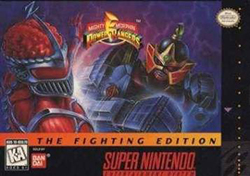
8. Mighty Morphin Power Rangers: The Fighting Edition (SNES)
Mighty Morphin Power Rangers: The Fighting Edition is one of those SNES titles that completely went under my radar back when it was released. I don’t recall hearing about it or reading about it in any of the magazines I had at the time. However, once I came across it and saw some gameplay footage, it definitely piqued my interest as the graphics looked pretty awesome for the console, and I saw the game was developed by Natsume.
As the title suggests, MMPR: The Fighting Edition is a 2D fighter with a few different modes, consisting of story mode, versus mode, and trial mode with a total of eight playable characters. For the story mode, which acts as the main mode for single player gameplay, only two characters can be chosen, either the Thunder Megazord or the Mega Tigerzord. For this playthrough, I went with the Thunder Megazord. I found the character to be easy to pick up and play, as the move inputs seemed to be pretty similar to the quarter circle input characters in Street Fighter II. MMPR: The controls are smooth and the moves are easy to execute. The Fighting Edition also features combos, but admittedly, I wasn’t aware of the combo strings on my first playthrough.
As for the graphics, the game looks very good on the SNES. The character sprites during the battles are large and detailed, and the levels are well designed and quite colorful. The cutscenes between fights and the game over screen are really impressive too, as they feature huge character sprites. The developers did a great job in the visual department. In regard to the soundtrack, the tunes throughout the game are pretty rocking, and fit with the action packed gameplay. The developers did a good job of bringing over the show’s theme song too. The character select title is also pretty catchy, but I think my favorite tune is the Airport level theme.
My only nitpick here is that it would’ve been nice to be able to choose a few more additional characters in the story mode. I find it to be a bit of an odd choice to be only able to select two of the eight characters.
Overall, Mighty Morphin Power Rangers: The Fighting Edition is a shorter game, but what it brings to the table is well done, IMO. The controls are well done, the graphics are impressive for the 16-bit era, and the music is awesome too. I’d enjoy playing the versus mode with friends! The developers also made Gundam Wing: Endless Duel on the Super Famicom with the same engine, so I’d like to try that one next along with the MMPR: The Movie game on SNES. If you’re a fan of fighting games, check this one out!
2. Castle Crashers Remastered (NSW)
3. Soul Calibur (DC)
4. Final Fantasy VII (PS1)
5. Alien Storm (GEN)
6. Captain America and the Avengers (GEN)
7. Final Fight 2 (SNES)
8. Mighty Morphin Power Rangers: The Fighting Edition (SNES)
Mighty Morphin Power Rangers: The Fighting Edition is one of those SNES titles that completely went under my radar back when it was released. I don’t recall hearing about it or reading about it in any of the magazines I had at the time. However, once I came across it and saw some gameplay footage, it definitely piqued my interest as the graphics looked pretty awesome for the console, and I saw the game was developed by Natsume.
As the title suggests, MMPR: The Fighting Edition is a 2D fighter with a few different modes, consisting of story mode, versus mode, and trial mode with a total of eight playable characters. For the story mode, which acts as the main mode for single player gameplay, only two characters can be chosen, either the Thunder Megazord or the Mega Tigerzord. For this playthrough, I went with the Thunder Megazord. I found the character to be easy to pick up and play, as the move inputs seemed to be pretty similar to the quarter circle input characters in Street Fighter II. MMPR: The controls are smooth and the moves are easy to execute. The Fighting Edition also features combos, but admittedly, I wasn’t aware of the combo strings on my first playthrough.
As for the graphics, the game looks very good on the SNES. The character sprites during the battles are large and detailed, and the levels are well designed and quite colorful. The cutscenes between fights and the game over screen are really impressive too, as they feature huge character sprites. The developers did a great job in the visual department. In regard to the soundtrack, the tunes throughout the game are pretty rocking, and fit with the action packed gameplay. The developers did a good job of bringing over the show’s theme song too. The character select title is also pretty catchy, but I think my favorite tune is the Airport level theme.
My only nitpick here is that it would’ve been nice to be able to choose a few more additional characters in the story mode. I find it to be a bit of an odd choice to be only able to select two of the eight characters.
Overall, Mighty Morphin Power Rangers: The Fighting Edition is a shorter game, but what it brings to the table is well done, IMO. The controls are well done, the graphics are impressive for the 16-bit era, and the music is awesome too. I’d enjoy playing the versus mode with friends! The developers also made Gundam Wing: Endless Duel on the Super Famicom with the same engine, so I’d like to try that one next along with the MMPR: The Movie game on SNES. If you’re a fan of fighting games, check this one out!
-
PartridgeSenpai
- Next-Gen
- Posts: 3187
- Joined: Mon Dec 14, 2015 9:27 am
- Location: Northern Japan
Re: Games Beaten 2026
Partridge Senpai's 2026 Beaten Games:
Previously: 2016 2017 2018 2019 2020 2021 2022 2023 2024 2025
* indicates a repeat
1. Final Fantasy XII (PS2)
2. We Were Here (Steam)
3. We Were Here Too (Steam)
4. Tales of Graces f (PS3) *
5. Retro Game Challenge (Switch) *
6. We Were Here Forever (Steam)
7. Tales of Hearts R (PSVita) *
8. Ghostbusters: The Video Game Remastered (PC)
9. Mega Man 11 (PC)
10. Gravity Circuit (PC)
11. Mario Party DS (DS)
12. Ghost of Tsushima (PS5)
13. Ghost of Tsushima: Iki Island (PS5)
14. Astro's Playroom (PS5)
15. Michael Jackson: The Experience (PSP)
16. Sackboy: A Big Adventure (PS5)
17. Control (PS4)
18. White Album (PS3)
19. Super Mario Advance 2: Super Mario World (GBA)
20. Kirby's Epic Yarn (Wii)
21. Breath of Fire III (PSP)
22. Sly Cooper and the Thievius Raccoonus (PS2) *
23. Sly 2: Band of Thieves (PS2)
24. Army of Two (Xbox 360)
25. Sly 3: Honor Among Thieves (PS2)
26. Jak II (PS2)
27. Jak 3 (PS2)
28. Uncharted: Drake's Fortune (PS3)
29. Pokemon Sapphire (GBA)
30. Watch_Dogs (PS4)
31. Watch_Dogs: Bad Blood (PS4)
32. Legend of Hero Tonma (TG16)
33. Alan Wake: American Nightmare (PC)
34. Banjo-Tooie (N64) *
35. Ratchet & Clank: Size Matters (PSP)
36. Super Robot Spirits (N64)
37. Animal Crossing: City Folk (Wii)
38. Tales of Arise (PS4)
39. Crash Bandicoot: The Wrath of Cortex (PS2)
40. Crash Bandicoot 4: It's About Time (PS5)
41. Battlefield 1 (PS4)
42. Quantum Break (Xbone)
After really loving my replay of Alan Wake and first play of Control over the past year, I decided to start covering the rest of Remedy’s back catalogue that I had yet to play. Already having an Xbox One, this was the next obvious choice after finishing Control. Given the general unpopularity of the Xbone, this wasn’t a game I ever heard all that much about at the time of its release outside of “the TV stuff is cool and the game is fine”, so I really had no idea what to expect. Looking for as many collectibles as I could, it overall took me about 12.5 hours to beat the Japanese version of the game in English on normal difficulty. (As is so common with my reviews of more narrative-heavy games, there will be spoilers ahead at least in some respects, so reader discretion be advised).
Quantum Break is the story of Jack Joyce. Called back from living in Thailand by his best friend Paul Scerene, he’s been asked to help with an extremely important experiment. He won’t say what it is, but Paul is never the kind to ask for favors, let alone this hard, so it must be incredibly important. The task at hand? Time travel. With the help of Jack’s brother Will, a physics prodigy, Paul has managed to make a bonafide time machine, but his investors are getting cagey. Will agreed to be a consultant at first, but upon seeing the fruits of Paul’s labor, he called the project dangerously rushed, and Paul is left between a rock and a hard place for getting this thing greenlit once more. What he needs to sway the money holding public is a confirmed test, and that’s what Jack is here to help him with. While the first test goes just fine, the second goes remarkably worse due to the arrival of an armed goon squad from the local mega technology corporation, Monarch. Paul is trapped in the future while Jack is blasted with chronon particles (sci-fi time magic particle) as time itself is fractured perhaps irreparably. With the looming threat of all time suddenly coming to a stop at any minute, Jack has to use his new time powers to, somehow, make sense of all this and make things right, if that can even be done.
Thematically, Quantum Break is just as strong as you’d expect from a modern Remedy game. This is a really well told story about hope, effort, and what it means to fight for something (and whom you’re actually fighting for). The story is told from the perspective of Jack going through a debriefing at Monarch HQ after the events of the story, so there’s an implication right from the start that, while he may survive the narrative, it certainly seems like he failed. The rules of time travel in Quantum Break also operate under the philosophy of a “closed loop” (you can’t go back and “change” things in the past. All events already turned out the way they did, and only events yet to come can actually be changed). It provides for a really nice framework for a story about trying against all odds to change things for the better no matter how impossible it may seem. Jack’s main drive as a character is best summarized by a line he says himself in regards to whether its even possible to fix the fracture and prevent the end of all time, “let’s die finding out”.
I also love what a great foil Jack and Paul are to one another. Both are fighting, giving everything they have, to protect what they care about, but the way they go about it is so different. Paul's greatest weakness is that he's never been able to see humanity's salvation coming from anywhere other than primarily himself. He has trusted confidants he delegates important tasks to, sure, but his ultimate mission still begins and ends at himself. Jack may be stubborn, and he may be a bit of a hothead too, but he's always understood that he's only a part of the hope and success he's trying to bring to humanity. His scope is so relatively narrow and full of those who support him on an egalitarian level that he's able to never lose hope that, no matter how often he's told that what he's doing is strictly impossible by the laws of causal reality, he will still never stop trying to save the people he cares about from this fate. This is very much a game about how, no matter the odds, if it's a cause worth giving everything for, then it's better to go down fighting no matter how futile things may seem rather than just lay down and accept the fate dictated to you.
While I do like the story and its message, I definitely think that it’s a bit more fraught in how it’s all executed compared to something like Alan Wake or Control (a game that Quantum Break has a *lot* of similarities to, so it’s difficult to avoid comparison). Particularly in how the sci-fi nature of Quantum Break works, it often feels like the technobabble exposition is constantly wrestling with the themes we’re dealing with rather than complimenting them the way Remedy’s other games do a better job of. The sequel hooks, particularly the really gratuitous after credits scene, were the worst offenders of this for me. This is very much the kind of story where a less ambiguous ending, one where it seems like things are actually very much unresolved, does a lot to cheapen the thematic weight of what came before them. It’s not like it completely ruins the story or anything, but the big boss of Monarch, Martin Hatch ultimately being such a mystery box of a character does more harm for the story than it doesn’t.
As I eluded to in the opening paragraph, the execution of Quantum Break’s story has one huge point of novelty beyond a typical video game: the TV show. In what was presumably an effort to show off the Xbox One’s TV/media streaming features, Quantum Break actually has proper TV episodes that you watch in between the game’s 5 acts. These four episodes are all proper TV show length, as well, running around 30 minutes each, so it really takes Remedy’s love of putting live action aspects into their storytelling to a whole new level. These days, you can’t stream the show from Xbox’s servers anymore, but you can thankfully still download the show right to your Xbone and watch it that way (even if it makes the already beefy 45gb install shoot up to over 110gb).
The end of each of the first four acts have you make one of two very different choices as to the direction of the narrative, and the TV episode you watch after that will be quite significantly different depending on which one you pick. These episodes sometimes involve Jack Joyce directly, but they mostly follow characters who are barely in the main story at all, and they serve to give you background to the rapidly destabilizing context at Monarch while you’re off doing Jack stuff in the main game. While I could definitely see someone getting bored at the sheer lack of interactivity these episodes have compared to more typical videogame cutscenes, I actually liked them a fair bit (more than I was expecting to, honestly). They don’t have crazy Hollywood budgets, but they feel like they’d fit in perfectly comfortably with a somewhat smaller budget prestige TV drama. The acting is largely great, and the likenesses to their in-game counterparts (for those characters that have them in the first place) are really well done, too. I think the main game’s story would be still mostly intelligible without watching these episodes, but the background they offer, particularly to our main antagonists’ motivations, is so key to understanding the wider narrative’s analogies and themes that I couldn’t imagine playing the game without watching the show. While I’m not sure you could really do a gimmick like this again, I think Quantum Break makes the most of its main gimmick, and it never outstays its welcome or feels forced upon an otherwise finished product by any means.
While I think the narrative is largely up to snuff of your typical Remedy game, the mechanics are definitely not what I’d expect after playing something that flows as well as Alan Wake. Quantum Break is, like basically all of Remedy’s games, a third-person shooter. Jack has some time manipulation powers that let him see enemies and interactable objects around him, stop time briefly in localized spaces, as well as do quick dodges or longer slow downs of time. It makes for a neat gimmick to the game, but it’s nothing nearly as impressive or interesting as anything Control has to offer. That, frankly, is the biggest stumbling block that Quantum Break has in the current year, because while it would’ve been a bit clunky but fine back when it came out, it cannot help but feel like a significantly weaker version of Control to play these days.
The story focusing around the weird powers you’ve been granted as you investigate this powerful, mysterious organization full of conspiracy and secrets already makes drawling parallels between this and Remedy’s next big work hard to avoid, but that’s especially true for the mechanics. Jack doesn’t have nearly the mobility that you have in Control. This can be pretty annoying with how glacially slow they have you move during some narrative-focused segments (they’re not usually the classic “walk & talk” of yesteryear, but they’re not too far off), and the incredibly slow, dreary pace of how slowly they make you walk around the university campus at the start makes for a frankly awful first impression, too. Beyond that, though, the limited platforming and puzzle solving this game does have also suffers due to how slow your character moves and how pre-determined all of the platforming is. You thankfully get the ability to zip around with quick dodges in battle pretty quickly (something Control outright copies), but you never get a proper run ability, and you’re feeling that the whole damn game.
Beyond that is the solid but still relatively unimpressive gunplay. There are no big monsters to fight in Quantum Break. It’s just all guys with varying degrees of special suits, so they’re either normal guys, heavies who are huge damage sponges, or special fast soldiers you fight later in the game. The environments make for still largely interesting encounter designs, but the small spread of guns in addition to the underwhelming enemy variety make combat a less than impressive affair even if it’s never awful or boring (even if the long load times and weird checkpoints can certainly make dying really annoying). It lacks the resource management of Alan Wake, doesn’t have the arcadey fast pace of American Nightmare, and it lacks the better powers, weapons, and mobility of Control. While never outright bad, Quantum Break’s less than impressive gameplay is definitely a big reason why this was easily the Remedy game that struggled the most to really get me hooked. This game’s mechanics have a lot of potential, but it ultimately took until Control for Remedy to finally find something that really makes the most of them. I definitely now understand the wider consensus of “it’s okay” that this game’s gameplay had when it came out, and that has only gotten harder to ignore these days, especially if you’ve already played Control like I have.
Visually, this game doesn’t look bad, but it definitely doesn’t look particularly great either. I stand by what I said earlier that the production values of the TV show largely look really good outside of a few pretty clearly CG-looking establishing shots of things like the Monarch building (which obviously doesn’t exist in real life). I think the graphics do a great job in-game of replicating how the actors in the show look, so it rarely looks uncanny to see someone in the show versus their appearance outside it (other than how Beth has very prominent freckles in the game yet completely lacks them in the show). The music is all fine and fits the drama of both the show and game just fine, but the big sticking point for me is the in-game graphics. To put it frankly, this game runs shockingly poorly for a game that’s a hardware exclusive title. Even in the opening cutscenes, there is a crazy amount of frame rate dipping and screen tearing that are really hard to go away. As the game progressed, I think *some* of these frame rate dips are an intentional artistic choice to show time freaking out, but that explanation makes no sense for ones happening before time even fractures. As much as I’m rarely someone who meaningfully cares about graphics, that bad frame rate, particularly during cutscenes is so hard to ignore that I could not omit mentioning it here, especially because you’d assume this game would run particularly well given that the Xbox One was the only hardware it needed to be developed to run on.
Verdict: Recommended. Especially if you’re a fan of Remedy’s other works, I think this game is worth checking out. It’s hardly super awesome or exemplary, and it’s hardly a surprise that this game didn’t set the world on fire back when it was new (just like it’s no surprise that this game has never had some huge critical reevaluation in the years since after some other big Remedy game’s release prompted people to look back at it). Paradoxically, I think it’ll be really hard to ignore this game’s faults if you’re a big fan of their other, more recent titles, but even still, I think Quantum Break still manages to stand on its own just fine. It’s hardly a new all time favorite for me, but the strength of the narrative really helps carry what’s an otherwise pretty unremarkable third-person shooter. If you can get it for cheap (preferably used, like I did), it’s definitely worth checking out if you’re a fan of well-told narratives or if the novelty of the TV show aspect is something you just find that enticing in the first place.
Previously: 2016 2017 2018 2019 2020 2021 2022 2023 2024 2025
* indicates a repeat
1. Final Fantasy XII (PS2)
2. We Were Here (Steam)
3. We Were Here Too (Steam)
4. Tales of Graces f (PS3) *
5. Retro Game Challenge (Switch) *
6. We Were Here Forever (Steam)
7. Tales of Hearts R (PSVita) *
8. Ghostbusters: The Video Game Remastered (PC)
9. Mega Man 11 (PC)
10. Gravity Circuit (PC)
11. Mario Party DS (DS)
12. Ghost of Tsushima (PS5)
13. Ghost of Tsushima: Iki Island (PS5)
14. Astro's Playroom (PS5)
15. Michael Jackson: The Experience (PSP)
16. Sackboy: A Big Adventure (PS5)
17. Control (PS4)
18. White Album (PS3)
19. Super Mario Advance 2: Super Mario World (GBA)
20. Kirby's Epic Yarn (Wii)
21. Breath of Fire III (PSP)
22. Sly Cooper and the Thievius Raccoonus (PS2) *
23. Sly 2: Band of Thieves (PS2)
24. Army of Two (Xbox 360)
25. Sly 3: Honor Among Thieves (PS2)
26. Jak II (PS2)
27. Jak 3 (PS2)
28. Uncharted: Drake's Fortune (PS3)
29. Pokemon Sapphire (GBA)
30. Watch_Dogs (PS4)
31. Watch_Dogs: Bad Blood (PS4)
32. Legend of Hero Tonma (TG16)
33. Alan Wake: American Nightmare (PC)
34. Banjo-Tooie (N64) *
35. Ratchet & Clank: Size Matters (PSP)
36. Super Robot Spirits (N64)
37. Animal Crossing: City Folk (Wii)
38. Tales of Arise (PS4)
39. Crash Bandicoot: The Wrath of Cortex (PS2)
40. Crash Bandicoot 4: It's About Time (PS5)
41. Battlefield 1 (PS4)
42. Quantum Break (Xbone)
After really loving my replay of Alan Wake and first play of Control over the past year, I decided to start covering the rest of Remedy’s back catalogue that I had yet to play. Already having an Xbox One, this was the next obvious choice after finishing Control. Given the general unpopularity of the Xbone, this wasn’t a game I ever heard all that much about at the time of its release outside of “the TV stuff is cool and the game is fine”, so I really had no idea what to expect. Looking for as many collectibles as I could, it overall took me about 12.5 hours to beat the Japanese version of the game in English on normal difficulty. (As is so common with my reviews of more narrative-heavy games, there will be spoilers ahead at least in some respects, so reader discretion be advised).
Quantum Break is the story of Jack Joyce. Called back from living in Thailand by his best friend Paul Scerene, he’s been asked to help with an extremely important experiment. He won’t say what it is, but Paul is never the kind to ask for favors, let alone this hard, so it must be incredibly important. The task at hand? Time travel. With the help of Jack’s brother Will, a physics prodigy, Paul has managed to make a bonafide time machine, but his investors are getting cagey. Will agreed to be a consultant at first, but upon seeing the fruits of Paul’s labor, he called the project dangerously rushed, and Paul is left between a rock and a hard place for getting this thing greenlit once more. What he needs to sway the money holding public is a confirmed test, and that’s what Jack is here to help him with. While the first test goes just fine, the second goes remarkably worse due to the arrival of an armed goon squad from the local mega technology corporation, Monarch. Paul is trapped in the future while Jack is blasted with chronon particles (sci-fi time magic particle) as time itself is fractured perhaps irreparably. With the looming threat of all time suddenly coming to a stop at any minute, Jack has to use his new time powers to, somehow, make sense of all this and make things right, if that can even be done.
Thematically, Quantum Break is just as strong as you’d expect from a modern Remedy game. This is a really well told story about hope, effort, and what it means to fight for something (and whom you’re actually fighting for). The story is told from the perspective of Jack going through a debriefing at Monarch HQ after the events of the story, so there’s an implication right from the start that, while he may survive the narrative, it certainly seems like he failed. The rules of time travel in Quantum Break also operate under the philosophy of a “closed loop” (you can’t go back and “change” things in the past. All events already turned out the way they did, and only events yet to come can actually be changed). It provides for a really nice framework for a story about trying against all odds to change things for the better no matter how impossible it may seem. Jack’s main drive as a character is best summarized by a line he says himself in regards to whether its even possible to fix the fracture and prevent the end of all time, “let’s die finding out”.
I also love what a great foil Jack and Paul are to one another. Both are fighting, giving everything they have, to protect what they care about, but the way they go about it is so different. Paul's greatest weakness is that he's never been able to see humanity's salvation coming from anywhere other than primarily himself. He has trusted confidants he delegates important tasks to, sure, but his ultimate mission still begins and ends at himself. Jack may be stubborn, and he may be a bit of a hothead too, but he's always understood that he's only a part of the hope and success he's trying to bring to humanity. His scope is so relatively narrow and full of those who support him on an egalitarian level that he's able to never lose hope that, no matter how often he's told that what he's doing is strictly impossible by the laws of causal reality, he will still never stop trying to save the people he cares about from this fate. This is very much a game about how, no matter the odds, if it's a cause worth giving everything for, then it's better to go down fighting no matter how futile things may seem rather than just lay down and accept the fate dictated to you.
While I do like the story and its message, I definitely think that it’s a bit more fraught in how it’s all executed compared to something like Alan Wake or Control (a game that Quantum Break has a *lot* of similarities to, so it’s difficult to avoid comparison). Particularly in how the sci-fi nature of Quantum Break works, it often feels like the technobabble exposition is constantly wrestling with the themes we’re dealing with rather than complimenting them the way Remedy’s other games do a better job of. The sequel hooks, particularly the really gratuitous after credits scene, were the worst offenders of this for me. This is very much the kind of story where a less ambiguous ending, one where it seems like things are actually very much unresolved, does a lot to cheapen the thematic weight of what came before them. It’s not like it completely ruins the story or anything, but the big boss of Monarch, Martin Hatch ultimately being such a mystery box of a character does more harm for the story than it doesn’t.
As I eluded to in the opening paragraph, the execution of Quantum Break’s story has one huge point of novelty beyond a typical video game: the TV show. In what was presumably an effort to show off the Xbox One’s TV/media streaming features, Quantum Break actually has proper TV episodes that you watch in between the game’s 5 acts. These four episodes are all proper TV show length, as well, running around 30 minutes each, so it really takes Remedy’s love of putting live action aspects into their storytelling to a whole new level. These days, you can’t stream the show from Xbox’s servers anymore, but you can thankfully still download the show right to your Xbone and watch it that way (even if it makes the already beefy 45gb install shoot up to over 110gb).
The end of each of the first four acts have you make one of two very different choices as to the direction of the narrative, and the TV episode you watch after that will be quite significantly different depending on which one you pick. These episodes sometimes involve Jack Joyce directly, but they mostly follow characters who are barely in the main story at all, and they serve to give you background to the rapidly destabilizing context at Monarch while you’re off doing Jack stuff in the main game. While I could definitely see someone getting bored at the sheer lack of interactivity these episodes have compared to more typical videogame cutscenes, I actually liked them a fair bit (more than I was expecting to, honestly). They don’t have crazy Hollywood budgets, but they feel like they’d fit in perfectly comfortably with a somewhat smaller budget prestige TV drama. The acting is largely great, and the likenesses to their in-game counterparts (for those characters that have them in the first place) are really well done, too. I think the main game’s story would be still mostly intelligible without watching these episodes, but the background they offer, particularly to our main antagonists’ motivations, is so key to understanding the wider narrative’s analogies and themes that I couldn’t imagine playing the game without watching the show. While I’m not sure you could really do a gimmick like this again, I think Quantum Break makes the most of its main gimmick, and it never outstays its welcome or feels forced upon an otherwise finished product by any means.
While I think the narrative is largely up to snuff of your typical Remedy game, the mechanics are definitely not what I’d expect after playing something that flows as well as Alan Wake. Quantum Break is, like basically all of Remedy’s games, a third-person shooter. Jack has some time manipulation powers that let him see enemies and interactable objects around him, stop time briefly in localized spaces, as well as do quick dodges or longer slow downs of time. It makes for a neat gimmick to the game, but it’s nothing nearly as impressive or interesting as anything Control has to offer. That, frankly, is the biggest stumbling block that Quantum Break has in the current year, because while it would’ve been a bit clunky but fine back when it came out, it cannot help but feel like a significantly weaker version of Control to play these days.
The story focusing around the weird powers you’ve been granted as you investigate this powerful, mysterious organization full of conspiracy and secrets already makes drawling parallels between this and Remedy’s next big work hard to avoid, but that’s especially true for the mechanics. Jack doesn’t have nearly the mobility that you have in Control. This can be pretty annoying with how glacially slow they have you move during some narrative-focused segments (they’re not usually the classic “walk & talk” of yesteryear, but they’re not too far off), and the incredibly slow, dreary pace of how slowly they make you walk around the university campus at the start makes for a frankly awful first impression, too. Beyond that, though, the limited platforming and puzzle solving this game does have also suffers due to how slow your character moves and how pre-determined all of the platforming is. You thankfully get the ability to zip around with quick dodges in battle pretty quickly (something Control outright copies), but you never get a proper run ability, and you’re feeling that the whole damn game.
Beyond that is the solid but still relatively unimpressive gunplay. There are no big monsters to fight in Quantum Break. It’s just all guys with varying degrees of special suits, so they’re either normal guys, heavies who are huge damage sponges, or special fast soldiers you fight later in the game. The environments make for still largely interesting encounter designs, but the small spread of guns in addition to the underwhelming enemy variety make combat a less than impressive affair even if it’s never awful or boring (even if the long load times and weird checkpoints can certainly make dying really annoying). It lacks the resource management of Alan Wake, doesn’t have the arcadey fast pace of American Nightmare, and it lacks the better powers, weapons, and mobility of Control. While never outright bad, Quantum Break’s less than impressive gameplay is definitely a big reason why this was easily the Remedy game that struggled the most to really get me hooked. This game’s mechanics have a lot of potential, but it ultimately took until Control for Remedy to finally find something that really makes the most of them. I definitely now understand the wider consensus of “it’s okay” that this game’s gameplay had when it came out, and that has only gotten harder to ignore these days, especially if you’ve already played Control like I have.
Visually, this game doesn’t look bad, but it definitely doesn’t look particularly great either. I stand by what I said earlier that the production values of the TV show largely look really good outside of a few pretty clearly CG-looking establishing shots of things like the Monarch building (which obviously doesn’t exist in real life). I think the graphics do a great job in-game of replicating how the actors in the show look, so it rarely looks uncanny to see someone in the show versus their appearance outside it (other than how Beth has very prominent freckles in the game yet completely lacks them in the show). The music is all fine and fits the drama of both the show and game just fine, but the big sticking point for me is the in-game graphics. To put it frankly, this game runs shockingly poorly for a game that’s a hardware exclusive title. Even in the opening cutscenes, there is a crazy amount of frame rate dipping and screen tearing that are really hard to go away. As the game progressed, I think *some* of these frame rate dips are an intentional artistic choice to show time freaking out, but that explanation makes no sense for ones happening before time even fractures. As much as I’m rarely someone who meaningfully cares about graphics, that bad frame rate, particularly during cutscenes is so hard to ignore that I could not omit mentioning it here, especially because you’d assume this game would run particularly well given that the Xbox One was the only hardware it needed to be developed to run on.
Verdict: Recommended. Especially if you’re a fan of Remedy’s other works, I think this game is worth checking out. It’s hardly super awesome or exemplary, and it’s hardly a surprise that this game didn’t set the world on fire back when it was new (just like it’s no surprise that this game has never had some huge critical reevaluation in the years since after some other big Remedy game’s release prompted people to look back at it). Paradoxically, I think it’ll be really hard to ignore this game’s faults if you’re a big fan of their other, more recent titles, but even still, I think Quantum Break still manages to stand on its own just fine. It’s hardly a new all time favorite for me, but the strength of the narrative really helps carry what’s an otherwise pretty unremarkable third-person shooter. If you can get it for cheap (preferably used, like I did), it’s definitely worth checking out if you’re a fan of well-told narratives or if the novelty of the TV show aspect is something you just find that enticing in the first place.
I identify everyone via avatar, so if you change your avatar, I genuinely might completely forget who you are. -- Me
-
ElkinFencer10

- Next-Gen
- Posts: 8984
- Joined: Fri Aug 13, 2010 8:34 pm
- Location: Elkin, North Carolina
- Contact:
Re: Games Beaten 2026
Games Beaten in 2026 - 9
* denotes a replay
January (2 Games Beaten)
February (1 Game Beaten)
March (3 Games Beaten)
April (2 Games Beaten)
May (1 Game Beaten)
9. Hyrule Warriors: Age of Imprisonment - Switch 2 - May 25

When Nintendo and Tecmo first collaborated on the original Hyrule Warriors back in 2014, it was exactly what I needed to get sucked into the musou games. I had played one of the Dynasty Warriors games - lord knows I can't remember which is which - but it just didn't click with me. It felt repetitive, bland, and too drawn out. Giving me the exact same gameplay but with the backdrop of Hyrule and characters from the Legend of Zelda franchise, however, gave me a chance to experience the genre in a context I already knew and loved. That made me a musou fan. I couldn't see how Hyrule Warriors could get any better, but with the release of Hyrule Warriors: Age of Calamity in 2020, the original Hyrule Warriors felt almost like a demo in comparison. I'm not going to say that 2025's Age of Imprisonment was an equally drastic improvement, but it does feel like they took Age of Calamity and perfected the formula. From story to gameplay to performance, this is the definitive Hyrule Warriors experience to date.

For the most part, the game is an accompaniment to Tears of the Kingdom. If you've played that game, you basically know the overall narrative and every major plot point in Age of Imprisonment. That's not to say that it's not worth playing or somehow diminished if you've played Tears of the Kingdom, though. Tears of the Kingdom had you experience the story from the perspective of a single person; Age of Imprisonment lets you see and experience the Imprisoning War on the scale that the name "war" implies. It also fleshes out characters a lot, so it's absolutely a worthwhile storytelling piece in its own right. The storytelling is a bit constrained here and there by being largely relegated to cutscenes before, during, or after battles, but that's kind of the nature of the beast with the musou genre.

The game features 19 playable characters each with their own unique special attacks and sync attacks (when you and an NPC character team up for a super charged attack). Every character (with two exceptions) uses one of three types of weapons - a sword-and-shield combo, a two-handed sword, or a spear. The exceptions are Raphica, who is the only character to use a bow, and the Knight Construct, who can use any of the three non-bow weapon types. Throughout the game, you'll collect different weapons as well as zonai steel which can be used to upgrade your weapons. Eight of your characters can't change weapons (for lore purposes), but the other eleven can, so it's worth it to spend some time comparing weapons and changing as you get a better one. It's important to keep in mind that leveling up your character isn't the only thing that will help you keep up with the ever-strengthening enemies; you have to make sure that you're upgrading your weapons, too. Each weapon can be upgraded to level 20, so even if you're using a level 70 character, you're leaving a lot of potential on the table if your weapon is only level 2.

Being exclusive to Switch 2, it should be obvious that Age of Imprisonment is a huge leap graphically over Age of Calamity. Better textures, more enemies on screen, more intricate animations, and less pop-in all make Age of Imprisonment an easier-on-the-eyes experience than Age of Calamity ever could have been even with the fact that, for the Switch hardware, that was an impressive game in my opinion. That said, it's not perfect. The brilliant guys at Digital Foundry, in their in-depth analysis of the game's performance, noted occasional texture pop-in, visible compression in some (but oddly not all) of the cutscenes, Nintendo's typical lack of anti-aliasing, and a dynamic resolution that varies from 720p to 900p docked and goes even lower handheld. Performance, likewise, is a huge step up from Age of Calamity but still not perfect. Age of Calamity's performance was...not great. It was totally playable, but it targeted 30 fps and routinely fell well below that during busy fights. Age of Imprisonment, on the other hand, targets 60 fps, and while it's not a locked 60 fps with numerous dips into the high 40s and 50s, it maintains 60 fps astoundingly more reliably than Age of Calamity maintained 30 fps. Split-screen local multiplayer, unsurprisingly, drops the target to 30 fps, and I've read that there is some frame pacing problem with that (although my middle-aged eyes have a hard time noticing that unless the problem is egregious), but it's still leagues more playable than Age of Calamity's split-screen multiplayer was.

Hyrule Warriors: Age of Imprisonment is exactly the kind of game that the Switch 2's first six months after launch needed. It successfully takes the ideas introduced in Age of Calamity and polishes them into a smoother more refined experience. The improved performance alone makes the game drastically more playable, and the graphical step up lets the environments that the developers envisioned shine. That's not to say that it's a perfect game. There are still some minor texture pop-in issues and frame rate drops, the missions can become repetitive, some characters can feel pretty mechanically similar, and the story sometimes struggles to capitalize on the deep lore set down in Tears of the Kingdom. All that said, though, this is probably - at least in my openly biased opinion - Tecmo's best musou game ever with a whole that feels like more than merely the sum of its parts. Hyrule Warriors was rather bare bones, and Age of Calamity struggled a lot with frame rate, but Age of Imprisonment is the dream made real. This is a game that belongs on anyone's Switch 2 shelf.
* denotes a replay
January (2 Games Beaten)
When Nintendo and Tecmo first collaborated on the original Hyrule Warriors back in 2014, it was exactly what I needed to get sucked into the musou games. I had played one of the Dynasty Warriors games - lord knows I can't remember which is which - but it just didn't click with me. It felt repetitive, bland, and too drawn out. Giving me the exact same gameplay but with the backdrop of Hyrule and characters from the Legend of Zelda franchise, however, gave me a chance to experience the genre in a context I already knew and loved. That made me a musou fan. I couldn't see how Hyrule Warriors could get any better, but with the release of Hyrule Warriors: Age of Calamity in 2020, the original Hyrule Warriors felt almost like a demo in comparison. I'm not going to say that 2025's Age of Imprisonment was an equally drastic improvement, but it does feel like they took Age of Calamity and perfected the formula. From story to gameplay to performance, this is the definitive Hyrule Warriors experience to date.
For the most part, the game is an accompaniment to Tears of the Kingdom. If you've played that game, you basically know the overall narrative and every major plot point in Age of Imprisonment. That's not to say that it's not worth playing or somehow diminished if you've played Tears of the Kingdom, though. Tears of the Kingdom had you experience the story from the perspective of a single person; Age of Imprisonment lets you see and experience the Imprisoning War on the scale that the name "war" implies. It also fleshes out characters a lot, so it's absolutely a worthwhile storytelling piece in its own right. The storytelling is a bit constrained here and there by being largely relegated to cutscenes before, during, or after battles, but that's kind of the nature of the beast with the musou genre.
The game features 19 playable characters each with their own unique special attacks and sync attacks (when you and an NPC character team up for a super charged attack). Every character (with two exceptions) uses one of three types of weapons - a sword-and-shield combo, a two-handed sword, or a spear. The exceptions are Raphica, who is the only character to use a bow, and the Knight Construct, who can use any of the three non-bow weapon types. Throughout the game, you'll collect different weapons as well as zonai steel which can be used to upgrade your weapons. Eight of your characters can't change weapons (for lore purposes), but the other eleven can, so it's worth it to spend some time comparing weapons and changing as you get a better one. It's important to keep in mind that leveling up your character isn't the only thing that will help you keep up with the ever-strengthening enemies; you have to make sure that you're upgrading your weapons, too. Each weapon can be upgraded to level 20, so even if you're using a level 70 character, you're leaving a lot of potential on the table if your weapon is only level 2.
Being exclusive to Switch 2, it should be obvious that Age of Imprisonment is a huge leap graphically over Age of Calamity. Better textures, more enemies on screen, more intricate animations, and less pop-in all make Age of Imprisonment an easier-on-the-eyes experience than Age of Calamity ever could have been even with the fact that, for the Switch hardware, that was an impressive game in my opinion. That said, it's not perfect. The brilliant guys at Digital Foundry, in their in-depth analysis of the game's performance, noted occasional texture pop-in, visible compression in some (but oddly not all) of the cutscenes, Nintendo's typical lack of anti-aliasing, and a dynamic resolution that varies from 720p to 900p docked and goes even lower handheld. Performance, likewise, is a huge step up from Age of Calamity but still not perfect. Age of Calamity's performance was...not great. It was totally playable, but it targeted 30 fps and routinely fell well below that during busy fights. Age of Imprisonment, on the other hand, targets 60 fps, and while it's not a locked 60 fps with numerous dips into the high 40s and 50s, it maintains 60 fps astoundingly more reliably than Age of Calamity maintained 30 fps. Split-screen local multiplayer, unsurprisingly, drops the target to 30 fps, and I've read that there is some frame pacing problem with that (although my middle-aged eyes have a hard time noticing that unless the problem is egregious), but it's still leagues more playable than Age of Calamity's split-screen multiplayer was.
Hyrule Warriors: Age of Imprisonment is exactly the kind of game that the Switch 2's first six months after launch needed. It successfully takes the ideas introduced in Age of Calamity and polishes them into a smoother more refined experience. The improved performance alone makes the game drastically more playable, and the graphical step up lets the environments that the developers envisioned shine. That's not to say that it's a perfect game. There are still some minor texture pop-in issues and frame rate drops, the missions can become repetitive, some characters can feel pretty mechanically similar, and the story sometimes struggles to capitalize on the deep lore set down in Tears of the Kingdom. All that said, though, this is probably - at least in my openly biased opinion - Tecmo's best musou game ever with a whole that feels like more than merely the sum of its parts. Hyrule Warriors was rather bare bones, and Age of Calamity struggled a lot with frame rate, but Age of Imprisonment is the dream made real. This is a game that belongs on anyone's Switch 2 shelf.
Patron Saint of Bitch Mode
Re: Games Beaten 2026
1. Dungeons & Dragons: Tower of Doom (SAT)
2. Castle Crashers Remastered (NSW)
3. Soul Calibur (DC)
4. Final Fantasy VII (PS1)
5. Alien Storm (GEN)
6. Captain America and the Avengers (GEN)
7. Final Fight 2 (SNES)
8. Mighty Morphin Power Rangers: The Fighting Edition (SNES)
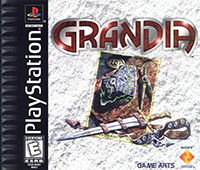
9. Grandia (PS1)
Grandia was originally released on the Sega Saturn and ported over to the PS1 for US audiences. This is another one I missed out on around the time of release and had been quite interested in over the years. After finishing Lunar: Silver Star Story Complete, I wanted to see what Game Arts was bringing to the table for the next RPG series they worked on. While the look of the game is quite different, there are some similarities in gameplay. I’m glad I took the time to complete this one! For this particular playthrough, I went through the main game, the three side quest dungeons, and I acquired all of the character’s skills.
Grandia is a turn-based JRPG in which you control Justin, a young boy who has dreams of being an adventurer. His friend Sue from his hometown accompanies him as they leave their town to discover the mystery behind the stone Justin received from his father and seek adventure by trying to reach the edge of the world. The Garlyle military are also interested in the stone Justin has, and are willing to go to great lengths to get it from him. Along the way you meet a fun and interesting cast of characters and traverse some unique environments. Grandia also includes an action-packed battle system that is somewhat similar to the system in Lunar, in which the character’s placement on the battle area is emphasized. The battle menu also reminds me a bit of Secret of Mana, as it’s a circular menu.
Graphics wise, Grandia’s environments are in 3D and the character sprites are 2D. The developers did a nice job with both the 3D environments, as some of the dungeons and towns have a unique and interesting look to them. Some of my favorite areas of the game are the Misty Forest, Luc Village, Zil Padon, and the Spirit Sanctuary. Other than the 2D sprites, each of the main characters have a detailed portrait depiction in an anime style, which appears in the menu screen, and during dialogue sequences. The soundtrack also has some catchy and beautiful tunes. I especially liked the theme that plays in Misty Forest, it’s very atmospheric. The voice acting is about what you’d expect from a late 90’s PS1 game, it’s not great, but it’s serviceable.
I have a few nitpicks, the first is in regard to navigating the dungeons and sometimes larger towns. I always felt the camera was just a bit too zoomed in and I didn’t have a good grasp of the overall area I was in. I wish I could’ve been able to zoom out a bit more to get a better overview. The other issue I have is that there is some slowdown in certain sections, it seemed mostly to occur in dungeons where there were a lot of enemies, or in the larger towns where a lot of NPCs were present. I’m curious if this is an issue on the Saturn version or in any other ports of the game. In regards to the difficulty, the main game is quite easy overall with most of the bosses being pushovers. However, the side quest dungeons are quite a challenge, and so is getting every character’s skill, especially Feena’s.
Also, just a warning for those interested in playing on original hardware. This is one of the few titles that has compatibility issues with the PS2. I played it on a fat PS2, and the game has issues with freezing from time to time. Luckily, there are a lot of save points, but I was always scrambling to get to the next one, so that in case something happened I didn’t lose too much progress. There were maybe two instances where I lost about an hour of progress. I wish I knew the title had compatibility issues before jumping in, but once I started it up, I was pretty determined to finish it. If you’re going to play this one on original hardware, I’d suggest only doing so if you have a working PS1 or maybe play it through other means, such as the Saturn version, the HD remake, or emulation.
Overall, I had a lot of fun playing through Grandia! Even despite some of the game’s shortcomings, I think it’s worth your time for any fan of RPGs from this era. It has an impressive mix of a fun storyline, likable main characters, and an action packed battle system. Down the line, I’d like to play Grandia II on the Dreamcast and experience the next game in the series. Definitely check this one out if you haven’t!
2. Castle Crashers Remastered (NSW)
3. Soul Calibur (DC)
4. Final Fantasy VII (PS1)
5. Alien Storm (GEN)
6. Captain America and the Avengers (GEN)
7. Final Fight 2 (SNES)
8. Mighty Morphin Power Rangers: The Fighting Edition (SNES)
9. Grandia (PS1)
Grandia was originally released on the Sega Saturn and ported over to the PS1 for US audiences. This is another one I missed out on around the time of release and had been quite interested in over the years. After finishing Lunar: Silver Star Story Complete, I wanted to see what Game Arts was bringing to the table for the next RPG series they worked on. While the look of the game is quite different, there are some similarities in gameplay. I’m glad I took the time to complete this one! For this particular playthrough, I went through the main game, the three side quest dungeons, and I acquired all of the character’s skills.
Grandia is a turn-based JRPG in which you control Justin, a young boy who has dreams of being an adventurer. His friend Sue from his hometown accompanies him as they leave their town to discover the mystery behind the stone Justin received from his father and seek adventure by trying to reach the edge of the world. The Garlyle military are also interested in the stone Justin has, and are willing to go to great lengths to get it from him. Along the way you meet a fun and interesting cast of characters and traverse some unique environments. Grandia also includes an action-packed battle system that is somewhat similar to the system in Lunar, in which the character’s placement on the battle area is emphasized. The battle menu also reminds me a bit of Secret of Mana, as it’s a circular menu.
Graphics wise, Grandia’s environments are in 3D and the character sprites are 2D. The developers did a nice job with both the 3D environments, as some of the dungeons and towns have a unique and interesting look to them. Some of my favorite areas of the game are the Misty Forest, Luc Village, Zil Padon, and the Spirit Sanctuary. Other than the 2D sprites, each of the main characters have a detailed portrait depiction in an anime style, which appears in the menu screen, and during dialogue sequences. The soundtrack also has some catchy and beautiful tunes. I especially liked the theme that plays in Misty Forest, it’s very atmospheric. The voice acting is about what you’d expect from a late 90’s PS1 game, it’s not great, but it’s serviceable.
I have a few nitpicks, the first is in regard to navigating the dungeons and sometimes larger towns. I always felt the camera was just a bit too zoomed in and I didn’t have a good grasp of the overall area I was in. I wish I could’ve been able to zoom out a bit more to get a better overview. The other issue I have is that there is some slowdown in certain sections, it seemed mostly to occur in dungeons where there were a lot of enemies, or in the larger towns where a lot of NPCs were present. I’m curious if this is an issue on the Saturn version or in any other ports of the game. In regards to the difficulty, the main game is quite easy overall with most of the bosses being pushovers. However, the side quest dungeons are quite a challenge, and so is getting every character’s skill, especially Feena’s.
Also, just a warning for those interested in playing on original hardware. This is one of the few titles that has compatibility issues with the PS2. I played it on a fat PS2, and the game has issues with freezing from time to time. Luckily, there are a lot of save points, but I was always scrambling to get to the next one, so that in case something happened I didn’t lose too much progress. There were maybe two instances where I lost about an hour of progress. I wish I knew the title had compatibility issues before jumping in, but once I started it up, I was pretty determined to finish it. If you’re going to play this one on original hardware, I’d suggest only doing so if you have a working PS1 or maybe play it through other means, such as the Saturn version, the HD remake, or emulation.
Overall, I had a lot of fun playing through Grandia! Even despite some of the game’s shortcomings, I think it’s worth your time for any fan of RPGs from this era. It has an impressive mix of a fun storyline, likable main characters, and an action packed battle system. Down the line, I’d like to play Grandia II on the Dreamcast and experience the next game in the series. Definitely check this one out if you haven’t!
-
RobertAugustdeMeijer
- 64-bit
- Posts: 328
- Joined: Fri Sep 02, 2022 10:15 am
Re: Games Beaten 2026
28: The Last of Us Part II
Is Naughty Dog trolling us? After all the criticism of Nathan Drake's mass murdering, they forced us to play Joel, yet another schizophrenic mass murderer, only this time in a world that actually cared about the countless people we kill. Perhaps the gamers were to blame for Sony's latest mess, as Joel became beloved by the masses. So what is Naughty Dog's answer to that? This time, Joel, Ellie, and the player are condescendingly punished for their dastardly deeds. Over and over again we have to massacre folks, ranging from outright brainwashed nutcases to a youngster innocently playing a Vita. With as much graphic detail as a Mortal Kombat game. On the cover we see Ellie covered in blood, looking angrily at the camera. Is she judging us? Or perhaps acting as a mirror? No matter how Part II is interpreted, you must slaughter your way through twenty+ hours of violence. Even the final boss, who has every reason to just run away, won't let you pull your punches. It's simply perplexing. Ultimately, this is an example of how commercialism can cynically ruin projects. A lot of talent was thrown at this blockbuster, and it's revolting to see it all go to waste.
1/10
Is Naughty Dog trolling us? After all the criticism of Nathan Drake's mass murdering, they forced us to play Joel, yet another schizophrenic mass murderer, only this time in a world that actually cared about the countless people we kill. Perhaps the gamers were to blame for Sony's latest mess, as Joel became beloved by the masses. So what is Naughty Dog's answer to that? This time, Joel, Ellie, and the player are condescendingly punished for their dastardly deeds. Over and over again we have to massacre folks, ranging from outright brainwashed nutcases to a youngster innocently playing a Vita. With as much graphic detail as a Mortal Kombat game. On the cover we see Ellie covered in blood, looking angrily at the camera. Is she judging us? Or perhaps acting as a mirror? No matter how Part II is interpreted, you must slaughter your way through twenty+ hours of violence. Even the final boss, who has every reason to just run away, won't let you pull your punches. It's simply perplexing. Ultimately, this is an example of how commercialism can cynically ruin projects. A lot of talent was thrown at this blockbuster, and it's revolting to see it all go to waste.
1/10
-
Markies

- Next-Gen
- Posts: 1614
- Joined: Fri Mar 27, 2015 4:29 pm
- Location: St. Louis, Missouri
- Contact:
Re: Games Beaten 2026
Markies' Games Beat List Of 2026!
***Denotes Replay For Completion***
1. Mario & Luigi: Superstar Saga (GBA)
2. Knights of the Round (SNES)
3. Fight'N Rage (NS)
4. Time Stalkers (SDC)
***5. Final Fantasy X/X-2 HD Remaster (PS3)***
6. OutRunners (GEN)
***7. Midtown Madness 3 (XBOX)***
8. Phantasy Star Online: Episode I & II (GCN)
9. Pikmin 3 (WiiU)
10. Valkyria Chronicles (PS3)
***11. Evolution 2: Far Off Promise (SDC)***
***12. Mario Golf (N64)***
13. Mana Khemia: Alchemists of Al-Revis (PS2)
14. Tetris (GB)
15. Double Dribble (NES)
16. Phalanx (SNES)

I have completed Phalanx on the Super Nintendo Entertainment System this evening!
Because of going to places that have MAME emulators, I have been slowly getting into Shoot'em Ups. On MAME, it is super easy to beat a game because you have unlimited quarters. On the consoles, it is a whole another story. So, I have been looking for beginner shooters as I am hoping that they are easier for me to play. One my favorite Youtube Channels is entitled SNES Drunk and he did a video about this game called Phalanx. It is the infamous game with the guy playing the banjo on the cover. He mentioned that he was new to Shooters as well and thought that Phalanx was a good one for a newcomer. Taking his advice, I eventually picked it up and decided to give it a try tonight.
Phalanx is a horizontal-scrolling shoot'emp up with an interesting power up mechanic. There are four different types of Power-ups in the game: Homing, Ricochet, Laser and Charge. Each of them can be powered-up three times to become more powerful. You can hold up to three different types and you release a type to do a devastating clear-all Bomb Attack. You also take three hits until you die and then get health refills throughout the level as well, which is also very nice. The levels are also varied with some being underwater, some being in caves and one level where you fight a giant boss that takes up the whole screen like in U.N. Squadron. The first couple of stages are very nice and you are bopping along to some nice tunes as well.
Ironically, I would say that U.N. Squadron boss is the tipping point because the second half of the game is just brutal. You barely get any power-ups and they are always at the beginning, so you never have them when you reach the boss. Regular enemies start having loads of Hit Points where it is better to avoid them than kill them. Bosses already have a ton of Hit Points and begin to have weak points that can only be hit at certain times. It also becomes incredibly hard to tell what you can kill and what you can't.
Overall, Phalanx is a tale of two halves. I actually really enjoyed the first half as it was a nice experience and a very learnable shooter. However, that second half became way too brutal and I really began to dislike the experience. There are a ton of shooters out there on many platforms, so it is easy to find better ones and even worse ones as well. Phalanx is perfectly in the middle.
***Denotes Replay For Completion***
1. Mario & Luigi: Superstar Saga (GBA)
2. Knights of the Round (SNES)
3. Fight'N Rage (NS)
4. Time Stalkers (SDC)
***5. Final Fantasy X/X-2 HD Remaster (PS3)***
6. OutRunners (GEN)
***7. Midtown Madness 3 (XBOX)***
8. Phantasy Star Online: Episode I & II (GCN)
9. Pikmin 3 (WiiU)
10. Valkyria Chronicles (PS3)
***11. Evolution 2: Far Off Promise (SDC)***
***12. Mario Golf (N64)***
13. Mana Khemia: Alchemists of Al-Revis (PS2)
14. Tetris (GB)
15. Double Dribble (NES)
16. Phalanx (SNES)
I have completed Phalanx on the Super Nintendo Entertainment System this evening!
Because of going to places that have MAME emulators, I have been slowly getting into Shoot'em Ups. On MAME, it is super easy to beat a game because you have unlimited quarters. On the consoles, it is a whole another story. So, I have been looking for beginner shooters as I am hoping that they are easier for me to play. One my favorite Youtube Channels is entitled SNES Drunk and he did a video about this game called Phalanx. It is the infamous game with the guy playing the banjo on the cover. He mentioned that he was new to Shooters as well and thought that Phalanx was a good one for a newcomer. Taking his advice, I eventually picked it up and decided to give it a try tonight.
Phalanx is a horizontal-scrolling shoot'emp up with an interesting power up mechanic. There are four different types of Power-ups in the game: Homing, Ricochet, Laser and Charge. Each of them can be powered-up three times to become more powerful. You can hold up to three different types and you release a type to do a devastating clear-all Bomb Attack. You also take three hits until you die and then get health refills throughout the level as well, which is also very nice. The levels are also varied with some being underwater, some being in caves and one level where you fight a giant boss that takes up the whole screen like in U.N. Squadron. The first couple of stages are very nice and you are bopping along to some nice tunes as well.
Ironically, I would say that U.N. Squadron boss is the tipping point because the second half of the game is just brutal. You barely get any power-ups and they are always at the beginning, so you never have them when you reach the boss. Regular enemies start having loads of Hit Points where it is better to avoid them than kill them. Bosses already have a ton of Hit Points and begin to have weak points that can only be hit at certain times. It also becomes incredibly hard to tell what you can kill and what you can't.
Overall, Phalanx is a tale of two halves. I actually really enjoyed the first half as it was a nice experience and a very learnable shooter. However, that second half became way too brutal and I really began to dislike the experience. There are a ton of shooters out there on many platforms, so it is easy to find better ones and even worse ones as well. Phalanx is perfectly in the middle.
Last edited by Markies on Thu May 28, 2026 1:18 am, edited 1 time in total.


Re: Games Beaten 2026
Previous Years: 2015 2016 2017 2018 2019 2020 2021 2022 2023 2024 2025
1. Dead Space (2023) - PC
2. Dead Space 2 - PC
3. Dead Space 3 - PC
4. The Legend of Heroes: Trails Beyond the Horizon - PS5
5. Stellar Blade - PS5
6. Dragon Quest VII Reimagined - Switch
7. Silent Hill 2 (2024) - PC
8. Silent Hill f - PC
9. Resident Evil Requiem - PC
10. Teenage Mutant Ninja Turtles: The Hyperstone Heist - Genesis
11. Sins of a Solar Empire II - PC
12. Starship Troopers: Ultimate Bug War! - PC
13. Gauntlet Dark Legacy - GC
14. A Street Cat's Tale 2: Outside is Dangerous - Switch
15. Teenage Mutant Ninja Turtles IV: Turtles in Time - SNES
16. Dragon's Crown - PS3
17. Dungeons & Dragons: Tower of Doom - PS3
18. Dungeons & Dragons: Shadow Over Mystara - PS3
19. Shadow Hearts - PS2
20. Diablo 4: Lord of Hatred - PC
21. Shadow Hearts: Covenant - PS2
22. Dark Cloud - PS2
23. Mechwarrior 5: Mercenaries: Chaos Reign - PC
The DLC train is still going strong for Mechwarrior 5. This time we're experiencing the post-Invasion, pre-Bulldog segment of the timeline. Unlike the previous several DLCs, this one is split into a handful of smaller campaigns.
The first campaign you get access to is the premier one. Remember the old Battletech cartoon? Want to see a season 2? Because that's effectively what this campaign is. Trying to sell the data you acquired in Shadow of Kerensky to the Federated Commonwealth, you strike a deal with Adam Steiner; you will accompany him to recon a system from your intel, and if it pans out it shows your intel is good. But when you arrive, you discover Jade Falcon warships in orbit, and soon a familiar face comes on the comm.
The second campaign is a short set of missions to assist the Draconis Combine in field testing one of their new Omnimechs; the Sunder. Finishing the track will give you a Sunder of your own, giving you another option with omni slots beside the expensive-to-maintain Clan mechs.
The final campaign is assisting in the Marik portion of Operation Guererro. This is where the last of the cinematic budget goes, specifically, in a cinematic wrapping up the storyline and calling out all the changes that have occurred in such a short time. And a bit of a tee up of Operation Bulldog to come. That seems the natural next-step for the DLC, assuming this one does well enough.
Overall, PGI continues to show just how much they are fans of the universe. It's amazing how far the game has come since it launched.
1. Dead Space (2023) - PC
2. Dead Space 2 - PC
3. Dead Space 3 - PC
4. The Legend of Heroes: Trails Beyond the Horizon - PS5
5. Stellar Blade - PS5
6. Dragon Quest VII Reimagined - Switch
7. Silent Hill 2 (2024) - PC
8. Silent Hill f - PC
9. Resident Evil Requiem - PC
10. Teenage Mutant Ninja Turtles: The Hyperstone Heist - Genesis
11. Sins of a Solar Empire II - PC
12. Starship Troopers: Ultimate Bug War! - PC
13. Gauntlet Dark Legacy - GC
14. A Street Cat's Tale 2: Outside is Dangerous - Switch
15. Teenage Mutant Ninja Turtles IV: Turtles in Time - SNES
16. Dragon's Crown - PS3
17. Dungeons & Dragons: Tower of Doom - PS3
18. Dungeons & Dragons: Shadow Over Mystara - PS3
19. Shadow Hearts - PS2
20. Diablo 4: Lord of Hatred - PC
21. Shadow Hearts: Covenant - PS2
22. Dark Cloud - PS2
23. Mechwarrior 5: Mercenaries: Chaos Reign - PC
The DLC train is still going strong for Mechwarrior 5. This time we're experiencing the post-Invasion, pre-Bulldog segment of the timeline. Unlike the previous several DLCs, this one is split into a handful of smaller campaigns.
The first campaign you get access to is the premier one. Remember the old Battletech cartoon? Want to see a season 2? Because that's effectively what this campaign is. Trying to sell the data you acquired in Shadow of Kerensky to the Federated Commonwealth, you strike a deal with Adam Steiner; you will accompany him to recon a system from your intel, and if it pans out it shows your intel is good. But when you arrive, you discover Jade Falcon warships in orbit, and soon a familiar face comes on the comm.
The second campaign is a short set of missions to assist the Draconis Combine in field testing one of their new Omnimechs; the Sunder. Finishing the track will give you a Sunder of your own, giving you another option with omni slots beside the expensive-to-maintain Clan mechs.
The final campaign is assisting in the Marik portion of Operation Guererro. This is where the last of the cinematic budget goes, specifically, in a cinematic wrapping up the storyline and calling out all the changes that have occurred in such a short time. And a bit of a tee up of Operation Bulldog to come. That seems the natural next-step for the DLC, assuming this one does well enough.
Overall, PGI continues to show just how much they are fans of the universe. It's amazing how far the game has come since it launched.
Blizzard Entertainment Software Developer - All comments and views are my own and not representative of the company.

Re: Games Beaten 2026
1. Doom 3: Resurrection of Evil (FPS)(PC)
2. Doom 3 (FPS)(PC)
3. V Rising (Adventure)(PC)
4. Teardown (Action)(PC)
5. Control: Ultimate Edition (Action)(PC)
6. Peak (Adventure)(PC)
7. The Exit 8 (Horror)(PC)
8. The Elder Scrolls V: Skyrim (RPG)(PC)
9. Killing Time: Resurrected (FPS)(PC)
10. Darkenstein 3D (FPS)(PC)
11. Metal Garden (FPS)(PC)
12. Caput Mortum (Horror)(PC)
13. Corridor 7: Alien Invasion (FPS)(PC)
14. Extraneum (FPS)(PC)
15. Dead Trash (FPS)(PC)
16. Dead Trash: Operation Yellow Snow (FPS)(PC)
17. Withering Rooms (Action)(PC)
18. Green Hell (Adventure)(PC)
19. Stray (Adventure)(PC)
20. Post Void (FPS)(PC)
21. Kiosk (Horror)(PC)
22. Gnomdom (Puzzle)(PC)
23. Librarian: Tidy Up the Arcane Library (Puzzle)(PC)
24. Shooty Shooty Robot Invasion (FPS)(PC)
25. Vital Shell (Action)(PC)
26. Warhammer 40,000: Fire Warrior (FPS)(PC)
So, I kinda fell behind on updating this... Sorry, folks! I'll keep this quick.
Stray
I feel like a cat. Seriously, this game is wonderful, in large part because it nails the sense that you're a little feline wandering around a decaying robot world. It's adorable, especially when you curl up to sleep or drink a little water for no reason other than that you can. Simply wandering around is a joy. There are some more complicated sections, such as running from an entity trying to absorb your biological matter, but that's less important. Also, the plot ended up feeling surprisingly sad and poignant. I really enjoyed Stray and would recommend it.
Post Void
Gotta go fast! In Post Void, you run through a cartoonish nightmare, trying to get to the end of each stage before your head runs out of liquid, killing whatever enemies get in your way before they kill you. It's ten levels, though admittedly there are major shifts around every 3 levels, and you do get a choice of upgrades after each one. Basically fly and aim for the head, and you'll get there eventually!
Kiosk
Lo-fi horror games on Steam are fun and weird, and this is a perfect example. You work in a food stall kiosk in a game that looks like a PS1 title. Every day, new items get added to the menu. You prepare orders as people come up to the kiosk, including the likes of a sad clown, a tired cop, businessmen, students, so on and so forth. It's implied over time you gave the beer that led to a drunk driver's death, and also the previous employee was murdered. And maybe there are ghosts and a killer after you. This isn't as good as the likes of Security Booth, but I still liked it well enough.
Gnomdom
There is an old gnome about to celebrate his 100th birthday, but the other gnomes are missing. You need to go to each area and solve the puzzles to free the gnomes so they can attend. Some of the puzzles are far more complex than others, and almost all of them require paying attention to the surrounding area for clues that will answer how to do things, and even knowing that, it can be more than a little cryptic. But it is cute, and there is a surprisingly dark ending that left me laughing hard. I liked this game.
Librarian: Tidy Up the Arcane Library
A fairy has gotten into the library and knocked over 3000 books off the shelf. So now you have to shelve them all, in the proper series orders in the proper sections. As you complete rows, you also gain access to magic spells that make shelving easier, like detecting or summoning books to you from the same series. Hey, you're a magic librarian, what were you expecting? Finish, and you get pizza and Merlin's thanks. There are apparently future modes planned from the game devs, so I'm looking forward to more, because frankly shelving entire series of magic-based philosophy books is actually rather soothing to me.
Shooty Shooty Robot Invasion
This is a very cartoonish FPS with a specific punkish point of view and lots of boss fights spread across its six stages, each of which feels unique and different. The game offers a surprising amount of variety in what you can do. Also, it takes nothing serious, which I greatly appreciate, and it wraps itself up nicely in the end. I was surprised at the end how much I had enjoyed its bizarre twists and turns.
Vital Shell
It's a sort of top down action game, where you move a mech around, killing waves of enemies, growing stronger and choosing weapons, until finally killing a big boss. Between each wave, you take stat boosts, assign different gems to your arsenal, and overall try to build your machine into a badass killing nightmare for the hordes. It's like games like Vampire Survivor, but if they had a PS1 aesthetic. And it's a lot of fun. I found myself challenged but enjoying trying to come up with all the ways to get the various unlocks, ranging from new weapons and abilities to color customization options and so forth. And it really does feel like something that could have been on my Playstation. This was one I loved.
Warhammer 40,000: Fire Warrior
And then there is this. Games Workshop recently did a big re-release of their older PC games on Steam, and Fire Warrior got the treatment. While the Warhammer franchise games get maligned during the 1990s and 2000s, there are some titles worth checking out that are a lot of fun to play. Fire Warrior...isn't one of them. It's a bland FPS that at least highlights the Tau army, which up to that point hadn't gotten much love in the 40k game space, but ugh, it feels like a chore to play. Levels are designed with checkpoints that are usually far between, options have to be set in an external launcher, and the vast majority of weapons are inaccurate messes. Also, there's a huge power disparity here: a Tau Fire Warrior simply isn't supposed to take on a Chaos Space Marine and live, let alone a horde of them. And enemies of the time like to do their dance, where they shift side to side to make it difficult to hit them. God, I forgot how annoying this era of FPS games could be, especially because my first instinct was to attempt to play this tactically, going for cover and such. Fire Warrior is often bland and sometimes just flat out not good and comes across as more of a chore than anything. But I beat it, and I can say I've beaten it, and that's good enough for me.
2. Doom 3 (FPS)(PC)
3. V Rising (Adventure)(PC)
4. Teardown (Action)(PC)
5. Control: Ultimate Edition (Action)(PC)
6. Peak (Adventure)(PC)
7. The Exit 8 (Horror)(PC)
8. The Elder Scrolls V: Skyrim (RPG)(PC)
9. Killing Time: Resurrected (FPS)(PC)
10. Darkenstein 3D (FPS)(PC)
11. Metal Garden (FPS)(PC)
12. Caput Mortum (Horror)(PC)
13. Corridor 7: Alien Invasion (FPS)(PC)
14. Extraneum (FPS)(PC)
15. Dead Trash (FPS)(PC)
16. Dead Trash: Operation Yellow Snow (FPS)(PC)
17. Withering Rooms (Action)(PC)
18. Green Hell (Adventure)(PC)
19. Stray (Adventure)(PC)
20. Post Void (FPS)(PC)
21. Kiosk (Horror)(PC)
22. Gnomdom (Puzzle)(PC)
23. Librarian: Tidy Up the Arcane Library (Puzzle)(PC)
24. Shooty Shooty Robot Invasion (FPS)(PC)
25. Vital Shell (Action)(PC)
26. Warhammer 40,000: Fire Warrior (FPS)(PC)
So, I kinda fell behind on updating this... Sorry, folks! I'll keep this quick.
Stray
I feel like a cat. Seriously, this game is wonderful, in large part because it nails the sense that you're a little feline wandering around a decaying robot world. It's adorable, especially when you curl up to sleep or drink a little water for no reason other than that you can. Simply wandering around is a joy. There are some more complicated sections, such as running from an entity trying to absorb your biological matter, but that's less important. Also, the plot ended up feeling surprisingly sad and poignant. I really enjoyed Stray and would recommend it.
Post Void
Gotta go fast! In Post Void, you run through a cartoonish nightmare, trying to get to the end of each stage before your head runs out of liquid, killing whatever enemies get in your way before they kill you. It's ten levels, though admittedly there are major shifts around every 3 levels, and you do get a choice of upgrades after each one. Basically fly and aim for the head, and you'll get there eventually!
Kiosk
Lo-fi horror games on Steam are fun and weird, and this is a perfect example. You work in a food stall kiosk in a game that looks like a PS1 title. Every day, new items get added to the menu. You prepare orders as people come up to the kiosk, including the likes of a sad clown, a tired cop, businessmen, students, so on and so forth. It's implied over time you gave the beer that led to a drunk driver's death, and also the previous employee was murdered. And maybe there are ghosts and a killer after you. This isn't as good as the likes of Security Booth, but I still liked it well enough.
Gnomdom
There is an old gnome about to celebrate his 100th birthday, but the other gnomes are missing. You need to go to each area and solve the puzzles to free the gnomes so they can attend. Some of the puzzles are far more complex than others, and almost all of them require paying attention to the surrounding area for clues that will answer how to do things, and even knowing that, it can be more than a little cryptic. But it is cute, and there is a surprisingly dark ending that left me laughing hard. I liked this game.
Librarian: Tidy Up the Arcane Library
A fairy has gotten into the library and knocked over 3000 books off the shelf. So now you have to shelve them all, in the proper series orders in the proper sections. As you complete rows, you also gain access to magic spells that make shelving easier, like detecting or summoning books to you from the same series. Hey, you're a magic librarian, what were you expecting? Finish, and you get pizza and Merlin's thanks. There are apparently future modes planned from the game devs, so I'm looking forward to more, because frankly shelving entire series of magic-based philosophy books is actually rather soothing to me.
Shooty Shooty Robot Invasion
This is a very cartoonish FPS with a specific punkish point of view and lots of boss fights spread across its six stages, each of which feels unique and different. The game offers a surprising amount of variety in what you can do. Also, it takes nothing serious, which I greatly appreciate, and it wraps itself up nicely in the end. I was surprised at the end how much I had enjoyed its bizarre twists and turns.
Vital Shell
It's a sort of top down action game, where you move a mech around, killing waves of enemies, growing stronger and choosing weapons, until finally killing a big boss. Between each wave, you take stat boosts, assign different gems to your arsenal, and overall try to build your machine into a badass killing nightmare for the hordes. It's like games like Vampire Survivor, but if they had a PS1 aesthetic. And it's a lot of fun. I found myself challenged but enjoying trying to come up with all the ways to get the various unlocks, ranging from new weapons and abilities to color customization options and so forth. And it really does feel like something that could have been on my Playstation. This was one I loved.
Warhammer 40,000: Fire Warrior
And then there is this. Games Workshop recently did a big re-release of their older PC games on Steam, and Fire Warrior got the treatment. While the Warhammer franchise games get maligned during the 1990s and 2000s, there are some titles worth checking out that are a lot of fun to play. Fire Warrior...isn't one of them. It's a bland FPS that at least highlights the Tau army, which up to that point hadn't gotten much love in the 40k game space, but ugh, it feels like a chore to play. Levels are designed with checkpoints that are usually far between, options have to be set in an external launcher, and the vast majority of weapons are inaccurate messes. Also, there's a huge power disparity here: a Tau Fire Warrior simply isn't supposed to take on a Chaos Space Marine and live, let alone a horde of them. And enemies of the time like to do their dance, where they shift side to side to make it difficult to hit them. God, I forgot how annoying this era of FPS games could be, especially because my first instinct was to attempt to play this tactically, going for cover and such. Fire Warrior is often bland and sometimes just flat out not good and comes across as more of a chore than anything. But I beat it, and I can say I've beaten it, and that's good enough for me.

-
RobertAugustdeMeijer
- 64-bit
- Posts: 328
- Joined: Fri Sep 02, 2022 10:15 am
Re: Games Beaten 2026
29: Death Howl
Here's the venn diagram: you have your Slay the Spire deck building, you have your Dark Souls bonfires and mystique. Finally, there's the grid-based combat a la Into the Breach. It's all well done, putting Death Howl in league with these masterpieces. It even has its own personality, as we get to travel through Scandinavian mythological folklore as we attempt to save our son from the underworld. Each of the four areas has its own deck-building style, and extra kudos are given to how the northern area works, where tactical use of a bonfire severely limits your options. That said, for a game that has such an esoteric veneer, it ultimately plays it very safe when it comes to interactions. Rarely will you feel stumped or gobsmacked at what is before you. In turn, it all feels surprisingly forgettable once completed.
8/10
Here's the venn diagram: you have your Slay the Spire deck building, you have your Dark Souls bonfires and mystique. Finally, there's the grid-based combat a la Into the Breach. It's all well done, putting Death Howl in league with these masterpieces. It even has its own personality, as we get to travel through Scandinavian mythological folklore as we attempt to save our son from the underworld. Each of the four areas has its own deck-building style, and extra kudos are given to how the northern area works, where tactical use of a bonfire severely limits your options. That said, for a game that has such an esoteric veneer, it ultimately plays it very safe when it comes to interactions. Rarely will you feel stumped or gobsmacked at what is before you. In turn, it all feels surprisingly forgettable once completed.
8/10