Games Beaten 2025
Re: Games Beaten 2025
In Clair Obscur's case, while the core studio is quite small, they subcontracted out a ton of work, leaving the total staff that meaningfully contributed being similar to any other AAA title. I'd call it a AAA title, as the main thing setting it apart from the other big studio games is the core creative team got a sweetheart investment deal. But if you look at history, so many of the big studios came about because when they were small one of their games went gangbusters and they could invest a lot more into their next title and begin the perpetual "people expect big so we'll go big" which ends up putting them much closer to only breaking even each time.
Blizzard Entertainment Software Developer - All comments and views are my own and not representative of the company.
-
ElkinFencer10

- Next-Gen
- Posts: 8986
- Joined: Fri Aug 13, 2010 8:34 pm
- Location: Elkin, North Carolina
- Contact:
Re: Games Beaten 2025
I don't count it as an "indie" game personally because of all of the money that had been dumped into it, but the line between indie and not indie these days is super blurred.marurun wrote: ↑Tue Jul 15, 2025 10:32 am So, Clair Obscur: Expedition 33 is raising a lot of questions, again, about what is an indie game. Because Kepler (the publisher) and Sandfall (the developer) are not one of the big studios or publishers. That said, this game is steeped in investment money. It had a large team and was well-funded. This is sort of the opposite of the whole Dave the Diver thing where it was a small game developed by a small team (Mintrocket) which just happened to be owned by Korean gaming monolith Nexon. So if Indie means small, it doesn't matter who owned and supported/funded Dave the Diver's development team. But if Indie means outside the major players, it doesn't matter than Clair Obscur was made with many many millions of dollars in a way very much like development at the major players.
This is all a way of saying Indie has become as meaningless in games (at least on a precise definition level) as it is in music, where the biggest artists basically create their own labels. Did you know Adele is her own label? Yup. She's distributed by Sony, though. And Adele isn't Indie at all. Because it's basically a genre at this point and doesn't have as much to do with how music is made, exactly. I think Indie in gaming is now in the area of "I know it when I see it" because the "rules" are meaningless.
Patron Saint of Bitch Mode
-
PartridgeSenpai

- Next-Gen
- Posts: 3188
- Joined: Mon Dec 14, 2015 9:27 am
- Location: Northern Japan
Re: Games Beaten 2025
Partridge Senpai's 2025 Beaten Games:
Previously: 2016 2017 2018 2019 2020 2021 2022 2023 2024
* indicates a repeat
1~50
51. Wave Race 64 (N64)
52. Bakushou Jinsei 64: Mezase! Resort-ou (N64)
53. Mother (Famicom)
54. Famista 64 (N64)
55. Weird and Unfortunate Things are Happening (PC)
56. Kirby and the Rainbow Curse (Wii U)
57. Mario Kart Wii (Wii)
58. Wario Land: Shake it! (Wii) *
59. Mario Party 8 (Wii) *
60. Zack & Wiki: Quest for Barbaros' Treasure (Wii)
61. SimCity 2000 (N64)
62. Prototype (PS3)
63. Prototype 2 (PS3)
64. Final Fantasy X (PS2) *
65. Final Fantasy X-2 (PS2)
66. Grand Theft Auto: Vice City (PS2)
67. Crackdown (Xbox 360)
68. Crackdown 2 (Xbox 360)
69. Alan Wake (Xbox 360) *
70. Dead to Rights (Xbox)
71. Medal of Honor (PS3)
72. Mario Kart 8 (Wii U)
After finishing Mario Kart Wii earlier in the year, I was feeling good that I’d finally beaten the last Mario Kart game I’d never beaten. I had so much fun with that one, that I decided to grab this one again too, since it’s so incredibly cheap on Wii U in this country. I know I’ve at least owned this game in the past, and I’m fairly sure I’ve played it at least a bit too. Until recently I was pretty darn sure I’d beaten it, but upon playing it here, I found it all so incredibly unfamiliar that I’m really starting to doubt my memory there XD. Lacking any memory of playing this game, I’m going to just call this a first-time finish, because even if this wasn’t the first time, it may as well have been for how new it all felt X3. Playing the Japanese version of the game, it took me around 6.5 hours to finish all the cups in the 50cc through 150cc modes playing with a Wii Classic Controller Pro. It’s also worth mentioning that I played the game on the newest patch but without any of the DLC, so this review will be focusing on just the base game’s content.
I’ll be comparing this to Mario Kart Wii a lot if only because it was the most recent one of these I played, but it also feels more generally appropriate given that MK Wii was the previous console title before this (even if a lot of changes here have been carried over from the 3DS’s Mario Kart 7). For your racers and karts, a lot has changed since Mario Kart Wii. Rather than having different weight classes of racer and bespoke cars and bikes for those racers, we now have a collection of racers who can use any vehicle they want. MK8 carries over a lot of ideas from MK7, and one of those is ditching distinct vehicles for a variety of parts you can mix and match.
Different racers have different weights/sizes which affect their stats (not that the game is courteous enough to actually explicitly tell you that), and then the car/bike bodies, wheels, and glider attachments have different stats as well which respectively affect the speed, acceleration, and handling of your vehicle. On one hand, this is a really cool change for letting you play however you want. Now that you can use interchangeable parts to modify the stats of your cart or bike before a race, it’s far easier to play whomever you want and simply use appropriate parts to have them play how you’d like them to. It’s not a perfectly free system in that regard, but I do still appreciate not being forced into playing a certain size of character just because I have a certain style of racing I like. For the real speed freaks out there, it also lets you min/max the car/bike of your dreams to really leave the competition in the dust.
I’m personally really not a fan of customizing your vehicles to this degree, especially in a cart racer, because it puts so much thought and preparation between you and getting behind the wheel, but I can at least still appreciate what they’re going for here. I certainly wish the interface for comparing and swapping parts weren’t so horribly inconvenient, as there’s very little excuse for that being so obtuse even back in 2014, but it’s simple enough that you don’t need to care terribly much about it if you don’t want to. I found a set of parts I liked using as well as my favorite character, and I didn’t need to worry about parts after that, thankfully.
The way you unlock new parts is a bit of a chore, but it’s at least a steep improvement from how Mario Kart Wii locked so much behind either doing thousands of races or doing absurdly hard single-player challenges. Characters will get unlocked as you complete each grand prix, but you’ll unlock every character long before you even complete all of the 50cc and 100cc cups. After you’ve unlocked every character, all completing more cups does is just mark them as finished. The way new parts are unlocked are the same as they were in MK7. There are coins scattered throughout the races. You can hold up to 10 of them at a time, and getting hit will make you lose a few. Each one you get increases your maximum speed slightly, so holding onto as many as you can is not only paramount for victory, but it also matters how many you finish the race with. The coins you finish a race with add to a larger game-wide total, and every 50 coins you collect unlocks a new part. It does feel a little boring that so many challenges in the game now unlock *nothing*, and unlocking parts is effectively just down to grinding out races until you’ve got enough coins, but at least it’s not nearly as grindy as Mario Kart Wii was <w>
For new characters, the stars of the show are the Koopalings (who were appearing in a lot of Mario games at the time). I really like these guys, so I was pretty excited to be able to play as favorites like Iggy or Ludwig. That said, I do gotta say that with all *seven* of them being here does take up a *lot* of space in the roster. Yeah, we have cool, weird characters like Lakitu still around, but between the seven Koopalings and all the baby versions of the normal Mario cast, this game’s playable character roster does start to feel quite same-y. Characters like Boo, Birdo, or Dry Bones who’d appeared in lots of Mario Kart games before get pushed out for all of these guys, and while I certainly realize that this is a very subjective and minor complaint, I can’t help but question whether it was worth it to homogenize the roster to quite this degree.
When it comes to the races themselves, just like things have been since Mario Kart Wii, we’ve got 8 grand prix cups of four races each. Four of them are composed of brand new tracks made specifically for this game, and four of them are retro tracks pulled from older Mario Kart games. In another way this game takes a page from Mario Kart 7’s design, the retro tracks have been changed up quite a lot to accommodate the gimmicks and design philosophies being focused upon in this game. As for Mario Kart 8’s main design gimmick, that’d be gravity. At lots of points in races there will be blue boosters on the ground that will turn your vehicle from normal ground mode into an anti-gravity hover mode that will stick to walls and ceilings you drive across. Your vehicles do handle a little differently in hover mode, but it’s ultimately not that different from normal driving, at least as far as I experienced. The more interesting aspects of hover mode come from when you have a fork in a race that lets you choose to either pick driving along a wall or driving along the ground, with the wall path often having more coins and boosts but the ground path offering a much tighter ability to corner, but that’s about the most interesting way that that mechanic is ever used.
As for how that all fits together, I’m disappointed (not to mention quite surprised, at least with the expectations I went into this game with) to say that I found it pretty unimpressive. For all that’s different about it compared to Mario Kart Wii, and for all that I had my fair share of issues with Mario Kart Wii, I honestly couldn’t help myself very frequently wishing that I were playing that game instead of this one. After being so hooked on Mario Kart Wii earlier in the year, I struggled a lot with just why I might be feeling so unengaged with Mario Kart 8 because there really weren’t any obvious problems at first. However, after talking with folks about it, I think it all comes down to this game feeling too same-y in its design.
This game has a lot of tracks (especially once you factor in the DLC and the insanely huge expansion that the Switch port of this got), but I’d struggle to call any of them here in the base game particularly memorable. Every track has wall bits and ground bits, but it’s still just the same similar collections of wide avenues to drive around with forks in the road here and there. Compared to a game like Mario Kart Wii or other earlier Mario Karts, MK8 is so reluctant to give you any meaningfully technical or dangerous tracks that the player might end up struggling with. Nowhere will you find something with dangerous, obstacle-filled areas like Toad’s Factory or Wario’s Gold Mine, and you’ll certainly never find anything remotely as perilous as the Wii-version of Rainbow Road. MK8’s versions of Rainbow Road only involve a seriously watered down reimagining of the N64 version, and its new version is so tame that I was shocked that it even bore the Rainbow Road name.
All that isn’t to demand that Mario Kart’s track design needs to be vindictive or memorization tests to be good, but these are all symptoms of a larger problem. Mario Kart 8’s lack of meaningful difficulty *anywhere* makes later tracks feel barely harder than earlier ones. Tracks lack meaningful set pieces to add friction or interesting aspects to them, and it makes them all start to blend together because they lack any kind of pacing. To borrow a comparative method from film studies, the large majority of tracks in this game follow too similar a tone and pacing, so nothing every really jumps out at you as a result. Nowhere will you find anything nearly as interesting or memorable as Coconut Mall or DK Mountain, and it all makes races really start to drag on even within the same grand prix. This makes it even more of a shame that they’ve Mario Kart 8-ified the classic tracks, because rather than feel different and put together with older tech or design philosophies (like the way SNES and GBA Mario Kart tracks were so mode-7 flat in Mario Kart Wii), they just feel like more of the same old Mario Kart 8 stuff.
I certainly appreciate that the game controls really well, but the tracks all end up feeling so same-y that there’s not much else to the experience (over previous Mario Kart games at least) other than the standard stuff that makes kart racers such a pain. I’ve already mentioned that I’m far from in love with the parts system or the poor UI, but there are larger and more fundamental problems at play here. While I do appreciate how interesting it is that you can no longer drag an item behind you to pick up a new one, and I also appreciate that the huge slate of new, wide-ranged items introduced back in Mario Kart Wii have been largely removed (or their frequency reduced), the new items introduced in their place still keep things just as annoying if not even worse. The boomerang weapon is lethal in the hands of computers, but often useless in the hands of a human. The piranha plant is a pretty cool new addition, but the fireball item is insanely lethal and easily one of the most poorly balanced items ever in one of these games. The new sound box item is an awful addition as well with how it can both commonly be gotten in first place *and* be easily used to save yourself from even the great equalizer: blue shells.
Items being so prevalent and hard to account for is what makes a kart racer a kart racer. I’m not unaware of that. The feeling of “I lost for a reason that was in no way my fault because someone else got a lucky item” sucks a lot, but that’s still a fundamental part of the design that underpins these party racing games. However, it makes it a lot harder to look past that as an integral part of the experience when they’ve made the penalties from these items so much more frequent and more punishing than they used to be in older Mario Kart games. One example is how you’re never safe mid-air anymore. Flying through the air on a huge jump that you can’t even maneuver on but a blue shell passes by you? Well, it’ll knock you out of the air now even if it wasn’t targeting you, and you’ll need to get Lakitu to carry you back onto the track (after paying some coins for the assist, of course).
This is where that new coin system really starts to be much more of a burden than it is a boon. It’s always been a thing in Mario Kart that no amount of playing well will make you immune to items pummeling you from behind. However, in Mario Kart 8, items now have much longer lasting damage than just a momentary stop. Getting hit makes you lose coins, and losing coins means your max speed is lower. Not only have you lost time on the track because you’ve been momentarily spun out, but you’ve also got an objective disadvantage because you’re a lot slower due to all that money you lost. The other players are operating under the same constraints, of course, so it’s not like only you suffer from this double whammy of a punishment mechanic, but it makes that whole vibe of “well I lost and there was nothing I could’ve done to prevent it” hurt even worse than the kart racer formula usually requires.
From the bad UI, the overly punishing coin mechanics, and the overly homogenized track design, this game never managed to hook me like Mario Kart Wii or Double Dash did. It feels like they’ve ultimately created more problems than they’ve solved, and this just doesn’t make a very compelling case to play it over older Mario Kart games unless the better online experience matters that much to you (and it very reasonably would matter that much for a lot of people). The game still feels great to control, of course, and it’s good fun with friends, but the experience is so sub-par and flat from what previous Mario Kart games have led me to expect that I don’t think I’d ever pick this to play over an older one if given the choice.
Aesthetically, at least, the game is just fine. The graphics are really nice, even back on the Wii U, and the different gestures and animations players have for all sorts of situations are really fun to see. Regardless of the game, Nintendo are damn near always excellent at bringing out the most fun aspects of their characters, and this game is no exception. The reason I say the aesthetics are “just fine” rather than “great” or something of that level is mostly down to the music. It isn’t bad by any means, of course, but none of it really stuck with me at all. The soundtrack compliments the respective tracks just fine, but, looking back on it, I just can’t recall a single memorable song for whatever reason (which is far from what I can say for other Nintendo racing games I’ve played recently).
Verdict: Hesitantly Recommended. While I don’t think popularity is any meaningful indication of quality, I think the sheer degree of Mario Kart 8’s financial success indicates that I am in a pretty clear minority in being so underwhelmed by it. Regardless, I just cannot seriously recommend this game after how bored I was playing it. This isn’t the only Nintendo game from this era where I’ve felt this way about it, but this is yet another one where all of the rough edges feel *so* thoroughly sanded down that there’s nothing but a frictionless, easily passed through experience left over. Even when it’s not stuff like kart racer or coin mechanic nonsense being irritating, its design choices are all so thoroughly *safe* that it ends up robbing it of any real memorability afterwards. Mario Kart 8 is still a fine game that’s far from terrible, but I’d still really struggle to recommend it to someone over an older Mario Kart game unless they just needed more new Mario Kart (and wanted it on their Wii U or Switch) that badly.
Previously: 2016 2017 2018 2019 2020 2021 2022 2023 2024
* indicates a repeat
1~50
52. Bakushou Jinsei 64: Mezase! Resort-ou (N64)
53. Mother (Famicom)
54. Famista 64 (N64)
55. Weird and Unfortunate Things are Happening (PC)
56. Kirby and the Rainbow Curse (Wii U)
57. Mario Kart Wii (Wii)
58. Wario Land: Shake it! (Wii) *
59. Mario Party 8 (Wii) *
60. Zack & Wiki: Quest for Barbaros' Treasure (Wii)
61. SimCity 2000 (N64)
62. Prototype (PS3)
63. Prototype 2 (PS3)
64. Final Fantasy X (PS2) *
65. Final Fantasy X-2 (PS2)
66. Grand Theft Auto: Vice City (PS2)
67. Crackdown (Xbox 360)
68. Crackdown 2 (Xbox 360)
69. Alan Wake (Xbox 360) *
70. Dead to Rights (Xbox)
71. Medal of Honor (PS3)
72. Mario Kart 8 (Wii U)
After finishing Mario Kart Wii earlier in the year, I was feeling good that I’d finally beaten the last Mario Kart game I’d never beaten. I had so much fun with that one, that I decided to grab this one again too, since it’s so incredibly cheap on Wii U in this country. I know I’ve at least owned this game in the past, and I’m fairly sure I’ve played it at least a bit too. Until recently I was pretty darn sure I’d beaten it, but upon playing it here, I found it all so incredibly unfamiliar that I’m really starting to doubt my memory there XD. Lacking any memory of playing this game, I’m going to just call this a first-time finish, because even if this wasn’t the first time, it may as well have been for how new it all felt X3. Playing the Japanese version of the game, it took me around 6.5 hours to finish all the cups in the 50cc through 150cc modes playing with a Wii Classic Controller Pro. It’s also worth mentioning that I played the game on the newest patch but without any of the DLC, so this review will be focusing on just the base game’s content.
I’ll be comparing this to Mario Kart Wii a lot if only because it was the most recent one of these I played, but it also feels more generally appropriate given that MK Wii was the previous console title before this (even if a lot of changes here have been carried over from the 3DS’s Mario Kart 7). For your racers and karts, a lot has changed since Mario Kart Wii. Rather than having different weight classes of racer and bespoke cars and bikes for those racers, we now have a collection of racers who can use any vehicle they want. MK8 carries over a lot of ideas from MK7, and one of those is ditching distinct vehicles for a variety of parts you can mix and match.
Different racers have different weights/sizes which affect their stats (not that the game is courteous enough to actually explicitly tell you that), and then the car/bike bodies, wheels, and glider attachments have different stats as well which respectively affect the speed, acceleration, and handling of your vehicle. On one hand, this is a really cool change for letting you play however you want. Now that you can use interchangeable parts to modify the stats of your cart or bike before a race, it’s far easier to play whomever you want and simply use appropriate parts to have them play how you’d like them to. It’s not a perfectly free system in that regard, but I do still appreciate not being forced into playing a certain size of character just because I have a certain style of racing I like. For the real speed freaks out there, it also lets you min/max the car/bike of your dreams to really leave the competition in the dust.
I’m personally really not a fan of customizing your vehicles to this degree, especially in a cart racer, because it puts so much thought and preparation between you and getting behind the wheel, but I can at least still appreciate what they’re going for here. I certainly wish the interface for comparing and swapping parts weren’t so horribly inconvenient, as there’s very little excuse for that being so obtuse even back in 2014, but it’s simple enough that you don’t need to care terribly much about it if you don’t want to. I found a set of parts I liked using as well as my favorite character, and I didn’t need to worry about parts after that, thankfully.
The way you unlock new parts is a bit of a chore, but it’s at least a steep improvement from how Mario Kart Wii locked so much behind either doing thousands of races or doing absurdly hard single-player challenges. Characters will get unlocked as you complete each grand prix, but you’ll unlock every character long before you even complete all of the 50cc and 100cc cups. After you’ve unlocked every character, all completing more cups does is just mark them as finished. The way new parts are unlocked are the same as they were in MK7. There are coins scattered throughout the races. You can hold up to 10 of them at a time, and getting hit will make you lose a few. Each one you get increases your maximum speed slightly, so holding onto as many as you can is not only paramount for victory, but it also matters how many you finish the race with. The coins you finish a race with add to a larger game-wide total, and every 50 coins you collect unlocks a new part. It does feel a little boring that so many challenges in the game now unlock *nothing*, and unlocking parts is effectively just down to grinding out races until you’ve got enough coins, but at least it’s not nearly as grindy as Mario Kart Wii was <w>
For new characters, the stars of the show are the Koopalings (who were appearing in a lot of Mario games at the time). I really like these guys, so I was pretty excited to be able to play as favorites like Iggy or Ludwig. That said, I do gotta say that with all *seven* of them being here does take up a *lot* of space in the roster. Yeah, we have cool, weird characters like Lakitu still around, but between the seven Koopalings and all the baby versions of the normal Mario cast, this game’s playable character roster does start to feel quite same-y. Characters like Boo, Birdo, or Dry Bones who’d appeared in lots of Mario Kart games before get pushed out for all of these guys, and while I certainly realize that this is a very subjective and minor complaint, I can’t help but question whether it was worth it to homogenize the roster to quite this degree.
When it comes to the races themselves, just like things have been since Mario Kart Wii, we’ve got 8 grand prix cups of four races each. Four of them are composed of brand new tracks made specifically for this game, and four of them are retro tracks pulled from older Mario Kart games. In another way this game takes a page from Mario Kart 7’s design, the retro tracks have been changed up quite a lot to accommodate the gimmicks and design philosophies being focused upon in this game. As for Mario Kart 8’s main design gimmick, that’d be gravity. At lots of points in races there will be blue boosters on the ground that will turn your vehicle from normal ground mode into an anti-gravity hover mode that will stick to walls and ceilings you drive across. Your vehicles do handle a little differently in hover mode, but it’s ultimately not that different from normal driving, at least as far as I experienced. The more interesting aspects of hover mode come from when you have a fork in a race that lets you choose to either pick driving along a wall or driving along the ground, with the wall path often having more coins and boosts but the ground path offering a much tighter ability to corner, but that’s about the most interesting way that that mechanic is ever used.
As for how that all fits together, I’m disappointed (not to mention quite surprised, at least with the expectations I went into this game with) to say that I found it pretty unimpressive. For all that’s different about it compared to Mario Kart Wii, and for all that I had my fair share of issues with Mario Kart Wii, I honestly couldn’t help myself very frequently wishing that I were playing that game instead of this one. After being so hooked on Mario Kart Wii earlier in the year, I struggled a lot with just why I might be feeling so unengaged with Mario Kart 8 because there really weren’t any obvious problems at first. However, after talking with folks about it, I think it all comes down to this game feeling too same-y in its design.
This game has a lot of tracks (especially once you factor in the DLC and the insanely huge expansion that the Switch port of this got), but I’d struggle to call any of them here in the base game particularly memorable. Every track has wall bits and ground bits, but it’s still just the same similar collections of wide avenues to drive around with forks in the road here and there. Compared to a game like Mario Kart Wii or other earlier Mario Karts, MK8 is so reluctant to give you any meaningfully technical or dangerous tracks that the player might end up struggling with. Nowhere will you find something with dangerous, obstacle-filled areas like Toad’s Factory or Wario’s Gold Mine, and you’ll certainly never find anything remotely as perilous as the Wii-version of Rainbow Road. MK8’s versions of Rainbow Road only involve a seriously watered down reimagining of the N64 version, and its new version is so tame that I was shocked that it even bore the Rainbow Road name.
All that isn’t to demand that Mario Kart’s track design needs to be vindictive or memorization tests to be good, but these are all symptoms of a larger problem. Mario Kart 8’s lack of meaningful difficulty *anywhere* makes later tracks feel barely harder than earlier ones. Tracks lack meaningful set pieces to add friction or interesting aspects to them, and it makes them all start to blend together because they lack any kind of pacing. To borrow a comparative method from film studies, the large majority of tracks in this game follow too similar a tone and pacing, so nothing every really jumps out at you as a result. Nowhere will you find anything nearly as interesting or memorable as Coconut Mall or DK Mountain, and it all makes races really start to drag on even within the same grand prix. This makes it even more of a shame that they’ve Mario Kart 8-ified the classic tracks, because rather than feel different and put together with older tech or design philosophies (like the way SNES and GBA Mario Kart tracks were so mode-7 flat in Mario Kart Wii), they just feel like more of the same old Mario Kart 8 stuff.
I certainly appreciate that the game controls really well, but the tracks all end up feeling so same-y that there’s not much else to the experience (over previous Mario Kart games at least) other than the standard stuff that makes kart racers such a pain. I’ve already mentioned that I’m far from in love with the parts system or the poor UI, but there are larger and more fundamental problems at play here. While I do appreciate how interesting it is that you can no longer drag an item behind you to pick up a new one, and I also appreciate that the huge slate of new, wide-ranged items introduced back in Mario Kart Wii have been largely removed (or their frequency reduced), the new items introduced in their place still keep things just as annoying if not even worse. The boomerang weapon is lethal in the hands of computers, but often useless in the hands of a human. The piranha plant is a pretty cool new addition, but the fireball item is insanely lethal and easily one of the most poorly balanced items ever in one of these games. The new sound box item is an awful addition as well with how it can both commonly be gotten in first place *and* be easily used to save yourself from even the great equalizer: blue shells.
Items being so prevalent and hard to account for is what makes a kart racer a kart racer. I’m not unaware of that. The feeling of “I lost for a reason that was in no way my fault because someone else got a lucky item” sucks a lot, but that’s still a fundamental part of the design that underpins these party racing games. However, it makes it a lot harder to look past that as an integral part of the experience when they’ve made the penalties from these items so much more frequent and more punishing than they used to be in older Mario Kart games. One example is how you’re never safe mid-air anymore. Flying through the air on a huge jump that you can’t even maneuver on but a blue shell passes by you? Well, it’ll knock you out of the air now even if it wasn’t targeting you, and you’ll need to get Lakitu to carry you back onto the track (after paying some coins for the assist, of course).
This is where that new coin system really starts to be much more of a burden than it is a boon. It’s always been a thing in Mario Kart that no amount of playing well will make you immune to items pummeling you from behind. However, in Mario Kart 8, items now have much longer lasting damage than just a momentary stop. Getting hit makes you lose coins, and losing coins means your max speed is lower. Not only have you lost time on the track because you’ve been momentarily spun out, but you’ve also got an objective disadvantage because you’re a lot slower due to all that money you lost. The other players are operating under the same constraints, of course, so it’s not like only you suffer from this double whammy of a punishment mechanic, but it makes that whole vibe of “well I lost and there was nothing I could’ve done to prevent it” hurt even worse than the kart racer formula usually requires.
From the bad UI, the overly punishing coin mechanics, and the overly homogenized track design, this game never managed to hook me like Mario Kart Wii or Double Dash did. It feels like they’ve ultimately created more problems than they’ve solved, and this just doesn’t make a very compelling case to play it over older Mario Kart games unless the better online experience matters that much to you (and it very reasonably would matter that much for a lot of people). The game still feels great to control, of course, and it’s good fun with friends, but the experience is so sub-par and flat from what previous Mario Kart games have led me to expect that I don’t think I’d ever pick this to play over an older one if given the choice.
Aesthetically, at least, the game is just fine. The graphics are really nice, even back on the Wii U, and the different gestures and animations players have for all sorts of situations are really fun to see. Regardless of the game, Nintendo are damn near always excellent at bringing out the most fun aspects of their characters, and this game is no exception. The reason I say the aesthetics are “just fine” rather than “great” or something of that level is mostly down to the music. It isn’t bad by any means, of course, but none of it really stuck with me at all. The soundtrack compliments the respective tracks just fine, but, looking back on it, I just can’t recall a single memorable song for whatever reason (which is far from what I can say for other Nintendo racing games I’ve played recently).
Verdict: Hesitantly Recommended. While I don’t think popularity is any meaningful indication of quality, I think the sheer degree of Mario Kart 8’s financial success indicates that I am in a pretty clear minority in being so underwhelmed by it. Regardless, I just cannot seriously recommend this game after how bored I was playing it. This isn’t the only Nintendo game from this era where I’ve felt this way about it, but this is yet another one where all of the rough edges feel *so* thoroughly sanded down that there’s nothing but a frictionless, easily passed through experience left over. Even when it’s not stuff like kart racer or coin mechanic nonsense being irritating, its design choices are all so thoroughly *safe* that it ends up robbing it of any real memorability afterwards. Mario Kart 8 is still a fine game that’s far from terrible, but I’d still really struggle to recommend it to someone over an older Mario Kart game unless they just needed more new Mario Kart (and wanted it on their Wii U or Switch) that badly.
I identify everyone via avatar, so if you change your avatar, I genuinely might completely forget who you are. -- Me
Re: Games Beaten 2025
Previous Years: 2015 2016 2017 2018 2019 2020 2021 2022 2023 2024
1. Tomb Raider II Remastered - PC
2. Tomb Raider III Remastered - PC
3. Blade Chimera - Switch
4. Cyber Shadow - Switch
5. Signalis - Switch
6. Ender Magnolia - Switch
7. SimCity 2000 Special Edition - PC
8. Ghost Song - Switch
9. Citizen Sleeper 2 - Switch
10. Vengeful Guardian: Moonrider - Switch
11. The Last Faith - Switch
12. Anger Foot - PC
13. Avowed - PC
14. Bloodstained: Ritual of the Night: Classic Mode - Switch
15. Bloodstained: Ritual of the Night: Classic II: Dominque's Curse - Switch
16. The Legend of Heroes: Trails Through Daybreak II - PS5
17. Pacific Drive - PC
18. Mekkablood: Quarry Assault - PC
19. Tempest Rising - PC
20. Astalon: Tears of the Earth - Switch
21. Voidwrought - Switch
22. Death's Gambit: Afterlife - Switch
23. Mechwarrior 5: Ghost Bear: Flash Storm - PC
24. Clair Obscur: Expedition 33 - PS5
25. Doom: The Dark Ages - PC
26. Haiku the Robot - Switch
27. Alwa's Awakening - Switch
28. Warhammer 40000: Boltgun: Words of Vengeance - PC
29. Alwa's Legacy - Switch
30. Wizordum - PC
31. Project Warlock II - PC
32. Exophobia - PC
33. Haunted Castle Revisited - Switch
34. Mario Kart World - Switch 2
35. Rebel Transmute - Switch
36. Guns of Fury - Switch
37. Street Fighter Alpha 3 - Dreamcast
38. Street Fighter III 3rd Strike - Dreamcast
39. Vampire Chronicle for Matching Service - Dreamcast
40. Record of Lodoss War - Dreamcast
41. Skald: Against the Black Priory - PC
42. Between the Stars - PC
43. Evoland - Switch
Evoland is a cute little RPG that is a polished expansion of a successful game jam that serves as a celebration of the evolution of RPGs and Zelda-likes. It's not very long, but it's incredibly charming.
The main gimmick of the game is that many of the treasures you collect cause the world to evolve. At the start of the game you have monochrome pixel graphics and can only move right. The first chest lets you move left. The second lets you move in all four cardinal directions, and as you progress you get things like color, free scrolling, and later on 3D graphics. While much of the biggest evolutions happen early in the game, you'll still get stuff later like prerendered backgrounds.
The actual gameplay bounces between Zelda sections and Final Fantasy sections. The overworld, one cave, and two boss fights are Final Fantasy, as well as many of the story homages (and the card minigame Double Duel); you get turn-based menu combat. The other zones (except one) are Zelda; you have hearts instead of numeric health, you swap between a sword, bomb, and bow for different situations, and must solve puzzles. Finally, one dungeon is actually Diablo; now you get a health globe and have big swarms of enemies (and you collect tons of loot of dubious quality).
There's not a lot of meat to the game; you can knock it out in a couple hours. It comes packaged with its sequel, which as I understand is tens of hours long, so this serves mostly as the proof of concept and is just a fun little celebration of games so many of us are fond of.
1. Tomb Raider II Remastered - PC
2. Tomb Raider III Remastered - PC
3. Blade Chimera - Switch
4. Cyber Shadow - Switch
5. Signalis - Switch
6. Ender Magnolia - Switch
7. SimCity 2000 Special Edition - PC
8. Ghost Song - Switch
9. Citizen Sleeper 2 - Switch
10. Vengeful Guardian: Moonrider - Switch
11. The Last Faith - Switch
12. Anger Foot - PC
13. Avowed - PC
14. Bloodstained: Ritual of the Night: Classic Mode - Switch
15. Bloodstained: Ritual of the Night: Classic II: Dominque's Curse - Switch
16. The Legend of Heroes: Trails Through Daybreak II - PS5
17. Pacific Drive - PC
18. Mekkablood: Quarry Assault - PC
19. Tempest Rising - PC
20. Astalon: Tears of the Earth - Switch
21. Voidwrought - Switch
22. Death's Gambit: Afterlife - Switch
23. Mechwarrior 5: Ghost Bear: Flash Storm - PC
24. Clair Obscur: Expedition 33 - PS5
25. Doom: The Dark Ages - PC
26. Haiku the Robot - Switch
27. Alwa's Awakening - Switch
28. Warhammer 40000: Boltgun: Words of Vengeance - PC
29. Alwa's Legacy - Switch
30. Wizordum - PC
31. Project Warlock II - PC
32. Exophobia - PC
33. Haunted Castle Revisited - Switch
34. Mario Kart World - Switch 2
35. Rebel Transmute - Switch
36. Guns of Fury - Switch
37. Street Fighter Alpha 3 - Dreamcast
38. Street Fighter III 3rd Strike - Dreamcast
39. Vampire Chronicle for Matching Service - Dreamcast
40. Record of Lodoss War - Dreamcast
41. Skald: Against the Black Priory - PC
42. Between the Stars - PC
43. Evoland - Switch
Evoland is a cute little RPG that is a polished expansion of a successful game jam that serves as a celebration of the evolution of RPGs and Zelda-likes. It's not very long, but it's incredibly charming.
The main gimmick of the game is that many of the treasures you collect cause the world to evolve. At the start of the game you have monochrome pixel graphics and can only move right. The first chest lets you move left. The second lets you move in all four cardinal directions, and as you progress you get things like color, free scrolling, and later on 3D graphics. While much of the biggest evolutions happen early in the game, you'll still get stuff later like prerendered backgrounds.
The actual gameplay bounces between Zelda sections and Final Fantasy sections. The overworld, one cave, and two boss fights are Final Fantasy, as well as many of the story homages (and the card minigame Double Duel); you get turn-based menu combat. The other zones (except one) are Zelda; you have hearts instead of numeric health, you swap between a sword, bomb, and bow for different situations, and must solve puzzles. Finally, one dungeon is actually Diablo; now you get a health globe and have big swarms of enemies (and you collect tons of loot of dubious quality).
There's not a lot of meat to the game; you can knock it out in a couple hours. It comes packaged with its sequel, which as I understand is tens of hours long, so this serves mostly as the proof of concept and is just a fun little celebration of games so many of us are fond of.
Blizzard Entertainment Software Developer - All comments and views are my own and not representative of the company.
-
RobertAugustdeMeijer
- 64-bit
- Posts: 330
- Joined: Fri Sep 02, 2022 10:15 am
Re: Games Beaten 2025
First 42:
43. Max Payne
All style, no substance, with reckless abandon. Unfortunately, a lot of style is lost due to the adaptive difficulty. As long as Max is on a killing streak, the enemies will get tougher and quicker. This forces the player to die every once in awhile, taking away the one thing this game has going for it: hard-boiled bad-assery. Even then, there are plenty of cheap deaths, as scripted events can mow you down within seconds. Oh, and the writing is only as good as it is a parody of noir film. Nevertheless, there's a certain glee to be had in seeing how Remedy used a Quake-like engine to construct the game we all tried to make in level editors as kids.
4/10
44. NHL '94
The Genesis version is smoother and feels tighter, but the SNES version doesn't have the weight bug and has better goalie controls. Both are great. Learning how to score can be a bit aggravating, as fooling the CPU goalie practically demands a few gamey tricks. Other than that, this is ice hockey perfection, perhaps never improved upon (unlike NHLPA '93, it has one-timers and no fighting. '95-'98 used a different engine and opinions are divided on which was better). Revel in its details and controls. Find some friends and use it as a change of pace in between bouts of Hyper Fighting and Bomberman.
8/10
45. Into the Breach
As the saying goes: Like chess, but every turn you're check-mate. Who thought so much gameplay could be packed in an 8x8 grid with only five turns to play? Because you can see how your opponent will attack, the difficulty of the planning is turned up high. But a smart player will, often amazingly, find a solution. There are also different squads to choose from, keeping the otherwise short campaign interesting for a long time. The main problem is that this strategy game is so asynchronous, so tightly designed, it's often more like a puzzle. Solving chess puzzles is fun, but we all know that fighting an opponent is where it's really at.
8/10
All style, no substance, with reckless abandon. Unfortunately, a lot of style is lost due to the adaptive difficulty. As long as Max is on a killing streak, the enemies will get tougher and quicker. This forces the player to die every once in awhile, taking away the one thing this game has going for it: hard-boiled bad-assery. Even then, there are plenty of cheap deaths, as scripted events can mow you down within seconds. Oh, and the writing is only as good as it is a parody of noir film. Nevertheless, there's a certain glee to be had in seeing how Remedy used a Quake-like engine to construct the game we all tried to make in level editors as kids.
4/10
44. NHL '94
The Genesis version is smoother and feels tighter, but the SNES version doesn't have the weight bug and has better goalie controls. Both are great. Learning how to score can be a bit aggravating, as fooling the CPU goalie practically demands a few gamey tricks. Other than that, this is ice hockey perfection, perhaps never improved upon (unlike NHLPA '93, it has one-timers and no fighting. '95-'98 used a different engine and opinions are divided on which was better). Revel in its details and controls. Find some friends and use it as a change of pace in between bouts of Hyper Fighting and Bomberman.
8/10
45. Into the Breach
As the saying goes: Like chess, but every turn you're check-mate. Who thought so much gameplay could be packed in an 8x8 grid with only five turns to play? Because you can see how your opponent will attack, the difficulty of the planning is turned up high. But a smart player will, often amazingly, find a solution. There are also different squads to choose from, keeping the otherwise short campaign interesting for a long time. The main problem is that this strategy game is so asynchronous, so tightly designed, it's often more like a puzzle. Solving chess puzzles is fun, but we all know that fighting an opponent is where it's really at.
8/10
-
ElkinFencer10
- Next-Gen
- Posts: 8986
- Joined: Fri Aug 13, 2010 8:34 pm
- Location: Elkin, North Carolina
- Contact:
Re: Games Beaten 2025
Games Beaten in 2025 - 11
* denotes a replay
January (Not Shit Beaten)
February (Not Shit Beaten)
March (Not Shit Beaten)
April (Not Shit Beaten)
May (Not Shit Beaten)
June (6 Games Beaten)
July (5 Games Beaten)
11. Final Fantasy II Pixel Remaster - Switch - July 18

Final Fantasy II - the real Final Fantasy II, not the release of Final Fantasy IV that they labeled Final Fantasy II in the West - is the second of the three Final Fantasy games to release on the NES/Famicom, and my recent playthrough on the Final Fantasy Pixel Remaster on Switch was my first experience with the game, so it will be my focus here. Final Fantasy II is a huge departure from the original Final Fantasy in just about every way. Some of those departures are huge improvements in my opinion, but I'm much less fond of others.
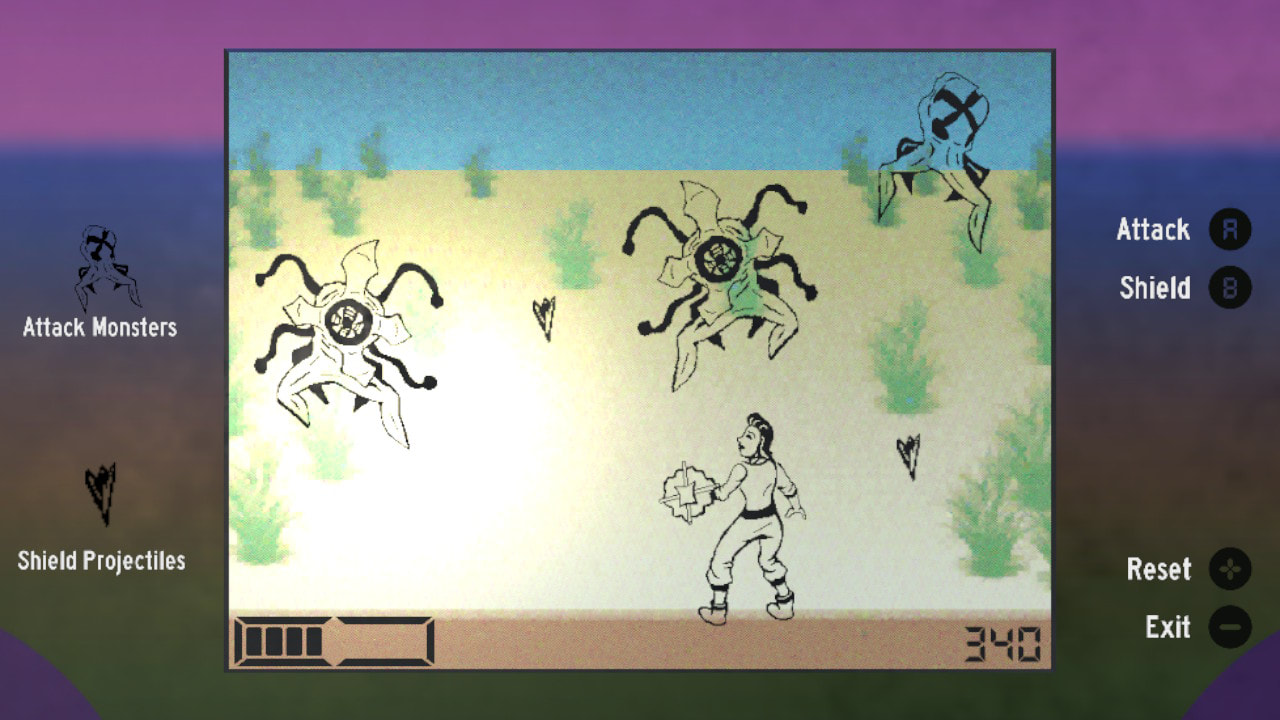
The most immediately apparent difference between Final Fantasy and Final Fantasy II is the greater emphasis on narrative in the second game. Instead of a generic "purify four crystals and beat the big baddie" quest that four nameless adventurers embark on, you have set names for your initial party of four - Firion, Maria, Guy, and Leon - and their quest, while far from original, doesn't feel nearly as generic as in the first game. There are also five playable characters who join your party on a temporary basis throughout the game - Gordon, Josef, Leila, Minwu, and Ricard. All nine of these characters have distinct personalities as do many of the NPCs you'll meet throughout the game. The power-hungry emperor of Palamecia has launched a war of global conquest, and the last holdouts of resistance have banded together in the small town of Altair. The rebel army, under the leadership of Princess Hilda of the fallen kingdom of Fynn, is trying desperately to hold out against the empire's army and find a way to reclaim their stolen homelands. This involves the player party's going on missions with actual objectives beyond "These four crystals got monster infested. Go fix it." Again, the story isn't going to blow your mind or anything, but it's a huge improvement over the skeletal-at-best story that the first game had. The characters, while actually named and given personalities in this game, are the weak link in the narrative, and not all of the characters are, in my opinion, well-written - I found myself completely uninterested in Firion, Maria, and Leon as characters - but some of them, like Gordon and Josef, are charming characters that I enjoyed.
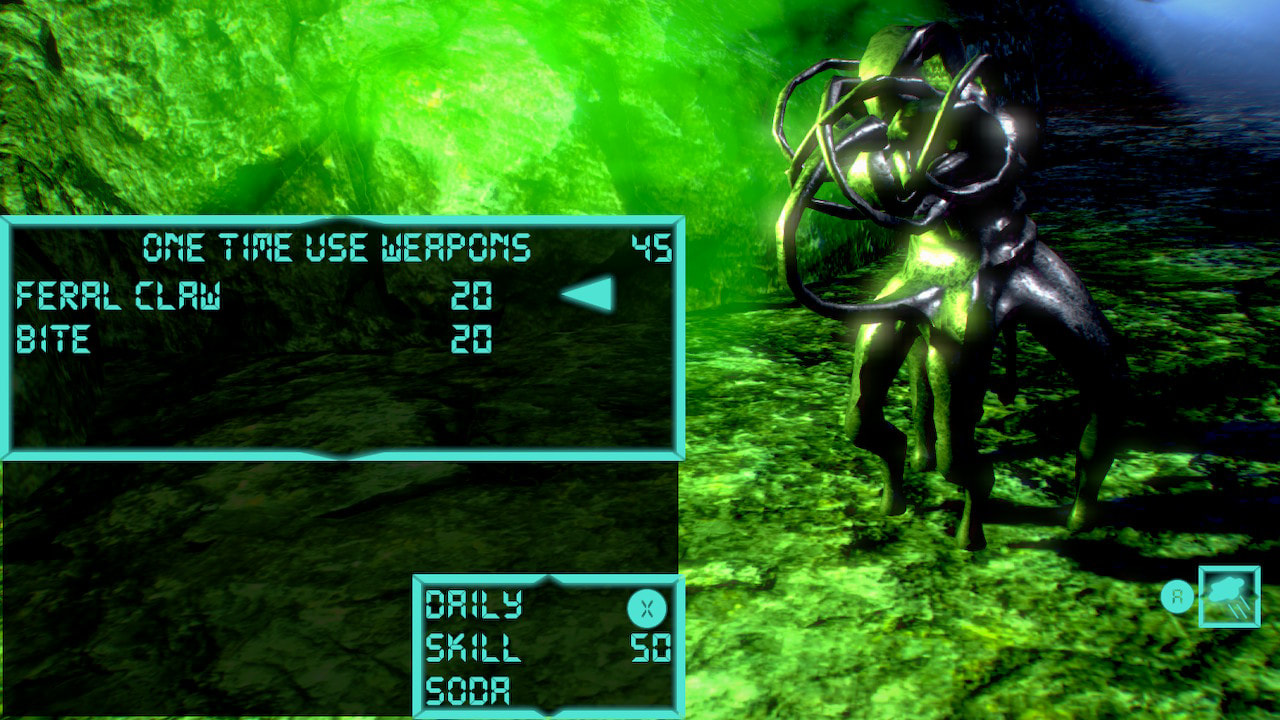
As was the case with the first game, the Pixel Remaster radically overhauls the visuals to bring them from the blocky 8-bit sprites that rarely look good without the rose-tinted glasses of nostalgia to a modern HD pixel sprite form that is more reminiscent of the 16-bit Super Nintendo than the 8-bit NES. The sprites and especially environments are significantly more detailed and clearer in this remaster, and more modern effects have been added in, like fog in some dungeons, for example. As is the case for all six of the games in the Pixel Remaster, the soundtrack has also been given a complete overhaul and features a gorgeous new orchestral arrangement, although you do have the option of keeping the original NES chiptune soundtrack if you so choose.
One of the big changes that I don't care for, however, is the leveling system. Final Fantasy II doesn't use typical xp like the previous game did. Instead, it uses a more skill-based system in which, rather than a character's having a level that goes up over time, that character gains levels in specific skills with use. If you spend the whole game using a sword and shield, that character's sword and shield levels might both be 12, but their axe, lance, knife, and bow skills would all be 1, meaning they would be significantly weaker and less accurate if they switched to those weapons. Each spell also has its own skill level. At level one, a spell is weak and inaccurate; at the maximum level of 16, you're basically flinging thermonuclear warheads around. This means that there is no traditional class or job system. While that's very freeing in a lot of ways, allowing you to mold a character's role and weapon use however you wish, I personally find that the constraints of a class system helps to streamline what role a character plays in combat and what weapons to equip; if left to my own devices, I'm apt to send everyone in screaming like Scotsmen with two swords and playing as fragile glass cannons. I definitely don't hate this system, and it was a nice breath of fresh air, but I do think I would have preferred a more traditional system. It's also obnoxious because levels start to take FOREVER to gain after level 8, and the difficulty of the enemy you're fighting directly determines how much experience in that skill you get. If you try to grind on weak enemies, you'll get money from the battles, but you may not be getting any skill experience. To some extent, that's logical, but most RPGs will give you at least some experience for early-game enemies even if it's reduced.
One of the goals of the Pixel Remaster - something I whole-heartedly approve of - is offering a more modern, streamlined experience. JRPGs are known for bloat, and Final Fantasy is not blameless in establishing that stereotype, especially as older games get ported to newer consoles and expanded. To that end, the extra content from the Game Boy Advance and PSP ports of the game is missing here. That's kind of a bummer for those wanting a full and complete experience, but consider this perspective - this is a modern version of the developer's original vision for the game, free of any later influences that may or may not have gelled well with that original vision. You're not getting the most complete version, but you are arguably getting the purest version of the game aside from the actual original release. In order to streamline the game for modern gamers - especially adults with little energy and even less free time to game - a number of quality-of-life features have been introduced. There is an auto-battle that has characters automatically use their last move again, be it attack, defend, a spell, etc. There's also an option to have your characters always run rather than walk in dungeons, and you can toggle encounters on and off. You can adjust the experience and gold given by enemies from four times the original rate down to half the original rate, and you can set it to give a guaranteed slight increase to characters' max HP after a certain number of battles. These are all optional, obviously, so if you think that makes the game too easy, then you're good to go as they all default to off.
Most people I know who have played Final Fantasy II on either NES (via fan translations) or its PS1 release as part of Final Fantasy Origins aren't terribly fond of the game. "Great story, bad gameplay and level progression" tends to be the gist of it. The Pixel Remaster does as much as possible to remedy that without actually changing the core design of the game. I didn't use the boost to money gained, but I did turn on the compensatory HP setting and increased the experience to 2x, and I found it to be a thoroughly enjoyable experience. It definitely didn't charm me as much as the original game did with how cumbersome its skill-based leveling system can be, but it was a fun game nonetheless with the NES limitations and brutal progression difficulty remedied. If you want the most content-rich Final Fantasy II experience, go with the GBA or PSP versions, but if you want the most accessible way to play it and have your time as a busy adult respected, the Pixel Remaster is the perfect way to play the game. Final Fantasy II is definitely one of the main series's low points, but I still think it's worth playing for fans of Final Fantasy or big JRPG fans. tl;dr - it's a pretty decent but not great JRPG adventure.
* denotes a replay
January (Not Shit Beaten)
February (Not Shit Beaten)
March (Not Shit Beaten)
April (Not Shit Beaten)
May (Not Shit Beaten)
June (6 Games Beaten)
Final Fantasy II - the real Final Fantasy II, not the release of Final Fantasy IV that they labeled Final Fantasy II in the West - is the second of the three Final Fantasy games to release on the NES/Famicom, and my recent playthrough on the Final Fantasy Pixel Remaster on Switch was my first experience with the game, so it will be my focus here. Final Fantasy II is a huge departure from the original Final Fantasy in just about every way. Some of those departures are huge improvements in my opinion, but I'm much less fond of others.
The most immediately apparent difference between Final Fantasy and Final Fantasy II is the greater emphasis on narrative in the second game. Instead of a generic "purify four crystals and beat the big baddie" quest that four nameless adventurers embark on, you have set names for your initial party of four - Firion, Maria, Guy, and Leon - and their quest, while far from original, doesn't feel nearly as generic as in the first game. There are also five playable characters who join your party on a temporary basis throughout the game - Gordon, Josef, Leila, Minwu, and Ricard. All nine of these characters have distinct personalities as do many of the NPCs you'll meet throughout the game. The power-hungry emperor of Palamecia has launched a war of global conquest, and the last holdouts of resistance have banded together in the small town of Altair. The rebel army, under the leadership of Princess Hilda of the fallen kingdom of Fynn, is trying desperately to hold out against the empire's army and find a way to reclaim their stolen homelands. This involves the player party's going on missions with actual objectives beyond "These four crystals got monster infested. Go fix it." Again, the story isn't going to blow your mind or anything, but it's a huge improvement over the skeletal-at-best story that the first game had. The characters, while actually named and given personalities in this game, are the weak link in the narrative, and not all of the characters are, in my opinion, well-written - I found myself completely uninterested in Firion, Maria, and Leon as characters - but some of them, like Gordon and Josef, are charming characters that I enjoyed.
As was the case with the first game, the Pixel Remaster radically overhauls the visuals to bring them from the blocky 8-bit sprites that rarely look good without the rose-tinted glasses of nostalgia to a modern HD pixel sprite form that is more reminiscent of the 16-bit Super Nintendo than the 8-bit NES. The sprites and especially environments are significantly more detailed and clearer in this remaster, and more modern effects have been added in, like fog in some dungeons, for example. As is the case for all six of the games in the Pixel Remaster, the soundtrack has also been given a complete overhaul and features a gorgeous new orchestral arrangement, although you do have the option of keeping the original NES chiptune soundtrack if you so choose.
One of the big changes that I don't care for, however, is the leveling system. Final Fantasy II doesn't use typical xp like the previous game did. Instead, it uses a more skill-based system in which, rather than a character's having a level that goes up over time, that character gains levels in specific skills with use. If you spend the whole game using a sword and shield, that character's sword and shield levels might both be 12, but their axe, lance, knife, and bow skills would all be 1, meaning they would be significantly weaker and less accurate if they switched to those weapons. Each spell also has its own skill level. At level one, a spell is weak and inaccurate; at the maximum level of 16, you're basically flinging thermonuclear warheads around. This means that there is no traditional class or job system. While that's very freeing in a lot of ways, allowing you to mold a character's role and weapon use however you wish, I personally find that the constraints of a class system helps to streamline what role a character plays in combat and what weapons to equip; if left to my own devices, I'm apt to send everyone in screaming like Scotsmen with two swords and playing as fragile glass cannons. I definitely don't hate this system, and it was a nice breath of fresh air, but I do think I would have preferred a more traditional system. It's also obnoxious because levels start to take FOREVER to gain after level 8, and the difficulty of the enemy you're fighting directly determines how much experience in that skill you get. If you try to grind on weak enemies, you'll get money from the battles, but you may not be getting any skill experience. To some extent, that's logical, but most RPGs will give you at least some experience for early-game enemies even if it's reduced.
One of the goals of the Pixel Remaster - something I whole-heartedly approve of - is offering a more modern, streamlined experience. JRPGs are known for bloat, and Final Fantasy is not blameless in establishing that stereotype, especially as older games get ported to newer consoles and expanded. To that end, the extra content from the Game Boy Advance and PSP ports of the game is missing here. That's kind of a bummer for those wanting a full and complete experience, but consider this perspective - this is a modern version of the developer's original vision for the game, free of any later influences that may or may not have gelled well with that original vision. You're not getting the most complete version, but you are arguably getting the purest version of the game aside from the actual original release. In order to streamline the game for modern gamers - especially adults with little energy and even less free time to game - a number of quality-of-life features have been introduced. There is an auto-battle that has characters automatically use their last move again, be it attack, defend, a spell, etc. There's also an option to have your characters always run rather than walk in dungeons, and you can toggle encounters on and off. You can adjust the experience and gold given by enemies from four times the original rate down to half the original rate, and you can set it to give a guaranteed slight increase to characters' max HP after a certain number of battles. These are all optional, obviously, so if you think that makes the game too easy, then you're good to go as they all default to off.
Most people I know who have played Final Fantasy II on either NES (via fan translations) or its PS1 release as part of Final Fantasy Origins aren't terribly fond of the game. "Great story, bad gameplay and level progression" tends to be the gist of it. The Pixel Remaster does as much as possible to remedy that without actually changing the core design of the game. I didn't use the boost to money gained, but I did turn on the compensatory HP setting and increased the experience to 2x, and I found it to be a thoroughly enjoyable experience. It definitely didn't charm me as much as the original game did with how cumbersome its skill-based leveling system can be, but it was a fun game nonetheless with the NES limitations and brutal progression difficulty remedied. If you want the most content-rich Final Fantasy II experience, go with the GBA or PSP versions, but if you want the most accessible way to play it and have your time as a busy adult respected, the Pixel Remaster is the perfect way to play the game. Final Fantasy II is definitely one of the main series's low points, but I still think it's worth playing for fans of Final Fantasy or big JRPG fans. tl;dr - it's a pretty decent but not great JRPG adventure.
Patron Saint of Bitch Mode

Re: Games Beaten 2025
1. Growing My Grandpa! (Point-and-Click Adventure)(PC)
2. The Black Masses (Action RPG)(PC)
3. Dead Estate (Action)(PC)
4. Call of Cthulhu (Horror RPG)(PC)
5. 100 Asian Cats (Puzzle)(PC)
6. Blade Chimera (Action)(PC)
7. Bloodstained: Ritual of the Night (Action)(PC)
8. 7 Days to Die (Action)(PC)
9. An Arcade Full of Cats (Puzzle)(PC)
10. Excive A-1000 (FPS)(PC)
11. Only Lead Can Stop Them (FPS)(PC)
12. Home Safety Hotline (Horror)(PC)
13. Viewfinder (Puzzle)(PC)
14. Star Wars: Dark Forces Remastered (FPS)(PC)
15. Wanted: Dead (Action)(PC)
16. Crime Scene Cleaner (Action)(PC)
17. Beyond Citadel (FPS)(PC)
18. Turbo Overkill (FPS)(PC)
19. Project Warlock 2 (FPS)(PC)
20. Saints Row: The Third (Action)(PC)
21. Saints Row: The Third - GenkiBowl VII (Action)(PC)
22. Saints Row: The Third - Gangstas in Space (Action)(PC)
23. Saints Row: The Third - The Trouble with Clones (Action)(PC)
24. Ultra Cop (Action)(PC)
25. The Land of Pain (Horror)(PC)
I have a couple of very different games here, but both are from the indie scene. One is a futuristic supercop action shooter set in a bizarre South African government dealing with clone harvesting, neo-Jihadism, and a United Nations bent on population culling. The other is a Lovecraftian horror walking simulator, until you need to run from the Oh-God-What-Is-That-THING?
Like I said, very different.
Ultra Cop
It's a shooter, but a third person one that allows you to swap into first person if you prefer. And I did. Playing this game as an FPS made it considerably easier for my play style, so I could now get headshots and snipe effectively. There are only four levels, and you're the ultra cop, facing off against different foes each time. The most bizarre is a battle against the forces of the United Nations, which are using chemical warfare to wipe out a section of South Africa's population, so you have to stop them by shooting them, because you're a cop...look, plot isn't exactly the game's strong suit.
So what is? Well, you get a wide variety of weapons at the start of each level, you have a group of AI buddies that you can send orders to, and levels have some interesting variety, even if they're not exactly what I'd call good. This game is rough around the edges. Interesting to me, as I like to plumb the depths of Steam's FPS library, but definitely rough. And it costs like $3, so how could I say no?
The Land of Pain
You go for a hike to visit your departed Dad's cabin in the woods, and you see a giant orb show up. And, because you're an idiot, you touch the orb. This transports you to an Earth like world where it's always night apparently, there's a Machine and a cult, and the Ancient One reigns openly. Also, he maybe did the nasty with your ancestral grandmama like two thousand years ago, so...yeah.
In The Land of Pain, you solve puzzles to go further along the path, and from time to time you run like Hell because you're gonna die if you don't. Saving is done via checkpoints, and the game is usually pretty nice about them, which is great because you definitely don't always know where you're going, you're just hauling ass through a swamp and hoping you make it.
This game is apparently the start of a series about this alternate world possibly on the far side of our galaxy that got the shit end of our Elder God stick. I'm curious enough, I may track down the next some time soon.
2. The Black Masses (Action RPG)(PC)
3. Dead Estate (Action)(PC)
4. Call of Cthulhu (Horror RPG)(PC)
5. 100 Asian Cats (Puzzle)(PC)
6. Blade Chimera (Action)(PC)
7. Bloodstained: Ritual of the Night (Action)(PC)
8. 7 Days to Die (Action)(PC)
9. An Arcade Full of Cats (Puzzle)(PC)
10. Excive A-1000 (FPS)(PC)
11. Only Lead Can Stop Them (FPS)(PC)
12. Home Safety Hotline (Horror)(PC)
13. Viewfinder (Puzzle)(PC)
14. Star Wars: Dark Forces Remastered (FPS)(PC)
15. Wanted: Dead (Action)(PC)
16. Crime Scene Cleaner (Action)(PC)
17. Beyond Citadel (FPS)(PC)
18. Turbo Overkill (FPS)(PC)
19. Project Warlock 2 (FPS)(PC)
20. Saints Row: The Third (Action)(PC)
21. Saints Row: The Third - GenkiBowl VII (Action)(PC)
22. Saints Row: The Third - Gangstas in Space (Action)(PC)
23. Saints Row: The Third - The Trouble with Clones (Action)(PC)
24. Ultra Cop (Action)(PC)
25. The Land of Pain (Horror)(PC)
I have a couple of very different games here, but both are from the indie scene. One is a futuristic supercop action shooter set in a bizarre South African government dealing with clone harvesting, neo-Jihadism, and a United Nations bent on population culling. The other is a Lovecraftian horror walking simulator, until you need to run from the Oh-God-What-Is-That-THING?
Like I said, very different.
Ultra Cop
It's a shooter, but a third person one that allows you to swap into first person if you prefer. And I did. Playing this game as an FPS made it considerably easier for my play style, so I could now get headshots and snipe effectively. There are only four levels, and you're the ultra cop, facing off against different foes each time. The most bizarre is a battle against the forces of the United Nations, which are using chemical warfare to wipe out a section of South Africa's population, so you have to stop them by shooting them, because you're a cop...look, plot isn't exactly the game's strong suit.
So what is? Well, you get a wide variety of weapons at the start of each level, you have a group of AI buddies that you can send orders to, and levels have some interesting variety, even if they're not exactly what I'd call good. This game is rough around the edges. Interesting to me, as I like to plumb the depths of Steam's FPS library, but definitely rough. And it costs like $3, so how could I say no?
The Land of Pain
You go for a hike to visit your departed Dad's cabin in the woods, and you see a giant orb show up. And, because you're an idiot, you touch the orb. This transports you to an Earth like world where it's always night apparently, there's a Machine and a cult, and the Ancient One reigns openly. Also, he maybe did the nasty with your ancestral grandmama like two thousand years ago, so...yeah.
In The Land of Pain, you solve puzzles to go further along the path, and from time to time you run like Hell because you're gonna die if you don't. Saving is done via checkpoints, and the game is usually pretty nice about them, which is great because you definitely don't always know where you're going, you're just hauling ass through a swamp and hoping you make it.
This game is apparently the start of a series about this alternate world possibly on the far side of our galaxy that got the shit end of our Elder God stick. I'm curious enough, I may track down the next some time soon.

-
Jagosaurus

- Next-Gen
- Posts: 4060
- Joined: Sat Mar 09, 2013 12:15 pm
- Location: Houston area, Texas
Re: Games Beaten 2025
2025 Games Beaten
Bold = new add
1. Dragon Quest XI S
2. Minecraft Dungeons
3. Tomb Raider 2013
4. Gears Ultimate (COG Tag & Hardcore Replay)
Wow! I've been bad about updating this thread in 2025. I've had a good time with these solid, yet not many, titles. So far, all of these in '25 have been beaten on Xbox Series X. I do have a trusty Xbox One S downstairs that gets some playtime also (depending on family dynamics). Cloud Saves are nice, allowing me to seamlessly go between my gameroom & living room consoles when needed. Obviously, titles tend to look and run much better on Series X.
Quick summaries:
I beat Minecraft Dungeons on XB, mostly to help my son with his Switch playthrough. This one gets repetitive, but is a fun Diablo-light APRG in a Minecraft esthetic.
I FINALLY got around to Tomb Raider 2013. I was in grad school when this came out & didn't have time to play it. It's been on my backlog since & lived up to my internal hype. I really enjoyed this one. I do plan on (eventually ) finishing the 2 remaining games in Survivor Trilogy.
While Gearing up for upcoming Gears Reloaded & Gears E-Day, I ran back through Gears Ultimate on solo, hardcore difficulty. I also collected all COG tags. Overall, still a fun experience. I love this world, lore, and characters. While the MP is outdated, I do think Playstation owners will enjoy experiencing the original Gears story.
Bold = new add
1. Dragon Quest XI S
2. Minecraft Dungeons
3. Tomb Raider 2013
4. Gears Ultimate (COG Tag & Hardcore Replay)
Wow! I've been bad about updating this thread in 2025. I've had a good time with these solid, yet not many, titles. So far, all of these in '25 have been beaten on Xbox Series X. I do have a trusty Xbox One S downstairs that gets some playtime also (depending on family dynamics). Cloud Saves are nice, allowing me to seamlessly go between my gameroom & living room consoles when needed. Obviously, titles tend to look and run much better on Series X.
Quick summaries:
I beat Minecraft Dungeons on XB, mostly to help my son with his Switch playthrough. This one gets repetitive, but is a fun Diablo-light APRG in a Minecraft esthetic.
I FINALLY got around to Tomb Raider 2013. I was in grad school when this came out & didn't have time to play it. It's been on my backlog since & lived up to my internal hype. I really enjoyed this one. I do plan on (eventually
) finishing the 2 remaining games in Survivor Trilogy. While Gearing up for
upcoming Gears Reloaded & Gears E-Day, I ran back through Gears Ultimate on solo, hardcore difficulty. I also collected all COG tags. Overall, still a fun experience. I love this world, lore, and characters. While the MP is outdated, I do think Playstation owners will enjoy experiencing the original Gears story.Games Beaten 2025, 2024, 2023 | Retro Achievements
xJAGOx = Xbox Gamertag | Console Mods
xJAGOx = Xbox Gamertag | Console Mods
Re: Games Beaten 2025
Maybe it's because I came from a CRPG place to Final Fantasy, but I liked that FF1 had nameless characters. There were named characters in the world doing stuff, but you were blank slates and forces of nature. You were prophesied heroes and didn't have to worry about anything but leveling up. As much as I love some JRPGs and their stories and characters, I am equally likely to be unable to suspend my disbelief and enjoy a JRPG because the character personalities are either horribly inconsistent or have no relationship to the gameplay or TOO MUCH relationship to the gameplay or... The whole blank slate party members thing may not generate real pathos in the game, but it can often help you enjoy the game's systems more without getting put off by some character idiosyncrasy that just ruins everything. I think we need more games where the story is in the world and other characters and you are just there to bear witness and wreck everything in your path. We should be able to enjoy both modes of play!
Re: Games Beaten 2025
1. Growing My Grandpa! (Point-and-Click Adventure)(PC)
2. The Black Masses (Action RPG)(PC)
3. Dead Estate (Action)(PC)
4. Call of Cthulhu (Horror RPG)(PC)
5. 100 Asian Cats (Puzzle)(PC)
6. Blade Chimera (Action)(PC)
7. Bloodstained: Ritual of the Night (Action)(PC)
8. 7 Days to Die (Action)(PC)
9. An Arcade Full of Cats (Puzzle)(PC)
10. Excive A-1000 (FPS)(PC)
11. Only Lead Can Stop Them (FPS)(PC)
12. Home Safety Hotline (Horror)(PC)
13. Viewfinder (Puzzle)(PC)
14. Star Wars: Dark Forces Remastered (FPS)(PC)
15. Wanted: Dead (Action)(PC)
16. Crime Scene Cleaner (Action)(PC)
17. Beyond Citadel (FPS)(PC)
18. Turbo Overkill (FPS)(PC)
19. Project Warlock 2 (FPS)(PC)
20. Saints Row: The Third (Action)(PC)
21. Saints Row: The Third - GenkiBowl VII (Action)(PC)
22. Saints Row: The Third - Gangstas in Space (Action)(PC)
23. Saints Row: The Third - The Trouble with Clones (Action)(PC)
24. Ultra Cop (Action)(PC)
25. The Land of Pain (Horror)(PC)
26. HROT (FPS)(PC)
HROT is wise in the ways of slavjank. Slavjank is a specific type of video game, often FPS, developed by Eastern European developers. Often times, they're messy and lack polish, hence the "-jank" part of the description, so we don't generally use the term for something like The Witcher 3. But games like Mortyr, You are Empty, Chasm: The Rift, the S.T.A.L.K.E.R. franchise...the slavjank is alive and well. And HROT knows and understands this but also mixes in Czechoslovakian history, culture, criticisms of communism, and even a great jab at modern Russia by making you fight a shirtless Putin riding a bear.
And a lot of it makes sense in the context of Czechoslovakian history, but then they make you fight a horse wearing a gimp mask, and you find yourself wondering what you are doing with your life...and then you swap to the double barrel and put buckshot into ol' gimpy there until he throws his rider, which you then mercilessly slaughter with your dual Makarovs or your sickle, because of course you would wield a sickle in Communist Czechoslovakia.
Does the shooting feel good in HROT? ...eh, sometimes? There are a lot of weapons in your arsenal that you may or may not use. I mostly stuck to the shotgun because I have an addiction to awesome, and HROT offers solid shotguns. But some of the others don't feel as good, like the popgun machine gun, or feel lacking in their ammo count, like the lightning gun that I so wanted to like more than I did. And then you have the liquor bottle, which gives you ten health per swig but also gets you drunk, making it real interesting when you fight the toxic-spewing legless guys in wheelchairs, because they can take a beating and hit damned hard.
If you're wondering what I just said, hey, this game lets me watch virtual roosters get it on with virtual hens and then has an army of headless chickens attack. Do not try to make sense, just keep firing and remember the glorious People's Republic.
HROT is everything I wanted in a slavjank game. And it's brown and beautiful.
2. The Black Masses (Action RPG)(PC)
3. Dead Estate (Action)(PC)
4. Call of Cthulhu (Horror RPG)(PC)
5. 100 Asian Cats (Puzzle)(PC)
6. Blade Chimera (Action)(PC)
7. Bloodstained: Ritual of the Night (Action)(PC)
8. 7 Days to Die (Action)(PC)
9. An Arcade Full of Cats (Puzzle)(PC)
10. Excive A-1000 (FPS)(PC)
11. Only Lead Can Stop Them (FPS)(PC)
12. Home Safety Hotline (Horror)(PC)
13. Viewfinder (Puzzle)(PC)
14. Star Wars: Dark Forces Remastered (FPS)(PC)
15. Wanted: Dead (Action)(PC)
16. Crime Scene Cleaner (Action)(PC)
17. Beyond Citadel (FPS)(PC)
18. Turbo Overkill (FPS)(PC)
19. Project Warlock 2 (FPS)(PC)
20. Saints Row: The Third (Action)(PC)
21. Saints Row: The Third - GenkiBowl VII (Action)(PC)
22. Saints Row: The Third - Gangstas in Space (Action)(PC)
23. Saints Row: The Third - The Trouble with Clones (Action)(PC)
24. Ultra Cop (Action)(PC)
25. The Land of Pain (Horror)(PC)
26. HROT (FPS)(PC)
HROT is wise in the ways of slavjank. Slavjank is a specific type of video game, often FPS, developed by Eastern European developers. Often times, they're messy and lack polish, hence the "-jank" part of the description, so we don't generally use the term for something like The Witcher 3. But games like Mortyr, You are Empty, Chasm: The Rift, the S.T.A.L.K.E.R. franchise...the slavjank is alive and well. And HROT knows and understands this but also mixes in Czechoslovakian history, culture, criticisms of communism, and even a great jab at modern Russia by making you fight a shirtless Putin riding a bear.
And a lot of it makes sense in the context of Czechoslovakian history, but then they make you fight a horse wearing a gimp mask, and you find yourself wondering what you are doing with your life...and then you swap to the double barrel and put buckshot into ol' gimpy there until he throws his rider, which you then mercilessly slaughter with your dual Makarovs or your sickle, because of course you would wield a sickle in Communist Czechoslovakia.
Does the shooting feel good in HROT? ...eh, sometimes? There are a lot of weapons in your arsenal that you may or may not use. I mostly stuck to the shotgun because I have an addiction to awesome, and HROT offers solid shotguns. But some of the others don't feel as good, like the popgun machine gun, or feel lacking in their ammo count, like the lightning gun that I so wanted to like more than I did. And then you have the liquor bottle, which gives you ten health per swig but also gets you drunk, making it real interesting when you fight the toxic-spewing legless guys in wheelchairs, because they can take a beating and hit damned hard.
If you're wondering what I just said, hey, this game lets me watch virtual roosters get it on with virtual hens and then has an army of headless chickens attack. Do not try to make sense, just keep firing and remember the glorious People's Republic.
HROT is everything I wanted in a slavjank game. And it's brown and beautiful.