The "bad" translation only enhances the magic of Castlevania II. The NPCs misdirect and lie to you, which ups the antagonism and the opaqueness of the game. While many NES games were designed not to be beaten using difficult gameplay, this game tries to beat you with information. Brilliant <3
Games Beaten 2025
-
RobertAugustdeMeijer
- 64-bit
- Posts: 330
- Joined: Fri Sep 02, 2022 10:15 am
Re: Games Beaten 2025
-
RobertAugustdeMeijer
- 64-bit
- Posts: 330
- Joined: Fri Sep 02, 2022 10:15 am
Re: Games Beaten 2025
The best parts of Silksong, so far are:
Not one, but two "traps that get you stuck in a hard part of the game" (kind of like that hole in Deepnest. And the chest that teleports you to that cave in Elden Ring). Unfortunately, they're not really that much harder than the rest of the game, so it sort of feels like just playing on, only this time you're bound to lose your beads. But since they're used multiple times, you're constantly on edge, yes! This also counts for the benches, which are sometimes trapped.
Also, the clockwork boss, the final phase, is just beautiful. Not only because, for once, the final phase is easier, but the boss now has to dance alone, and it makes it a pathetic, toothless performance. You feel sad for it, but also want to finish it off. Rare to feel such a mixed emotion in a game!
How organic the world is. There's a lot of backtracking, and constantly things are changing. An area never feels finished.
The smaller hitbox of attacks. This makes attacking riskier, and you can't just hide behind your attack range. This also counts for your downward attack, which can be strong if you get it right, but can seriously mess you up if you miss.
Finally, and this is hypothetical, but it's rare for such a difficult game to be so popular, and it was a shame that despite its size and challenge, Elden Ring still had a high completion % among its player. I'm hoping that Silksong has a better legacy. We really need to normalize games beating players again. Case in point: remember how awesome Naxxramas was until everyone could beat it in Wrath?
Not one, but two "traps that get you stuck in a hard part of the game" (kind of like that hole in Deepnest. And the chest that teleports you to that cave in Elden Ring). Unfortunately, they're not really that much harder than the rest of the game, so it sort of feels like just playing on, only this time you're bound to lose your beads. But since they're used multiple times, you're constantly on edge, yes! This also counts for the benches, which are sometimes trapped.
Also, the clockwork boss, the final phase, is just beautiful. Not only because, for once, the final phase is easier, but the boss now has to dance alone, and it makes it a pathetic, toothless performance. You feel sad for it, but also want to finish it off. Rare to feel such a mixed emotion in a game!
How organic the world is. There's a lot of backtracking, and constantly things are changing. An area never feels finished.
The smaller hitbox of attacks. This makes attacking riskier, and you can't just hide behind your attack range. This also counts for your downward attack, which can be strong if you get it right, but can seriously mess you up if you miss.
Finally, and this is hypothetical, but it's rare for such a difficult game to be so popular, and it was a shame that despite its size and challenge, Elden Ring still had a high completion % among its player. I'm hoping that Silksong has a better legacy. We really need to normalize games beating players again. Case in point: remember how awesome Naxxramas was until everyone could beat it in Wrath?
-
PartridgeSenpai

- Next-Gen
- Posts: 3188
- Joined: Mon Dec 14, 2015 9:27 am
- Location: Northern Japan
Re: Games Beaten 2025
Partridge Senpai's 2025 Beaten Games:
Previously: 2016 2017 2018 2019 2020 2021 2022 2023 2024
* indicates a repeat
1~50
51. Wave Race 64 (N64)
52. Bakushou Jinsei 64: Mezase! Resort-ou (N64)
53. Mother (Famicom)
54. Famista 64 (N64)
55. Weird and Unfortunate Things are Happening (PC)
56. Kirby and the Rainbow Curse (Wii U)
57. Mario Kart Wii (Wii)
58. Wario Land: Shake it! (Wii) *
59. Mario Party 8 (Wii) *
60. Zack & Wiki: Quest for Barbaros' Treasure (Wii)
61. SimCity 2000 (N64)
62. Prototype (PS3)
63. Prototype 2 (PS3)
64. Final Fantasy X (PS2) *
65. Final Fantasy X-2 (PS2)
66. Grand Theft Auto: Vice City (PS2)
67. Crackdown (Xbox 360)
68. Crackdown 2 (Xbox 360)
69. Alan Wake (Xbox 360) *
70. Dead to Rights (Xbox)
71. Medal of Honor (PS3)
72. Mario Kart 8 (Wii U)
73. Donkey Kong Country Returns (Wii) *
74. Mario Party 9 (Wii) *
75. Dragon Ball Z: Budokai 2 (PS2)
76. Splashdown (PS2)
77. R4 Ridge Racer Type 4 (PS1)
78. Super Smash Bros. Brawl (Wii) *
79. Star Fox (SNES)
80. Kamen Rider: Battride War (PS3)
81. Mario Kart: Double Dash!! (GC) *
82. Final Fantasy VII: International Edition (PS1)
83. Final Fantasy VIII (PS1)
84. Final Fantasy IX (PS1) *
85. Pac-Man World (PS1)
86. Super Ghouls'n Ghosts (SFC)
87. Disney's Aladdin (SNES)
88. Mega Man: Wily Wars (MD)
89. The Magical Quest Starring Mickey Mouse (SNES)
90. The Great Circus Mystery Starring Mickey & Minnie (SNES)
91. Mickey to Donald Magical Adventure 3 (SFC)
92. Disney's The Little Mermaid (NES)
93. Little Nemo: The Dream Master (NES)
94. Gunman's Proof (SFC)
95. Blaze & Blade: Busters (PS1)
96. Void Stranger (Steam)
97. Fortune Street (Wii)
I love economics-focused board games. I played through the Dragon Quest & Final Fantasy-themed Itadaki Street on PS2 some five years ago, and I played a very similar sort of game on N64 earlier this year. As I can imagine was the case for most English speakers, this was the first game in the Itadaki Street series that I played back when it came out nearly 15 years ago, but I’d never actually beaten it. I got to the last few maps of the single-player mode, but being mandated to get first place to proceed was just too much for my teenage patience to bear. After finding this locally for very cheap recently, I decided to give finishing this game another try! As much as I’d really enjoyed my time with that PS2 Itadaki Street game those years ago, there were quite a few issues with its design that really drove me crazy, and I was very curious on if an entry made over half a decade later would go about fixing some of those problems. Playing with the standard rule set on the Japanese version of the game, it took me just around 40 hours to finish all 18 maps in the Tour mode and see the credits.
Itadaki Street, or Fortune Street as I’ll call it here for simplicity’s sake, has no story, and is an economy board game that very closely resembles Monopoly. You role a die to go around a board, buy properties, and try to get as much money as you can to win. However, there are a lot of differences between the (likely) very familiar Monopoly and Fortune Street’s rule set. For starters, there's a more straightforward goal. Each map has a target amount of money to hit, and the first person to reach that amount and make it back to the bank is the winner. However, the most straightforward change is the stock market. Buildings can be individually invested in once purchased (you don’t need to own an entire district to start investing in it further like in Monopoly), and owning more buildings in a district raises the cap of how much money can be invested. Not only does investing in a building increase the rent cost if an enemy player lands there, but it also raises the stock price.
You also don’t just get money for passing the board’s start (like passing “Go” in Monopoly) either. You’ll need to collect all four colored card suit token scattered around the board before turning them in at the bank for your “salary” payday. Going back to bank, Fortune Street’s version of the Go space, isn’t just about that payday either. Payday or no, going back to the starting space, the bank, allows you to buy stocks in any district you want, and that even includes districts where you own no property at all. Investing wisely to get ever richer off of your enemy’s investments while you use that money to then invest back into your own properties is key to any fundamental strategy in Fortune Street, and it makes for a really fun variant the (likely very familiar) Monopoly board game style.
Compared to other board games of this type (and in this series), there are a few aspects of Fortune Street Wii I like a lot, and a fair few I like a lot less. One thing I love is both the districts system combined with the stock system *and* the various different boards. The random roll of the die is a fundamental part of board games like this, but being trapped to simply wander forward on a set ring like in Monopoly make you SO much more a victim of random chance that it can get really frustrating very fast. Fortune Street Wii has a few boards that are so simple that they lock you in like this, but being able to usually get around the board and back to the bank while deliberately avoiding dangerous enemy-controlled territory is a really nice bit of strategy that you can employ (even if it’ll usually mean sacrificing a payday). Better board design is probably the #1 thing I’d say this game has over the DQ & FF version I played years back.
However, there are a lot of aspects of Fortune Street that this Wii version stubbornly sticks to. Sticking on the subject of map design, while there are less than in the DQ & FF PS2 game, there are a really annoying amount of maps that have what I call “jail islands”. These are areas of the map that can only be accessed by getting lucky enough (or unlucky enough, as the case more often is) to land on a portal space that brings you there. Jail islands don’t connect to the rest of the board at all outside of the portal(s) you can in on, so you’re completely at the mercy of your own bad luck on how soon you’ll be able to escape. While getting trapped on a jail island in the early game can lead to getting a quick monopoly on a large portion of the jail’s assets, it also leads to losing a TON of opportunity to land on spaces on the larger mainland of the board where the bulk of player traffic is conducted.
Sure, it feels great to see an enemy player get trapped on the island when you have a lot of scary spaces there, but that’ll also usually come paired with the unfortunate reality of the mainland board (where the bank and usually all the suits are) being much more dangerous for *you* to travel across. There are 18 boards (annoying to unlock in the single player mode as the last 6 of them admittedly are) in Fortune Street Wii, and by and large they have either less islands or more exits to those islands than the DQ & FF game did, and FS Wii even usually has extra suit tiles to sweep up quickly on the islands too, but there were still plenty of times where I or a CPU very demonstrably had their entire game ruined simply by getting trapped on an island for too long too many times. While I get that just getting lucky is a fundamental part of board games, the sheer amount of RNG (random number gaming) that does nothing but rob a blameless player of their hard work up to this point is something that Fortune Street as a series has far too much of for my liking.
Other aspects where this “feel bad RNG” manifests are in things like the chance tiles. The suits you collect to get your bank paydays actually occupy their own tiles on the board. Landing on one of these or a dedicated chance space nets you a chance to pick a chance tile on the randomly shuffled 8 x 8 tile chance board. There are good outcomes from the cards just as there are bad outcomes, but the relentlessly brutality or incredible fortune some give to the player go SO far that I’ve seen plenty of whole matches shift due to one lucky (or unlucky) chance card draw. Again, I very much appreciate the nature of random chance in board games, especially in party games, but I have really come to believe that the overwhelming amount of random chance in Fortune Street ultimately serves to subvert the strategic investment gameplay that the board game is meant to revolve around. For the same reason that the boards I found to be the best and most fun in the game were the ones with lots of paths to take and options for you to take, ones that let you manage calculated risk the best, these boards would often be a lot more fun by an option to just remove chance tiles and focus on the buying and selling of stocks and properties instead.
The last annoying thing I really must complain about in regards to this game versus the older one I’ve played are the special plot spaces. “Plot” as in “plot of land”, these are special spaces that some boards have that are like the normal unoccupied shop spaces but have a major difference too. Special plot spaces don’t have a pre-existing shop with a pre-designated price tag applied to it. Instead, you can pay a simple 200 gold to build one of a variety of special buildings with special effects when landed on (or 1000 for a very expensive normal shop, admittedly). The balance of these special buildings between one another is dreadfully uneven, and they were something that plagued my PS2 Fortune Street games, and I was very bothered to see them here too, to say the least XD
Why are they so bad? Well, most of them are generally far too circumstantial to ever be very useful. Sure, being able to travel anywhere on the map, assemble everyone to that point, or buy any unowned property on the map if the owner lands on it sound nice, but they only result in small rents collected if someone other than the owner lands on it. Gates that demand a slowly increasing fee for just passing by the space (instead of needing to have someone land on it) may seem tempting with their constant money flow, but the BIG bad here is the continued presence of the tax office building. Landing on your own tax office grants you a modest immediate cash bonus equal to 5% of your net worth. However, should someone *else* land on it, they owe the owner 10% of their net worth in cash. Given how early that such spaces can be acquired, such a massive financial hit for such a small cash investment is usually game-endingly devastating, and it really bummed me out to see these *still* in the series despite all the years that’d passed since. I will admit that there are some improvements in FS Wii compared to the DQ & FF game in regards to these spaces, namely that far fewer maps have them in the first place, but that’s cold comfort when a tax space completely robs you of your last payday and puts you at the bottom of the stock-buying ladder compared to your newly enriched opponents :/
The aesthetics of this game are very nice, at least. This being Fortune Street on Nintendo’s console, it’s got a bunch of different Super Mario series characters you can choose to play as in addition to a bundle of Dragon Quest series characters (13 of each!). The maps themselves are mostly just backgrounds that sit behind the assortment of space tiles, so they’re hardly as impressive as a Mario Party board, for example, but it’s still nice to have such a great variety of boards to play on with your buddies. It’s also a neat touch to see just what a time capsule these boards are for sub-series for each franchise that were popular at the time (like the maps dedicated to the long-since dead Mario Baseball games or DQ Rocket Slime RPGs). My only real complaint with the boards or graphics are that some backgrounds to some boards are clearly way too complicated because some boards have AWFUL frame rates. That hardly matters a ton in a board game, of course, but it was still a weird thing that was impossible to ignore. The boards all have nice renditions of various Mario and DQ series songs, including some from fairly unexpected places that were fun to see represented (like even Mario RPG!). There’s very little truly original music, but they’re nonetheless very nice renditions of all sorts of tracks from each series.
This being a Wii game, you can of course also play as your Miis, but that comes with a significant caveat. The really annoying thing is that you actually MUST play as the Mii you attached to that save file if you’re playing single-player. There is no way to play single-player mode as any of the 26 characters from the two franchises represented. While I understand this makes some degree of sense for the dedicated single-player Tour mode, I cannot fathom why they chose to enforce this for the free play mode as well. It’s really neat that beating maps on the tour mode lets you unlock (the ability to purchase with in-game currency) new outfits for your Mii, at least. You can even buy new play styles for your Mii to use if you want to just put the game down and let it play itself for you (which is a nice consolation for anyone who just wants to unlock the extra maps and characters to unlock in multiplayer mode).
Beating the single-player Tour mode even lets you set any computer you want to max-level CPU intelligence, so you can face off against any CPU-controlled character you want without having to settle for their otherwise unchangeable lower intelligence ranking. The AI in this game is generally a fair bit better than it was in the older game I’ve played. They’re still not geniuses and will make some at times very startling mistakes even at higher difficulty levels (like the one time I had an S-rank CPU simply choose not to win, ultimately allowing me to get to the goal before her, simply because going away from the goal would get her more money that she objectively didn’t actually need). Even still, they’re plenty smart enough to provide a good challenge, and I even learned some truly monstrous play styles from them this time around, so they’re far from all bad XD
The last thing I'll mention before I close out is the "Easy Rules" rule set that can be chosen in this version of the game. There are the Standard Rules, which clearly explain how they're how the game has been played since the original game in 1991, but then there are the Easy Rules which you can play as well. I beat the game on Standard Rules, as it's how I prefer to play the game (and for all intents and purposes is, to an almost literal degree, *the* way to play Fortune Street), but Easy Rules are also here as seemingly an option for those for whom the whole concept of "Monopoly with stocks" is too complicated a proposition. Easy Rules keeps all the same characters and boards, but it ditches the stock system. What you have instead are just rolling die to go around and buy unaffiliated buildings, and you try and be the one to get the most money first. The only relation buildings have to one another is that getting adjacent properties to one another will have them boost how much money can be invested in them much like how buildings in the same district operate in the Standard Rules mode. I don't think this mode is terribly fun, and I don't think it's particularly worth buying this game for either, because it just doesn't actually work cohesively enough to be much fun (it's genuinely more simple than even normal Monopoly rules), but it *is* a legit game mode all on its own. Heck, they even have exclusive chance cards that only appear in this mode, so it's not like it's something they threw together without giving it *any* thought <w>
Verdict: Recommended. After having so much more fun with Bakusho Jinsei Game 64 earlier this year, I can’t highly recommend Itadaki Street nearly as highly as I used to be able to. All of the RNG really makes everything far more random than it needs to be, and it made me long for more straightforward games where relying on your wits and the die rolls were the most you had to worry about. That said, Fortune Street is still a very fun board game and a great party game. While it may have more randomness than I’d like, that’s a lot easier to deal with playing against friends, and I was honestly shocked at how often I was able to come back from seemingly unwinnable situations in my time through this one, so perhaps good strategy *can* overcome all that nonsense randomness if you’re good enough and I’m just too salty XD. Be that as it may, if “Monopoly with a stock exchange & Dragon Quest and Super Mario characters” sounds like a great time to you, then this is a fantastic game to pick up and play with your buddies or on your own~.
Previously: 2016 2017 2018 2019 2020 2021 2022 2023 2024
* indicates a repeat
1~50
52. Bakushou Jinsei 64: Mezase! Resort-ou (N64)
53. Mother (Famicom)
54. Famista 64 (N64)
55. Weird and Unfortunate Things are Happening (PC)
56. Kirby and the Rainbow Curse (Wii U)
57. Mario Kart Wii (Wii)
58. Wario Land: Shake it! (Wii) *
59. Mario Party 8 (Wii) *
60. Zack & Wiki: Quest for Barbaros' Treasure (Wii)
61. SimCity 2000 (N64)
62. Prototype (PS3)
63. Prototype 2 (PS3)
64. Final Fantasy X (PS2) *
65. Final Fantasy X-2 (PS2)
66. Grand Theft Auto: Vice City (PS2)
67. Crackdown (Xbox 360)
68. Crackdown 2 (Xbox 360)
69. Alan Wake (Xbox 360) *
70. Dead to Rights (Xbox)
71. Medal of Honor (PS3)
72. Mario Kart 8 (Wii U)
73. Donkey Kong Country Returns (Wii) *
74. Mario Party 9 (Wii) *
75. Dragon Ball Z: Budokai 2 (PS2)
76. Splashdown (PS2)
77. R4 Ridge Racer Type 4 (PS1)
78. Super Smash Bros. Brawl (Wii) *
79. Star Fox (SNES)
80. Kamen Rider: Battride War (PS3)
81. Mario Kart: Double Dash!! (GC) *
82. Final Fantasy VII: International Edition (PS1)
83. Final Fantasy VIII (PS1)
84. Final Fantasy IX (PS1) *
85. Pac-Man World (PS1)
86. Super Ghouls'n Ghosts (SFC)
87. Disney's Aladdin (SNES)
88. Mega Man: Wily Wars (MD)
89. The Magical Quest Starring Mickey Mouse (SNES)
90. The Great Circus Mystery Starring Mickey & Minnie (SNES)
91. Mickey to Donald Magical Adventure 3 (SFC)
92. Disney's The Little Mermaid (NES)
93. Little Nemo: The Dream Master (NES)
94. Gunman's Proof (SFC)
95. Blaze & Blade: Busters (PS1)
96. Void Stranger (Steam)
97. Fortune Street (Wii)
I love economics-focused board games. I played through the Dragon Quest & Final Fantasy-themed Itadaki Street on PS2 some five years ago, and I played a very similar sort of game on N64 earlier this year. As I can imagine was the case for most English speakers, this was the first game in the Itadaki Street series that I played back when it came out nearly 15 years ago, but I’d never actually beaten it. I got to the last few maps of the single-player mode, but being mandated to get first place to proceed was just too much for my teenage patience to bear. After finding this locally for very cheap recently, I decided to give finishing this game another try! As much as I’d really enjoyed my time with that PS2 Itadaki Street game those years ago, there were quite a few issues with its design that really drove me crazy, and I was very curious on if an entry made over half a decade later would go about fixing some of those problems. Playing with the standard rule set on the Japanese version of the game, it took me just around 40 hours to finish all 18 maps in the Tour mode and see the credits.
Itadaki Street, or Fortune Street as I’ll call it here for simplicity’s sake, has no story, and is an economy board game that very closely resembles Monopoly. You role a die to go around a board, buy properties, and try to get as much money as you can to win. However, there are a lot of differences between the (likely) very familiar Monopoly and Fortune Street’s rule set. For starters, there's a more straightforward goal. Each map has a target amount of money to hit, and the first person to reach that amount and make it back to the bank is the winner. However, the most straightforward change is the stock market. Buildings can be individually invested in once purchased (you don’t need to own an entire district to start investing in it further like in Monopoly), and owning more buildings in a district raises the cap of how much money can be invested. Not only does investing in a building increase the rent cost if an enemy player lands there, but it also raises the stock price.
You also don’t just get money for passing the board’s start (like passing “Go” in Monopoly) either. You’ll need to collect all four colored card suit token scattered around the board before turning them in at the bank for your “salary” payday. Going back to bank, Fortune Street’s version of the Go space, isn’t just about that payday either. Payday or no, going back to the starting space, the bank, allows you to buy stocks in any district you want, and that even includes districts where you own no property at all. Investing wisely to get ever richer off of your enemy’s investments while you use that money to then invest back into your own properties is key to any fundamental strategy in Fortune Street, and it makes for a really fun variant the (likely very familiar) Monopoly board game style.
Compared to other board games of this type (and in this series), there are a few aspects of Fortune Street Wii I like a lot, and a fair few I like a lot less. One thing I love is both the districts system combined with the stock system *and* the various different boards. The random roll of the die is a fundamental part of board games like this, but being trapped to simply wander forward on a set ring like in Monopoly make you SO much more a victim of random chance that it can get really frustrating very fast. Fortune Street Wii has a few boards that are so simple that they lock you in like this, but being able to usually get around the board and back to the bank while deliberately avoiding dangerous enemy-controlled territory is a really nice bit of strategy that you can employ (even if it’ll usually mean sacrificing a payday). Better board design is probably the #1 thing I’d say this game has over the DQ & FF version I played years back.
However, there are a lot of aspects of Fortune Street that this Wii version stubbornly sticks to. Sticking on the subject of map design, while there are less than in the DQ & FF PS2 game, there are a really annoying amount of maps that have what I call “jail islands”. These are areas of the map that can only be accessed by getting lucky enough (or unlucky enough, as the case more often is) to land on a portal space that brings you there. Jail islands don’t connect to the rest of the board at all outside of the portal(s) you can in on, so you’re completely at the mercy of your own bad luck on how soon you’ll be able to escape. While getting trapped on a jail island in the early game can lead to getting a quick monopoly on a large portion of the jail’s assets, it also leads to losing a TON of opportunity to land on spaces on the larger mainland of the board where the bulk of player traffic is conducted.
Sure, it feels great to see an enemy player get trapped on the island when you have a lot of scary spaces there, but that’ll also usually come paired with the unfortunate reality of the mainland board (where the bank and usually all the suits are) being much more dangerous for *you* to travel across. There are 18 boards (annoying to unlock in the single player mode as the last 6 of them admittedly are) in Fortune Street Wii, and by and large they have either less islands or more exits to those islands than the DQ & FF game did, and FS Wii even usually has extra suit tiles to sweep up quickly on the islands too, but there were still plenty of times where I or a CPU very demonstrably had their entire game ruined simply by getting trapped on an island for too long too many times. While I get that just getting lucky is a fundamental part of board games, the sheer amount of RNG (random number gaming) that does nothing but rob a blameless player of their hard work up to this point is something that Fortune Street as a series has far too much of for my liking.
Other aspects where this “feel bad RNG” manifests are in things like the chance tiles. The suits you collect to get your bank paydays actually occupy their own tiles on the board. Landing on one of these or a dedicated chance space nets you a chance to pick a chance tile on the randomly shuffled 8 x 8 tile chance board. There are good outcomes from the cards just as there are bad outcomes, but the relentlessly brutality or incredible fortune some give to the player go SO far that I’ve seen plenty of whole matches shift due to one lucky (or unlucky) chance card draw. Again, I very much appreciate the nature of random chance in board games, especially in party games, but I have really come to believe that the overwhelming amount of random chance in Fortune Street ultimately serves to subvert the strategic investment gameplay that the board game is meant to revolve around. For the same reason that the boards I found to be the best and most fun in the game were the ones with lots of paths to take and options for you to take, ones that let you manage calculated risk the best, these boards would often be a lot more fun by an option to just remove chance tiles and focus on the buying and selling of stocks and properties instead.
The last annoying thing I really must complain about in regards to this game versus the older one I’ve played are the special plot spaces. “Plot” as in “plot of land”, these are special spaces that some boards have that are like the normal unoccupied shop spaces but have a major difference too. Special plot spaces don’t have a pre-existing shop with a pre-designated price tag applied to it. Instead, you can pay a simple 200 gold to build one of a variety of special buildings with special effects when landed on (or 1000 for a very expensive normal shop, admittedly). The balance of these special buildings between one another is dreadfully uneven, and they were something that plagued my PS2 Fortune Street games, and I was very bothered to see them here too, to say the least XD
Why are they so bad? Well, most of them are generally far too circumstantial to ever be very useful. Sure, being able to travel anywhere on the map, assemble everyone to that point, or buy any unowned property on the map if the owner lands on it sound nice, but they only result in small rents collected if someone other than the owner lands on it. Gates that demand a slowly increasing fee for just passing by the space (instead of needing to have someone land on it) may seem tempting with their constant money flow, but the BIG bad here is the continued presence of the tax office building. Landing on your own tax office grants you a modest immediate cash bonus equal to 5% of your net worth. However, should someone *else* land on it, they owe the owner 10% of their net worth in cash. Given how early that such spaces can be acquired, such a massive financial hit for such a small cash investment is usually game-endingly devastating, and it really bummed me out to see these *still* in the series despite all the years that’d passed since. I will admit that there are some improvements in FS Wii compared to the DQ & FF game in regards to these spaces, namely that far fewer maps have them in the first place, but that’s cold comfort when a tax space completely robs you of your last payday and puts you at the bottom of the stock-buying ladder compared to your newly enriched opponents :/
The aesthetics of this game are very nice, at least. This being Fortune Street on Nintendo’s console, it’s got a bunch of different Super Mario series characters you can choose to play as in addition to a bundle of Dragon Quest series characters (13 of each!). The maps themselves are mostly just backgrounds that sit behind the assortment of space tiles, so they’re hardly as impressive as a Mario Party board, for example, but it’s still nice to have such a great variety of boards to play on with your buddies. It’s also a neat touch to see just what a time capsule these boards are for sub-series for each franchise that were popular at the time (like the maps dedicated to the long-since dead Mario Baseball games or DQ Rocket Slime RPGs). My only real complaint with the boards or graphics are that some backgrounds to some boards are clearly way too complicated because some boards have AWFUL frame rates. That hardly matters a ton in a board game, of course, but it was still a weird thing that was impossible to ignore. The boards all have nice renditions of various Mario and DQ series songs, including some from fairly unexpected places that were fun to see represented (like even Mario RPG!). There’s very little truly original music, but they’re nonetheless very nice renditions of all sorts of tracks from each series.
This being a Wii game, you can of course also play as your Miis, but that comes with a significant caveat. The really annoying thing is that you actually MUST play as the Mii you attached to that save file if you’re playing single-player. There is no way to play single-player mode as any of the 26 characters from the two franchises represented. While I understand this makes some degree of sense for the dedicated single-player Tour mode, I cannot fathom why they chose to enforce this for the free play mode as well. It’s really neat that beating maps on the tour mode lets you unlock (the ability to purchase with in-game currency) new outfits for your Mii, at least. You can even buy new play styles for your Mii to use if you want to just put the game down and let it play itself for you (which is a nice consolation for anyone who just wants to unlock the extra maps and characters to unlock in multiplayer mode).
Beating the single-player Tour mode even lets you set any computer you want to max-level CPU intelligence, so you can face off against any CPU-controlled character you want without having to settle for their otherwise unchangeable lower intelligence ranking. The AI in this game is generally a fair bit better than it was in the older game I’ve played. They’re still not geniuses and will make some at times very startling mistakes even at higher difficulty levels (like the one time I had an S-rank CPU simply choose not to win, ultimately allowing me to get to the goal before her, simply because going away from the goal would get her more money that she objectively didn’t actually need). Even still, they’re plenty smart enough to provide a good challenge, and I even learned some truly monstrous play styles from them this time around, so they’re far from all bad XD
The last thing I'll mention before I close out is the "Easy Rules" rule set that can be chosen in this version of the game. There are the Standard Rules, which clearly explain how they're how the game has been played since the original game in 1991, but then there are the Easy Rules which you can play as well. I beat the game on Standard Rules, as it's how I prefer to play the game (and for all intents and purposes is, to an almost literal degree, *the* way to play Fortune Street), but Easy Rules are also here as seemingly an option for those for whom the whole concept of "Monopoly with stocks" is too complicated a proposition. Easy Rules keeps all the same characters and boards, but it ditches the stock system. What you have instead are just rolling die to go around and buy unaffiliated buildings, and you try and be the one to get the most money first. The only relation buildings have to one another is that getting adjacent properties to one another will have them boost how much money can be invested in them much like how buildings in the same district operate in the Standard Rules mode. I don't think this mode is terribly fun, and I don't think it's particularly worth buying this game for either, because it just doesn't actually work cohesively enough to be much fun (it's genuinely more simple than even normal Monopoly rules), but it *is* a legit game mode all on its own. Heck, they even have exclusive chance cards that only appear in this mode, so it's not like it's something they threw together without giving it *any* thought <w>
Verdict: Recommended. After having so much more fun with Bakusho Jinsei Game 64 earlier this year, I can’t highly recommend Itadaki Street nearly as highly as I used to be able to. All of the RNG really makes everything far more random than it needs to be, and it made me long for more straightforward games where relying on your wits and the die rolls were the most you had to worry about. That said, Fortune Street is still a very fun board game and a great party game. While it may have more randomness than I’d like, that’s a lot easier to deal with playing against friends, and I was honestly shocked at how often I was able to come back from seemingly unwinnable situations in my time through this one, so perhaps good strategy *can* overcome all that nonsense randomness if you’re good enough and I’m just too salty XD. Be that as it may, if “Monopoly with a stock exchange & Dragon Quest and Super Mario characters” sounds like a great time to you, then this is a fantastic game to pick up and play with your buddies or on your own~.
I identify everyone via avatar, so if you change your avatar, I genuinely might completely forget who you are. -- Me
Re: Games Beaten 2025
The original translation certainly doesn't make the NPC hints clearer or more helpful, but the lies were there in the Japanese. They weren't mistranslated. The game was designed so that the townsfolk would like to you.RobertAugustdeMeijer wrote: ↑Sun Sep 21, 2025 9:22 amThe "bad" translation only enhances the magic of Castlevania II. The NPCs misdirect and lie to you, which ups the antagonism and the opaqueness of the game. While many NES games were designed not to be beaten using difficult gameplay, this game tries to beat you with information. Brilliant <3

Re: Games Beaten 2025
1. Streets of Rage 3 (GEN)*
2. Iridion II (GBA)*
3. Final Fantasy III (SNES)
4. Tenchu: Stealth Assassins (PS1)
5. Shockman Zero (SNES)
6. Suikoden (PS1)
7. Chiki Chiki Boys (GEN)
8. Altered Beast (GEN)
9. Jewel Master (GEN)
10. Fight'N Rage (NSW)
11. Lunar: Silver Star Story Complete (PS1)
12. Phantasy Star (SMS)
13. Super Metroid (SNES)
14. Double Dragon (Arcade)
15. Final Fight (Arcade)
(Slowly catching up on reviews ... )
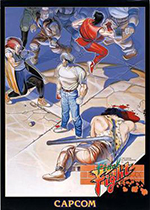
While browsing through the arcade area at the Long Island Retro Expo, my girlfriend and I also came across the Final Fight cabinet. We played it a good amount on Friday evening, but my partner wanted to take a break to get food so we didn't get a chance to finish our playthrough at that time. On Sunday afternoon, we returned to the arcade and were able to hop on and give it another go.
Previously, I've played through the Final Fight port on the SNES and tried the Sega CD version, but I had never beat the arcade original. For this playthrough my girlfriend played as Guy and I played as Cody.
Final Fight is another example of an early game in the beat 'em up genre, but Capcom did a great job of taking the genre to the next level with this release. The controls are very smooth and responsive compared to other early games. The graphics and music are also both very impressive. Gameplay wise, you have access to a variety of regular attacks, jump attacks, throws, and a special. You also can pick up a variety of weapons to give yourself a slight advantage and various other items to raise your score. Besides the waves of henchmen, you’ll also need to watch out for environmental hazards, and have to deal with a serious boss fight at the end of each stage.
In regards to the graphics, the sprites for the characters are both large and very detailed. The background graphics for each stage are also very well done. The game looks great, but especially when compared to the other beat ‘em ups that were available at that time. The background tune to the beginning of the first stage, which I believe is titled “Slum Above” iconic IMO and my favorite song in the game’s soundtrack. The OST is really good and gets you pumped for the action,, but unfortunately in a loud arcade setting, we weren’t able to get the full experience when it came to the sound.
Overall, we had a great time playing this one and I’m really glad my girlfriend enjoyed it as well. She can be hit or miss when it comes to older games, so it’s great to find another one she also enjoys. Looking forward to introducing her to the other games in the series on the SNES. Definitely check this one out if you haven’t!
2. Iridion II (GBA)*
3. Final Fantasy III (SNES)
4. Tenchu: Stealth Assassins (PS1)
5. Shockman Zero (SNES)
6. Suikoden (PS1)
7. Chiki Chiki Boys (GEN)
8. Altered Beast (GEN)
9. Jewel Master (GEN)
10. Fight'N Rage (NSW)
11. Lunar: Silver Star Story Complete (PS1)
12. Phantasy Star (SMS)
13. Super Metroid (SNES)
14. Double Dragon (Arcade)
15. Final Fight (Arcade)
(Slowly catching up on reviews ... )
While browsing through the arcade area at the Long Island Retro Expo, my girlfriend and I also came across the Final Fight cabinet. We played it a good amount on Friday evening, but my partner wanted to take a break to get food so we didn't get a chance to finish our playthrough at that time. On Sunday afternoon, we returned to the arcade and were able to hop on and give it another go.
Previously, I've played through the Final Fight port on the SNES and tried the Sega CD version, but I had never beat the arcade original. For this playthrough my girlfriend played as Guy and I played as Cody.
Final Fight is another example of an early game in the beat 'em up genre, but Capcom did a great job of taking the genre to the next level with this release. The controls are very smooth and responsive compared to other early games. The graphics and music are also both very impressive. Gameplay wise, you have access to a variety of regular attacks, jump attacks, throws, and a special. You also can pick up a variety of weapons to give yourself a slight advantage and various other items to raise your score. Besides the waves of henchmen, you’ll also need to watch out for environmental hazards, and have to deal with a serious boss fight at the end of each stage.
In regards to the graphics, the sprites for the characters are both large and very detailed. The background graphics for each stage are also very well done. The game looks great, but especially when compared to the other beat ‘em ups that were available at that time. The background tune to the beginning of the first stage, which I believe is titled “Slum Above” iconic IMO and my favorite song in the game’s soundtrack. The OST is really good and gets you pumped for the action,, but unfortunately in a loud arcade setting, we weren’t able to get the full experience when it came to the sound.
Overall, we had a great time playing this one and I’m really glad my girlfriend enjoyed it as well. She can be hit or miss when it comes to older games, so it’s great to find another one she also enjoys. Looking forward to introducing her to the other games in the series on the SNES. Definitely check this one out if you haven’t!
Re: Games Beaten 2025
1. Streets of Rage 3 (GEN)*
2. Iridion II (GBA)*
3. Final Fantasy III (SNES)
4. Tenchu: Stealth Assassins (PS1)
5. Shockman Zero (SNES)
6. Suikoden (PS1)
7. Chiki Chiki Boys (GEN)
8. Altered Beast (GEN)
9. Jewel Master (GEN)
10. Fight'N Rage (NSW)
11. Lunar: Silver Star Story Complete (PS1)
12. Phantasy Star (SMS)
13. Super Metroid (SNES)
14. Double Dragon (Arcade)
15. Final Fight (Arcade)
16. Street Fighter II Turbo: Hyper Fighting (SNES)
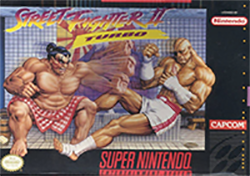
One of the first games I ever owned was the original release of Street Fighter II on the SNES, which was gifted to me with a SNES console on Christmas day of 1992. Like many of us, I spent so many hours playing that game with my cousins, and it was a big part of my childhood. Years later, I would receive the upgraded version, Super Street Fighter II as a Christmas gift as well, but I missed the Hyper Fighting version, which I would end up playing at friend’s places and arcades.
This summer, I saw a copy of it available at a vendor’s booth, and decided to pick it up. It was really great to revisit this game again after quite a number of years.
Street Fighter II Turbo: Hyper Fighting is the upgraded version of SF II, which includes the ability to speed up the matches as well as the four boss characters: Balrog, Vega, Sagat, and M. Bison now being playable. A few characters also have additional moves, such as Chun-Li now having a small fireball. For this solo playthrough, I played the game as Ken.
Gameplay wise, this mostly applies to the original release of SF II, but I’m going to bring it up here, Capcom just did an amazing job of coming up with the control scheme and button combinations for special moves. To this day, I still consider the button combinations for moves in this game the standard in fighting games, and I’ve had a tough time getting with any other system for 2D fighters. I was never too great with the charge characters, but the characters that have quarter circle or half circle moves, just feel right, IMO. Also, the control scheme fits quite well with the design of the SNES controller.
The graphics here are excellent, with not only the large character sprites being great, but the character animations for various movements, special attacks, and reactions after a character gets attacked are all masterfully done. My cousins and I used to get a kick out of that barf animation that would come up sometimes after a character got hit. Also, the backgrounds were eye-catching as well, and I love all the quirky animations included in each level. The random animations in the background help bring the game to life. Sound wise, the soundtrack is just spectacular and one of the best on the console IMO. With so many tracks being catchy and uplifting, I can’t even begin to pick a favorite. But it’s good enough, that it’s something I can listen to outside of the game and totally enjoy.
One of the only criticisms I can point out here is that the game does have some slowdown here and there. Also, at the time of release, I’m sure a lot of people were not happy that the cart was selling for full price, even though it was essentially an upgrade.
Even though I was quite young when this game was released, I still was able to experience the cultural phenomenon that was SF II, and I’m glad I was able to experience it then and relive that a little bit. If for some reason you never played this version of the game, or haven’t revisited it in quite a while, it’s highly recommended! I can’t wait to sit around with a few friends and pass around the controllers while playing this one again.
2. Iridion II (GBA)*
3. Final Fantasy III (SNES)
4. Tenchu: Stealth Assassins (PS1)
5. Shockman Zero (SNES)
6. Suikoden (PS1)
7. Chiki Chiki Boys (GEN)
8. Altered Beast (GEN)
9. Jewel Master (GEN)
10. Fight'N Rage (NSW)
11. Lunar: Silver Star Story Complete (PS1)
12. Phantasy Star (SMS)
13. Super Metroid (SNES)
14. Double Dragon (Arcade)
15. Final Fight (Arcade)
16. Street Fighter II Turbo: Hyper Fighting (SNES)
One of the first games I ever owned was the original release of Street Fighter II on the SNES, which was gifted to me with a SNES console on Christmas day of 1992. Like many of us, I spent so many hours playing that game with my cousins, and it was a big part of my childhood. Years later, I would receive the upgraded version, Super Street Fighter II as a Christmas gift as well, but I missed the Hyper Fighting version, which I would end up playing at friend’s places and arcades.
This summer, I saw a copy of it available at a vendor’s booth, and decided to pick it up. It was really great to revisit this game again after quite a number of years.
Street Fighter II Turbo: Hyper Fighting is the upgraded version of SF II, which includes the ability to speed up the matches as well as the four boss characters: Balrog, Vega, Sagat, and M. Bison now being playable. A few characters also have additional moves, such as Chun-Li now having a small fireball. For this solo playthrough, I played the game as Ken.
Gameplay wise, this mostly applies to the original release of SF II, but I’m going to bring it up here, Capcom just did an amazing job of coming up with the control scheme and button combinations for special moves. To this day, I still consider the button combinations for moves in this game the standard in fighting games, and I’ve had a tough time getting with any other system for 2D fighters. I was never too great with the charge characters, but the characters that have quarter circle or half circle moves, just feel right, IMO. Also, the control scheme fits quite well with the design of the SNES controller.
The graphics here are excellent, with not only the large character sprites being great, but the character animations for various movements, special attacks, and reactions after a character gets attacked are all masterfully done. My cousins and I used to get a kick out of that barf animation that would come up sometimes after a character got hit. Also, the backgrounds were eye-catching as well, and I love all the quirky animations included in each level. The random animations in the background help bring the game to life. Sound wise, the soundtrack is just spectacular and one of the best on the console IMO. With so many tracks being catchy and uplifting, I can’t even begin to pick a favorite. But it’s good enough, that it’s something I can listen to outside of the game and totally enjoy.
One of the only criticisms I can point out here is that the game does have some slowdown here and there. Also, at the time of release, I’m sure a lot of people were not happy that the cart was selling for full price, even though it was essentially an upgrade.
Even though I was quite young when this game was released, I still was able to experience the cultural phenomenon that was SF II, and I’m glad I was able to experience it then and relive that a little bit. If for some reason you never played this version of the game, or haven’t revisited it in quite a while, it’s highly recommended! I can’t wait to sit around with a few friends and pass around the controllers while playing this one again.
Re: Games Beaten 2025
1. Streets of Rage 3 (GEN)*
2. Iridion II (GBA)*
3. Final Fantasy III (SNES)
4. Tenchu: Stealth Assassins (PS1)
5. Shockman Zero (SNES)
6. Suikoden (PS1)
7. Chiki Chiki Boys (GEN)
8. Altered Beast (GEN)
9. Jewel Master (GEN)
10. Fight'N Rage (NSW)
11. Lunar: Silver Star Story Complete (PS1)
12. Phantasy Star (SMS)
13. Super Metroid (SNES)
14. Double Dragon (Arcade)
15. Final Fight (Arcade)
16. Street Fighter II Turbo: Hyper Fighting (SNES)
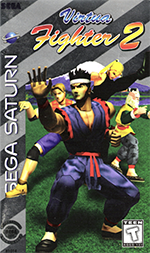
17. Virtua Fighter 2 (SAT)
Virtua Fighter 2 is another title that I didn't own back around the time of its release, but I had the chance to play it at my friend's place. He had received a Saturn as a gift back then and his console came bundled with three games in a cardbox and disc sleeves, Virtua Cop, Daytona USA, and Virtua Fighter 2. I had good memories playing the game with my friend, so when I spotted a CIB copy at an expo I attended over the summer, I decided to go for it. When I sat down to test the game, I had a tough time putting it down and ended up finishing it. For this particular playthrough, I played as Akira.
Virtua Fighter 2 is an early 3D fighter that was going up against some great similar titles at the time. However, I really like how Sega handled the control scheme and the move sets for each character, which feel very technical. While the controls seem quite basic, with just three buttons on the controller being mapped to the block, punch, and kick actions, once you open the manual and see the move list for each character, you'll realize there's something a lot deeper here. While there are a lot of moves to learn for each character, I'm glad to say the button combinations are not overly complex, but a lot of the moves rely on precise timing, which will take some repetition to get down. The gameplay is very fast and aggressive (which I think has helped it age well), and a round can be over in a blink if a significant combo or throw is properly executed. Also, there are no projectiles or other fancy super moves here, which I think gives the title a more down to earth and realistic feel.
Graphics wise, VF 2 looks great on the Saturn. The character models are vastly improved from the first game in the series and Sega's development team really stepped up in that department in a short period of time. The backgrounds look decent, but a lot of the details were cut from the original arcade version, which offered full 3D backdrops. It's not a deal breaker, but I think it's fair to point out this aspect took a hit with the Saturn port. Regarding the music, the tunes here fit the style of the game well and definitely add to the action. My favorite song on the OST is probably Young Knight, which is Lion's theme.
Overall, I had a very fun time revisiting Virtua Fighter 2 and I was glad to replay it. The technical style of the fighting really clicks with me, and I would like to spend some more time with this game, the VF series, and some of Sega's other 3D fighters on the platform. I have pretty high praise for the title, and have to say it's up there as one of my favorite 3D fighters along with Soul Calibur. If you haven't checked this one out or haven't revisited it in quite a while, give it a go!
2. Iridion II (GBA)*
3. Final Fantasy III (SNES)
4. Tenchu: Stealth Assassins (PS1)
5. Shockman Zero (SNES)
6. Suikoden (PS1)
7. Chiki Chiki Boys (GEN)
8. Altered Beast (GEN)
9. Jewel Master (GEN)
10. Fight'N Rage (NSW)
11. Lunar: Silver Star Story Complete (PS1)
12. Phantasy Star (SMS)
13. Super Metroid (SNES)
14. Double Dragon (Arcade)
15. Final Fight (Arcade)
16. Street Fighter II Turbo: Hyper Fighting (SNES)
17. Virtua Fighter 2 (SAT)
Virtua Fighter 2 is another title that I didn't own back around the time of its release, but I had the chance to play it at my friend's place. He had received a Saturn as a gift back then and his console came bundled with three games in a cardbox and disc sleeves, Virtua Cop, Daytona USA, and Virtua Fighter 2. I had good memories playing the game with my friend, so when I spotted a CIB copy at an expo I attended over the summer, I decided to go for it. When I sat down to test the game, I had a tough time putting it down and ended up finishing it. For this particular playthrough, I played as Akira.
Virtua Fighter 2 is an early 3D fighter that was going up against some great similar titles at the time. However, I really like how Sega handled the control scheme and the move sets for each character, which feel very technical. While the controls seem quite basic, with just three buttons on the controller being mapped to the block, punch, and kick actions, once you open the manual and see the move list for each character, you'll realize there's something a lot deeper here. While there are a lot of moves to learn for each character, I'm glad to say the button combinations are not overly complex, but a lot of the moves rely on precise timing, which will take some repetition to get down. The gameplay is very fast and aggressive (which I think has helped it age well), and a round can be over in a blink if a significant combo or throw is properly executed. Also, there are no projectiles or other fancy super moves here, which I think gives the title a more down to earth and realistic feel.
Graphics wise, VF 2 looks great on the Saturn. The character models are vastly improved from the first game in the series and Sega's development team really stepped up in that department in a short period of time. The backgrounds look decent, but a lot of the details were cut from the original arcade version, which offered full 3D backdrops. It's not a deal breaker, but I think it's fair to point out this aspect took a hit with the Saturn port. Regarding the music, the tunes here fit the style of the game well and definitely add to the action. My favorite song on the OST is probably Young Knight, which is Lion's theme.
Overall, I had a very fun time revisiting Virtua Fighter 2 and I was glad to replay it. The technical style of the fighting really clicks with me, and I would like to spend some more time with this game, the VF series, and some of Sega's other 3D fighters on the platform. I have pretty high praise for the title, and have to say it's up there as one of my favorite 3D fighters along with Soul Calibur. If you haven't checked this one out or haven't revisited it in quite a while, give it a go!
-
PartridgeSenpai
- Next-Gen
- Posts: 3188
- Joined: Mon Dec 14, 2015 9:27 am
- Location: Northern Japan
Re: Games Beaten 2025
Partridge Senpai's 2025 Beaten Games:
Previously: 2016 2017 2018 2019 2020 2021 2022 2023 2024
* indicates a repeat
1~50
51. Wave Race 64 (N64)
52. Bakushou Jinsei 64: Mezase! Resort-ou (N64)
53. Mother (Famicom)
54. Famista 64 (N64)
55. Weird and Unfortunate Things are Happening (PC)
56. Kirby and the Rainbow Curse (Wii U)
57. Mario Kart Wii (Wii)
58. Wario Land: Shake it! (Wii) *
59. Mario Party 8 (Wii) *
60. Zack & Wiki: Quest for Barbaros' Treasure (Wii)
61. SimCity 2000 (N64)
62. Prototype (PS3)
63. Prototype 2 (PS3)
64. Final Fantasy X (PS2) *
65. Final Fantasy X-2 (PS2)
66. Grand Theft Auto: Vice City (PS2)
67. Crackdown (Xbox 360)
68. Crackdown 2 (Xbox 360)
69. Alan Wake (Xbox 360) *
70. Dead to Rights (Xbox)
71. Medal of Honor (PS3)
72. Mario Kart 8 (Wii U)
73. Donkey Kong Country Returns (Wii) *
74. Mario Party 9 (Wii) *
75. Dragon Ball Z: Budokai 2 (PS2)
76. Splashdown (PS2)
77. R4 Ridge Racer Type 4 (PS1)
78. Super Smash Bros. Brawl (Wii) *
79. Star Fox (SNES)
80. Kamen Rider: Battride War (PS3)
81. Mario Kart: Double Dash!! (GC) *
82. Final Fantasy VII: International Edition (PS1)
83. Final Fantasy VIII (PS1)
84. Final Fantasy IX (PS1) *
85. Pac-Man World (PS1)
86. Super Ghouls'n Ghosts (SFC)
87. Disney's Aladdin (SNES)
88. Mega Man: Wily Wars (MD)
89. The Magical Quest Starring Mickey Mouse (SNES)
90. The Great Circus Mystery Starring Mickey & Minnie (SNES)
91. Mickey to Donald Magical Adventure 3 (SFC)
92. Disney's The Little Mermaid (NES)
93. Little Nemo: The Dream Master (NES)
94. Gunman's Proof (SFC)
95. Blaze & Blade: Busters (PS1)
96. Void Stranger (Steam)
97. Fortune Street (Wii)
98. Max Payne (PS2)
This was a game and series I’ve been loosely aware of for a long while, but mostly only because it’s the game credited with inventing bullet time slowdown mechanics. However, upon recently finishing the Japanese version of Alan Wake and enjoying that game’s fantastic Japanese dub, that got me interested about how good a dub treatment Remedy’s other games may or may not have. That led me to discovering that the original Max Payne not only came out here (though its sequel sadly didn’t) but also that it actually has a Japanese dub too! I set out to find a copy at once, and I was lucky enough to find one for a super bargain too. I really had no idea what the game was like, in truth, other than that my friends who’d played it really seemed to like it, so I figured I was in for a good time if nothing else X3. It overall took me about 10.5-ish hours to beat the Japanese version of the game on normal mode.
Max Payne is the story of our titular character, Mr. Payne himself. Three years ago, he was just an average cop on the NYPD, but that all changed when a group of maniacs attacked his house and killed his wife and child. Left with nothing to lose, he joins a super dangerous undercover unit at the NYPD to start hunting down why his family was killed. However, things begin to go from bad to worse as he first barely avoids an assassination before being framed for an assassination himself. On the run from gangs, the mafia, and the law, he’s a man against the world with nothing to lose, and he’s gonna make sure that the people who ruined his life feel the pain he’s been surviving through these past three long years.
Max Payne’s story is well regarded as a campy crime noir story in English, and while I’m not super familiar with that version of things, I’m happy to report that they do a fantastic job of translating it into Japanese. The amazing straightness with which they approach this absurd story is so incredible that this game just about always had me in stitches. From Max’s witty, overly serious narration in the cutscenes between levels to even the goofy dialogue between goons talking about their favorite movies and naming their guns, Max Payne is a crime story that is very well aware of exactly how silly it is, and it’s having a TON of fun reveling in that X3. I found that some actual details of the mystery Max is going through can get lost in the frenzy at times, but the game’s overall pacing is still good enough that I never found it to be a meaningful issue even if the story’s not the most carefully put together thing in the world. It’s also got a pretty neat anti-corporate flair to it, but the main meat of the story is this rip-roaring rampage of revenge, and it does a gloriously fun job of bringing that to life even in a language other than the original one. As long as you don’t need all your stories to be serious, then Max Payne is easily a super fun time that I can easily imagine is just as fun in English X3
The gameplay of Max Payne is a stage-based third-person shooter. There are three acts each with an assortment of chapters that break it up, and in the console versions of the game, those chapters are further divided into sub-stages (likely due to constraints in how much of the level can exist at one time). Level design is largely quite good, and I think chopping up levels like they have makes up really well for the lack of a quick-save system like the PC original had. Compared to the relentlessly cheap and unforgiving Dead to Rights that I played earlier in the year, Max Payne is a pretty darn well balanced game that is just about always challenging but never too frustrating.
You’ve got a pretty good variety of guns to take out bad guys with, and you’ve also got the famous bullet time slowdown feature to assist you in taking aim just where you need to. Guns overall feel great too, and the shotgun in particular is SO satisfying to use with how powerful it is and how far it makes enemies fly when you hit them X3. The only caveat to all that is that, as much fun as the rolling dodges and slow-mo jumping dives are, I found them to be pretty unnecessary in this version of the game because of changes to how much accuracy is demanded of the player during firefights. The original PC version (which I have not played myself but have seen a few hours of it be played) requires quite precise aim to take out enemies, and the slow-mo helps a TON to take out enemies. However, to make up for how much harder it is to aim accurately on a joystick compared to with a mouse, Remedy have put in an auto-aiming support feature (which can actually be turned off if you’re feeling particularly death hungry XD). That auto-aim feature is SUPER powerful, though. It doesn’t change your camera, but as long as you’re aiming even kinda near an enemy, Max will probably end up hitting them with his shot.
I honestly didn’t mind this at all. Being far from the best at shooters, I’ll take any help I can get for this kind of game, so being able to not have to worry terribly much about accuracy kept the game well-paced, not too challenging, and more than forgiving enough for me to always want to keep going when I’d fail a challenge. However, the other reason that I appreciated it and the main reason I’d say the auto-aim is basically necessary to play this version of the game is because the PS2 port of Max Payne runs like *trash*. I’m not one to usually be bothered by a spotty frame rate, but this game’s frame rate is both incredibly inconsistent and drops below 10 frames per second very frequently during firefights with even 2 or 3 enemies at once. If you had to aim accurately with no auto-aim, then this game would frankly be downright impossible to complete at many points just because of how badly it runs. As much fun as I had with Max Payne and as well designed a game as I believe it to be, I absolutely cannot recommend you play it on PS2 if you have any other option with just how badly it runs on this platform. I was more than willing to make that sacrifice to see the Japanese dub, but I understand very well that most people are not nearly so willing to make such a sacrifice to play a game this old XD
The presentation is definitely “2001 PC game” in a lot of ways, but there are a lot of stylistic choices that are really fun! Remedy went to New York City to get references to make the environments, and it really shows in just how evocatively they recreate the feeling of the city in this game. Additionally, the character models use faces that are taken from photographs of real people including Sam Lake, the game’s writer, as Max Payne himself X3. The cutscenes between levels use a comic book stylization on top of real photographs for their storytelling too, and it ends up being such a great boost to how campy everything already is. Sam Lake’s faces for Max Payne are so delightfully exaggerated that it highlights the absurdity of the story very well, and the game would’ve been far worse if they’d stuck with only 3D cutscenes or whatever. The soundtrack, on the other hand, is just okay. It’s perfectly adequate for when it’s used to make a scene more dramatic, but it’s nothing super memorable by itself.
Verdict: Recommended. Even as poorly as this game ran on the PS2, I still had a ton of fun with it. The localization is fantastic, and it makes a for a super fun yakuza-style crime story (that being the genre fiction, not the game series of the same name) out of Max Payne’s English original. The game may run pretty dire on this hardware, but if you’re willing to wade through that or just have another version available, then this game is very worth playing if you’re up for a fun time that isn’t too difficult either. This game’s good reputation is well deserved, and as much as it’s hardly as great as Remedy’s more recent games, I was still as happy as I was surprised to see just how well this game has held up despite its age~.
Previously: 2016 2017 2018 2019 2020 2021 2022 2023 2024
* indicates a repeat
1~50
52. Bakushou Jinsei 64: Mezase! Resort-ou (N64)
53. Mother (Famicom)
54. Famista 64 (N64)
55. Weird and Unfortunate Things are Happening (PC)
56. Kirby and the Rainbow Curse (Wii U)
57. Mario Kart Wii (Wii)
58. Wario Land: Shake it! (Wii) *
59. Mario Party 8 (Wii) *
60. Zack & Wiki: Quest for Barbaros' Treasure (Wii)
61. SimCity 2000 (N64)
62. Prototype (PS3)
63. Prototype 2 (PS3)
64. Final Fantasy X (PS2) *
65. Final Fantasy X-2 (PS2)
66. Grand Theft Auto: Vice City (PS2)
67. Crackdown (Xbox 360)
68. Crackdown 2 (Xbox 360)
69. Alan Wake (Xbox 360) *
70. Dead to Rights (Xbox)
71. Medal of Honor (PS3)
72. Mario Kart 8 (Wii U)
73. Donkey Kong Country Returns (Wii) *
74. Mario Party 9 (Wii) *
75. Dragon Ball Z: Budokai 2 (PS2)
76. Splashdown (PS2)
77. R4 Ridge Racer Type 4 (PS1)
78. Super Smash Bros. Brawl (Wii) *
79. Star Fox (SNES)
80. Kamen Rider: Battride War (PS3)
81. Mario Kart: Double Dash!! (GC) *
82. Final Fantasy VII: International Edition (PS1)
83. Final Fantasy VIII (PS1)
84. Final Fantasy IX (PS1) *
85. Pac-Man World (PS1)
86. Super Ghouls'n Ghosts (SFC)
87. Disney's Aladdin (SNES)
88. Mega Man: Wily Wars (MD)
89. The Magical Quest Starring Mickey Mouse (SNES)
90. The Great Circus Mystery Starring Mickey & Minnie (SNES)
91. Mickey to Donald Magical Adventure 3 (SFC)
92. Disney's The Little Mermaid (NES)
93. Little Nemo: The Dream Master (NES)
94. Gunman's Proof (SFC)
95. Blaze & Blade: Busters (PS1)
96. Void Stranger (Steam)
97. Fortune Street (Wii)
98. Max Payne (PS2)
This was a game and series I’ve been loosely aware of for a long while, but mostly only because it’s the game credited with inventing bullet time slowdown mechanics. However, upon recently finishing the Japanese version of Alan Wake and enjoying that game’s fantastic Japanese dub, that got me interested about how good a dub treatment Remedy’s other games may or may not have. That led me to discovering that the original Max Payne not only came out here (though its sequel sadly didn’t) but also that it actually has a Japanese dub too! I set out to find a copy at once, and I was lucky enough to find one for a super bargain too. I really had no idea what the game was like, in truth, other than that my friends who’d played it really seemed to like it, so I figured I was in for a good time if nothing else X3. It overall took me about 10.5-ish hours to beat the Japanese version of the game on normal mode.
Max Payne is the story of our titular character, Mr. Payne himself. Three years ago, he was just an average cop on the NYPD, but that all changed when a group of maniacs attacked his house and killed his wife and child. Left with nothing to lose, he joins a super dangerous undercover unit at the NYPD to start hunting down why his family was killed. However, things begin to go from bad to worse as he first barely avoids an assassination before being framed for an assassination himself. On the run from gangs, the mafia, and the law, he’s a man against the world with nothing to lose, and he’s gonna make sure that the people who ruined his life feel the pain he’s been surviving through these past three long years.
Max Payne’s story is well regarded as a campy crime noir story in English, and while I’m not super familiar with that version of things, I’m happy to report that they do a fantastic job of translating it into Japanese. The amazing straightness with which they approach this absurd story is so incredible that this game just about always had me in stitches. From Max’s witty, overly serious narration in the cutscenes between levels to even the goofy dialogue between goons talking about their favorite movies and naming their guns, Max Payne is a crime story that is very well aware of exactly how silly it is, and it’s having a TON of fun reveling in that X3. I found that some actual details of the mystery Max is going through can get lost in the frenzy at times, but the game’s overall pacing is still good enough that I never found it to be a meaningful issue even if the story’s not the most carefully put together thing in the world. It’s also got a pretty neat anti-corporate flair to it, but the main meat of the story is this rip-roaring rampage of revenge, and it does a gloriously fun job of bringing that to life even in a language other than the original one. As long as you don’t need all your stories to be serious, then Max Payne is easily a super fun time that I can easily imagine is just as fun in English X3
The gameplay of Max Payne is a stage-based third-person shooter. There are three acts each with an assortment of chapters that break it up, and in the console versions of the game, those chapters are further divided into sub-stages (likely due to constraints in how much of the level can exist at one time). Level design is largely quite good, and I think chopping up levels like they have makes up really well for the lack of a quick-save system like the PC original had. Compared to the relentlessly cheap and unforgiving Dead to Rights that I played earlier in the year, Max Payne is a pretty darn well balanced game that is just about always challenging but never too frustrating.
You’ve got a pretty good variety of guns to take out bad guys with, and you’ve also got the famous bullet time slowdown feature to assist you in taking aim just where you need to. Guns overall feel great too, and the shotgun in particular is SO satisfying to use with how powerful it is and how far it makes enemies fly when you hit them X3. The only caveat to all that is that, as much fun as the rolling dodges and slow-mo jumping dives are, I found them to be pretty unnecessary in this version of the game because of changes to how much accuracy is demanded of the player during firefights. The original PC version (which I have not played myself but have seen a few hours of it be played) requires quite precise aim to take out enemies, and the slow-mo helps a TON to take out enemies. However, to make up for how much harder it is to aim accurately on a joystick compared to with a mouse, Remedy have put in an auto-aiming support feature (which can actually be turned off if you’re feeling particularly death hungry XD). That auto-aim feature is SUPER powerful, though. It doesn’t change your camera, but as long as you’re aiming even kinda near an enemy, Max will probably end up hitting them with his shot.
I honestly didn’t mind this at all. Being far from the best at shooters, I’ll take any help I can get for this kind of game, so being able to not have to worry terribly much about accuracy kept the game well-paced, not too challenging, and more than forgiving enough for me to always want to keep going when I’d fail a challenge. However, the other reason that I appreciated it and the main reason I’d say the auto-aim is basically necessary to play this version of the game is because the PS2 port of Max Payne runs like *trash*. I’m not one to usually be bothered by a spotty frame rate, but this game’s frame rate is both incredibly inconsistent and drops below 10 frames per second very frequently during firefights with even 2 or 3 enemies at once. If you had to aim accurately with no auto-aim, then this game would frankly be downright impossible to complete at many points just because of how badly it runs. As much fun as I had with Max Payne and as well designed a game as I believe it to be, I absolutely cannot recommend you play it on PS2 if you have any other option with just how badly it runs on this platform. I was more than willing to make that sacrifice to see the Japanese dub, but I understand very well that most people are not nearly so willing to make such a sacrifice to play a game this old XD
The presentation is definitely “2001 PC game” in a lot of ways, but there are a lot of stylistic choices that are really fun! Remedy went to New York City to get references to make the environments, and it really shows in just how evocatively they recreate the feeling of the city in this game. Additionally, the character models use faces that are taken from photographs of real people including Sam Lake, the game’s writer, as Max Payne himself X3. The cutscenes between levels use a comic book stylization on top of real photographs for their storytelling too, and it ends up being such a great boost to how campy everything already is. Sam Lake’s faces for Max Payne are so delightfully exaggerated that it highlights the absurdity of the story very well, and the game would’ve been far worse if they’d stuck with only 3D cutscenes or whatever. The soundtrack, on the other hand, is just okay. It’s perfectly adequate for when it’s used to make a scene more dramatic, but it’s nothing super memorable by itself.
Verdict: Recommended. Even as poorly as this game ran on the PS2, I still had a ton of fun with it. The localization is fantastic, and it makes a for a super fun yakuza-style crime story (that being the genre fiction, not the game series of the same name) out of Max Payne’s English original. The game may run pretty dire on this hardware, but if you’re willing to wade through that or just have another version available, then this game is very worth playing if you’re up for a fun time that isn’t too difficult either. This game’s good reputation is well deserved, and as much as it’s hardly as great as Remedy’s more recent games, I was still as happy as I was surprised to see just how well this game has held up despite its age~.
I identify everyone via avatar, so if you change your avatar, I genuinely might completely forget who you are. -- Me

Re: Games Beaten 2025
You're in a videogame Pidge.
Blizzard Entertainment Software Developer - All comments and views are my own and not representative of the company.
Re: Games Beaten 2025
1. Streets of Rage 3 (GEN)*
2. Iridion II (GBA)*
3. Final Fantasy III (SNES)
4. Tenchu: Stealth Assassins (PS1)
5. Shockman Zero (SNES)
6. Suikoden (PS1)
7. Chiki Chiki Boys (GEN)
8. Altered Beast (GEN)
9. Jewel Master (GEN)
10. Fight'N Rage (NSW)
11. Lunar: Silver Star Story Complete (PS1)
12. Phantasy Star (SMS)
13. Super Metroid (SNES)
14. Double Dragon (Arcade)
15. Final Fight (Arcade)
16. Street Fighter II Turbo: Hyper Fighting (SNES)
17. Virtua Fighter 2 (SAT)
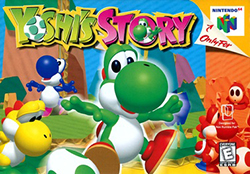
18. Yoshi's Story (N64)
Super Mario World 2: Yoshi’s Island was sitting in my backlog for many years before I finally completed it in 2020. When I was younger, I liked the game but I could not get over the high-pitched squealing of Baby Mario. Eventually, I managed to put that aside and get through the game. I’m glad I did because it ended up growing on me and being a memorable experience. After reading a variety of opinions on the N64 sequel, I wanted to finally give it a shot during this year's Summer Games Challenge.
As a fan of 2D platformers, I was looking forward to trying the follow up to Yoshi’s Island. The game has some similarities to the original, but also has some interesting differences in both the mechanics, the type of collectables, and the general overall structure of the game. Luckily, Baby Mario does not make a return here, so we’re spared this go around.
You get a chance to choose one of six different colored Yoshi; however, the Yoshis do not possess any unique abilities, which is too bad, as the developers could have added a strategic aspect to the game in which a certain Yoshi could have been better suited for a level. Another interesting aspect here is how the levels were designed. The levels actually don’t have an endpoint, you must collect a certain amount of fruit, and if you’re not able to, the level will loop you back to the starting point to go through it again. Also, specific fruits are worth more points than others, so I tried to hold out for the fruits that were worth more. If I was having an issue finding them, I would start to collect the others.
Another unique design choice is that in each world you visit, you will only get a chance to play one of the five stages in that world, which you have the option to choose from. I didn’t really care for this design choice, as I would have preferred to have had the opportunity to go through each level on my first playthrough. It would have been nice if the player had the option to move on to the next world, or continue going through each stage in that world. To unlock additional levels, you can collect the three large hearts that appear in the stages as well. However, with the developers structuring the game this way, this means your playthrough will be done after six levels, which is really very short for this style of game.
Gameplay wise, the challenge isn’t very high, and veterans at the platformer genre will most likely breeze through this one. The better you perform during the level, and if you stick to certain fruits, the more points you receive. However, there is not much of a reward for getting high scores. I believe there is a slightly different ending if you only collect watermelons throughout your playthrough. Also, there are a few bosses throughout the game, but depending on which levels you choose before you reach the end you could potentially miss them. Perhaps the developers should have had a boss appear after each stage, no matter which one the player chose.
Yoshi’s Story shines in the graphics department. In an era where gamers were experiencing early 3D games that didn’t age so well, Yoshi’s Island still looks pretty good to this day, as it stuck to 2D and did so with a bright and colorful palette. There are also a lot of well designed enemies and backdrops here, and everything is smoothly animated. The only nitpick I have is about the UI, where every once in a while I would mix up a fruit on the screen’s border, which displays everything you’ve collected, with something in the level. Perhaps some type of effect or palette swap could have been used for the border to differentiate. The music is good, matches the rest of the game, and will draw you into the world here, but it’s not something I would listen to outside of the game.
Overall, I can fully understand why Yoshi’s Story has mixed reviews. I do like the controls and graphics here, but I think the game doesn’t reach its full potential, with a low challenge and very short playthroughs due to the non linear structure. I had some fun with this one, but I’m hesitant to recommend it to veteran gamers. If you’re up for a short romp or want to experience a 2D holdout in the early era of 3D gaming, maybe give it a go.
2. Iridion II (GBA)*
3. Final Fantasy III (SNES)
4. Tenchu: Stealth Assassins (PS1)
5. Shockman Zero (SNES)
6. Suikoden (PS1)
7. Chiki Chiki Boys (GEN)
8. Altered Beast (GEN)
9. Jewel Master (GEN)
10. Fight'N Rage (NSW)
11. Lunar: Silver Star Story Complete (PS1)
12. Phantasy Star (SMS)
13. Super Metroid (SNES)
14. Double Dragon (Arcade)
15. Final Fight (Arcade)
16. Street Fighter II Turbo: Hyper Fighting (SNES)
17. Virtua Fighter 2 (SAT)
18. Yoshi's Story (N64)
Super Mario World 2: Yoshi’s Island was sitting in my backlog for many years before I finally completed it in 2020. When I was younger, I liked the game but I could not get over the high-pitched squealing of Baby Mario. Eventually, I managed to put that aside and get through the game. I’m glad I did because it ended up growing on me and being a memorable experience. After reading a variety of opinions on the N64 sequel, I wanted to finally give it a shot during this year's Summer Games Challenge.
As a fan of 2D platformers, I was looking forward to trying the follow up to Yoshi’s Island. The game has some similarities to the original, but also has some interesting differences in both the mechanics, the type of collectables, and the general overall structure of the game. Luckily, Baby Mario does not make a return here, so we’re spared this go around.
You get a chance to choose one of six different colored Yoshi; however, the Yoshis do not possess any unique abilities, which is too bad, as the developers could have added a strategic aspect to the game in which a certain Yoshi could have been better suited for a level. Another interesting aspect here is how the levels were designed. The levels actually don’t have an endpoint, you must collect a certain amount of fruit, and if you’re not able to, the level will loop you back to the starting point to go through it again. Also, specific fruits are worth more points than others, so I tried to hold out for the fruits that were worth more. If I was having an issue finding them, I would start to collect the others.
Another unique design choice is that in each world you visit, you will only get a chance to play one of the five stages in that world, which you have the option to choose from. I didn’t really care for this design choice, as I would have preferred to have had the opportunity to go through each level on my first playthrough. It would have been nice if the player had the option to move on to the next world, or continue going through each stage in that world. To unlock additional levels, you can collect the three large hearts that appear in the stages as well. However, with the developers structuring the game this way, this means your playthrough will be done after six levels, which is really very short for this style of game.
Gameplay wise, the challenge isn’t very high, and veterans at the platformer genre will most likely breeze through this one. The better you perform during the level, and if you stick to certain fruits, the more points you receive. However, there is not much of a reward for getting high scores. I believe there is a slightly different ending if you only collect watermelons throughout your playthrough. Also, there are a few bosses throughout the game, but depending on which levels you choose before you reach the end you could potentially miss them. Perhaps the developers should have had a boss appear after each stage, no matter which one the player chose.
Yoshi’s Story shines in the graphics department. In an era where gamers were experiencing early 3D games that didn’t age so well, Yoshi’s Island still looks pretty good to this day, as it stuck to 2D and did so with a bright and colorful palette. There are also a lot of well designed enemies and backdrops here, and everything is smoothly animated. The only nitpick I have is about the UI, where every once in a while I would mix up a fruit on the screen’s border, which displays everything you’ve collected, with something in the level. Perhaps some type of effect or palette swap could have been used for the border to differentiate. The music is good, matches the rest of the game, and will draw you into the world here, but it’s not something I would listen to outside of the game.
Overall, I can fully understand why Yoshi’s Story has mixed reviews. I do like the controls and graphics here, but I think the game doesn’t reach its full potential, with a low challenge and very short playthroughs due to the non linear structure. I had some fun with this one, but I’m hesitant to recommend it to veteran gamers. If you’re up for a short romp or want to experience a 2D holdout in the early era of 3D gaming, maybe give it a go.