The point of the wall jump in Super Metroid is that it's a hidden move at the start. Its use is also hidden in the level design, as in, its (ab)use isn't acknowledged.
Or is it? As using it will grant you access to plenty of sequence breaking, but it never breaks the game. The use of bomb-jumping and Shine Spark is similar.
This is what makes Super Metroid so amazing: you're never really sure how the designers intended you to do sequence breaking. This is also the reason why Hollow Knight remains a top-tier game.
If the wall jump were easily discovered, then its use would be too obvious.
Games Beaten 2025

Re: Games Beaten 2025
That's a good breakdown, popo. It's that extra directional pad push to move in the other direction before (I believe you have to press it beforehand) pressing jump again that would throw me off. I think sometimes my timing was off on that d-pad press, and other times my timing was off on the extra jump. After a lot of practice, I managed to get the timing down to make my way through certain shafts when needed.
Also, this isn't the only game I've had issues with the double jump mechanic. Another one I have trouble with is Shinobi III on the Genesis.
Also, this isn't the only game I've had issues with the double jump mechanic. Another one I have trouble with is Shinobi III on the Genesis.
-
PartridgeSenpai

- Next-Gen
- Posts: 3188
- Joined: Mon Dec 14, 2015 9:27 am
- Location: Northern Japan
Re: Games Beaten 2025
Partridge Senpai's 2025 Beaten Games:
Previously: 2016 2017 2018 2019 2020 2021 2022 2023 2024
* indicates a repeat
1~50
51. Wave Race 64 (N64)
52. Bakushou Jinsei 64: Mezase! Resort-ou (N64)
53. Mother (Famicom)
54. Famista 64 (N64)
55. Weird and Unfortunate Things are Happening (PC)
56. Kirby and the Rainbow Curse (Wii U)
57. Mario Kart Wii (Wii)
58. Wario Land: Shake it! (Wii) *
59. Mario Party 8 (Wii) *
60. Zack & Wiki: Quest for Barbaros' Treasure (Wii)
61. SimCity 2000 (N64)
62. Prototype (PS3)
63. Prototype 2 (PS3)
64. Final Fantasy X (PS2) *
65. Final Fantasy X-2 (PS2)
66. Grand Theft Auto: Vice City (PS2)
67. Crackdown (Xbox 360)
68. Crackdown 2 (Xbox 360)
69. Alan Wake (Xbox 360) *
70. Dead to Rights (Xbox)
71. Medal of Honor (PS3)
72. Mario Kart 8 (Wii U)
73. Donkey Kong Country Returns (Wii) *
74. Mario Party 9 (Wii) *
75. Dragon Ball Z: Budokai 2 (PS2)
76. Splashdown (PS2)
77. R4 Ridge Racer Type 4 (PS1)
78. Super Smash Bros. Brawl (Wii) *
79. Star Fox (SNES)
80. Kamen Rider: Battride War (PS3)
81. Mario Kart: Double Dash!! (GC) *
This is a game I played a TON as a kid, and before this I'd easily 100% unlocked everything in the game at least 3 times back in the day. However, it just so happens that this is a childhood favorite of my wife too! Upon learning that, I went out and grabbed a copy as soon as I could so we could replay through it together when she came to visit~. Playing on my GameCube, it took us about 8.5 hours to beat all the cups and unlock all the karts and characters playing 2-player versus on the Japanese version of the game.
Being a Mario Kart game, there's no story to speak of here. You've got 16 brand new tracks to race on spread across 4 grand prix (and one crazy "all tour" grand prix mode where you play through all 16 in a jumbled order), and you've got 3 cc rankings plus mirror mode to go through. The gimmick with this game, however, is the "Double" there in the title. Rather than only one racer per kart, now you've got two! You can't drag items behind you like you can in Mario Kart 64 or Mario Kart Wii, but you *can* just straight up hold two items at once, because each racer can hold an item. You can press Z to switch who's driving and who's in back, because only the guy in back will get the thing from the next item box you smash into (unless you smash into a double-item box, which gives a roll of the item wheel to both the driver and the thrower).
This may not sound like much, but it honestly adds a lot to the experience, especially you combine it with the new special item mechanic. MK:DD adds quite a few new items to the game compared to Mario Kart 64, but these new big items are generally locked to particular characters (save for Petey Piranha and King Boo who can get all of 'em). You want the giant Bowser shell available? Only Bowser and Bowser Jr. can get that. You want the new giant king banana peel that splits into 3 normal peels when someone hits it? Only DK and Diddy can get that. It feels a bit pointlessly exclusionary at first, but it actually adds a really fun element of strategy to the game.
While this isn't the first Mario Kart game to have stats (that'd be Super Circuit on the GBA), this *is* the first Mario Kart game to add the three different weight classes to the game (light, medium, and heavy) as well as different karts with different respective stats to choose. With the racers not only having weight classes but items particular to their respective pairs, that adds that much more meaning to whom you choose as your racers. Picking a pair that gives you both the items you'd like to have a chance of getting can be just as important as picking a pair who *denies* your opponents those same benefits (if you don't want to have to deal with king banana peels, then it makes sense to grab up both DK and Diddy, for example). The items in general are quite well balanced too with how they're distributed and how they function (far better balanced than Mario Kart Wii's go on to be, at least), and I don't think there's anyone who has an outright bad or stupid item choice (save for my boys Wario and Waluigi who get saddled with the high risk, high rewards bob-ombs, perhaps ^^; ).
The karts handle great too, even if I'm not a fan of the Mario Kart 64/DD/DS method of grind boosting (where you've gotta move the stick side to side to trigger them rather than just being time-based like they go back to in Mario Kart Wii). I really love the track designs too! There are a ton of really well put together, memorable tracks, from greats like DK Mountain, to the 2-lap marathon of Wario's Stadium, to the infamous super short but 7-lap Baby Park X3. Sure, the game may not have the sheer number of tracks that a game like Mario Kart Wii does, but the track design is still so good and the kart handling is so great on top of that that it's not hard for me to look past a shortcoming of content like that.
The presentation is really great too. The soundtrack is packed with bangers (looove that Baby Park theme), and the graphics are really nice too. They're not as polished as a newer Mario Kart game, of course, but they're very nice for what they are, and the use of color and good animations really help the characters spring to life as well~.
Verdict: Highly Recommended. I was worried that I was just seeing this game through rose-colored glasses all these years, but I have seldom been so happy to be wrong. Mario Kart: Double Dash!! is still easily one of the best if not *the* best Mario Kart that Nintendo has ever put out. From the roster to the track design to the awesome handling of special items, this is a fantastic racing game that still holds up brilliantly. As much as the GameCube houses a lot of also-ran members of various Nintendo series, Double Dash is one that can confidently go toe-to-toe with even the newest Mario Kart games and still be a great game well worth playing~.
Previously: 2016 2017 2018 2019 2020 2021 2022 2023 2024
* indicates a repeat
1~50
52. Bakushou Jinsei 64: Mezase! Resort-ou (N64)
53. Mother (Famicom)
54. Famista 64 (N64)
55. Weird and Unfortunate Things are Happening (PC)
56. Kirby and the Rainbow Curse (Wii U)
57. Mario Kart Wii (Wii)
58. Wario Land: Shake it! (Wii) *
59. Mario Party 8 (Wii) *
60. Zack & Wiki: Quest for Barbaros' Treasure (Wii)
61. SimCity 2000 (N64)
62. Prototype (PS3)
63. Prototype 2 (PS3)
64. Final Fantasy X (PS2) *
65. Final Fantasy X-2 (PS2)
66. Grand Theft Auto: Vice City (PS2)
67. Crackdown (Xbox 360)
68. Crackdown 2 (Xbox 360)
69. Alan Wake (Xbox 360) *
70. Dead to Rights (Xbox)
71. Medal of Honor (PS3)
72. Mario Kart 8 (Wii U)
73. Donkey Kong Country Returns (Wii) *
74. Mario Party 9 (Wii) *
75. Dragon Ball Z: Budokai 2 (PS2)
76. Splashdown (PS2)
77. R4 Ridge Racer Type 4 (PS1)
78. Super Smash Bros. Brawl (Wii) *
79. Star Fox (SNES)
80. Kamen Rider: Battride War (PS3)
81. Mario Kart: Double Dash!! (GC) *
This is a game I played a TON as a kid, and before this I'd easily 100% unlocked everything in the game at least 3 times back in the day. However, it just so happens that this is a childhood favorite of my wife too! Upon learning that, I went out and grabbed a copy as soon as I could so we could replay through it together when she came to visit~. Playing on my GameCube, it took us about 8.5 hours to beat all the cups and unlock all the karts and characters playing 2-player versus on the Japanese version of the game.
Being a Mario Kart game, there's no story to speak of here. You've got 16 brand new tracks to race on spread across 4 grand prix (and one crazy "all tour" grand prix mode where you play through all 16 in a jumbled order), and you've got 3 cc rankings plus mirror mode to go through. The gimmick with this game, however, is the "Double" there in the title. Rather than only one racer per kart, now you've got two! You can't drag items behind you like you can in Mario Kart 64 or Mario Kart Wii, but you *can* just straight up hold two items at once, because each racer can hold an item. You can press Z to switch who's driving and who's in back, because only the guy in back will get the thing from the next item box you smash into (unless you smash into a double-item box, which gives a roll of the item wheel to both the driver and the thrower).
This may not sound like much, but it honestly adds a lot to the experience, especially you combine it with the new special item mechanic. MK:DD adds quite a few new items to the game compared to Mario Kart 64, but these new big items are generally locked to particular characters (save for Petey Piranha and King Boo who can get all of 'em). You want the giant Bowser shell available? Only Bowser and Bowser Jr. can get that. You want the new giant king banana peel that splits into 3 normal peels when someone hits it? Only DK and Diddy can get that. It feels a bit pointlessly exclusionary at first, but it actually adds a really fun element of strategy to the game.
While this isn't the first Mario Kart game to have stats (that'd be Super Circuit on the GBA), this *is* the first Mario Kart game to add the three different weight classes to the game (light, medium, and heavy) as well as different karts with different respective stats to choose. With the racers not only having weight classes but items particular to their respective pairs, that adds that much more meaning to whom you choose as your racers. Picking a pair that gives you both the items you'd like to have a chance of getting can be just as important as picking a pair who *denies* your opponents those same benefits (if you don't want to have to deal with king banana peels, then it makes sense to grab up both DK and Diddy, for example). The items in general are quite well balanced too with how they're distributed and how they function (far better balanced than Mario Kart Wii's go on to be, at least), and I don't think there's anyone who has an outright bad or stupid item choice (save for my boys Wario and Waluigi who get saddled with the high risk, high rewards bob-ombs, perhaps ^^; ).
The karts handle great too, even if I'm not a fan of the Mario Kart 64/DD/DS method of grind boosting (where you've gotta move the stick side to side to trigger them rather than just being time-based like they go back to in Mario Kart Wii). I really love the track designs too! There are a ton of really well put together, memorable tracks, from greats like DK Mountain, to the 2-lap marathon of Wario's Stadium, to the infamous super short but 7-lap Baby Park X3. Sure, the game may not have the sheer number of tracks that a game like Mario Kart Wii does, but the track design is still so good and the kart handling is so great on top of that that it's not hard for me to look past a shortcoming of content like that.
The presentation is really great too. The soundtrack is packed with bangers (looove that Baby Park theme), and the graphics are really nice too. They're not as polished as a newer Mario Kart game, of course, but they're very nice for what they are, and the use of color and good animations really help the characters spring to life as well~.
Verdict: Highly Recommended. I was worried that I was just seeing this game through rose-colored glasses all these years, but I have seldom been so happy to be wrong. Mario Kart: Double Dash!! is still easily one of the best if not *the* best Mario Kart that Nintendo has ever put out. From the roster to the track design to the awesome handling of special items, this is a fantastic racing game that still holds up brilliantly. As much as the GameCube houses a lot of also-ran members of various Nintendo series, Double Dash is one that can confidently go toe-to-toe with even the newest Mario Kart games and still be a great game well worth playing~.
I identify everyone via avatar, so if you change your avatar, I genuinely might completely forget who you are. -- Me

Re: Games Beaten 2025
James Bond 007 (Game Boy)
It was a few weeks ago now, but I wanted to briefly discuss completing James Bond 007. I've kind of inadvertently played through a number of Bond games in the last year, and the experience has me thinking that the Bond franchise may have some of the weirdest, most interesting to discuss (if not to play) licensed games of any major franchise.
James Bond 007 is a Game Boy game based on the 007 franchise as a whole, not a particular Bond movie, and unlike the typical licensed garbage that filled the Game Boy in 1998 (the year it was released) 007 is not a wonky, side-scrolling platformer game, but rather a top-down adventure game modeled after The Legend of Zelda. And while James Bond 007 is nowhere near as good as, say, Link's Awakening or the Oracles duo, it's a surprisingly fun, player-friendly little romp through a somewhat toned-down Bond-style adventure. You travel the world, flirt with beautiful (for the Game Boy) ladies, use gadgets to solve very Bond-style puzzles, battle hordes of henchmen, get frequently captured, just as frequently escape, confront a super villain with a very inflated sense of self-importance, and (SPOILERS!!!) save the world. The Bond universe makes a surprisingly good fit for a Legend of Zelda-style game, and I was repeatedly impressed with how player-friendly it was for a licensed Game Boy game from 1998. The health and ammo pickups felt like they were exactly where they needed to be every time I started to run low on each, puzzles made perfect sense if you're familiar with the Bond franchise, and the game lets you save anywhere but also takes numerous steps to make sure you can't accidentally soft-lock yourself by using an item in the wrong place or getting trapped somewhere with no resources.
Which brings me to the whole reason I wanted to talk about this game. In one of the levels Bond needs to get close to a notorious gambler with criminal connections in a fancy casino. He's tucked away in the high-rollers' room, only open to those who have demonstrated their gaming skills. I assumed, this being a game targeted at somewhat younger players, there would be some kind of puzzle to substitute for having to gamble. NOPE! You actually have to win a few thousand dollars in the game's poker minigame, which I will admit is a very Bond thing to do. There's no in-game currency, though, so in the game, the British government just wires Bond a certain monetary value of chips through the casino. Unfortunately, I am not James Bond and I am a terrible poker player. My James Bond lost his shirt playing poker numerous times, and while I started out save scumming, I eventually realized, in the interest of not soft-locking me, whenever I lost all my chips, the game would have the British government wire me more through the casino. And frankly, I thought I could complete this section of the game the fastest if I just bet it all on each hand in the hopes of winning the amount I needed in one shot, then go to the casino window and collect my government-funded chips when I inevitably lost, rinse, repeat. I lost so many times that I eventually just started laughing out loud, imagining an increasingly grumpy, very not suave James Bond repeatedly stomping back and forth from the poker table to the chips window collecting handouts from unflinchingly polite casino staff while he lost thousands of dollars playing poker like a complete buffoon. It was an amusing image.
So, in conclusion, A+++++++++++, would Bond again!
It was a few weeks ago now, but I wanted to briefly discuss completing James Bond 007. I've kind of inadvertently played through a number of Bond games in the last year, and the experience has me thinking that the Bond franchise may have some of the weirdest, most interesting to discuss (if not to play) licensed games of any major franchise.
James Bond 007 is a Game Boy game based on the 007 franchise as a whole, not a particular Bond movie, and unlike the typical licensed garbage that filled the Game Boy in 1998 (the year it was released) 007 is not a wonky, side-scrolling platformer game, but rather a top-down adventure game modeled after The Legend of Zelda. And while James Bond 007 is nowhere near as good as, say, Link's Awakening or the Oracles duo, it's a surprisingly fun, player-friendly little romp through a somewhat toned-down Bond-style adventure. You travel the world, flirt with beautiful (for the Game Boy) ladies, use gadgets to solve very Bond-style puzzles, battle hordes of henchmen, get frequently captured, just as frequently escape, confront a super villain with a very inflated sense of self-importance, and (SPOILERS!!!) save the world. The Bond universe makes a surprisingly good fit for a Legend of Zelda-style game, and I was repeatedly impressed with how player-friendly it was for a licensed Game Boy game from 1998. The health and ammo pickups felt like they were exactly where they needed to be every time I started to run low on each, puzzles made perfect sense if you're familiar with the Bond franchise, and the game lets you save anywhere but also takes numerous steps to make sure you can't accidentally soft-lock yourself by using an item in the wrong place or getting trapped somewhere with no resources.
Which brings me to the whole reason I wanted to talk about this game. In one of the levels Bond needs to get close to a notorious gambler with criminal connections in a fancy casino. He's tucked away in the high-rollers' room, only open to those who have demonstrated their gaming skills. I assumed, this being a game targeted at somewhat younger players, there would be some kind of puzzle to substitute for having to gamble. NOPE! You actually have to win a few thousand dollars in the game's poker minigame, which I will admit is a very Bond thing to do. There's no in-game currency, though, so in the game, the British government just wires Bond a certain monetary value of chips through the casino. Unfortunately, I am not James Bond and I am a terrible poker player. My James Bond lost his shirt playing poker numerous times, and while I started out save scumming, I eventually realized, in the interest of not soft-locking me, whenever I lost all my chips, the game would have the British government wire me more through the casino. And frankly, I thought I could complete this section of the game the fastest if I just bet it all on each hand in the hopes of winning the amount I needed in one shot, then go to the casino window and collect my government-funded chips when I inevitably lost, rinse, repeat. I lost so many times that I eventually just started laughing out loud, imagining an increasingly grumpy, very not suave James Bond repeatedly stomping back and forth from the poker table to the chips window collecting handouts from unflinchingly polite casino staff while he lost thousands of dollars playing poker like a complete buffoon. It was an amusing image.
So, in conclusion, A+++++++++++, would Bond again!
-
prfsnl_gmr

- Next-Gen
- Posts: 12420
- Joined: Mon Jun 01, 2009 10:26 pm
- Location: Charlotte, North Carolina
Re: Games Beaten 2025
ZRofel wrote: ↑Thu Aug 07, 2025 9:49 pm James Bond 007 (Game Boy)
Which brings me to the whole reason I wanted to talk about this game. In one of the levels Bond needs to get close to a notorious gambler with criminal connections in a fancy casino. He's tucked away in the high-rollers' room, only open to those who have demonstrated their gaming skills. I assumed, this being a game targeted at somewhat younger players, there would be some kind of puzzle to substitute for having to gamble. NOPE! You actually have to win a few thousand dollars in the game's poker minigame, which I will admit is a very Bond thing to do. There's no in-game currency, though, so in the game, the British government just wires Bond a certain monetary value of chips through the casino. Unfortunately, I am not James Bond and I am a terrible poker player. My James Bond lost his shirt playing poker numerous times, and while I started out save scumming, I eventually realized, in the interest of not soft-locking me, whenever I lost all my chips, the game would have the British government wire me more through the casino. And frankly, I thought I could complete this section of the game the fastest if I just bet it all on each hand in the hopes of winning the amount I needed in one shot, then go to the casino window and collect my government-funded chips when I inevitably lost, rinse, repeat. I lost so many times that I eventually just started laughing out loud, imagining an increasingly grumpy, very not suave James Bond repeatedly stomping back and forth from the poker table to the chips window collecting handouts from unflinchingly polite casino staff while he lost thousands of dollars playing poker like a complete buffoon. It was an amusing image.
So, in conclusion, A+++++++++++, would Bond again!


Re: Games Beaten 2025
Not Revenge of Shinobi? I thought Shinobi III's controls were really nice, but RoS's double jump makes me so angry I could tip a cow.
PartridgeSenpai wrote: ↑Thu Aug 07, 2025 6:49 pm As much as the GameCube houses a lot of also-ran members of various Nintendo series
???
I don't know. Gamecube has the best Super Mario, best Luigi's Mansion, best F-Zero, best Kirby (although the existence of 64 makes it tough), best 3D Zelda, best Smash Bros, maybe the best Mario Kart (if it weren't DD, I'd say it's DS), best Metroid or whatever (they're kind of all the same to me, so it may as well be Prime), best Wario(?) (I haven't actually played it; I just can't imagine Treasure made a game that isn't better than one of Nintendo's).
Gamecube era is pretty much the pinnacle of Nintendo's creative output, although they did start to outsource a lot more at that time. Coincidence? I don't think so. >_>
_____________________________________
Steam (and other) keys for trade/free: viewtopic.php?p=1189267#p1189267
B/S/T Thread: viewtopic.php?p=1188724#p1188724
Steam (and other) keys for trade/free: viewtopic.php?p=1189267#p1189267
B/S/T Thread: viewtopic.php?p=1188724#p1188724
-
PartridgeSenpai
- Next-Gen
- Posts: 3188
- Joined: Mon Dec 14, 2015 9:27 am
- Location: Northern Japan
Re: Games Beaten 2025
Partridge Senpai's 2025 Beaten Games:
Previously: 2016 2017 2018 2019 2020 2021 2022 2023 2024
* indicates a repeat
1~50
51. Wave Race 64 (N64)
52. Bakushou Jinsei 64: Mezase! Resort-ou (N64)
53. Mother (Famicom)
54. Famista 64 (N64)
55. Weird and Unfortunate Things are Happening (PC)
56. Kirby and the Rainbow Curse (Wii U)
57. Mario Kart Wii (Wii)
58. Wario Land: Shake it! (Wii) *
59. Mario Party 8 (Wii) *
60. Zack & Wiki: Quest for Barbaros' Treasure (Wii)
61. SimCity 2000 (N64)
62. Prototype (PS3)
63. Prototype 2 (PS3)
64. Final Fantasy X (PS2) *
65. Final Fantasy X-2 (PS2)
66. Grand Theft Auto: Vice City (PS2)
67. Crackdown (Xbox 360)
68. Crackdown 2 (Xbox 360)
69. Alan Wake (Xbox 360) *
70. Dead to Rights (Xbox)
71. Medal of Honor (PS3)
72. Mario Kart 8 (Wii U)
73. Donkey Kong Country Returns (Wii) *
74. Mario Party 9 (Wii) *
75. Dragon Ball Z: Budokai 2 (PS2)
76. Splashdown (PS2)
77. R4 Ridge Racer Type 4 (PS1)
78. Super Smash Bros. Brawl (Wii) *
79. Star Fox (SNES)
80. Kamen Rider: Battride War (PS3)
81. Mario Kart: Double Dash!! (GC) *
82. Final Fantasy VII: International Edition (PS1)
This is my third (and thankfully finally successful) attempt at playing through this game. The first was some 15-odd years ago, and I got stuck in the Midgar return and quit. The second time was 5 years ago, where I got too burned out on hunting for blue magic about halfway through disc 1 and just called it quits on the whole thing. But this time, I did it! I was in the mood for something both new yet familiar, and this fit the bill perfectly. To clarify the title of this review, this "international edition" I have was a version of the game exclusive to Japan. Much like SquareSoft did with FFIV before this and FFX after it, they ported the revised and repolished international release back to Japan, so this is more or less the version of the game any English-speaking readers are familiar with outside of a few very minor changes (like the Chocobo races being even harder). Over the course of a week, it took me around 51.5 hours to beat the Japanese version of the game doing some but far from all of the side content and side dungeons.
FF7 is famously the story of Cloud Strife. An ex-special forces soldier (of a group literally called "Soldier"), he's joined up with the eco-terrorist group Avalanche to take on the world-controlling mega corporation Shinra. Shinra are using the planet's lifeblood, Mako, to power their giant reactors, and it's only a matter of time until they literally suck the planet dry. Cloud doesn't care about that though. He's only here for the job. Everything changes, however, when a job eventually goes wrong, and he crosses paths with the mysterious but captivating Aerith Gainsborough in the slums Midgar, Shinra's capital city. He doesn't know it yet, but that fateful meeting will bring him fortune, heartbreak, and adventure as it drags him into a whirlwind of self-discovery that ends up saving this doomed world of theirs.
I've heard so, so very much about the larger details and set pieces of FF7's story throughout my life, but I've never gotten a proper, up close and personal look at it until now. Personally, I really can't say I'm impressed. This game was written by its character designer (Tetsuya Nomura), its director (Yoshinori Kitase), and a dedicated writer, Kazushige Nojima, but Nojima was the one most responsible for tying the actual story together after the three of them thought up the various set pieces that make up its plot. Now, I'm not gonna try and argue that Nojima didn't have a hard job. Weaving an intelligible narrative out of a sequence of larger "Wouldn't this be cool?" moments is a very hard thing to do, but even still, I couldn't help see so many echoes of what makes FFX (a game he was the main writer on several years later) also not work. The story has plenty of opportunity to be about something grander or have some kind of prescient central theme (an anti-capitalist stance against Shinra, the philosophical differences Avalanche's eco-terrorism versus Sephiroth's eco-fascism, Cloud trying to find what he actually believes now that he's stopped being who he thinks people want him to be, or any combination of the three), but it always chooses to be about nothing instead.
The central cast is too big, sure, but they're also all painfully shallow and underdeveloped characters for a story of this great length. Once you make it out of Midgar at around the 10 hour mark, the rest of the story is just a collection of vignettes centered around one character at a time that the other members of the constantly growing cast barely have anything to do with. With Cloud being such a shallow character himself, they don't even use him as some focal point to build some kind of larger thematic framework off of through all these interactions with the other members of the main cast. It's a competent enough adventure story I suppose, but I still have a hard time looking past Nojima's tendency to take narrative elements with such obvious or explicit ties to real-world issues and then still use them as nothing but superficial set pieces regardless. It's certainly dramatic (in a literal sense) in a way video games really weren't back in early '97, so I have little confusion as to why FF7 was so popular and influential for its narrative back when it was released, but I struggle to think of compelling reasons to engage with it in the present day given how much higher the bar has been raised for what an RPG can deliver narratively. It's certainly not invalid or foolish to enjoy FF7's story on its own merits, but at least when it comes to what I look for in a story, this game leaves me high and dry.
Mechanically, FF7 isn't really my cup of tea either. For its combat, it's a turn-based RPG that utilizes SquareSoft's ATB real-time system much like earlier FF games were. However, compared to FF6, FF7 makes a few pretty big changes that make things more simplified but also (at least for my money) meaningfully more boring in most cases. In a big departure from FF6, no longer do we have the Magicite that affects both character stat growths and teaches them spells too. Characters no longer have character-exclusive powers either. All such powers and spells are now locked to Materia, our new magic crystal system. Having a Materia equipped on a weapon or armor gives that character the ability to gain and use the power from that Materia. From stealing items to casting blue magic or any kind of white or black magic (and even big fancy summons), this is how that all functions.
The system works fine for what it is, but I can't help but sigh at how same-y it makes your party feel. I really liked how the big cast in FF6 actually felt different because of the different powers they all had. Even if everyone could be leveled similarly for their stats or use the same spells, only Edgar had his tools, only Sabin had his techs, and only Locke could steal. It made choosing your party composition feel like a more meaningful choice outside of whom you preferred the aesthetic appearance of the most. The one way they do actually function differently (outside of their respective ultimate weapons' particular ways of working) is via the new limit break system.
Each character has a limit break that they'll reach when they take enough damage. There are four different levels of limit break, and you'll unlock more limit break for a character as that character is used more (giving you even less reason to switch off of your favorite group of 3) with each progressive level requiring more damage taken to activate. As much as I find the rest of FF7's combat rather dull, I actually really like the limit break system as its implemented here. Upon your limit break bar reaching its maximum, your ATB bar fills up super fast to give them their next turn, but they don't *have* to use limit break. All the limit break does is overwrite their attack command, so there's actually an incentive to use lower level limit breaks (as I did) if you want to get chances quick, free turns to sling out healing magic more often on certain characters. The limit breaks also have one of the most interesting uses of the ATB system that I've seen in one of these games, as they will actually force priority in the turn counter once used. Instead of waiting for their turn, as soon as the previous animation ends, a character will jump to the front of the line and pop their limit break no matter who was in front of them. It's a style of turn manipulation that I really like, and it's definitely the part of combat that gripped me the most (even if different characters' limit breaks are incredibly unbalanced compared to one another even at low levels).
I do want to clarify again that I don't think the game's combat is outright bad, but I also find it pretty difficult to find reasons to call it particularly compelling. This is an early PS1 game, so attack animations are often dreadfully long, and that drags the pace of an already rather narratively weak game down even further. Add that in with how awkward the maps are to navigate (with the pre-rendered backgrounds often being unclear as to where you can actually move and the camera changes making movement awkward in general quite frequently) and constant incredibly tedious and awkwardly controlling mini-games, and I definitely understand why my younger self struggled to see this game through to completion for so many years. They're all things that would've made FF7 very interesting, varied, and filled with novel spectacle back when it came out, but they're things that make it that much more of a boring chore to play these days.
Aesthetically, the game is quite nice looking and very nice sounding. Old SquareSoft games nigh universally have awesome soundtracks thanks to Uematsu, and FF7 is absolutely no exception to that rule. The game's pre-rendered backgrounds and smooth transitions between cutscenes and gameplay still look really nice today, even if they are a bit crunchy looking. The 3D models hardly look like photo-realistic people even in their more detailed forms in cutscenes and battle, but they have very nicely done animations and modeling that stand the test of time very well for anyone not demanding PS4 performance out of a PS1. The aesthetics are yet another reason I have no trouble at all understanding the appeal of this game when it came out, because there really wasn't anything else that looked or sounded like this, not even close, back in early '97 when this first released. Unlike the gameplay and writing, however, I'd say that the visuals and music do certainly still hold up as nice things to experience these days.
Verdict: Not Recommended. I'm certainly not gonna call FF7 a bad game (even as much as I was often bored by it), but it's definitely a game I'd struggle very hard to find reasons to recommend someone play in the modern day. Outside of experiencing the cultural phenomenon that is FF7 firsthand, I can't really think of any particularly strong aspects that would make playing it yourself a better experience than watching someone else play it (or at the very least playing a more current remaster with speed up options for battles and such). The story is flashy yet terribly shallow, and the gameplay ranges from only perfectly okay on the high end to miserably trudging on the low end. I know for a fact that there are plenty of people who still enjoy this game and find it very adequately enjoyable these days, but I am simply not one of those people. You very well might not dislike your time with FF7, should you choose to play it. That said, I'd be hard pressed to say that, if you just had to sit down and play an old PS1 RPG, you would not find your time better spent playing one of the myriad better RPGs that came out later in its life rather than this game.
Previously: 2016 2017 2018 2019 2020 2021 2022 2023 2024
* indicates a repeat
1~50
52. Bakushou Jinsei 64: Mezase! Resort-ou (N64)
53. Mother (Famicom)
54. Famista 64 (N64)
55. Weird and Unfortunate Things are Happening (PC)
56. Kirby and the Rainbow Curse (Wii U)
57. Mario Kart Wii (Wii)
58. Wario Land: Shake it! (Wii) *
59. Mario Party 8 (Wii) *
60. Zack & Wiki: Quest for Barbaros' Treasure (Wii)
61. SimCity 2000 (N64)
62. Prototype (PS3)
63. Prototype 2 (PS3)
64. Final Fantasy X (PS2) *
65. Final Fantasy X-2 (PS2)
66. Grand Theft Auto: Vice City (PS2)
67. Crackdown (Xbox 360)
68. Crackdown 2 (Xbox 360)
69. Alan Wake (Xbox 360) *
70. Dead to Rights (Xbox)
71. Medal of Honor (PS3)
72. Mario Kart 8 (Wii U)
73. Donkey Kong Country Returns (Wii) *
74. Mario Party 9 (Wii) *
75. Dragon Ball Z: Budokai 2 (PS2)
76. Splashdown (PS2)
77. R4 Ridge Racer Type 4 (PS1)
78. Super Smash Bros. Brawl (Wii) *
79. Star Fox (SNES)
80. Kamen Rider: Battride War (PS3)
81. Mario Kart: Double Dash!! (GC) *
82. Final Fantasy VII: International Edition (PS1)
This is my third (and thankfully finally successful) attempt at playing through this game. The first was some 15-odd years ago, and I got stuck in the Midgar return and quit. The second time was 5 years ago, where I got too burned out on hunting for blue magic about halfway through disc 1 and just called it quits on the whole thing. But this time, I did it! I was in the mood for something both new yet familiar, and this fit the bill perfectly. To clarify the title of this review, this "international edition" I have was a version of the game exclusive to Japan. Much like SquareSoft did with FFIV before this and FFX after it, they ported the revised and repolished international release back to Japan, so this is more or less the version of the game any English-speaking readers are familiar with outside of a few very minor changes (like the Chocobo races being even harder). Over the course of a week, it took me around 51.5 hours to beat the Japanese version of the game doing some but far from all of the side content and side dungeons.
FF7 is famously the story of Cloud Strife. An ex-special forces soldier (of a group literally called "Soldier"), he's joined up with the eco-terrorist group Avalanche to take on the world-controlling mega corporation Shinra. Shinra are using the planet's lifeblood, Mako, to power their giant reactors, and it's only a matter of time until they literally suck the planet dry. Cloud doesn't care about that though. He's only here for the job. Everything changes, however, when a job eventually goes wrong, and he crosses paths with the mysterious but captivating Aerith Gainsborough in the slums Midgar, Shinra's capital city. He doesn't know it yet, but that fateful meeting will bring him fortune, heartbreak, and adventure as it drags him into a whirlwind of self-discovery that ends up saving this doomed world of theirs.
I've heard so, so very much about the larger details and set pieces of FF7's story throughout my life, but I've never gotten a proper, up close and personal look at it until now. Personally, I really can't say I'm impressed. This game was written by its character designer (Tetsuya Nomura), its director (Yoshinori Kitase), and a dedicated writer, Kazushige Nojima, but Nojima was the one most responsible for tying the actual story together after the three of them thought up the various set pieces that make up its plot. Now, I'm not gonna try and argue that Nojima didn't have a hard job. Weaving an intelligible narrative out of a sequence of larger "Wouldn't this be cool?" moments is a very hard thing to do, but even still, I couldn't help see so many echoes of what makes FFX (a game he was the main writer on several years later) also not work. The story has plenty of opportunity to be about something grander or have some kind of prescient central theme (an anti-capitalist stance against Shinra, the philosophical differences Avalanche's eco-terrorism versus Sephiroth's eco-fascism, Cloud trying to find what he actually believes now that he's stopped being who he thinks people want him to be, or any combination of the three), but it always chooses to be about nothing instead.
The central cast is too big, sure, but they're also all painfully shallow and underdeveloped characters for a story of this great length. Once you make it out of Midgar at around the 10 hour mark, the rest of the story is just a collection of vignettes centered around one character at a time that the other members of the constantly growing cast barely have anything to do with. With Cloud being such a shallow character himself, they don't even use him as some focal point to build some kind of larger thematic framework off of through all these interactions with the other members of the main cast. It's a competent enough adventure story I suppose, but I still have a hard time looking past Nojima's tendency to take narrative elements with such obvious or explicit ties to real-world issues and then still use them as nothing but superficial set pieces regardless. It's certainly dramatic (in a literal sense) in a way video games really weren't back in early '97, so I have little confusion as to why FF7 was so popular and influential for its narrative back when it was released, but I struggle to think of compelling reasons to engage with it in the present day given how much higher the bar has been raised for what an RPG can deliver narratively. It's certainly not invalid or foolish to enjoy FF7's story on its own merits, but at least when it comes to what I look for in a story, this game leaves me high and dry.
Mechanically, FF7 isn't really my cup of tea either. For its combat, it's a turn-based RPG that utilizes SquareSoft's ATB real-time system much like earlier FF games were. However, compared to FF6, FF7 makes a few pretty big changes that make things more simplified but also (at least for my money) meaningfully more boring in most cases. In a big departure from FF6, no longer do we have the Magicite that affects both character stat growths and teaches them spells too. Characters no longer have character-exclusive powers either. All such powers and spells are now locked to Materia, our new magic crystal system. Having a Materia equipped on a weapon or armor gives that character the ability to gain and use the power from that Materia. From stealing items to casting blue magic or any kind of white or black magic (and even big fancy summons), this is how that all functions.
The system works fine for what it is, but I can't help but sigh at how same-y it makes your party feel. I really liked how the big cast in FF6 actually felt different because of the different powers they all had. Even if everyone could be leveled similarly for their stats or use the same spells, only Edgar had his tools, only Sabin had his techs, and only Locke could steal. It made choosing your party composition feel like a more meaningful choice outside of whom you preferred the aesthetic appearance of the most. The one way they do actually function differently (outside of their respective ultimate weapons' particular ways of working) is via the new limit break system.
Each character has a limit break that they'll reach when they take enough damage. There are four different levels of limit break, and you'll unlock more limit break for a character as that character is used more (giving you even less reason to switch off of your favorite group of 3) with each progressive level requiring more damage taken to activate. As much as I find the rest of FF7's combat rather dull, I actually really like the limit break system as its implemented here. Upon your limit break bar reaching its maximum, your ATB bar fills up super fast to give them their next turn, but they don't *have* to use limit break. All the limit break does is overwrite their attack command, so there's actually an incentive to use lower level limit breaks (as I did) if you want to get chances quick, free turns to sling out healing magic more often on certain characters. The limit breaks also have one of the most interesting uses of the ATB system that I've seen in one of these games, as they will actually force priority in the turn counter once used. Instead of waiting for their turn, as soon as the previous animation ends, a character will jump to the front of the line and pop their limit break no matter who was in front of them. It's a style of turn manipulation that I really like, and it's definitely the part of combat that gripped me the most (even if different characters' limit breaks are incredibly unbalanced compared to one another even at low levels).
I do want to clarify again that I don't think the game's combat is outright bad, but I also find it pretty difficult to find reasons to call it particularly compelling. This is an early PS1 game, so attack animations are often dreadfully long, and that drags the pace of an already rather narratively weak game down even further. Add that in with how awkward the maps are to navigate (with the pre-rendered backgrounds often being unclear as to where you can actually move and the camera changes making movement awkward in general quite frequently) and constant incredibly tedious and awkwardly controlling mini-games, and I definitely understand why my younger self struggled to see this game through to completion for so many years. They're all things that would've made FF7 very interesting, varied, and filled with novel spectacle back when it came out, but they're things that make it that much more of a boring chore to play these days.
Aesthetically, the game is quite nice looking and very nice sounding. Old SquareSoft games nigh universally have awesome soundtracks thanks to Uematsu, and FF7 is absolutely no exception to that rule. The game's pre-rendered backgrounds and smooth transitions between cutscenes and gameplay still look really nice today, even if they are a bit crunchy looking. The 3D models hardly look like photo-realistic people even in their more detailed forms in cutscenes and battle, but they have very nicely done animations and modeling that stand the test of time very well for anyone not demanding PS4 performance out of a PS1. The aesthetics are yet another reason I have no trouble at all understanding the appeal of this game when it came out, because there really wasn't anything else that looked or sounded like this, not even close, back in early '97 when this first released. Unlike the gameplay and writing, however, I'd say that the visuals and music do certainly still hold up as nice things to experience these days.
Verdict: Not Recommended. I'm certainly not gonna call FF7 a bad game (even as much as I was often bored by it), but it's definitely a game I'd struggle very hard to find reasons to recommend someone play in the modern day. Outside of experiencing the cultural phenomenon that is FF7 firsthand, I can't really think of any particularly strong aspects that would make playing it yourself a better experience than watching someone else play it (or at the very least playing a more current remaster with speed up options for battles and such). The story is flashy yet terribly shallow, and the gameplay ranges from only perfectly okay on the high end to miserably trudging on the low end. I know for a fact that there are plenty of people who still enjoy this game and find it very adequately enjoyable these days, but I am simply not one of those people. You very well might not dislike your time with FF7, should you choose to play it. That said, I'd be hard pressed to say that, if you just had to sit down and play an old PS1 RPG, you would not find your time better spent playing one of the myriad better RPGs that came out later in its life rather than this game.
I identify everyone via avatar, so if you change your avatar, I genuinely might completely forget who you are. -- Me
-
RobertAugustdeMeijer
- 64-bit
- Posts: 330
- Joined: Fri Sep 02, 2022 10:15 am
Re: Games Beaten 2025
First 51:
49: Left 4 Dead 2
More like version 1.5. The addition of new special zombies with quirky abilities marks the biggest difference, keeping levels fresh. There are also a handful of new weapons, like the grenade launcher. Melee weapons prove to be effective against large groups. The new levels trek through southern parts of USA, which is reflected in the game's music and aesthetic. Finally, there's now Scavenger Mode, for if you want to fight (indirectly) against your friends. Look, the core is still scraping by and testing your humanity, best described in that review by Tom Bissell (in Extra Lives). This game is still particularly good at delivering such moment. But if you already had had your fill of those, there's nothing substantial that will surprise you.
7/10
50: Metal Gear Solid 3
Talk about all over the place, geez. Make sure you're playing a later version where you can control the camera. Not that the stealth sections are that interesting: pretty much the same as in MGS1, only now with a worse radar. You'll spend way more time in menus to change clothing, eat food, and try out some tools. The game thinks it's clever, but all those gimmicks are just a cover for what is a fundamentally flawed system. On top of that, the controls feature all sorts of context sensitivity, leading to many unwanted actions. Just skip this one and play MGSV, which leapfrogs the earlier games in how well it plays. You'll be glad to have skipped this game's story, which is a pastiche of cold war tropes and conspiracies, littered with nonsensical characters. There's even a button to zoom in women's breasts during conversations, ugh. Peak PS2-era AAA slop.
2/10
51: Titanfall 2
So polished, so smooth, and yet so bombastic... this is triple-A gaming done correct. You get to blast the bad guys while running along walls, with guns that have impact, and otherwise smacking them with visceral melee attacks. Or, don a mech suit and trample over them. Other mechs taunt you before you crack their exoskeleton and rip out their bodies. Half way through there's a contraption in which you can jump back and forth in time (released a month before Dishonored 2), leading to some of most outrageous combat ever. And yes, you will feel for BT-7274. The multiplayer is still fantastic, with its interesting mix of abilities. Probably Electronics Best modern game. Which is not saying much, but still.
8/10
More like version 1.5. The addition of new special zombies with quirky abilities marks the biggest difference, keeping levels fresh. There are also a handful of new weapons, like the grenade launcher. Melee weapons prove to be effective against large groups. The new levels trek through southern parts of USA, which is reflected in the game's music and aesthetic. Finally, there's now Scavenger Mode, for if you want to fight (indirectly) against your friends. Look, the core is still scraping by and testing your humanity, best described in that review by Tom Bissell (in Extra Lives). This game is still particularly good at delivering such moment. But if you already had had your fill of those, there's nothing substantial that will surprise you.
7/10
50: Metal Gear Solid 3
Talk about all over the place, geez. Make sure you're playing a later version where you can control the camera. Not that the stealth sections are that interesting: pretty much the same as in MGS1, only now with a worse radar. You'll spend way more time in menus to change clothing, eat food, and try out some tools. The game thinks it's clever, but all those gimmicks are just a cover for what is a fundamentally flawed system. On top of that, the controls feature all sorts of context sensitivity, leading to many unwanted actions. Just skip this one and play MGSV, which leapfrogs the earlier games in how well it plays. You'll be glad to have skipped this game's story, which is a pastiche of cold war tropes and conspiracies, littered with nonsensical characters. There's even a button to zoom in women's breasts during conversations, ugh. Peak PS2-era AAA slop.
2/10
51: Titanfall 2
So polished, so smooth, and yet so bombastic... this is triple-A gaming done correct. You get to blast the bad guys while running along walls, with guns that have impact, and otherwise smacking them with visceral melee attacks. Or, don a mech suit and trample over them. Other mechs taunt you before you crack their exoskeleton and rip out their bodies. Half way through there's a contraption in which you can jump back and forth in time (released a month before Dishonored 2), leading to some of most outrageous combat ever. And yes, you will feel for BT-7274. The multiplayer is still fantastic, with its interesting mix of abilities. Probably Electronics Best modern game. Which is not saying much, but still.
8/10
-
ElkinFencer10

- Next-Gen
- Posts: 8986
- Joined: Fri Aug 13, 2010 8:34 pm
- Location: Elkin, North Carolina
- Contact:
Re: Games Beaten 2025
Games Beaten in 2025 - 17
* denotes a replay
January (Not Shit Beaten)
February (Not Shit Beaten)
March (Not Shit Beaten)
April (Not Shit Beaten)
May (Not Shit Beaten)
June (6 Games Beaten)
July (10 Games Beaten)
August (1 Game Beaten)
17. Final Fantasy VI - Switch - August 12

Final Fantasy VI, the last main series Final Fantasy game before the dawn of the 3D era and last of the six games in the Pixel Remaster collection, is considered by many to be the best game of the series. VI and VII are the two names I tend to see thrown around the most for best of the series, and I can understand why. I don't necessarily agree, but I can certainly understand why people would hail Final Fantasy VI as the best of the massive list of Final Fantasy games.

I'm going to state up front that Final Fantasy VI is not my favorite game of the series - that title goes to Final Fantasy V - but it's definitely in my top five. VI does, however, feel like the first "modern" Final Fantasy in a lot of ways. It saw the advent of long cut scenes, massive amounts of dialogue, and huge numbers of optional quests. IV and V had cut scenes, good dialogue, and optional content, but not on the scale that VI brought. In that way, it feels like the bridge between IV and V's somewhat simpler gameplay and the massive sprawling experiences we got starting with VII. VI also introduced a villain who is not a caricature of evil like the early games had but rather a person with a personality and motivations who also happens to be purely evil to his core. Kefka is a bit of a goofy villain, but he's goofy in the same way as the Joker or John Wayne Gacey - laughing but while holding your dog's entrails.

The game's story is massive, but I'll give a brief summary of the beginning. An empire in the southern part of the world has started a global war of conquest using its magitek armor, massive machines that fuse technology and magic into a behemoth of death. Much like the German blitzkreig in 1939 and 1940, the Imperial forces steamroll everything in their path with no one able to slow their advance. A resistance does exist, but their power is insufficient to oppose the empire openly. That changes when two events occur - a girl enslaved by the empire is found and hidden from them after a battle, and the empire - again, like the Nazis - break a pact they had with another nation that they wrongly believed to be weak and easy prey. From there, your party grows (a lot) as you begin making your moves against the empire. The party is both one of the best things about Final Fantasy VI as well as one of the things that I liked least. Depending on what you do, you have a massive party. Like, there are over a dozen playable characters. You can only use four at a time, however. I don't mind this if the party members not in active use still gain xp, but there are few things I despise more than having to level each character when I have more characters than party slots. I just end up neglecting all but my favorite ones which usually bites me in the ass when I find myself needing all of my party members in the late game, but I have four characters whose levels are in the 60s or 70s and half a dozen whose levels are in the 20s and 30s. I also just don't personally like having that many protagonist characters to keep up with. By no means am I saying that the size of Final Fantasy VI's playable roster is a bad thing; it's objectively not. I'm just saying that it's not my personal preference.

The combat system and uniqueness of each character is something that warrants praise, though. Unlike previous games where you could swap jobs at will and end up with characters that play pretty much the same, every character is specifically designed with a particular role, and no two characters play exactly the same. Your samurai character has unique bushido abilities, your feral wild child can mimic the abilities of some monsters previously encountered, the little mage girl can use a magic paintbrush to use an opponent's attacks against them, etc. Every character has something that makes them unique whether that's a unique type of battle action or just different equippable weapons. The ATB system is also smoothed out to the point of near perfection. I still prefer pure turn based combat in my JRPGs, but I didn't mind the ATB system in Final Fantasy VI at all.

Turning from mechanics to presentation, if you've kept up with my reviews of the previous five Final Fantasy games, you know what I'm about to say - the pixel remaster's redone sprites are beautiful, the added visual effects really enhance the aesthetics and ambiance of the experience, and the redone orchestral arrangements for the soundtrack elevate the game's sound design far beyond what the original SNES release could offer. There are some modest quality-of-life improvements, but none that alter the core experience. That could be see as both a pro and a con as it doesn't have some of the options that remasters of other JRPGs sometimes do to speed up the experience for those who've played the game before and want to blaze through some of the more monontnous sections, but you can still set some degree of a boost to exp and money gained, and you can still toggle random encounters on and off, so there are definitely some ways to expedite the monotony of the grind.

Final Fantasy VI, while not my personal favorite of the six games in the pixel remaster, definitely is the peak of 2D Final Fantasy and the best of the six early games. It's by far the longest of the six games in the pixel remaster, but that's because it has so much content packed into it, not because of artificial padding. Whether this is your favorite, your favorite is a more uncommon pick, or you prefer the newer 3D Final Fantasy games, any fan of the series or of JRPGs in general is all but guaranteed to love Final Fantasy VI. This one is definitely highly recommended, and while I personally prefer Final Fantasy V, I can't pretend that this isn't overall a perfect 16-bit JRPG.
* denotes a replay
January (Not Shit Beaten)
February (Not Shit Beaten)
March (Not Shit Beaten)
April (Not Shit Beaten)
May (Not Shit Beaten)
June (6 Games Beaten)
Final Fantasy VI, the last main series Final Fantasy game before the dawn of the 3D era and last of the six games in the Pixel Remaster collection, is considered by many to be the best game of the series. VI and VII are the two names I tend to see thrown around the most for best of the series, and I can understand why. I don't necessarily agree, but I can certainly understand why people would hail Final Fantasy VI as the best of the massive list of Final Fantasy games.
I'm going to state up front that Final Fantasy VI is not my favorite game of the series - that title goes to Final Fantasy V - but it's definitely in my top five. VI does, however, feel like the first "modern" Final Fantasy in a lot of ways. It saw the advent of long cut scenes, massive amounts of dialogue, and huge numbers of optional quests. IV and V had cut scenes, good dialogue, and optional content, but not on the scale that VI brought. In that way, it feels like the bridge between IV and V's somewhat simpler gameplay and the massive sprawling experiences we got starting with VII. VI also introduced a villain who is not a caricature of evil like the early games had but rather a person with a personality and motivations who also happens to be purely evil to his core. Kefka is a bit of a goofy villain, but he's goofy in the same way as the Joker or John Wayne Gacey - laughing but while holding your dog's entrails.
The game's story is massive, but I'll give a brief summary of the beginning. An empire in the southern part of the world has started a global war of conquest using its magitek armor, massive machines that fuse technology and magic into a behemoth of death. Much like the German blitzkreig in 1939 and 1940, the Imperial forces steamroll everything in their path with no one able to slow their advance. A resistance does exist, but their power is insufficient to oppose the empire openly. That changes when two events occur - a girl enslaved by the empire is found and hidden from them after a battle, and the empire - again, like the Nazis - break a pact they had with another nation that they wrongly believed to be weak and easy prey. From there, your party grows (a lot) as you begin making your moves against the empire. The party is both one of the best things about Final Fantasy VI as well as one of the things that I liked least. Depending on what you do, you have a massive party. Like, there are over a dozen playable characters. You can only use four at a time, however. I don't mind this if the party members not in active use still gain xp, but there are few things I despise more than having to level each character when I have more characters than party slots. I just end up neglecting all but my favorite ones which usually bites me in the ass when I find myself needing all of my party members in the late game, but I have four characters whose levels are in the 60s or 70s and half a dozen whose levels are in the 20s and 30s. I also just don't personally like having that many protagonist characters to keep up with. By no means am I saying that the size of Final Fantasy VI's playable roster is a bad thing; it's objectively not. I'm just saying that it's not my personal preference.
The combat system and uniqueness of each character is something that warrants praise, though. Unlike previous games where you could swap jobs at will and end up with characters that play pretty much the same, every character is specifically designed with a particular role, and no two characters play exactly the same. Your samurai character has unique bushido abilities, your feral wild child can mimic the abilities of some monsters previously encountered, the little mage girl can use a magic paintbrush to use an opponent's attacks against them, etc. Every character has something that makes them unique whether that's a unique type of battle action or just different equippable weapons. The ATB system is also smoothed out to the point of near perfection. I still prefer pure turn based combat in my JRPGs, but I didn't mind the ATB system in Final Fantasy VI at all.
Turning from mechanics to presentation, if you've kept up with my reviews of the previous five Final Fantasy games, you know what I'm about to say - the pixel remaster's redone sprites are beautiful, the added visual effects really enhance the aesthetics and ambiance of the experience, and the redone orchestral arrangements for the soundtrack elevate the game's sound design far beyond what the original SNES release could offer. There are some modest quality-of-life improvements, but none that alter the core experience. That could be see as both a pro and a con as it doesn't have some of the options that remasters of other JRPGs sometimes do to speed up the experience for those who've played the game before and want to blaze through some of the more monontnous sections, but you can still set some degree of a boost to exp and money gained, and you can still toggle random encounters on and off, so there are definitely some ways to expedite the monotony of the grind.
Final Fantasy VI, while not my personal favorite of the six games in the pixel remaster, definitely is the peak of 2D Final Fantasy and the best of the six early games. It's by far the longest of the six games in the pixel remaster, but that's because it has so much content packed into it, not because of artificial padding. Whether this is your favorite, your favorite is a more uncommon pick, or you prefer the newer 3D Final Fantasy games, any fan of the series or of JRPGs in general is all but guaranteed to love Final Fantasy VI. This one is definitely highly recommended, and while I personally prefer Final Fantasy V, I can't pretend that this isn't overall a perfect 16-bit JRPG.
Patron Saint of Bitch Mode
Re: Games Beaten 2025
1. Streets of Rage 3 (GEN)*
2. Iridion II (GBA)*
3. Final Fantasy III (SNES)
4. Tenchu: Stealth Assassins (PS1)
5. Shockman Zero (SNES)
6. Suikoden (PS1)
7. Chiki Chiki Boys (GEN)
8. Altered Beast (GEN)
9. Jewel Master (GEN)
10. Fight'N Rage (NSW)
11. Lunar: Silver Star Story Complete (PS1)
12. Phantasy Star (SMS)
13. Super Metroid (SNES)
14. Double Dragon (Arcade)
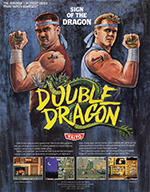
While attending the Long Island Retro Expo over this past weekend, my partner and I were on the lookout for two-player beat 'em ups that we could play together and spotted Double Dragon! I have played and beat the Sega Master System port, but I hadn't finished the arcade release. It was fun to to check out the arcade with my partner who had never played the game and to get her perspective on an early beat 'em up, since we mostly play modern beat 'em ups together.
In regards to the graphics, I think the game looks pretty good for the time of its release. The sprites are fairly detailed, and there are some larger enemy sprites as well. Also, the backgrounds have a good amount of detail and the settings are varied. You'll go from an urban area, to a factory, to the woods, and eventually your final stop, the enemy's headquarters. The enemy's base has some quite annoying environmental hazards waiting for you, with large spears coming your way as you traverse the base. The game also has some iconic tunes that are used throughout the series, but unfortunately in the setting we were in, we weren't able to hear the music or sound effects too well, as we were in quite a noisy and busy arcade area! But at the same time, it was great to see everyone enjoying the older games.
I don't have much to criticize here, as Double Dragon was one of the earlier games in the genre, but the game does have some slowdown when there are a good amount of enemies. I think this is understandable on the home console ports, but I feel like this is something that should have been taken care of for the arcade.
Overall, I had a blast playing Double Dragon. I was nervous my girlfriend wouldn't like it due to the simplicity of the game, but she likes a good amount of beat 'em ups, and ended up enjoying this one too. Highly recommended for fans of the genre!
2. Iridion II (GBA)*
3. Final Fantasy III (SNES)
4. Tenchu: Stealth Assassins (PS1)
5. Shockman Zero (SNES)
6. Suikoden (PS1)
7. Chiki Chiki Boys (GEN)
8. Altered Beast (GEN)
9. Jewel Master (GEN)
10. Fight'N Rage (NSW)
11. Lunar: Silver Star Story Complete (PS1)
12. Phantasy Star (SMS)
13. Super Metroid (SNES)
14. Double Dragon (Arcade)
While attending the Long Island Retro Expo over this past weekend, my partner and I were on the lookout for two-player beat 'em ups that we could play together and spotted Double Dragon! I have played and beat the Sega Master System port, but I hadn't finished the arcade release. It was fun to to check out the arcade with my partner who had never played the game and to get her perspective on an early beat 'em up, since we mostly play modern beat 'em ups together.
In regards to the graphics, I think the game looks pretty good for the time of its release. The sprites are fairly detailed, and there are some larger enemy sprites as well. Also, the backgrounds have a good amount of detail and the settings are varied. You'll go from an urban area, to a factory, to the woods, and eventually your final stop, the enemy's headquarters. The enemy's base has some quite annoying environmental hazards waiting for you, with large spears coming your way as you traverse the base. The game also has some iconic tunes that are used throughout the series, but unfortunately in the setting we were in, we weren't able to hear the music or sound effects too well, as we were in quite a noisy and busy arcade area! But at the same time, it was great to see everyone enjoying the older games.
I don't have much to criticize here, as Double Dragon was one of the earlier games in the genre, but the game does have some slowdown when there are a good amount of enemies. I think this is understandable on the home console ports, but I feel like this is something that should have been taken care of for the arcade.
Overall, I had a blast playing Double Dragon. I was nervous my girlfriend wouldn't like it due to the simplicity of the game, but she likes a good amount of beat 'em ups, and ended up enjoying this one too. Highly recommended for fans of the genre!