Games Beaten 2025

Anything that is gaming related that doesn't fit well anywhere else
User avatar
RobertAugustdeMeijer
64-bit
Posts: 307
Joined: Fri Sep 02, 2022 10:15 am

Re: Games Beaten 2025

Post by RobertAugustdeMeijer »


1. Assassin's Creed IV: Black Flag
Cynically, in the modern chapters, this game even admits that it's a commercially pedestrian blockbuster. It depicts history wrongly all the time, so there's little value in that. Purely as a game, it's mostly the same as the previous games, which means gameplay is automatic and shallow, while you hoover up symbols on your map. The only thing going for it would be the ship battles, which while sluggish and imprecise, are still somewhat novel and explosive. In about forty hours of play time, I think I had about an hour of fun being a pirate.
4/10

2. Minecraft
I was extremely pleasantly surprised at how much respect the game had for the player's ingenuity. The tutorial is merely some pages you can find in the options menu. You have minutes to set up a safe haven, preferably with a bed and torches, with little to no instructions. Dying halves your experience points and leaves all your gear scattered about. Although randomly generated, there's always a feeling you might find something unique. The final boss is a treat, being open ended and seemingly insurmountable at first. There's a lot of random stuff that can set you back a couple of hours back, which keeps the challenge honest and respectful. However, it is still a game about crafting, meaning half the time you'll be doing busywork and clicking around in menus.
8/10

3. Street Fighter 6
Link combos now have a three frame buffer, while the super meter(s) allow many alterations to your moves. Competitively, this means you'll spend less time practicing the same combos over and over, and instead practicing reading different situations. With less neutral and much more creativity, this makes Street Fighter more like the other anime fighters. Which while a good thing, makes me wonder why this should be played at all. The answer is the masses: the single player mode is a poor man's Yakuza, but nevertheless will feed the tournament scene with plenty of folks confident enough they'll want to compete.
8/10

4. Call of Duty 4: Modern Warfare
Is this a recruitment ad for the US Army? The production values are very impressive. Obviously, the game propels you forward, set piece to set piece, always giving you blockbuster flare. Occasionally, precision and strategy is required, and everything falls apart. Perhaps the lack of clarity and random nature of the enemies is realistic, but it does not make the challenge engaging. Luckily, it's over within a couple of hours. I hear the multiplayer was popular. Perhaps, but I doubt there's a reason to play this over Counter Strike or Quake.
3/10

5. Felvidek
A brisk 'Japanese' RPG instead located in Hungary, as its name implies. It delights in its historic background, where the church is at odds with cultists, and the monarchy at odds with the peasantry. The combat might just be barely strategic enough to keep the fights interesting, but this leaves more headspace for the eccentric narrative. Both silly and serious themes are explored, with intriguing writing and distinctive artistry. It's no Disco Elysium or Undertale, but if you want more in the same vein, a must play.
7/10

6. Blazing Lazers
Hectic and sharp, this is everything you could hope a 16-bit shmup can be. At times there might be too much going on, while you're bomb attack is too slow, but otherwise the difficulty is mostly fair. Space Megaforce has more interesting weapon choices, and MUSHA has more pizazz, but this one is still almost as good and definitely a step up from earlier Zanac/Aleste games.
7/10

7. Company of Heroes
On paper this sounds like any other RTS, but this one has a bombast to it that makes everything feel urgent, hence its popular appeal. The campaign benefits from high production values, enhancing the historic significance of the battles. There's an extra emphasis on controlling many different parts of the map for resources, and less on building structures, making skirmishes action packed. Still, I'd recommend only trying out single player, as CoH3 and SC2 have better competitive scenes.
8/10

8. Animal Crossing: New Horizons
The amount of personality is commendable, but that's really all this 'game' has to offer. You can't help but feel like half the time you're just doing mundane tasks. And for what? Happy emotes and the occasional joke? Perhaps being able to show off your creativity with online friends. Fundamentally, this genre is flawed due to being in a medium that limits expression to moving things around and making extremely simple dialogue choices. Still, picked up at the right time in small bursts, there's no denying it's a charming experience. And for what it's worth, there is more to see and do than in the prequels.
6/10

9. Shatterhand
The risk/reward element of short ranged attacks works better in Zelda II and Ninja Gaiden due to them having defensive options. Shatterhand relies a lot on speed and brute strength, which is exciting, but also tense. The upgrades are awkward to yield and keeping them around is even harder. There's a lot of potential here: think Mega Man with fists and body extensions. And while the execution is polished on a surface level, the combat is too frustrating to make it a classic.
5/10

10. CyberPunk 2077
Amazingly ambitious, just seeing the effort put into this is a marvel. Goes beyond the likes of Red Dead Redemption 2 and The Witcher III in almost every way, and thankfully, also in terms of gameplay and emergency. Unfortunately, the whole thing buckles under its own weight, as it's clear that the design process was hacked into parts for delegation. So don't expect level design as bold and organic as in Deus Ex, and systems working as well together. But there's still a lot to toy around with, and often enough make a choice with emotional weight.
8/10

11. Wario Land 4
Despite being the third iteration as a costume-based puzzle platformer, design is still rather tame and in stark contrast with the its exuberant personality. Some of the later levels dare the player to think twice, but never are you allowed to attempt things creatively. Still, it's a highly saccharine trip and you can't help but feel glee as Wario plows through ancient ruins with reckless abandon. Great bosses, too!
7/10

12. SUGAR (Jen Simpkins)
This interaction fiction is so short, it borders on being poetry. No matter, every second is gripping, as is every branch in the narrative. We already knew she was a talented writer as editor of Edge. I can only hope Jen's talents make it into other games. And you get to be a sex worker that eats the rich, indeed a very wholesome topic.
7/10

13. Earthbound
The best parts are when it subverts genre conventions, but rarely does it subvert gaming conventions. This tragically leaves the experience emotionally bound to 90's Japanese role playing games. Which in turn might ironically create its charm: it's yet another go at one of these, only this time everything's a bit different, making it both familiar and odd at the same time. The overworld portions are memorable, the combat isn't.
6/10

14. Venba
The cooking is surprisingly involving, as the meals have an existential weight to them. The cut-scenes between them are just barely long enough to get you interested in the next family conundrum. In the end, it's a bittersweet tale you can almost smell at times. And yes, you unlock a cook book at the end to add these recipes to your own memories.
7/10

15. Mario Kart 8
Now with more pizazz!! Luigi's Death Stare(tm) will never get old. And all the Nintendo characters having political alignments is hilarious. Toadette for life. /raisefist
7/10

16. Super Mario 64
Are you into speedrunning? Then this is the golden standard. There's boundless creativity in the movement options and oddball architecture. But as an adventure, this one quickly loses steam, as the horrendous camera does not gel well with the demanding platforming found in later stages. Most of the enjoyment comes from seeing how Nintendo got the most personality out of limited polygons. Often, the compromises create fantastic 90's SGI landscapes, which are a pleasure to trek through.
6/10

17. Resident Evil 2 Remake
There's something cozy about turning an unsafe area (in this case, the police station) into an orderly safe haven. The power fantasy is domestic: it's not that the place is empty, it's just under control. As the narrative delves deeper and astray into lacklustre areas and explanations, this one devolves into run-of-the-mill post-RE4 Resident Evil. The Claire run fares better thanks to the girl's side-missions.
5/10

18. Fantastic Dizzy
Stupid puzzles and annoying platforming are combined into something more than the sum of its parts. Perhaps the anticipation of seeing if your solution actually works is heightened by putting dexterous challenges in your way. And there's adorkable energy abound, as the Darling Brothers yet again shamelessly slap together a jury-rigged budget title according to a proven formula. While it is not recommended to be played, it should nevertheless never be forgotten.
5/10

19. Prince of Persia: The Lost Crown
A commercially injected by-the-numbers kitchen-sink metroidvania: doing everything as expected, and meticulously programmed. Of course, Ubisoft doesn't understand that it's mystery that ignites a sense of adventure (as done in Super Metroid and Hollow Knight), so its predictability makes everything feel redundant. And yet, you get a bunch of moves to play around with, while the developers went ham with exploiting tightly designed obstacles.
7/10

20. Chess 2: The Sequel
Easily the best Chess variant ever made. Some of these rules should at the very least be instituted in normal play (like winning by crossing the mid-line with your king). David Sirlin yet again amazes by adding five new armies to choose from. No need to memorize opening moves, and mid-game excitement is practically the whole game. Tragically so good, it exposes Chess's fundamental flaws. By turning the classic into a modern strategy game, one starts to realize that Chess was never really that interesting for competition. Its main attraction was that it's a rabbit-hole that has been studied for centuries.
7/10

21. Project Gotham Racing 4
PGR's last hurrah is more of the same, only this time flashier. Going down to 30 fps wasn't worth it though. There's fun to be had, climbing the ladder and fantasizing about the rivalries you make. One of the more demanding racing games, the repetition rewards the player with excellence. The kudo system, bikes, and alternative objectives keep the racing fresh. Unfortunately a bit too gimmicky for a sense of simulation, but too serious for pure fun.
6/10

22. Lode Runner
What I didn't expect is how much tension is added by the slow animation for making holes. This means you have to think ahead to keep Bomberman at bay. Combined with its fair share of different obstacles, I can see why the level editor was so popular. One of the best pre-crash games I've ever played!
7/10

23. Grand Theft Auto IV
You can easily watch ten better gangsta films in the time it takes to get through this one, while also avoiding all the unfunny sexism, homophobia, and juvenile humor. The driving and shooting have amazingly bad controls, considering the prestigious amounts of money that went into this. Nothing has been added to GTA's best parts, namely blowing stuff up and seeing how the world reacts. Instead we get mundane dating mini-games and a character with half-baked introspective moments.
1/10

24. Prince of Prussia
The original is infamous for its excessive animations and wonky sword fighting. Now all animation is cut away, making the platforming zippy and fun. And what's even more fun is that you get to stab nazis in the back. It's simple, gratis, and short, and very much worth your time.
7/10

25. Riven
The stand-alone puzzles of Myst are replaced by two huge world spanning puzzles. The connection between the world's logistics, and the symbolism used for the puzzles, is a bit contrived. But it nevertheless does give everything a potential meaning. The puzzles aren't solved by hard math, but by intuiting what the designers were trying to communicate. The clean mid-90's silicon graphics aesthetic fits well with the serene nature of the fictional setting and is a delight to surround yourself with, click by click.
7/10

26. Ghost of Tsushima
Basically a Ubisoft map set in Japan. The combat has more bells and whistles, but is still heavily restrained by sensational animations. The lack of mini-map doesn't really make you pay better attention to your surroundings, as every challenge is still bluntly applied cookie-cutter style. Only about three of the Witcher III-inspired tales are memorable, and even more startling, even fewer have a sense of humor to them. Triple-A at its best and worst: spectacular detail on the surface, while design gets more rudimentary the more you try to get out of this game.
4/10

27. Double Dragon
I don't recall being this annoyed by all this slowdown forty years ago. Were it not for that, this would still be a decent beat-em-up with almost everything you could hope for: a nice variety of moves and enemies, exciting locations, catchy music, and a few gimmicks like treadmills and booby traps. Good luck finding somebody else to play this with to the end for -that- classic duel, as thirty minutes of sluggish gameplay is a hard sell.
5/10

28. BABBDI
Probably the best tutorial since Dusk. There's no combat or death, and interactions are mostly limited to movement. But still get ready to question the meaning of everything this game throws at you. Good luck trying to go over the borders of the map. Yes, you can jump higher using the bat. Heck, it even has bunny hopping! At about two hours, it's over too fast. But still has as many thrills, and better ones to boot, than the likes of Half-Life 2, Metro, and STALKER.
8/10

29. Cuphead
The challenges are divided into bite-sized chunks, hence its mainstream success. But beyond its glorious animation, there's also some modern gameplay technology, like dashes, parries, and equippable skills, which lift it above 90's era run 'n' guns. Cuphead lacks the depth of Alien Soldier or Battle Garegga, but it compensates by simply having a lot of well thought out encounters with multiple phases. A delight!
8/10

30. Uncharted 2
The best parts are the cut-scenes, and I'm not sure they're even as good as The Crystal Skull. The epitome of Naughty Dog's water and oil design: nothing fits together, whether it be the puzzles, shooting, or climbing. None of which are done well. There are countless Quartermain/Indiana Jones knockoffs; this one is simply unnecessary. If for whatever reason you enjoy the first half, be warned, the second half just drags on and on.
2/10

31. Shock Troopers
You can so easily picture this game just by reading its contents. Neo Geo top down shooter, where you can make teams of three characters (indeed with different attacks and speeds). You can roll as a defensive maneuver. There is an overhead map with three paths to choose. Yeah, that's all there is to it. Nothing wrong, nothing remarkable.
5/10

32. The Forgotten City
That Skyrim mod gets plenty of extra flair as its own game. Now a cornucopia of ancient religions are thrown together in order to explain the time loop. And while you're at it, pointing out logical fallacies in their dogmas. Clever. And despite all this, it is never overwhelming or obtuse. Within a few hours you should be able to connect all the dots and feel satisfied both in your intellectual prowess, but also in seeing how such a project came together splendidly. Just don't expect the dazzling pomp of Outer Wilds.
8/10

33. Splatterhouse
Combat can hardly be any simpler: jump, kick, punch, or swing a weapon. Still surprisingly effective at offering a bit of a challenge. Obviously, this is played for cheap scares contained in a 16-bit side scroller. Again, quite effective and often fun to see. Is it worth your time though? As a standalone experience, no. But as an artifact to see what was possible with an 80's arcade cabinet? Sure.
5/10

34. Limbo
Like Inside and Cocoon, the puzzles are just barely difficult enough to stump you for a moment. What makes them engaging is that there's no real universal playbook for all of them. Sometimes you'll solve one by understanding physics, another one by understanding the nature of spiders, and another by finding out what a switch does. There's also a layer of narrative interpretation, something about feeling guilty for killing your sister or something, but please don't write an article on this. Just slightly mindlessly stroll through this one for a couple of hours.
6/10

35. How Do You Do It?
Considering how badly sex is represented in video games, this one gets kudos for exploring sexuality in video game form, albeit through the eyes of a kid who has no idea what sex is. And dolls that are functionally sexless. The point is frustration: in this three-minute "simulation", only questions are raised, and definitely no satisfaction, whether intellectual, spiritual, or physical. Just like every other video game. This leaves the player begging the question: is it the medium's fault? Or what we make of it?
7/10

36. Kingdom Hearts
Strip away the Disney sight-seeing and you're left with a really bad action-rpg. Combat is shallow, platforming is headache inducing, the frame-rate is viscous, and the story has the depth of a Little Golden Book. The way the PS2's lighting subdues primary colors is more saddening that the plot. And yet, the fact that there are no enemies in the Hundred Acre Wood is a touching detail. It's always tragic when a work's best feature is reminding the user how great the works are it's based on.
3/10
37. Tails Adventure
The gist is that Tails can collect power ups and use them to open up new areas to explore. Exciting? Hardly. The main draw of this game is that if you squint hard enough, this Game Gear game looks like a Genesis game. The level and enemy design is pedestrian, as are the "puzzles". But for what it's worth, it's an adventure game that doesn't bog you down with explaining stuff and you briskly get to decipher what the developers were trying to challenge you with.
4/10

38. Say No! More
Well this game gets its point across staunchly! All you have to do is press the "NO" button whenever anything gets in your way. Sometimes you'll use a stronger NO, sometimes one with a different attitude, but for two hours, you'll be doing the same thing over and over. It's all anti-corporatist, with humor and wholesomeness coloring your actions. Perhaps not extremely funny, but still a unique, and interactive, approach to giving sound advice.
6/10

39. The Case of the Golden Idol
A brisker Obra Dinn if you will, with a funnier plot, but the solutions are a bit more clinical in their execution. Ultimately, you're mostly equating meaning to symbols. The levels use different themes and situations, keeping the puzzle solving fresh. The grand finale comes just in time to tie everything together in a slap-stick manner. You'll revel in finding out how exactly the cult destroys itself from within. It's easy to see why this game has spawned its own genre of sequels.
8/10
User avatar
prfsnl_gmr
Next-Gen
Posts: 12410
Joined: Mon Jun 01, 2009 10:26 pm
Location: Charlotte, North Carolina

Re: Games Beaten 2025

Post by prfsnl_gmr »

The reviews on this thread are really good this year. (I just made it through @AJ’s post a few pages back.) I am really digging all the different perspectives and detailed analysis (even if I don’t have the patience to write lengthy reviews myself).

……

1. Mega Man (DOS)
2. Mega Man III: The Robots Are Revolting (DOS)
3. Teslagrad 2 (Switch)
4. Metal Slug 5 (Neo Geo)
5. Ufouria: The Saga 2 (Switch)
6. The Legend of Zelda: Echoes of Wisdom (Switch)
7. The Bounty Huntress (Switch)
8. Wide Ocean Big Jacket (Switch)
9. Haunted Castle Revisited (Switch)
10. UnderDungeon (Switch)
11. BurgerTime (Arcade)
12. BurgerTime (2600)
13. BurgerTime Deluxe (GameBoy)
14. The Flintstones - BurgerTime in Bedrock (GBC)
15. Dojoran (Switch)
16. Super BurgerTime (Arcade)
17. The Mr. Rabbit Magic Show (iOS)
18. Shantae Advance: Risky Revolution (GBA)
19. Dark Souls Remastered (Xbox)
20. Ys Book I & II (TG16CD)
21. F-Zero X (N64)
22. Metal Slug 6 (Arcade)


Ys Book I & II was the first game I played for this year’s Aummer Games Challenge, and I reviewed it in that thread. In short,it’s a dated ARPG with charming graphics and sound that, amazingly, still holds up OK despite some questionable design decisions. (Bump combat is not one of those decisions. It rules.)

F-Zero X is one of the best racing games of the fifth console generation, making it one of the best racing games of all time. It features ~24 tracks, ~30 racers, and four difficulty levels. It also features insane speed, great graphics, hectic racing, steep difficulty, and mechanics deeper than the ocean. (Seriously, people were discovering new tactics and writing new guides for this game almost 20 years after its release.) One interesting thing I observed about it is that, as you tackle harder difficulties - you have to beat all the tracks on “expert difficulty to roll credits - the simpler tracks from the earlier races become the game’s hardest. (That is, I had little trouble completing the Joker Cup on expert difficulty, but a lot of trouble beating the Jack Cup.) Despite frequent frustration, I ended up loving this game, and I am so happy I put it on most this year.

Metal Slug 6 is not one of my Summer Games Challenge list, but it was the last game my son and I needed to beat to accomplish our goal of credit feeding our way through all the Metal Slug games. Unlike previous entries in the series, Metal Slug 6 was released for Aromiswave arcade hardware, rather than the Neo Geo. The game looks and sound like previous series entries, though, and the lack of slowdown is the only way to tell it isn’t running in (even more) archaic hardware. Unfortunately, the game ends up being a bit bland in comparison to previous entries, however, and it doesn’t really do anything new. Still, there’s a lot of shooting, and even bland Metal Slug is still pretty good.
User avatar
REPO Man
Next-Gen
Posts: 5093
Joined: Tue Jul 29, 2008 8:05 pm
Location: Outer Banks, NC

Re: Games Beaten 2025

Post by REPO Man »

IIRC, there's a fanmade Dreamcast port of Metal Slug 6. Not sure how common that fact is.
User avatar
PartridgeSenpai
Next-Gen
Posts: 3173
Joined: Mon Dec 14, 2015 9:27 am
Location: Northern Japan

Re: Games Beaten 2025

Post by PartridgeSenpai »

Partridge Senpai's 2025 Beaten Games:
Previously: 2016 2017 2018 2019 2020 2021 2022 2023 2024
* indicates a repeat

1~50
1. Arc Rise Fantasia (Wii)
2. Return of the Obra Dinn (PC)
3. Battlefield: Hardline (PS3)
4. Call of Duty: Black Ops (PS3)
5. Call of Duty: Black Ops II (PS3)
6. Dead Nation (PS3)
7. Kileak, The Blood 2: Reason in Madness (PS1)
8. Paro Wars (PS1)
9. in Stars and Time (Steam)
10. Tetris Battle Gaiden (SFC)
11. Super Tetris 3 (SFC)
12. Battlefield 4 (PS3)
13. Call of Duty: Modern Warfare 2 (PS3)
14. Call of Duty: Modern Warfare 3 (PS3)
15. Call of Duty: Black Ops III (PS4)
16. Call of Duty: Infinite Warfare (PS4)
17. Call of Duty: WWII (PS4)
18. Resistance 3 (PS3)
19. Tearaway: Unfolded (PS4)
20. Grow Home (PS4)
21. Grow Up (PS4)
22. Ratchet & Clank (2016) (PS4)
23. Dark Sector (Steam)
24. Nagano Winter Olympics '98 (N64)
25. Multi-Racing Championship (N64)
26. Super Smash Bros. (N64)
27. Puyo Puyo Sun 64 (N64)
28. Shin Nippon Pro Wrestling: Toukon Road - Brave Spirits (N64)
29. Jikkyou Pawafuru Puroyakyuu 6 (N64)
30. Let's Smash (N64)
31. Mario Tennis 64 (N64)
32. Ucchannanchan no Honō no Challenger: Denryū Iraira Bō (N64)
33. Jikkyou Pawafuru Puroyakyuu 4 (N64)
34. FIFA: Road to the World Cup 98 (N64)
35. Jikkyou Pawafuru Puroyakyuu 2000 (N64)
36. Jikkyou Pawafuru Puroyakyuu 5 (N64)
37. Time and Eternity (PS3)
38. Pokemon Red (GB)
39. Dr. Mario 64 (N64)
40. Shining Force Neo (PS2)
41. Chou Kuukan Nighter: King of Pro Baseball (N64)
42. Tales of Destiny 2 (PS2)
43. Star Wars: Episode I - Racer (N64)
44. ChoroQ 64 (N64)
45. F-Zero X (N64)
46. Homefront (PS3)
47. Ape Escape: Pumped & Primed (PS2)
48. F-Zero (SNES)
49. Castlevania: Lament of Innocence (PS2)
50. Castlevania: Curse of Darkness (PS2)
51. Wave Race 64 (N64)
52. Bakushou Jinsei 64: Mezase! Resort-ou (N64)
53. Mother (Famicom)
54. Famista 64 (N64)
55. Weird and Unfortunate Things are Happening (PC)
56. Kirby and the Rainbow Curse (Wii U)
57. Mario Kart Wii (Wii)
58. Wario Land: Shake it! (Wii) *
59. Mario Party 8 (Wii) *
60. Zack & Wiki: Quest for Barbaros' Treasure (Wii)
61. SimCity 2000 (N64)
62. Prototype (PS3)
63. Prototype 2 (PS3)
64. Final Fantasy X (PS2) *
65. Final Fantasy X-2 (PS2)

66. Grand Theft Auto: Vice City (PS2)

I’ve been a fan of the Saints Row games for quite some time, and “guy in a city” open-world games in general are something I usually vibe with pretty well. Despite that, I’ve never really given any meaningful time to the GTA series outside of playing through Ballad of Gay Tony many years ago. I did quite like the writing in that game, even if playing it was a bit of a hassle, but hearing that this game, Vice City, was basically its predecessor in many respects has always made me curious about it. Having just finished another few open-world games recently, something in me decided it was finally time to give one of these old GTA games a shot to see just what I felt about them. I referenced guides a little bit for strategies for a couple of the harder missions, but other than that, I beat the game completely fairly without outside help or cheats active. As a result, it ended up taking me about 22.5 hours to beat the Japanese version of the game on original hardware.

GTA: Vice City is the story of Tommy Vercetti. The year is 1986, and Vercetti has just gotten out of a 15 year stint in prison after getting busted on some job for his mafia family way back when. The higher ups in the family don’t feel that it’ll be good for business if people see a character like him walking around the streets of their local Liberty City, so they decide to send him on a mission where he’ll be much less of a liability. There’s a lot of power up for grabs down south in Vice City, so they send him there with a bunch of cash to get a piece of the local narcotics trade. Everything is going smoothly at first, but their inaugural illicit trade deal is ambushed by masked gunmen who steal both the goods and the money. Left with nothing but a pile of massive (likely fatal) problems and a huge lust for revenge for whomever has screwed him over, Tommy sets out on a quest to make Vice City his.

The story in this game is all over the place, but that’s largely down to presentation reasons. It’s honestly kind of hard to say Vice City has a “story”, at least in a traditional sense, because it’s so disjointed and sporadic with cutscenes before and after particular story missions. The game wears its inspirations on its sleeve as far as what mobster movies and crime TV shows it’s drawing from for its plot beats, but what we actually see of Tommy’s story is more fits and spurts. It winds up feeling more like we’re seeing highlights of a much larger life that Tommy is leading rather than us being in the driver’s seat for the totality of it. It ends up being an interesting story, but it’s more like living out a fantasy of playing through a mobster movie than a proper story that’s about anything in particular.

That’s not necessarily a problem, mind you, but it does mean the strength of the story largely lives and dies by the quality of those vignettes of Tommy’s life that we’re privy to. Those end up being hit or miss, but I think more end up being hits than misses. Vice City is more of a comedy than it is a crime drama, and the main source of that comedy comes from two places. The first place is the setting. Rockstar, in the style they’ve always been (in)famous for, have made Vice City a giant pastiche of American culture in the 80’s as they’ve seen it. From ads on the radio to street signs to dialogue from passing NPCs, it ends up being an inescapable aspect of playing the game. While it hits pretty well through some of the radio programs, I found this largely insufferable.

Part of that is due to the usual stuff of distasteful comedy that has only aged more poorly as time has gone on (racist/sexist/ableist stuff that’s just gross to hear/see), but another huge part of it is just poorly put together comedy. Virtually every radio advertisement is well over a minute long, and they’re nearly all the same joke of “isn’t this gross/petty/disgusting”. They beat that same dead horse for so long that they turn any possibility of comedy into something tedious instead, and that’s easily where the game’s biggest comedy missteps come from as far as I’m concerned. Even if you can look past the distasteful nature of the comedy skits, they’re so bad at telling these jokes that they end up being annoying rather than funny regardless.

The other main source of the comedy though ends up being a lot stronger. Tommy Vercetti is a serious guy and a man on a mission. He’s a bit of a mobster caricature, but he’s easily one of the biggest straight men in the story. The best sources of comedy come from when he has to deal with other people, because the other denizens of Vice City are all very wacky weirdos, and seeing them bounce off of Tommy’s smarmy seriousness is just about always a great laugh. My personal favorites were Umberto the overly self-conscious Cuban gangster and the Steven Spielberg parody, but frankly damn near all of the mission-giving side characters end up being great fun. There may’ve been some meaningful bumps in the road to creating this, the first GTA game with a non-silent player character, but I think they pulled it off pretty darn well, all things considered. I by no means had to do the big pile of optional missions I did, but I kept doing them if for no other reason than I wanted to see more of the silly cutscenes X3

And that’s really saying something, because the playing part of playing Vice City is *really* where things start to suffer (and boy do they suffer hard). Vice City is an open-world third-person game where you do missions to get cash and advance the story. Big 3D games were still a relatively new thing in the early 2000’s, and the early GTA games show that harder than even a lot of their contemporaries. Despite launching on the PS2, GTA III was originally a Dreamcast game, and that legacy shows very deeply in the way it controls (and that’s a legacy Vice City doesn’t escape because it was built on the same engine). Despite being a 3D game only released on consoles with two joysticks, Vice City controls as if it only has one joystick. You move with the left stick and use a shoulder button to center the camera behind you, and for a game with as much gunplay as this has, that gets to be very annoying fast.

You die incredibly quickly, so going into first-person mode for guns like the stronger automatic rifles ends up being nothing but a great way to get killed. Getting killed or arrested not only makes you fail the current mission you’re on, but it also robs you of ALL of your weapons, meaning you’ll need to either spend a crap ton of (your very limited and hard to recover) money at a store to reacquire them, or you’ll need to look up where free ones can be found around the map and then meticulously go track them down one at a time before your next attempt at a mission. With death mechanics this incredibly punishing, it makes sense that you want to die as little as possible (or do what I did and just only ever load saves when you die because having to recover from death is far worse than just loading your last save), but that also means that you’re at the mercy of the weaker guns that still mercifully have auto-targeting capabilities. The SMG ends up being your best friend in this regard, but then that still means you’re stuck dealing with the auto-targeting mechanics. Trying to get Tommy to actually target what you’re hoping he will is a massive learning process that is still only ever very frustrating. It works *just* well enough that the game isn’t impossible, but it still makes gunplay something frustrating and tedious that you’re better off avoiding if and whenever possible.

In something of a small blessing, this game actually doesn’t have that heavy a focus on gunplay for its mission design, at least compared to later GTA games. Unfortunately, that means that it *does* have a much higher emphasis on driving for its missions, and they’re generally far harder than the gunplay missions in my experience. Part of the reason for that is the driving physics themselves. Cars are floaty and explode-y in a way that, sure, you can get used to handling if you drive them enough, but that’s never going to save you from the incredible lethality of other drivers. Whether it’s other gangsters or the cops, missions where you’re being attacked or pursued in a car are almost always a massive test of luck to see if you’ll be able to have your attackers spawn unluckily enough (for them) that you’re able to slip through their security net and make it to safety in time. You think it’s awful trying to guard an NPC you’re escorting from enemy gunfire (when they die as fast as they do)? Well get ready to suffer through trying to babysit one in a *vehicle* when the car-apocalypse is descending on top of you the moment you hit the road.

In general, the bad gunplay and rough driving are as much of a problem as they are because the mission design seems so unwilling to take their inadequacies into account at all. You are constantly made to do the most unreasonable possible things, and I cannot being to recount how many missions that were so vicious that I only managed to make it through them because the PS2’s low RAM amount made the cops/gangsters unable to spawn long enough that I was able to make it to safety. That said, I do have to give at least some props to the mission design.

Sure, there’s no difficulty curve at all, and missions vary in difficulty incredibly wildly even within the same sub-set from the same quest giver. However, I believe that the missions are like this because of a very dedicated effort from the game developers to make it feeling like you’re always doing something different and interesting. Annoying and frustrating as it may be, each mission ends up being a lot more memorable than it otherwise would’ve been due to just how much effort went into differentiating them in this fashion. I totally realize that this is something that could easily be described as an excuse for poorly polished mission design, and I’m not going to deny that a lot of the game’s missions could’ve used a lot more polishing up, but nonetheless appreciate that this was done not solely for the purpose of making you buy a strategy guide or buy the game instead of rent it.

Vice City’s mechanics and missions provide a LOT of friction to the experience (especially for a modern player for whom the open-world nature of its design is nowhere near as novel as it would’ve been at the time of its release), but that friction ends up making things a lot more memorable. Seeing just how you can manage to cheat fate with whatever guns, vehicles, or tricks you can acquire makes for a really novel time, and this is certainly not going to be a game or an experience I forget any time soon as a result. That’s not going to be much solace to most folks playing this game, of course, but for someone who plays as many games as I do, it’s something I can’t help but appreciate despite how crazy this game drove me so often XD

Aesthetically, this is very much a game of its time. The soundtrack is a pretty sizeable collection of 80’s pop music that plays on the radio whenever you pilot vehicles, and it really helps set the mood of the setting as well as provide a neat layer of verisimilitude. If you like 80’s music, there’s gonna be finding it pretty hard to want to get out of a car and start a mission until the current song is over, needless to say X3. The graphics are VERY early 2000’s 3D, yes, but they have a certain charm to them nonetheless. If you’re a big snob for graphics, this game is just going to look terrible no matter how you slice it, but I can’t imagine that that’s a terribly huge problem for anyone big enough into retro games to be reading this far into this review ^^;. While their models may be simple, I really do like how much detail and expressiveness they still managed to get out of them in cutscenes, and the great voicework does a lot to help bring these guys to life too.

Which brings me to particulars about this Japanese version of Vice City. I’ll admit, the biggest reason I originally paid 200 whole yen for this was an incorrect memory of a post detailing just how different a lot of the content and music was for Capcom’s 2004 release of Vice City in Japan XD. Not only is the music exactly the same as the English release, but there also isn’t even any Japanese voice acting either (something I was really bummed about, even if I still enjoyed the English VA a lot nonetheless). The Japanese market does seem to have really enjoyed Vice City by all accounts, so my upcoming comments certainly don’t mean that Japanese players didn’t still enjoy their time with this game, but I was honestly really disappointed with Capcom’s localization job for this game.

Sure, I would’ve appreciated it a lot if Capcom had managed to make the game’s performance better (the framerate gets REALLY bad when you’re driving or gunning around a lot of vehicles/enemies, and with how the chase sequences go, that’s a very common occurrence and it makes the already less than stellar controls that much harder to deal with), but I’m not expecting miracles here XD. What I feel were more realistic expectations were doing something, anything with the dialogue they *did* translate. So so much of the NPC dialogue is completely robbed of its character. It’s a feeling I have very often playing English versions of Japanese games, an it’s certainly strange feeling it in the other direction, but the subtitles feel so perfunctory that I can’t help but call them bad with just how thoroughly generic they make these personality-filled characters of the original work.

Beyond that, there’s also SO much left totally untranslated on top of that. On the smaller end, you’ve got little asides from Tommy after cutscenes fade to black. Because the screen has already gone black, the usual place they put subtitles is no longer visible, so there just aren’t subtitles for that at all. On the much larger end, none of the absolute piles of radio or non-essential dialogue (heck, even signs and such) are translated at all. Japanese players were cheated out of SO much content here that it almost (but not actually) baffles me how this game nonetheless still got so popular here. I cannot fathom a Japanese game coming out in English with this amount of completely untranslated dialogue and text, and frankly shame on 2K and Capcom for thinking that this is at all an acceptable level of production for a publishing a game in Japan. My bar for localizations from English to Japanese was already quite low (especially for British-developed games, which tend to be far poorer localized than American-developed ones for whatever reason), but this game really takes the cake for ignoring SO much of the original content that it makes me question why they bothered translating any of it in the first place.

Verdict: Not Recommended. This is a really weird game to talk about “recommending”. That lack of recommendation stands, don’t get me wrong. This game plays bad and has outright vindictive mission design from beginning to end, and with the dozens of far better playing games in this genre (not even talking about just better playing/designed games in the GTA series alone), I can think of absolutely no reason why I’d tell a new player to actually sit down and play Vice City themselves rather than watching a Let’s Play or a no-commentary playthrough to get the fun of the writing with none of the friction of the gameplay. With all that in mind, I did ultimately actually enjoy my time with this game. I have loads of friends and even partners who played this game a ton when they were younger, and it was a load of fun for both them and me to talk with them as I went through this totally fresh and relayed my experiences to them. The friction and the frustration wound up giving me some really fun and funny moments on top of all the crap it gave me, and that’s just not the kind of experience you can get from a game that’s better put together. While I certainly can’t recommend anyone reading this play Vice City, I can just about promise that this will not be the only old GTA game I wind up playing through this year, because I just have to see what other goofy horrors lie in store for me in these classic “guy in a city” open-world games X3
I identify everyone via avatar, so if you change your avatar, I genuinely might completely forget who you are. -- Me
User avatar
alienjesus
Next-Gen
Posts: 8875
Joined: Tue Feb 24, 2009 7:10 pm
Location: London, UK.

Re: Games Beaten 2025

Post by alienjesus »

prfsnl_gmr wrote: Mon Jul 07, 2025 8:38 pm

Metal Slug 6 is not one of my Summer Games Challenge list, but it was the last game my son and I needed to beat to accomplish our goal of credit feeding our way through all the Metal Slug games. Unlike previous entries in the series, Metal Slug 6 was released for Aromiswave arcade hardware, rather than the Neo Geo. The game looks and sound like previous series entries, though, and the lack of slowdown is the only way to tell it isn’t running in (even more) archaic hardware. Unfortunately, the game ends up being a bit bland in comparison to previous entries, however, and it doesn’t really do anything new. Still, there’s a lot of shooting, and even bland Metal Slug is still pretty good.
6 isn’t one of my favourites either, but one unique thing it does is introduce character specific mechanics. They’re just small things but for example Marco does double damage with the pistol, Eri gets double grenades and can throw them in any direction, Fio gets extra ammo and always starts with a machine gun, and Tarma gets more health in tanks.
Image
User avatar
alienjesus
Next-Gen
Posts: 8875
Joined: Tue Feb 24, 2009 7:10 pm
Location: London, UK.

Re: Games Beaten 2025

Post by alienjesus »

1. Advance Wars ReBoot Camp - Advance Wars Campaign Switch
2. Paper Mario: The Thousand-Year Door Switch
3. Advance Wars ReBoot Camp - Advance Wars 2 Campaign Switch
4. Another Code Recollection - Another Code: Two Memories Switch
5. Another Code Recollection - Another Code R: A Journey Into Lost Memories Switch
6. Bomb Chicken Switch
7. Castlevania Advance Collection - Castlevania: Vampire’s Kiss Switch
8. Castlevania Advance Collection - Castlevania: Aria of Sorrow Switch
9. Disco Elysium Switch
10. Espgaluda II Switch
11. Famicom Detective Club: The Missing Heir Switch eShop *NEW*
12. Famicom Detective Club: The Girl Who Stands Behind Switch eShop *NEW*
13. Emio: The Smiling Man - Famicom Detective Club Switch *NEW*
14. Donkey Kong Country SNES *NEW*
15. Super Mario World SNES *NEW*
16. Kirby's Dream Land 3 SNES *NEW*
17. Super Mario Kart SNES *NEW*
18. Super Metroid SNES *NEW*
19. Starwing SNES *NEW*


Famicom Detective Club: The Missing Heir

Image

Famicom Detective Club: The Missing Heir is a remake of the original Famicom Detective Club game which originally released for the Famicom Disc System in 1988. Somehow, this got a full on remake on Nintendo Switch over 30 years after the fact, and even more unexpectedly it got an English localisation, albeit digitally only.

The remake looks really pretty, with newly drawn art that has a subtle movement that helps make things feel alive. Backgrounds in particularly are beautifully detailed, but whilst character illustrations are more limited they still have a ton of character to them. The soundtrack is also really nicely done, if a little forgettable – but it sets the mood for the game just right.

One thing to note with this game is that is a very faithful remake, for all that that entails. This is a 30+ year old adventure game, and it is not without it’s problems. There are numerous occasions where you will be unable to progress without hitting a specific trigger, and it can be hard to find. Often you’re not even able to go to another screen to explore – you have to find the trigger to be allowed to leave the conversation you’re in. Speaking of which, conversation is done via menu selections with new lines of conversation opening as new information is revealed via other lines of questioning. However, sometimes you need to click the same option multiple times to reveal new info, whereas most of the time doing so will repeat the info already said. This means you’ll spend a lot of the game skipping through text you’ve already read whilst hunting for whatever prompt will let you progress.

The other thing that feels decidedly old-school about this game is plot progression. This isn’t an adventure game with a mystery to solve like in Ace Attorney or Danganronpa, where you need to come to conclusions on your own via context clues – this is very much a story that gets told to you. There’s no input on where we should go next, or ability to conclude things yourself - the characters will tell you where they’re going to go next and info will be fed to you.

Ultimately I had a decent time playing through Famicom Detective Club, especially looking at it historically. But in the modern perspective it’s barely a game and not that exciting as a book – the plot twists are mostly not hard to see coming in this one. It’s worth a play, but would be easier to recommend if it wasn’t so expensive for a digital only release. It’s never seen a sale since release from what I can tell either, so if you want to give It a go, be prepared to fork out.


Famicom Detective Club: The Girl Who Stands Behind

Image

This is the second Famicom Detective Club game, and serves as a prequel to the first one. It explains a little about how your characters from the first game came to work for the detective agency despite their young age. It also tells a much more compelling tale than the first game, with more twists and turns and red herrings that can genuinely shock and surprise this time.

The game was remade at the same time as the first, so it comes as no surprise that all of the issues of the first game are also present here, from maddening trigger hunting to tedious repetition of text – but the pace of the game is much improved overall with more story beats happening more frequently helping to drive the pace forward.

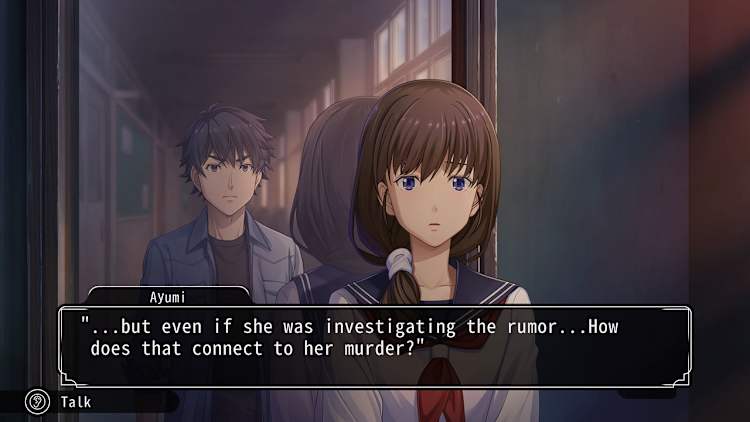
One interesting thing about these titles is how un-Nintendo they feel, despite having the console name in the title. They’re pretty up front about talking about alcohol, sex and violence, and they outright show you the murder victims corpses multiple times, and they’re often not pretty sights. It’s not all Phoenix Wright style bodies with a trickle of blood here – there can be clear bruises, rotting and other things. I should emphasise it’s not super gruesome or anything, but unexpected considering the developer.

I think that The Girl Who Stands Behind is definitely the superior of the 2 games. It has better pacing, a better cast and a more interesting premise with a slight horror twist to it. But ultimately it suffers from most of the same drawbacks as the first and will only appeal to specific type of gamer. I enjoyed it well enough, and I think it’s worth experiencing.

Emio: The Smiling Man – Famicom Detective Club

Image

If I was surprised that Nintendo released English-localised remakes of Famicom Detective Club 1 & 2, then my jaw almost fell off when years later they announced a global release of a brand-new entry in the series, despite what must have been terrible sales of the remakes. Even more unexpectedly, this is a pretty dark and adult themed game to boot – if I was surprised by how up front they were in depictions of violence in the former 2, this game really levels it up a notch – again, it’s not outright gruesome, but there can be surprising amounts of claret on screen at times, and the game features swearing, alcohol use, domestic violence and more themes that normally wouldn’t come within 100 miles of a Nintendo IP. It’s not overdone, which makes it more surprising when a character suddenly swears, or a corpse appears more mangled than you were expecting.

A lot of the advertising of this title focused around the ‘horror’ aspect of the titular Emio, an urban legend figure who approaches crying girls and kills them, before putting a paper bag over their heads with a creepy smiling face drawn on it to allow them to smile forever. This is no horror game though – the tale is a background element to what is more of the same for the series, with lots of talking to people to solve the case. It’s faithful to the old format too – this isn’t a reinvention of the series by any means. The story is told to you, you just press menu options to help it proceed.

Emio does make a few small fixes from the first 2 titles. The game is much better about telling you what should be clicked to progress by highlighting certain menu options, and there’s also a ‘thought’ system which basically hints as to what info you need to try and get too and where you might need to go next. It can still have issues with hunting for triggers though, especially when you need to observe the environment, and the issue of needing to repeat menu options sometimes is still there too. It could have been easily fixed by greying out options you’ve fully exhausted, but unfortunately it wasn’t.

The main playthrough of Emio is somewhat unsatisfying. Lots happens outside of your characters control and you feel like you’ve only half figured out whats going on by the end. Whilst the current case is solved, you learn very little about Emio himself. I was willing to say that this was the weakest entry in the series, but then after beating the game you unlock a new menu option on the home screen. Picking this gives you a small gameplay section before throwing you into an animated movie explaining all about Emio. This is the darkest content in the game by far, and I’ve seen a lot of people say that it was the best part of the game. I’m more torn – some of what’s here is compelling and interesting, but it also feels a little over the top and unrealistic at times too. However, it does manage to wrap up the loose ends from the game and ultimately brings up the experience in my estimations. I think this is the better polished game, but Girl Who Stands Behind is probably still the best paced story of the 3 in my opinion.

Emio is a decent time, and a super unexpected title to come out in todays day and age, but it suffers from nearly all of the issues the 35 year old original titles did. It has a great presentation and some unexpectedly dark themes for Nintendo, but it’s going to be an acquired taste due to how minimally interactive it is, how little control you have over story progression and how incredibly old school the design philosophy is. I’m glad this exists and I hope it means we’ll see more weird experiments like this from Nintendo, but ultimately it’s a divisive experience. Worth a look, but know what you’re getting in for – 10+ hours of menu selecting to drive a slowly paced plot forward, with most of the payoff in the last 2 hours.

Donkey Kong Country

Image

At this point in the year, I’d played entirely Switch games, but I got an urge to revisit some classics and so I decided to replay some SNES games I haven’t revisited in a long time to 100% complete them for the first time. To begin, I revisited Donkey Kong Country.

Although I love the DKC series, I’ve never been a big fan of how the bonus stages were handled in the first game, where mechanics around how to find them are extremely inconsistent. I picked up the game and ran through it, then revisited every stage that wasn’t marked as being 100% done to hunt for bonus rooms. I’d love to say I found them all on my own, but some of these stages are ridiculously well hidden, so I did end up using a guide to help me find them. Screw that one bonus room hidden inside another bonus room!

Revisiting DKC was a lot of fun, but it was clear I was a bit out of practice – I died a lot on this revisit, and had a really hard time handling the rotating barrels in particular – it’s possible it’s due to lag on my modern TV, but I don’t like to make excuses without evidence! I did eventually manage to get the 101% completion on the game, finally completing a game I’ve owned for about 25 years.


Super Mario World

Image

The next Super Nintendo game I revisited for completion was Super Mario World. Somehow. I’ve never managed to get all exits in this game. I made an attempt years ago and came close, but something else came up and I never finished off the last few. This time I persevered and cleared out all 96 exits in the game.

Revisiting Super Mario World after DKC emphasised how easy this game is in comparison – both to DKC but in my opinion, also compared to the earlier games in the Mario series on NES. I struggle to clear those even today, but Mario World was mostly a breeze. However, it was still a lot of fun to play through with lots of ways to approach secret exits thanks to the cape, blue Yoshi and other methods to navigate the stage.

Super Mario World isn’t my favourite game in the series or on the SNES, but it was nice to revisit it and finally wrap up 100% completion. I feel there are far better games on the system, but as a launch title it’s hard to argue with the amount of content and variety offered.

Kirby’s Dream Land 3

Image

Onto my 3rd SNES game going for 100%, I chose something that I have slightly less nostalgia for with Kirby’s Dream Land 3. This never came out in Europe, so I first experienced it via Wii Virtual Console in the late 2000s.

Kirby’s Dream Land 3 is often maligned for slow pace and simple gameplay compared to Kirby Superstar which preceded it, but I have a bit of a soft spot for it and it’s Gameboy-esque gameplay. It’s definitely an easy game, even by Kirby standards, but the 100% run can be a challenge.

The first requirement for 100% is to clear every stage in the game whilst completing the secret missions in each. These can be quite obscure but often follow a theme – stage 1 in each world involves interacting (or not interacting) with specific flowers in the level, stage 3 is always a mini game needing cleared etc. Clearing every mission rewards a heart and getting every heart will unlock the true final boss Zero, who is more challenging and took me a few attempts. This brings completion to 97%.

The final 3% completion is the hardest part in my opinion. 1% is given for clearing a mini-game gauntlet requiring you to win all mini games in a row. Most aren’t so bad, but one or two mini games require some very fast reactions and have a large luck element so can often end a run. Another 1% is given for clearing a boss rush of all bosses in a row – this is also pretty rough as Zero is required at the end and is hard enough on his own, but you’ll likely have lost health up to this point – it’s not recovered between bosses. The final 1% is the roughest part of all – you must play the end of stage mini game up to 10 rounds in a row, with the target to land on getting smaller each time. When you have to land on a space 1 wide within 10 it can be very hard to time the button press to kirby’s jump animation. This one took me a long time to clear.

Revisiting Kirby’s Dream Land was fun, and I enjoyed the process of getting all the hearts and fighting the final boss. The final 3% completion via the mini games and boss rush was a pain in the ass though, so I’d suggest you only do that if you’re determined to fully complete the game.


Super Mario Kart

Image

Speaking of pain in the ass completions, next up I tackled Super Mario Kart. I used to enjoy this game back in the day, but I’d never done 150CC, so I decided it was time to clear this one out.

Unfortunately, this game was really rough to revisit. The physics and steering I didn’t mind that much, but the track design can be utterly brutal. Some of the tracks like Bowser Castle 3 and Donut Plains 3 feel like they are completely luck dependent – computer players will either shoot off miles ahead unexplainably or will bash you into every patch of water possible. This is compounded by the item mechanics for computer racers in this game, where they can and will use specific items whenever they want. Mario and Luigi were terrifying as any time they were near there was a 50% chance they would activate a star randomly and barge into you.

Weirdly, the difficulty of tracks feels super inconsistent. Rainbow Road for example is no problem, and the Koopa beach tracks often had me lapping CPUs even on 150CC. Bowsers Castle tracks always had computers blasting off way ahead though unexplainably.

It took me many, many attempts to clear tracks on 100CC (especially the godawful special cup) and even longer to work through 150CC. Each gold trophy in 150CC felt like luck – often it required hitting the best CPU player with an item on the last turn so they would get 3rd or 4th place and lose out on overall points. I honestly had a pretty terrible time, but I did finally get all gold trophies and 100% the game.

Of all the SNES games I revisited, this is the only one I wish I hadn’t. I’m in no rush to revisit this game in future.


Super Metroid

Image

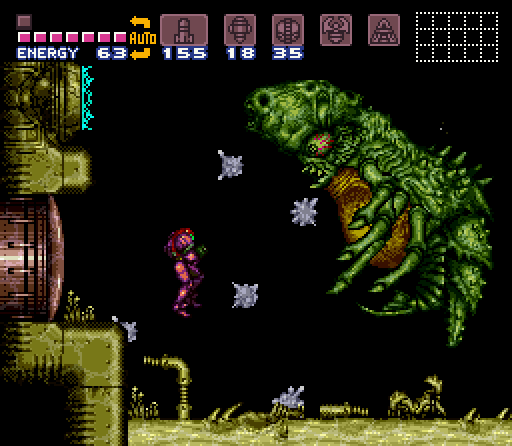
Here’s another Super Nintendo game I didn’t play as a kid but first experienced via Virtual Console on the Wii. However, even without that same nostalgia attached, I considered this to be a contender for best game on the console. After having a bad experience with Super Mario Kart, I was hoping that I’d still enjoy Super Metroid as much as I did the first time. I needn’t have worried though – this game is still utterly fantastic.

For 100% on this one, I used a map to help me find the items. The plan was to playthrough the game once grabbing all items so I could learn where they were and remind myself of where to go to progress. Then a second runthrough to clear the game in under 3 hours and get the best ending. I underestimated how useful the map would be though, as I actually managed to achieved both goals in a single playthrough. I did cut it a little close, especially with a couple of annoying to grab items near the end (there bit near your ship where there are two items either side of a collapsing shaft was a particular pain).

There’s not much to add about Super Metroid. It is a masterclass of atmosphere, game design and quality that feels massively ahead of it’s time considering the hardware it’s on. It’s still probably the best game in the series, which is a big claim because the series is consistently great. It’s still probably one of my votes for best game on the system, and if I divorce myself for the nostalgia I have for the other 2, probably the one with the most legitimate claim. Play it if you haven’t.

Starwing

Image

Another day, another SNES completion run. Here’s a hot take for you – this is another one of the 3 games in consideration for ‘best game on SNES’ in my opinion. Some people say this hasn’t aged well, and most people seem to prefer StarFox 64 – but this is my favourite game in the series, and my vote for the best one too. If you were wondering what my 3rd contender for best in the system is, it’s another hot take because it’s Donkey Kong Country 3 – I didn’t replay that one this time because I’ve got the 103% before.

Starwing (the PAL name for Starfox, in case it wasn’t obvious) was one I was mildly apprehensive about after Mario Kart. A game this dependent on it’s standout technical performance has a ton of potential to age badly, and although I loved it as a kid, it had been some time since I last played through. My memories held true on this one though, because low frame rate aside, it’s still a blast to play and the Arwing feels just right to manoeuvre around the stages. The low poly look has a ton of charm, and I adore the character voices ‘Bleh bleh bleh blehbleh bleh!’).

I did a quick replay of the easy route to get my eye in – this is the route I always did as a kid so no problems at all. Then I took to the medium difficulty route which I’d never cleared before. Sector X with the spinning beams always killed me quickly as a kid. Turns out childhood me was just rubbish though, because I cleared it without too much difficulty, and got 100% on most of the stages to boot.

Next, I took to the hard route – this one gave me a little more trouble – I had to use a continue on the boss of Fortuna as dodging him when he approaches the screen is tough. There’s also one boss where you need to shoot it’s arms to hurt it which caused me some grief – but I cleared the route and again got 100% on all stages. This game is definitely easier than I remember – apparently I’m much better at this time of game these days.

Finally, I took one more trip through hard mode, but this time I activated the secret exit from the asteroid field level to land in the ‘out of this dimension’ level. This is a weird stage with Dali-esque graphics, paper plane enemies and a slot machine boss. Clearing this got me an ending scene and is where I decided to call this game 100% complete. There’s one more secret level (the Black hole) which is accessed from the easy route, but I’ve done that one tons of times in the past, so I didn’t bother to revisit it this time.

I still think this stands out as one of the best games on the system.
Image
User avatar
MrPopo
Moderator
Posts: 24190
Joined: Tue Aug 26, 2008 1:01 pm
Location: Orange County, CA

Re: Games Beaten 2025

Post by MrPopo »

I agree with your assessment that the original Star Fox is the better of the two between it and 64. I think 64 got a little too distracted with "oh, we can do more stuff" and it meant you had things like the non-Arwing stages (not as fun as Arwing) and all-range mode (fun for the Star Wolf duels, meh for everything else).
Blizzard Entertainment Software Developer - All comments and views are my own and not representative of the company.
Limewater
Next-Gen
Posts: 3392
Joined: Thu Dec 18, 2008 11:01 am
Location: Northern Alabama

Re: Games Beaten 2025

Post by Limewater »

Regarding Start Fox:
I still don't understand how to figure out when to accelerate to dodge large things in the space levels.
Without having the ground to tell you how far away something is, how do you do it?
I am asking seriously. I only ever completed Star Fox on the easiest route because of this.
Well, I mean, maybe for other things too, but it was my weakest point in the easy route and ended my run on the middle route.
Systems: TI-99/4a, Commodore Vic-20, Atari 2600, NES, SMS, GB, Neo Geo MVS (Big Red 4-slot), Genesis, SNES, 3DO, PS1, N64, DC, PS2, GBA, GCN, NDSi, Wii
User avatar
Markies
Next-Gen
Posts: 1608
Joined: Fri Mar 27, 2015 4:29 pm
Location: St. Louis, Missouri
Contact:

Re: Games Beaten 2025

Post by Markies »

Markies' Games Beat List Of 2025!
***Denotes Replay For Completion***

1. Muramasa: The Demon Blade (Wii)
2. Mario Party 4 (GCN)
***3. The Lord of the Rings: The Third Age (PS2)***
***4. Pokemon Snap (N64)***
***5. Dead Or Alive (PS1)***
6. Rogue Galaxy (PS2)
7. Pokemon Blue (GBC)
8. Mario Kart 8 (Wii U)
***9. Eiyuden Chronicle: Rising (NSW)***
***10. Sonic The Hedgehog (GEN)***
***11. The New Tetris (N64)***
12. Final Fantasy I & II: Dawn of Souls (GBA)
13. Yoshi (NES)
***14. Super Mario RPG: Legend of the Seven Stars (SNES)***
15. L.A. Noire - The Complete Edition (PS3)
16. Batman: The Video Game (GBC)
17. Splatoon 2 (NSW)
18. The Punisher (GEN)
***19. The Legend of Zelda: Ocarina of Time / Master Quest (GCN)***
***20. ChuChu Rocket! (SDC)***
21. Advance Wars (GBA)
22. Shadow of the Ninja (NES)
23. Tecmo Super Bowl (SNES)
24. Child of Eden (PS3)

***25. Atelier Iris 2: The Azoth Of Destiny (PS2)

Image

I completed Atelier Iris 2: The Azoth of Destiny on the Sony Playstation 2 this evening!

Back in 2015, I beat Atelier Iris 2. I enjoyed it so much that I ranked it number 3 on my favorite games beat that year behind Super Smash Bros. Melee and Mario Kart: Double Dash!! Honestly, I have loved the entire Atelier Iris series on the PS2, but I would say Atelier Iris 2 is probably my favorite one. So, back in 2023, I did my first ever New Year Roulette where I randomly selected one game to buy, one game to beat and one game to replay to completion. Well, Atelier Iris 3 came up and I spent a few months replaying that to completion. Since that started a tradition, I am now replaying the series backwards as I decided this year to replay Atelier Iris 2. I was looking for another JRPG after Super Mario RPG and I thought this would be a perfect one to enjoy.

Even after this replay, Atelier Iris 2 is still a fantastic game and one of my favorites on the system. It is probably my favorite in the series, though the first one is also a strong contender as well. Everything about the game is just done superbly well. The battle system is quick paced and one of the most addictive I have enjoyed. It is classic turn based, but it is also very fast and the ability to push back your opponents is very satisfying. The music and graphics are absolutely stunning. The artwork has this almost water colored appearance to it at times while the music is catchy and relaxing. The story and characters are just a joy to enjoy throughout the entire experience. The dialogue is also quite funny, so it is nicely light hearted but its also not a joke or poking fun at anything. It is just whimsical and refreshing. You add in a crafting mechanic that is not too overbearing or too simple and you have a recipe for a fantastic game. I loved it so much back when I first played through it and replaying it against just confirmed my love for the game.

Overall, I loved absolutely everything about Atelier Iris 2: The Azoth of Destiny. I think this is the perfect mixture of alchemy and traditional RPG gameplay. Obviously, in a few years time, I will probably play through the original game to complete the series. Also, I own Mana Khemia, so I am very excited to try the next game in the series, albeit a bit different one. However, for this one, I think it is a fantastic JRPG experience and if you have any interest in these alchemic RPG's, this is one of the best!
Image
User avatar
PartridgeSenpai
Next-Gen
Posts: 3173
Joined: Mon Dec 14, 2015 9:27 am
Location: Northern Japan

Re: Games Beaten 2025

Post by PartridgeSenpai »

Partridge Senpai's 2025 Beaten Games:
Previously: 2016 2017 2018 2019 2020 2021 2022 2023 2024
* indicates a repeat

1~50
1. Arc Rise Fantasia (Wii)
2. Return of the Obra Dinn (PC)
3. Battlefield: Hardline (PS3)
4. Call of Duty: Black Ops (PS3)
5. Call of Duty: Black Ops II (PS3)
6. Dead Nation (PS3)
7. Kileak, The Blood 2: Reason in Madness (PS1)
8. Paro Wars (PS1)
9. in Stars and Time (Steam)
10. Tetris Battle Gaiden (SFC)
11. Super Tetris 3 (SFC)
12. Battlefield 4 (PS3)
13. Call of Duty: Modern Warfare 2 (PS3)
14. Call of Duty: Modern Warfare 3 (PS3)
15. Call of Duty: Black Ops III (PS4)
16. Call of Duty: Infinite Warfare (PS4)
17. Call of Duty: WWII (PS4)
18. Resistance 3 (PS3)
19. Tearaway: Unfolded (PS4)
20. Grow Home (PS4)
21. Grow Up (PS4)
22. Ratchet & Clank (2016) (PS4)
23. Dark Sector (Steam)
24. Nagano Winter Olympics '98 (N64)
25. Multi-Racing Championship (N64)
26. Super Smash Bros. (N64)
27. Puyo Puyo Sun 64 (N64)
28. Shin Nippon Pro Wrestling: Toukon Road - Brave Spirits (N64)
29. Jikkyou Pawafuru Puroyakyuu 6 (N64)
30. Let's Smash (N64)
31. Mario Tennis 64 (N64)
32. Ucchannanchan no Honō no Challenger: Denryū Iraira Bō (N64)
33. Jikkyou Pawafuru Puroyakyuu 4 (N64)
34. FIFA: Road to the World Cup 98 (N64)
35. Jikkyou Pawafuru Puroyakyuu 2000 (N64)
36. Jikkyou Pawafuru Puroyakyuu 5 (N64)
37. Time and Eternity (PS3)
38. Pokemon Red (GB)
39. Dr. Mario 64 (N64)
40. Shining Force Neo (PS2)
41. Chou Kuukan Nighter: King of Pro Baseball (N64)
42. Tales of Destiny 2 (PS2)
43. Star Wars: Episode I - Racer (N64)
44. ChoroQ 64 (N64)
45. F-Zero X (N64)
46. Homefront (PS3)
47. Ape Escape: Pumped & Primed (PS2)
48. F-Zero (SNES)
49. Castlevania: Lament of Innocence (PS2)
50. Castlevania: Curse of Darkness (PS2)
51. Wave Race 64 (N64)
52. Bakushou Jinsei 64: Mezase! Resort-ou (N64)
53. Mother (Famicom)
54. Famista 64 (N64)
55. Weird and Unfortunate Things are Happening (PC)
56. Kirby and the Rainbow Curse (Wii U)
57. Mario Kart Wii (Wii)
58. Wario Land: Shake it! (Wii) *
59. Mario Party 8 (Wii) *
60. Zack & Wiki: Quest for Barbaros' Treasure (Wii)
61. SimCity 2000 (N64)
62. Prototype (PS3)
63. Prototype 2 (PS3)
64. Final Fantasy X (PS2) *
65. Final Fantasy X-2 (PS2)
66. Grand Theft Auto: Vice City (PS2)

67. Crackdown (Xbox 360)
This and its sequel are games I’ve heard about basically forever. Crackdown 1 in particular I remember hearing all sorts of praise for when I was younger, but it’s a game I’ve never really known all that much about beyond it being one of the earlier superhero-ish open-world games. Microsoft recently gave these away for free for whatever reason, though, so I grabbed them and promptly forgot about them completely XD. That is, I forgot about them completely until I recently played through their rough contemporaries, Prototype 1 and 2. I had the bug for superhero open world games, and so it only made sense to check this game out too with how important it was to popularize the genre in this console generation. I meant to get to it right after Prototype 2, but I had to take a slight detour to play through a couple of RPGs with my spouse first X3. Once that was finished, however, I got right on it, and I managed to knock it out in just a couple of days. It took me around 8.5 hours to beat the game on the default difficulty of “tough”, and that was playing the “enhanced for Xbox One” version of the game in English.

Crackdown (or the equally evocative “Riot Act” as it’s known in Japan) is the story of Pacific City. Escalating crime and violence between rival gangs has been driving the world to ruin, and the world’s law enforcement agencies have banded together to combat it. However, this new crime fighting force simply called the Agency still hasn’t been enough. That’s where you come in. As a last-ditch effort to turn the rising tide of crime, the Agency has enlisted the help of a controversial scientist’s genetic experiments to create superhuman law enforcement officers. You are the first of this new breed of agent (they always just call you “Agent”), and you’re seemingly the last thing standing between the law-abiding civilian populace of Pacific City (and the world?) and the world’s three most dangerous gangs (all conveniently located right here in Pacific City).

Honestly, Crackdown barely has any story beyond that very simple premise. The generals and gang leaders you’re here to take out get little bios before and after you defeat them, but other than that, the only talking you’ll hear from visible people are just general chatter when you’re passing them by. The only real character (if you can call him that) is your unnamed handler at the Agency. He’s the one who gives you tips, reads out the bios for you, and in his words “is the closest thing you’re going to have to a friend”. Compared to GTA games that came before or other superhero-ish open-world games that came after like Prototype or Infamous, Crackdown ends up feeling very empty and devoid of character, and the lack of a proper character creator hardly helps in that regard either.

There are some twists in the story that *could* be read as leaning towards the Agency being something of a satire on the extreme power and force held by law enforcement in the real world, but it’s so scant that I very seriously hesitate to call it purposeful (and even if it is purposeful, it’s hardly very effective or well done). Crackdown ends up being pretty typical pro-cop and pro-neoliberal status quo propaganda for the era this was released in. The sheer lack of story and character certainly makes this a less egregious case than something like Mass Effect, but that’s hardly anything to brag about. At any rate, it’s all so shallow that it’s hardly going to convince anyone to play the game solely on the strength of its narrative no matter which side of the political spectrum you’re on, and it's a fine enough excuse for the action at hand.

Action is clearly where the developers for this game put all their resources, because Crackdown plays really well for what it is. There’s pretty clearly an intended route through the game, but it’s actually remarkably non-linear if you wanted to test your skills and tackle the game’s three major islands in whatever order you wanted to. You’ve got guns, you’ve got cars, and you’ve got great speed and super jumping to fling yourself around Pacific City and mulch up all its bad guys. Your major objective is taking out all three major gangs in the city, and each gang has a king pin whose power is bolstered by a number of minor generals. Taking out the generals first makes the king pin’s defenses weaker at their final fortress, so no matter what order you’re tackling things in, you’re pretty heavily incentivized to do generals before king pins, but there’s nothing stopping you from assaulting the king pin’s base immediately upon entering the city if that’s what you’re keen to try.

The game actually completely lacks mission structures too. The gang leaders simply exist in pre-determined spots around the city, and you can go to them and fight them whenever you want. Granted, they’re not on your map to start with, so you’ll need to explore around until you get a briefing from Agency HQ telling you that you’ve found a new general to snuff out, but the world is your oyster as far as how you tackle pretty much any problem is concerned. Much like Breath of the Wild would do about 10 years later, the lack of a more typical mission structure or directed story ends up being a strength just as much as it is a weakness. I think BotW executes upon this a lot better than Crackdown for a large number of reasons, but I also believe that Crackdown’s strange emptiness to its world ironically ends up being quite the novel strength compared to most games that’d come after it in this genre.

The leveling system also supports this non-linearity too. As there are no quests, it’s not like you can be given experience points for completing objectives of various types or whatever. Instead, you’ve got five different skills (agility, guns, melee, explosives, and driving), and you just get better at a respective skill as you do it more. Collecting the agility orbs scattered around high places in the city levels up your agility, and that allows you to run a lot faster and jump a lot higher with each level up. You can’t ever scale tall buildings outright, sure, but the higher jumps mean that your ability to jump from ledge to ledge and grab point to grab point is that much simpler. You’ll really need that for the skyscrapers you’ve gotta climb at the end of the game, especially with how temperamental and finicky Agent can be with actually grabbing the things he’s falling past. I cannot begin to imagine counting how many tall towers need to be reclimbed because my agent just arbitrarily decided to not be able to grab ledges anymore at an angle that worked perfectly well before, meaning I’d fall all the way back down to the ground and have to start over :/

You can’t really aim down sights in Crackdown. Instead, aiming is done entirely by holding a lock down button when looking at an enemy much like the older GTAs did with their small firearms. Though your targeting reticle will default to the enemy’s body, you can also select which body part you want to attack if you want to shoot weapons out of gangsters hands, make them stumble with a leg shot, or take them out quick with a head shot. I found the lock-on system a lot fiddlier than I would’ve preferred it to be. Sometimes Agent just won’t focus on whom you want him to, and tilting the right stick to correct that by re-aiming often just means you don’t actually re-aim and get stuck uselessly firing at your first and undesired target’s limbs instead of the guy you’re actually trying to take out. At any rate, getting higher levels in guns means the reticle that indicates your level of accuracy when firing at a target focuses far faster with each power up you give it, so it’s worth increasing that all you can so you actually have a chance of taking targets out.

Your other skills are very useful too. Explosives are a pain to start leveling up, but the best guns later in the games are all explosive-based, and higher levels in that mean your explosions hit a LOT harder and also have far larger explosion radii. Needless to say, a high explosives level is gonna be your best friend by the end of the game. Melee may not seem too useful, but it’s also a very useful thing to have in your arsenal. Even the penultimate level of melee can one-shot kill most low level gang members, and each level of melee also gives you a new health bar to keep from dying. You’ve got regenerating health in this game, and the auto-healing armor that protects your actual health bar is far more burly than your HP itself, but you die SO quickly in this game (especially with how badly enemy explosions constantly ragdoll you) that every bit of extra health is always appreciated.

The only really underwhelming skill is your driving, I’d say. You’re always scaling buildings for agility orbs and attacking gangsters inside, so you rarely have much need to drive anywhere. Higher levels of driving mean Agency cars will transform in to better and better vehicles when you get inside them, but going back to HQ to grab a better vehicle is always a pain even with the fast travel systems the game has. It’s kinda neat that there are street races to do and such to level up your driving extra fast, and the driving itself does handle quite well compared to an older GTA game or something, but I extremely rarely actually found driving worth it when I could just run so fast in the first place with even middling levels of agility.

Crackdown’s mechanics and design are the star of the show for sure, and it’s not hard to see why people liked them so much back when this came out. However, in the present future of Current Year, I think that novelty has since been outshone by the myriad of successors in the “guy in a city” open-world sub-genre. Back in ’07 when Crackdown came out, a big city to romp around in that actually controlled (mostly) well was a really cool experience, and the novelty and good play control made things like a threadbare world and narrative trivial to ignore. However, in the nearly 20 years since, the ante has been upped a lot for games in this genre, and it’s impossible to ignore how archaic Crackdown feels as a result. Much like I complained about with Prototype 1, your movement options are *so* good that the city itself ends up feeling rather unimportant and disposable. Buildings are just obstacles to be jumped over and nothing more. There’s little reason to become familiar with anywhere because you don’t need to learn streets and you don’t need to return to areas once you’re done with them because of the game’s overall structure. The action feels pretty darn good, sure, but it comes at the expense of the overall experience having much staying power once you’ve had your fill of what it offers.

All that said, if you’re in the mood for a sandbox experience that lets you get into the action right away without any hand-holding starter missions, Crackdown can still give that to you now just as well as it always has, but I have to imagine that a lot fewer people are looking for that compared to how many people are looking for a more character-based, curated experience like even an older Saints Row game would give you.

The aesthetics are pretty good for what they are, but they’re definitely dated (even in this version that’s got enhanced graphics for the Xbox One). That early 360-era 3D looks as funky as it ever has, but the cell-shading they use for the graphics does help this game hold up a lot better than it otherwise might’ve done. Humans look fun and comic book-y, and Pacific City looks nice even if there isn’t much life to it. The overall soundtrack is pretty ignorable, at least for me. Much like GTA, there isn’t really music beyond that which plays diegetically in vehicles, and unlike GTA, you’re probably driving so little in Crackdown that you’ll very rarely even have a chance to hear that music. I wasn’t really a fan of the tunes playing on the rare occasions I actually got in a car, but I can’t really give a fair opinion on the soundtrack beyond it being far too absent to really care much about (at least if you play the game anything like I did).

Verdict: Hesitantly Recommended. Crackdown 1 is a game that really shows its age, but the fundamentals that made it fun back then do still mostly hold up. With the scads of other “guy in a city” open-world games at your disposal these days (superpowered or otherwise), I don’t think there’s all that much reason to sit down and play Crackdown, but if you do fancy a look at where the genre really began to take flight beyond mere licensed Spider-Man games, then this is a pretty decent way to spend a weekend. If you ever wanna just turn your brain off, hop around a city, and running spin-kick through some bad guys as you hang out with friends in voice chat or listen to a podcast, then Crackdown is pretty much the perfect vehicle for that sort of vibe~.
----

68. Crackdown 2 (Xbox 360)
After finishing Crackdown, the only logical next step was to carry on to the sequel that Microsoft also gave out for free recently. I was vaguely aware of Crackdown 1, but I’d never so much as seen footage of Crackdown 2. All I knew was that people generally seemed to look down on this game. The vibe I’d gotten over the years was that this was a rushed-out sequel where they just reused the same city, threw in some zombies, and called it a day. Ironically, pretty much everyone I’ve talked to about Crackdown 2 since playing it has said the opposite, that Crackdown 2 was pretty much always seen as the superior game, but that’s news to me! XD. Regardless of its legacy, I had no idea what I was getting into, but after the baffling cliffhanger that Crackdown 1 ended on, I was incredibly curious to see just where they took things from there. It took me around 10.5 hours to beat the game on normal, “tough”, difficulty doing a fair few side activities playing the “enhanced for Xbox One” version of the game.

Crackdown 2 is, as the name implies, a sequel to the first Crackdown. It’s been about 10 years since the end of the Gang Wars that were the last Crackdown, and Pacific City has really gone down the toilet since. The master plan of the Agency revealed at the end of the previous game, that the Gang Wars were something they orchestrated in order to gain all this power, hasn’t done much in the face of new overwhelming threat: “Freaks”. The genetic experiments of the mad scientist of the previous game, the very same ones that created the Agent superhuman program of which you were one, have exploded into a full-blown zombie-like monster pandemic, and the city has been walled off, destroyed, and generally ransacked in the process.

The Agency hasn’t been sitting on their thumbs though. They’ve got a secret weapon, Project Sunburst, that’ll wipe out the Freaks once and for all. However, the constant pressure from a new anti-Agency terrorist gang named Cell (about which I made *many* Dragon Ball jokes, I assure you) have all but left Project Sunburst completely in ruins with their constant attacks. Between Cell’s attacks and the Freaks’ advances, Pacific City and perhaps the whole world seems lost. But the Agency isn’t down and out yet. Despite the old Agent cloning system having been destroyed by Cell, they’ve been very busy making up a new one, and you’re part of the latest batch. Thankfully, it seems like you’re just the winner they need at the moment. Once you graduate from your accelerated initial training course, you’re pushed out into Pacific City. Sure, you’re hardly working for the good guys, but if you can’t save Pacific City, it doesn’t look like anyone will.

It’s a much meatier premise (that I probably spent too much time relating back to you here, admittedly), but the overall presence of the story isn’t that different on paper. Aside from a few recurring characters in the form of audio logs you find, the only real character present in the narrative is the same Handler from the Agency who is the constant voice in your ear as ever. However, the new writing team have allowed themselves to have a lot more fun than they did in the last game. Now that the mask has been dropped for the Agency being self-serving and pretty evil, the Handler makes no pretense that he’s here to be polite or your friend. He’s sassy, he’s condescending, and he even swears! He even explicitly announced when you get achievements, and I loved getting new ones if only because just how patronizing he sounded made me cackle with laughter every time X3. Much like the first game, the narrative (such that there is) is certainly nothing to make a huge fuss about compared to any contemporaries or successive games in the genre, but the higher presence of comedy helps make up for that a lot, and it makes the whole experience a lot more memorable to boot.

The changes to the overall gameplay loop go a long way towards giving Pacific City a much stronger identity too. Firstly, fundamental changes have been made to the way missions and activities are structured that give you a lot more reason to actually use cars. You’re not slow or anything, but you’re a lot less ridiculously fast and high-jumping even when you’re at max agility power. Additionally, getting cars at drop points is now far easier than it used to be, and you also get way cooler and faster cars a lot sooner too. Where I barely ever used cars in Crackdown 1, I found myself using them far more in Crackdown 2 (and even doing one of the street race activities here and there because the handling just felt so good~).

Then, there’s the city itself. Yes, the city is *technically* the same Pacific City, but there have been a ton of changes made to it to make you feel the impact of the past 10 years (not to mention the Cell occupation and Freak invasion too, of course). However, as much as the ruin brought to so many buildings makes for less pain in the butt climbing than the last game had in certain areas, this is far from the only aspect giving the world more character. The Freaks and Cell themselves also help vary up the gameplay loop a lot, and you end up learning and familiarizing yourself with the city significantly more than you ever had reason to in the last game.

The game’s day/night cycle affects the power of the Freaks and Cell respectively. Cell guard their outposts significantly more strongly at night, so if you want to capture outposts (and unlock more ammo/vehicle restore points as a result), then you’re far more likely to survive that during a daytime attack. Freaks, by contrast, go out at night, and you also unlock the ability to take out their lairs to reduce their numbers at nighttime. Not only that, but you also have the fact that certain guns far better at fighting man rather than monster, so using different loadouts can help a lot too depending on just how overwhelming the odds you’re facing are. The diversification of activities depending on the time of day helps give the city a lot more character because it means you’re traveling back to places for *a reason* far more than you ever had opportunity to in Crackdown 1, and it’s something I had a ton of fun with.

I know it sounds a lot like I just spent a paragraph or two talking about how great backtracking is, and while I would argue that this is far better designed than simple backtracking, I’m not going to deny that there’s certainly some annoying aspects to how this system is put together (including, yes, what’s effectively backtracking). I really like that you can take on Cell strongholds whenever, but the time of day just changes how strong they’ll be. Sure, it’s harder at night, but it’s not impossible. What *is* impossible is doing the Freak lair clearouts during the day. If you’re on your way to one and the sun rises, well then you either gotta wait in place or find something else to do in the meanwhile, because there’s nothing you can do about it now.

Similarly, the street races actually suffer significantly from this too. Unlike the first game (unless I just happened to never encounter it), you actually get penalized for killing civilians in Crackdown 2. Kill too many Agency peacekeepers (the normal cops of Pacific City) or civilians and the peacekeepers will start hunting you down and trying to kill you, and you’ll need to wait a fair while for them to leave you alone. I really like this change because it makes the actions you take matter a lot more, and it makes Crackdown feel less like a sandbox god game where you have great power but very little actual influence.

Unfortunately (albeit logically), activities like street races don’t turn off these penalty features (though initiating things like Cell stronghold attacks mercifully does turn them off). If you’re racing during the daytime, you’re gonna be flattening a LOT of pedestrians and friendly motorists, and the Agency really doesn’t like that no matter how much the Handler will cheer you on if you’re making good lap times XD. The risk/reward of doing street races during the day vs doing them at night when all you have are weak shambling Freaks to worry about is a lot less interesting or fun than the risk/reward of attacking Cell strongholds, and it just ends up being a pain in the butt. I think the general design of both activities and the flow of the game have been improved significantly with things like the two major enemy types and day/night cycle, but it’s still close but no cigar insofar as providing an experience that doesn’t feel like its wasting your time for no reason goes :/

As different as the mission/activity structure and Pacific City itself are, the basics of control, gameplay, and leveling up have gotten more subtle improvements from how they worked in Crackdown 1. Agility orbs are still all over rooftops (sometimes even the same rooftops), and they still make you jump higher and run faster as you get more levels of agility. However, as I’ve already spoken about, they reach a much better balance with how agility is balanced against the usefulness of cars in this game compared to the last one, so that’s something I really appreciated. Something I didn’t appreciate is how finicky grappling onto ledges while you’re climbing *still* is. The design of the city definitely makes climbing better than it was, but it’s still too annoying too frequently for all of the complicated climbing up high buildings they’re still having you do for required mission objectives.

Another sadly still very janky mechanic is the lock-on system for guns. You’re still at the mercy of the lock-on system deciding to lock on to the right enemy or not, and this game overall being harder than the previous one makes that fact just that much more frustrating to deal with. This is especially true since this game feel much more designed around its co-op features than the last one did. While Crackdown 1 did have online co-op play, it never felt like I was under-equipped to handle what it threw at me. Crackdown 2 has not just 2-player but 4-player online multiplayer, though, and the big late-game challenges REALLY felt like I was suffering a lot primarily because these were just not missions very well designed for a single player to tackle on their own. The guns are still fun and the movement is still good too, but just how hard the game could get (and just how incredibly annoying getting ragdolled by enemies’ infinite grenades and rockets is) makes an otherwise pretty well-polished game a lot more of a pain to enjoy than it feels like it needed to be.

On a more positive note, I do really like how they’ve touched up how leveling up other stats affects gameplay. Melee is still giving both more max health as well a stronger punches, but leveling it up also gives you longer melee combos and big new moves with each new level too. Rather than just making your guns, bombs, and cars better respectively, leveling up guns, explosives, and cars mostly benefits you by unlocking new Agency-provided gear at your drop points. These new weapons and especially the better cars were absolute life savers more than once, and I think this change to how leveling up benefits you is a really clever way to keep the gameplay evolving over the game rather than leveling up largely just being flat power increases like it was in the last game.

Aesthetically, this is really a game from 2010 XD. There’s a bit more to it than that, but it overall looks quite nice (especially on the Xbox One), and I dig how they’ve managed to give Pacific City so much color in its design despite all the browns and greys added from the destruction it’s suffered. The music is still a mix of both ignorable and meh. They don’t have nearly the chops for licensed music that a GTA game would, and a lot of the tunes I happened to catch on the radio were things I either easily tuned out or things that actively annoyed me. The sound design as a whole is still perfectly good, the soundtrack is sadly not much improved from Crackdown 1’s meager performance.

Verdict: Recommended. I don’t really understand how people didn’t like Crackdown 2 back in the day, because as far as I’m concerned, it’s a flat upgrade on the first game in nearly every way it could be. It’s certainly not the best superpowered “guy in a city” open-world game, but it’s still a really strong showing that I loved losing myself with. If you’re itching for an open-world game in this fashion, Crackdown 2 may not top any best of all time lists, but it’s still a fun game that’s well worth your time and attention.
I identify everyone via avatar, so if you change your avatar, I genuinely might completely forget who you are. -- Me
Post Reply