Games Beaten 2026

Anything that is gaming related that doesn't fit well anywhere else
User avatar
Note
Next-Gen
Posts: 1562
Joined: Thu Feb 05, 2009 4:39 pm
Location: NYC

Re: Games Beaten 2026

Post by Note »

1. Dungeons & Dragons: Tower of Doom (SAT)
2. Castle Crashers Remastered (NSW)
3. Soul Calibur (DC)
4. Final Fantasy VII (PS1)
5. Alien Storm (GEN)
6. Captain America and the Avengers (GEN)
7. Final Fight 2 (SNES)
8. Mighty Morphin Power Rangers: The Fighting Edition (SNES)
9. Grandia (PS1)

Image

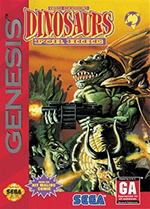
10. Dinosaurs for Hire (GEN)

I originally heard of this game back in the 2010s, I believe from watching Classic Game Room reviews on YouTube. The host of that channel reviewed a lot of uncommon Genesis games in a shorter format, which I enjoyed simply to learn about games I had never come across previously. Being a run and gun, this one piqued my interest right away. Years later, a friend of mine introduced me to his buddy that collects arcade cabinets, and when he learned I was into retro gaming, one of the first questions he asked me was "Do you know of Dinosaurs for Hire?" when I mentioned it was released on the Genesis, he was stunned I was familiar with it. Ever since then, the game's title has been kind of a joke in that social circle. I finally came across a copy while traveling in LA a few years ago and decided to pick it up.

Dinosaurs for Hire is based on a comic book originally released by Eternity Comics and had a run of nine issues. When Eternity Comics was purchased by Malibu Comics in 1993, the title returned to publication. This seems like an unlikely IP to get a video game release, but there was an employee at Sega, Mike Latham, who was a fan of the comic and pushed Sega to strike a deal and release a game for it. As mentioned earlier, Dinosaurs for Hire is a run and gun, with a good amount of platforming in the mix.

Unlike a lot of others in the genre, Dinosaurs for Hire has a vertical aspect to many of the levels and a fair amount of platforming. The game also has a choice of three characters, Archie - a T-Rex, Lorenzo - a Triceratops wearing a Hawaiian shirt, and Reese - a Stegosaurus with an eye patch. A fourth character, Cyrano, who is a Pterodactyl, appears before certain levels or bosses, to give you tips. While the cast of characters have a cool look to them, they unfortunately do not play different from one another. It would have been great to differentiate the characters by speed, strength, or special abilities, but it's not the case here. For this playthrough, I went through the game as Lorenzo. The game also features couch co-op, which is a great addition.

Gameplay wise, the controls are pretty responsive, and I think the challenge is fair here. Your character has a health meter, so you can take a good amount of damage. Luckily, this isn't like the US version of Contra Hard Corps, where you have to deal with one hit deaths. There are also weapon upgrades to be found throughout the game. One upgrade increases the power of the weapon, which can be upgraded up to five times before maxing out. The other turns the weapon into a spreadshot, which is always useful in this type of game. You can also find a force field upgrade which gives you temporary invincibility, health replenish, extra lives, and extra bombs. The game has a total of five main levels, with each one containing sub-sections. Broken down, I think you'll go through a total of 11 stages. Some of the locations are based on real world locations such as the Hoover Dam and Hollywood, while others appear to be fictional areas. There is also an auto-scrolling jet ski level, which I thought was a fun inclusion to switch up the gameplay.

Graphics wise, Dinosaurs for Hire is a mixed bag. The protagonist designs are pretty cool, and some of the bosses look amazing, as some of the boss sprites take up most of the screen, or are so big, only a portion of the boss fits on the screen. However, some of the color palettes throughout the game are pretty drab, and there's not much movement or animation in many of the backgrounds. There are a few levels that are bright and colorful, such as the stage when you're on top of a moving train, but many of the others don't look nearly as nice. For a Genesis game released in 1993, I think the graphics could have been much better, but some of the bosses are a treat to look at.

Overall, I had fun with Dinosaurs for Hire! I would recommend this one to fans of the genre who have got their share of Contra Hard Corps or Gunstar Heroes and are looking to try something different on the console. I would enjoy revisiting this with a friend in couch co-op. Also, my copy is missing the manual, so if anyone comes across one, let me know!
User avatar
PartridgeSenpai
Next-Gen
Posts: 3181
Joined: Mon Dec 14, 2015 9:27 am
Location: Northern Japan

Re: Games Beaten 2026

Post by PartridgeSenpai »

Partridge Senpai's 2026 Beaten Games:
Previously: 2016 2017 2018 2019 2020 2021 2022 2023 2024 2025
* indicates a repeat

1~50
1. Final Fantasy XII (PS2)
2. We Were Here (Steam)
3. We Were Here Too (Steam)
4. Tales of Graces f (PS3) *
5. Retro Game Challenge (Switch) *
6. We Were Here Forever (Steam)
7. Tales of Hearts R (PSVita) *
8. Ghostbusters: The Video Game Remastered (PC)
9. Mega Man 11 (PC)
10. Gravity Circuit (PC)
11. Mario Party DS (DS)
12. Ghost of Tsushima (PS5)
13. Ghost of Tsushima: Iki Island (PS5)
14. Astro's Playroom (PS5)
15. Michael Jackson: The Experience (PSP)
16. Sackboy: A Big Adventure (PS5)
17. Control (PS4)
18. White Album (PS3)
19. Super Mario Advance 2: Super Mario World (GBA)
20. Kirby's Epic Yarn (Wii)
21. Breath of Fire III (PSP)
22. Sly Cooper and the Thievius Raccoonus (PS2) *
23. Sly 2: Band of Thieves (PS2)
24. Army of Two (Xbox 360)
25. Sly 3: Honor Among Thieves (PS2)
26. Jak II (PS2)
27. Jak 3 (PS2)
28. Uncharted: Drake's Fortune (PS3)
29. Pokemon Sapphire (GBA)
30. Watch_Dogs (PS4)
31. Watch_Dogs: Bad Blood (PS4)
32. Legend of Hero Tonma (TG16)
33. Alan Wake: American Nightmare (PC)
34. Banjo-Tooie (N64) *
35. Ratchet & Clank: Size Matters (PSP)
36. Super Robot Spirits (N64)
37. Animal Crossing: City Folk (Wii)
38. Tales of Arise (PS4)
39. Crash Bandicoot: The Wrath of Cortex (PS2)
40. Crash Bandicoot 4: It's About Time (PS5)
41. Battlefield 1 (PS4)
42. Quantum Break (Xbone)
43. Battlefield V (PS4)
44. Balloon Fight GB (GBC)
45. Lemmings (PSP)
46. Uncharted 2: Among Thieves (PS3)
47. Uncharted 3: Drake's Deception (PS3)
48. Turnip Boy Robs a Bank (PC)
49. Dr. Mario (Famicom)
50. Max Payne 2: The Fall of Max Payne (PC)
51. Jimmy and the Pulsating Mass (PC)

52. Blasphemous 2 (PC)
I really loved the first Blasphemous when I played it years back. While I was excited to hear it was getting a sequel, this was yet another case where a modern game was just far too expensive for me to ever realistically look at picking it up for myself. However, luckily for me, my wonderful partner recently played through both games, saw that I had this on my wishlist, and bought it for me on deep discount so I could finally play it myself as well! :D. Having her to talk to about it definitely helped increase my enjoyment of it a lot, so on top of all the thanks I’ve already given to her, I’ll give her one more here as well for being such a sweetie~ ^w^. Doing both of the free DLC expansion thingies that have apparently come out for the game since its release, it ultimately took me around 21 hours to achieve 98% completion of the game with ending B (which I had to use a guide to figure out how to get because, while it ain’t as cryptic as the first game’s good ending, holy heck is that well hidden <w>).

Blasphemous 2 brings us back to both Castodia and the Penitent One, the respective setting and hero of the first game. Eons have passed since the High Wills of the Miracle were vanquished and peace returned to the land, but all is not well. The Miracle has managed to begin a return to the realm of men, and it seeks to birth a new child into the world via a giant heart floating in the sky above the blessed city. Not only that, but it’s also summoned its greatest defenders led by the very first penitent one to guard the heart until the birth is complete. All of this is enough to awaken our Penitent One from his slumber. Donning a new weapon and guided by a helpful angelic woman, he sets out to continue his endless penance and set things right once again.

While on the surface, Blasphemous 2’s story (even with the DLCs alongside it) mirrors the first’s rather meaningfully in a lot of ways thematically (a lot of stuff about how organized religious institutions pervert humanity both figuratively and literally with its self-serving approaches to faith, belief, and worship), there’s a lot more here once you go a bit past just-past-the-surface reading. Despite how full of suffering, sadness, and pain the world of Castodia is, it’s also a place overflowing with stories of hope, kindness, and self-sacrifice for the good of others. It’s a place that refuses to let the pain and horrors of the world, of the Miracle (something explicitly holy and sacred), rob them of their humanity even if it may rob them of so many other things. You, the Penitent One, are an important factor in helping them achieve the end goals of this good will via many of the game’s sidequests, but the fact of the matter remains that the Penitent One isn’t *bringing* positivity to the world: He’s only helping people follow through on the sincerity and good will they already so readily have.

This focus on humanity and how it reacts to catastrophes and how it relates to how they experience faith is what really defines the narrative of Blasphemous 2 for me. From the normal people in the streets to the people setting up these big religious institutions, they are all ultimately just people searching for answers and salvation like any other. Some of these people are self-serving, cruel, or totally wrong-headed in doing what they do, but they’re still a part of this great fabric like all the others are. That isn’t to say what the baddies are doing isn’t wrong (as Blasphemous 2 has no illusions about that), but it’s to say that the story well acknowledges that everyone is, regardless of position, struggling through this same uncertainty and pain of existence together at the end of the day. While the Miracle’s toxic influence was vanquished once before, people’s hope, their wishes for salvation from the pains of everyday living, lived on, and that’s what eventually allowed the Miracle to attempt to come back via this giant heart thing.

Blasphemous 2 is definitely not the kind of story I generally enjoy all that much. It takes a lot of cues from Dark Souls in just how much lore and story are tied up in optional text entries whose relative importance is on the player to deduce. In another note similar to Dark Souls, it’s also not really a character-driven story, and the larger themes are more things you put together after the fact by thinking about the nature of events that have taken place along your adventure. Even still, as much as I might not’ve understood everything the game was going for as I went through it, that’s what talking about it with my partner helped me so much in understanding for myself once I’d finished it. I ultimately really do like Blasphemous 2’s story. Sure, the thematic beats are messages I think are positive and largely agree with, but even just the creepy, weird, and wild superficial aspects of the Penitent One’s journey are enjoyable in and of themselves. Even if you’re someone who isn’t interested in combing through piles of in-game item descriptions or thinking about the larger implications of the story as a whole to try and decode its things, there’s a lot to enjoy and be engaged by in Blasphemous 2, and that’s before we even get to the pretty darn good gameplay.

The mechanical design of Blasphemous 2 is a metroidvania much like its predecessor was, but the moment-to-moment gameplay of this sequel is remarkably different from how the first game was. Something I found really fun and novel about the original Blasphemous is that it eschewed so many established conventions of the metroidvania genre. You never got new movement techniques or new weapons to help you explore. Your tools for both getting around and defending yourself could only ever be altered very slightly by certain, rare passive equipment you could find, but even then, only slightly. For the most part, getting to new areas of the map was just down to beating bosses to unlock the barriers their existence was tied to. While FromSoft’s Souls games follow a formula very similar to this, it makes a lot more sense for them to do it as technical 3D action games don’t really benefit the same way 2D ones do from enhanced movement capabilities like double jumping or phase dashing. While it’d be unlikely to do not on purpose, it was entirely possible to go through the entirety of Blasphemous 1 without picking up a single powerup and still have a very similar experience to a player who went out of their way to collect them all.

Blasphemous 2 takes the series in a completely different direction from the first game, and it has far more of those familiar trappings that other 2D action/adventure metroidvanias use. Not only do you get your choice of three different weapons at the start of the game, but you can even find the other two within the first third of the game and switch between your different weapons mid-combat whenever you like. Each of the two free DLCs even adds their own new weapon to the game, which are both really fun and cool to use. Blasphemous 2 also has a ton of movement tech that you unlock over the course of the game. Some are tied to those different weapons you find (as each has different exploration-related functions in addition to their normal weapon abilities), and some of them just give you whole new ways of getting around, full stop. Each weapon also has a main alternate ability as well as a full-blown upgrade tree to give you new combos, new moves, and even permanent passive upgrades to your weapon damage or natural defensive capabilities.

While you don’t need to engage particularly much with the new combos and such, all of these new options make Blasphemous 2 a very different beast to the original. None of these changes are strictly speaking *negative* evolutions for the series, but they’re definitely going to throw big fans of the original game for a loop, and that’s particularly true for how this sequel handles difficulty. Blasphemous 2 isn’t necessarily an *easy* game, but given just what a ball-buster Blasphemous 1 was (it was easily one of the hardest metroidvanias released up to that point, imo, right up there with Hollow Knight), Blasphemous 2 having such a relatively normal balance to its combat is very strange to get used to. The game does have harder modes you unlock once you beat it once, and I imagine it’s a fair bit harder if you forego a lot of upgrades or do particular sorts of challenge runs, Blasphemous 2 is a game I found shockingly easy for almost its entire playtime. I died maybe 10 times during my time with Blasphemous 2, and while I’m hardly a novice at this genre, Blasphemous 1 had me dying *so* many times against even the first boss that I was routinely surprised at just how many bosses I managed to do in Blasphemous 2 without dying a single time.

Again, I want to reiterate that none of these changes are bad in a vacuum. Heck, it’s not even like I disliked my time playing this game. The combat and platforming both felt great, exploration was fun, and the sidequests felt really rewarding to do as well. It’s just that contrast with what a fan of the first game like myself would *expect* from a sequel and what this sequel actually delivers that I can’t help but use as a warning here. It’d be like someone really enjoying Dark Souls but then finding that Dark Souls 2 had the same gameplay balancing as Legend of Zelda: Ocarina of Time. Ocarina of Time is a very good game, but it’s hardly a satisfying mechanical progression from Dark Souls. As long as you’re someone who doesn’t *demand* your action games punish the heck out of you and push you to your very limits, I think you’ll probably have a pretty darn good if not outright great time with Blasphemous 2, but this is definitely a case of “your mileage may vary” if you’re someone with your hopes really set on Blasphemous 2 being a bigger, meaner, flashier version of the first game. While “bigger” and “flashier” are certainly true, you’re going to have to look elsewhere for the enhanced meanness.

“Flashier” is probably not even the right word to use, because this game is *so* darn pretty looking. Blasphemous 1 already looked amazing with all of its gorgeous pixel art, and Blasphemous 2 kicks that up another few notches with how fantastic all the new enemies, environments, and effects look. The only real issue I have is with the game’s frequent, strange desire to use 2D animated, non-pixel art cutscenes as frequently as it does. They’re hardly omnipresent or anything, and they don’t look bad on their own, but they just do not look as good as the pixel art animations do, and I couldn’t stop thinking of how much better so many scenes would’ve looked had they just let them be animated in-engine rather than depicted via these 2D scenes. That isn’t *every* scene, mind you, but it was more than enough of them that I think the game’s aesthetic is more harmed than helped by how many are ultimately in the game.

The music is fantastic, and it brings the “scary Castlevania-y medieval Spain” flair the world has to life in a brilliant way. The oodles of personality that the Spanish dev team bring from their homeland is just as stunning as it was in the first game, and it means there’s once again just no adventure game that’ll give you the same vibe that journeying through Castodia will. I definitely wish I’d realized the game had a Spanish dub when I was playing through it, too. The English voice cast is really good, sure, and I really do appreciate that they employ a large variety of European English accents as well, but it definitely feels strange to contrast the extremely Spanish flair that all of the names, places, and people have with the English-language dialogue coming out of their mouths.

Verdict: Highly Recommended. While Blasphemous 2 definitely didn’t leave quite the impact the first one left on me, it’s still a fantastic game. A well-executed and engrossing story, well-balanced and great feeling gameplay, and a nigh one-of-a-kind aesthetic in a video game make this a metroidvania you really don’t wanna miss if you’re any kind of fan of the genre~.
----

53. Max Payne 3 (PS3)
After playing through the first two Max Payne games, the two Remedy-developed ones, it felt like it only made sense to give this one a go as well even if I was hardly the world’s biggest Max Payne fan mechanically. It’s a game I’d seen going for cheap locally that I’d meant to give a go anyhow during last year’s playthroughs of so many PS3-era shooters, so now it was a game I doubly meant to get around to X3. Playing the Japanese version of the game on normal difficulty, it took me almost dead-on 9 hours to beat it while hunting for as many collectibles as I could (not that that added all that much to my total playtime).

Max Payne 3 picks up a few years after Max Payne 2’s ending. Much like Max Payne 2 had done, we see Max flashing back at the end of the story to how he got there in the first place, and “there”, in this case, is São Paulo, Brazil. While working what he was promised would be an easy, cushy bodyguard job, Max quickly finds that this private security gig is far from all it was cracked up to be. The party quickly devolves into a blood bath as armed kidnappers storm the penthouse and try to make off with his employer’s wife. Max’s legendary reflexes and willingness to put his own life in danger wind up saving her in the end, but that’s only the beginning of what’ll be a hurricane of political upheaval, gang warfare, and PMC activity in the city.

What I had heard more than anything about this game before playing it is that, while it’s not a bad game, it’s just not Max Payne, and that is definitely the case for the story. Though I haven’t seen Man on Fire, a film I’ve heard this game borrows from *heavily* for its narrative, it’s definitely far from an atypical neo-noir/cop story. That’s not bad in a vacuum, but it’s also just not Max Payne. If you were familiar with the first two games, and I told you the broad strokes of the story of Max Payne 3, you’d probably think it was a bit of an odd choice of setting for a Max Payne game but not an impossible one. The devil is really in the details here. Yeah, Max is cynical, he’s curt, he quips, but the Remedy’s absence and, more importantly, Rockstar’s presence can be felt very heavily from the word ‘go’.

For starters, this just makes so little sense as a narrative successor to Max Payne 2. 2 ends on a remarkably hopeful note, with Max finally seeing a light at the end of the tunnel, that life may really still be worth living despite how much he’s lost (it doesn’t mean he needs to lose himself as well). 3 starts with Max “worse than ever” in all respects but with no justification as to why, and they never really try and provide one either. I think a theoretical version of Max Payne 3 *could* have given us a Max who’s fallen farther than he ever has, but it’d take some real legwork to set that up, and the way we feel like we’re starting in media res with Max Payne 3 just assumes you’ll fill in all those gaps yourself. This feels like a “what if” scenario sequel to an alternate version of Max Payne *1* more than it ever feels like a straight sequel to Max Payne 2.

This game very much has Xbox 360-era Rockstar’s commitment to cynicism in a way Max Payne never did before, and it makes it often feel gratuitous and uncomfortable for no real gain just as much as it makes it feel un-Max Payne. Why does Max fall farther than ever? He just does because loss makes you miserable forever, I guess. Why does Rockstar take Max’s love of drink and his painkiller health pack mechanic and extend that into a full-blown substance addiction problem? I can only assume that it made the story feel more superficially mature in the way Rockstar love so much, so they felt it was a natural course for the story to take. Why are we suddenly in Brazil instead of somewhere else in the States? I don’t really have an explanation for that outside of shooting non-English speaking darker skinned people was very popular in shooters that generation. They *try* to justify it in the story a time or two, but they never follow up on it in a way that makes it feel anything more than just picking an exotic location for the sake of it (and one they haven’t even done that good a job of recreating, if commentary by contemporary Brazilian reviewers are anything to go off of). Compared to the other worst offenders of the generation, Max Payne 3 is hardly the worst case of “white guy goes around and kills a bunch of non-white people” shooter game, but that’s both not a high bar to clear as well as damning with faint praise at the best of times.

All in all, I think Max Payne 3’s story is a well-enough executed one for what it is, but it feels very predictable and unoriginal due to just how well trodden the genre they’re doing is. Yeah, it’s very cinematic in ways that video games rarely went for at the time, but that doesn’t really do much to wow an audience these days. It almost feels like Rockstar were trying to make their own spin on Uncharted with the way they try to structure it as a playable action movie, but they’ve picked a much less engaging genre to do it in despite having a similar amount of baggage tied to it (between all the cop stuff and racism stuff, at least).

They even effectively cut out a lot of the levity the game *could* have by setting it in São Paulo, because they have most NPCs just speak untranslated Portuguese. It’s a nice alienating thing for Max, I guess, but as already established, they don’t exactly do anything with it, so I’d question how praiseworthy a design choice that actually is. The Max Payne games (much like all of Remedy’s games) have a lot of really fun, memorable levity among the dialogue you can overhear the people around you doing, and this game has nearly none of it because of that commitment to alienating Max and the player by not translating so, so much of the dialogue. The kindest summation I can give Max Payne 3’s narrative is that it’s *fine*, but it’s hardly a reason to show up even compared to contemporary third-person shooter “playable action movie” games from its own generation let alone ones that have come out since.

That whole vibe of “it’s fine I guess” is not helped at all by how this game plays, either, because I absolutely cannot just write that off as “fine” with how much it drove me crazy. Much like the first two Max Payne games, 3 is a third-person shooter with activatable slow-mo. While it being a modern shooter means you don’t have the Duke Nukem pockets you did in the old games (you can only carry two small guns and one big gun at a time now instead of having all weapons all the time), there are much larger issues at play here. Unlike the first two games, this is built in Rockstar’s RAGE engine, meaning it plays like GTA. With the cruddy encounter design, overdone luxury animations for movement, and less than perfect cover system, GTA is not a particularly good third-person shooter, but that’s a way easier flaw to overlook in GTA because it’s not just an action game: It’s an open-world game. It’s way easier to overlook the more glaring flaws in systems that a game isn’t entirely focused on, but Max Payne 3 does not have that luxury.

The guns themselves feel fine to use, but Rockstar’s less than stellar encounter design *really* hurts this game, because there are really only two types of encounters. There are the kind where cover is pretty readily available, so you can just use the cover system to stay relatively safe as long as you make sure you’re not being flanked. Then there are the myriads of encounters with just no discernible cover at all, so you just need to get lit the heck up by enemy gunfire as you hope you have enough healing to outlast their bullets. In the large majority of cases, you will not have the healing to outlast them, because this game is *so* stingy with giving you health packs. It’s also really stingy with giving you ammo for guns (let alone the decent ones), so even by chapter 3 (of more than a dozen chapters) I was already losing my mind at just how much death seemed to be an inevitability.

There’s a mechanic where dying enough starts giving you more and more extra health packs upon respawn, but that doesn’t really make the game more fun so much as it just attempts to bandage over the overly hostile health pack placement the game has on its own. Other third-person shooters from this era don’t really have this problem because they just have regenerating player health, but Rockstar seem to have retained the old health pack mechanic without actually designing a game that was fun to play with health packs (not that I’m the biggest fan of health pack-centered games in the first place, but I have at least played some I’ve enjoyed). Combat in Max Payne can often feel fun with the silly ragdolls and just how particularly enemies will react to getting shot in different parts of the body (falling down when legs are shot, losing aim with their weapons when arms are shot, etc), but just how bad it actually is to fight them takes away a LOT of how fun that actually is to play, and the slow-mo system does nothing to help that.

More opportunity to aim accurately would be the main advantage one would expect to come from the ability to slow down time in a shooter. I personally think this mechanic reaches its peak with 2005’s F.E.A.R., but the older Max Payne games basically invented the mechanic for video games, so I’m more than willing to cut them some slack for their slow-mo often being questionably useful. Given that it’s such an iconic aspect of the series’ mechanics, Max Payne 3 brings your slow-mo powers back, but they are frankly more useless than they’ve ever been. Because this is a RAGE engine game, you’ve got *crazy* good auto-aim with how Max’s targeting reticle will snap to enemies once you start aiming down sights. You can turn it off completely in the game settings, but the game is already so miserably hard that I have no idea why you’d want to do that (let alone play on any of the *three* difficulties higher than normal). Even putting aside the crappy encounter design, you die *so* fast from enemy gunfire that all slow-mo generally does is just prolong the time you’ll have before you die, because Max’s movements aren’t actually sped up by slow-mo.

The only time slow-mo is actually useful is when it automatically kicks in if you have any health packs left upon being killed. That puts you into a slow-mo “last stand” mode where if you can shoot the guy who fatally shot you, you’ll get back up while consuming a health pack. It’s a neat idea, but again with the crappy encounter design, this just feels like a bandage over a much larger problem in a not super fun to play game. Maybe this is less of an issue on the PC version, but for the console versions, slow-mo is a mechanic so unhelpful I often forgot it existed at all, and that’s doubly true since Rockstar also chose to revert slow-mo *back* to how it worked in Max Payne 1. No longer does your slow-mo automatically recharge like it did in Max Payne 2. Now it’s only a reward for getting kills, so you can’t actually rely on it to be available at any particular time in combat. This isn’t the biggest drawback since, as we’ve established, slow-mo is a dreadfully unhelpful mechanic in Max Payne 3, but it means that even if it *were* helpful, the basic gameplay loop trains the player to ignore it since you can never really rely on having it when you might need it. As okay/tolerable as the story was, the experience of actually playing Max Payne 3 was one I found incredibly tedious far before I neared the end, and I was incredibly glad that I managed to get through this whole darn thing in just a day so I could stop thinking about it Xp

Visually, this game mostly lives up to its Rockstar heritage and is pretty darn good. It’s still a PS3-era game, but from the faces to the locations, this game looks quite good for a game from 2012. The music is good and the voicework is great too (outside of Rockstar hiring Vas from Portugal rather than Brazil, let alone São Paulo, so the VA does sound kinda weird at times), but unfortunately the game also bares its heritage of being delayed more than 3 years, so it’s got some very odd, tacked-on feeling aspects to it. First of all is the weird love of having random words the characters say pop up visually on the screen. You’d think it’d be to emphasize words with particular relevance to the plot or to foreshadow things, and while it’s true that that’s *sometimes* the case, it’s the exception rather than the rule. It ends up becoming a sort of visual white noise during cutscenes, much like the weird graphical flashes and distortions during both gameplay and cutscenes. These weird distortions are to get across, I can only assume, Max’s states of drunkenness or withdrawal, but while that might be tolerably effective over the course of a 1.5~2-hour film, over a 9-hour singleplayer campaign, they quickly lose any significant beyond bothering your eyes.

Verdict: Not Recommended. The best aspects of Max Payne 3 are okay at best as well as incredibly un-special. While I think that making a successor to Max Payne 2 would’ve been difficult at the best of times, Rockstar have absolutely failed to make something compelling (or at the very least fails to stand the test of the time the way the earlier games still can). It’s a very flawed and too often just frustrating third-person shooter with an OK story, and if you’re going all the back to the PS3 to play your cover shooters, your time is worth far, far more than this.
----

54. Lemmings (SFC)
A few weeks back, I played through the 2006 remake of Lemmings done by Team 17 for the PSP. I really loved it, but something just wasn’t complete for me. While it was nice to say that I’d finally beaten *a* version of the original Lemmings, my real white whale (or white Lemming, as one could say?) was the SNES version of Lemmings I had growing up. I don’t know why I assumed for the longest time that it was a remarkably expensive game on the Super Famicom, but I was overjoyed to see that it’s actually super affordable out here. I snapped up a copy as quick as I could, and I’ve spent the past few days slowly chugging away at beating the original 120 levels (the extra 5 Sunsoft Special-difficulty stages are post-game as far as I’m concerned. I managed to finish the first one, but they’re crazy crap I’m not holding myself to finishing to call this one “beaten” XP). It took me 11 hours over three days, but I finally did it! I finally got the Lemmings to their shiny new homeland in the version of this game most nostalgic to my heart~.

Different hardware, different console generation, same old Lemmings. With four difficulty levels (fun, tricky, taxing, and mayhem) each holding 30 levels a piece, you’ve got 120 levels of puzzling madness to test yourself with just like you did back on the Amiga. Sunsoft, in all their evil genius, even decided to make an extra five levels and tack them onto the very end to REALLY test your mettle (and patience XP) if you’re really up for it! The general concept is still the same, though. Lemmings emerge from their door in the sky, and they walk forward unceasingly towards whatever awaits them. Thankfully for them, they’ve got you! Using your cursor, you can assign them special abilities to help them break through barriers, bridge chasms, and avoid traps so that you can get enough Lemmings to the end to fulfil the quota for that level. It’ll often be impossible to get every Lemming to safety, but as the title screen of many old Lemmings games (though oddly enough, not this one) proclaims “The needs of the many outweigh the needs of the few!” XD

There’s not much more to say that I haven’t already elaborated on in my review of the PSP Lemmings from ’06, so I’ll spend most of the rest of this review talking about the intricacies of this version and how they compare to that later remake. While this may not be the original hardware for Lemmings, so far as I’ve been able to find, this version mirrors the Amiga original as much as it possibly could outside of the addition of those few extra levels. The same thing goes for the North American Super Nintendo release I grew up with and this Japanese Super Famicom release. Outside of a very minor bit of censorship on one level different between the two (and, strangely enough, different end-of-level passwords between the two versions as well), they’re the same darn game from the graphics to the music.

The same can’t be said for that later PSP version, however, and having now played through this original version, I’ve got a much better grasp as to *why* the PSP version has the changes it does. If I have any major complaints with the original iteration of Lemmings, it’s that too many late-game puzzles rely too heavily on pushing you to figuring out what the limits of the engine can pull off. Now, in a vacuum, that wouldn’t even necessarily be a problem, as plenty of puzzle games are “guilty” of the same thing because that’s just how they were intended to be played. With Lemmings, however, they’re pushing the boundaries of what’s reasonable *so* far as to rob some puzzles of discrete solutions, full stop. There are quite a few puzzles throughout the game that I’d argue are down to getting lucky with the Lemming your cursor happens to select as much as they are about quick reflexes or actually cracking the solution to a tricky puzzle.

While certain aspects of the PSP version are made easier or more difficult due to how they’ve had to streamline the UI to fit the new screen resolution (having both the mini-map in the lower right as well as an indicator of how many Lemmings your cursor is currently over were very welcome after having to go without them in the PSP version), nearly all of the ways the PSP version makes the experience easier is down to the fact that their new engine has better precision than the old one did. Both versions have a number of puzzles that come down to managing to make the correct Lemming dig or build the way you want him to, but the PSP version is totally lacking the issues surrounding blockers that the original version has. You never need to play guesswork with exactly where a builder will turn around when he encounters a blocker mid-build (*shakes fist at Mayhem 5*), and you’ll never need to use blockers to shove walkers into walls to have them explode more efficiently like you have to in the original, either. If I were to pick any reason for picking a later Lemmings release rather than one of these original incarnations, it’d be that you don’t need to suffer through those blocker puzzles, first and foremost.

That said, there were a remarkable amount of more general changes between this original and the PSP remake that were interesting to encounter (aside from the order of some levels being swapped for no discernible reason). One that made this version a fair bit harder was how much less agency you have while the game is paused. In the PSP version, you can assign a singular job to a Lemming while paused, and you can even raise and lower the exit rate while paused as well. Such is not the case in this original version. Any job assigning or exit rate management *must* be done while the game is going in real time, which makes some trivial levels in the PSP version *far* harder here in their original forms. One way this original is actually *easier* than the PSP version is that destruction-focused Lemmings, particularly miners and diggers (and possibly also bombers?), actually have slightly larger destruction areas than they do in the PSP remake. In fairness, it makes some levels harder as much as it makes others easier, but it was nonetheless nice to have something more than just a challenge upgrade from the version I played a few weeks back X3

The one major place where not just the original version but this SNES/SFC version in particular beats the pants off of the remake is the music. Where the PSP version’s tunes are honestly some of the weakest music this original Lemmings has ever had, I adore the way that Sunsoft have recreated and enhanced the Amiga originals via the SNES’s sound chip. The presentation overall has its charm points in both versions, of course. I prefer the old 16-bit graphics or nostalgia reasons and beyond, but I definitely don’t love just how badly this version can chug at times. If you’ve got all 50, 80, or 100 Lemmings on screen at once, the game can really start to chug and stutter. It sucks that the game slows down, of course, but it’s way more annoying when a very particular bit of timing for a Lemming starting to dig, build, etc gets thrown out of whack just because the framerate was dying XP. I do still love the way this version looks, of course, and especially how it sounds, but there are absolutely sacrifices playing this original one in terms of performance (and not just because of the lack of the PSP version’s x3 fast forward button XP).

Verdict: Highly Recommended. As much as I think the PSP version is definitely the more palatable and accessible version of the original Lemmings, this 16-bit original is still as strong as it ever was. Sure, it’s missing out on some quality-of-life features and has some really unforgiving nonsense with some of the meaner levels, but that’s stuff that a patient player or a good emulator can get past no problem, imo. This is still one of the best action puzzle games ever made, and it’s still fun and addicting as heck even playing an old version like this.
I identify everyone via avatar, so if you change your avatar, I genuinely might completely forget who you are. -- Me
User avatar
MrPopo
Moderator
Posts: 24217
Joined: Tue Aug 26, 2008 1:01 pm
Location: Orange County, CA

Re: Games Beaten 2026

Post by MrPopo »

It's worth mentioning that a second playthrough of Max Payne 3 does add subtitles. I thought having the dialog unsubtitled was an interesting choice, but as you said, they didn't really do a lot with it.

I do recommend you watch Man on Fire, the Denzel Washington version. It's a very good revenge story.
Blizzard Entertainment Software Developer - All comments and views are my own and not representative of the company.
User avatar
PartridgeSenpai
Next-Gen
Posts: 3181
Joined: Mon Dec 14, 2015 9:27 am
Location: Northern Japan

Re: Games Beaten 2026

Post by PartridgeSenpai »

MrPopo wrote: Tue Jun 23, 2026 11:12 am It's worth mentioning that a second playthrough of Max Payne 3 does add subtitles. I thought having the dialog unsubtitled was an interesting choice, but as you said, they didn't really do a lot with it.

I do recommend you watch Man on Fire, the Denzel Washington version. It's a very good revenge story.
I very well may watch that movie at some point! Seems like the kind of movie my partner will enjoy~

And I'm also very unsurprised to learn that a replay adds subtitles. I guessed as such while I was playing because the mere fact that they go through the trouble to subtitle all the Portuguese implied that they'd show you what everyone was actually saying on a replay or something. It's also not really surprising that they don't really do much with it. It feels like the kind of thing much like the graphical effects or word pop ins where it sounded very cool on paper, but then when it actually came time to implement it, they didn't really have any grand ideas on what to do with it beyond just doing it <w>
I identify everyone via avatar, so if you change your avatar, I genuinely might completely forget who you are. -- Me
User avatar
Note
Next-Gen
Posts: 1562
Joined: Thu Feb 05, 2009 4:39 pm
Location: NYC

Re: Games Beaten 2026

Post by Note »

1. Dungeons & Dragons: Tower of Doom (SAT)
2. Castle Crashers Remastered (NSW)
3. Soul Calibur (DC)*
4. Final Fantasy VII (PS1)
5. Alien Storm (GEN)
6. Captain America and the Avengers (GEN)
7. Final Fight 2 (SNES)
8. Mighty Morphin Power Rangers: The Fighting Edition (SNES)
9. Grandia (PS1)
10. Dinosaurs for Hire (GEN)

Image

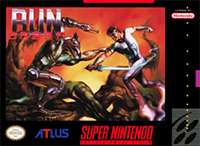
11. Run Saber (SNES)

Run Saber is one of those SNES titles that I totally missed out on back when it was released. I didn't hear about it until much later and it caught my attention, as I'm a fan of the Strider games. The couch co-op feature was a big bonus as well, as it's not common for these type of games to feature a two player mode. I came across a copy a few years ago and am glad to have finally finished it!

Run Saber is an action platformer developed by Horisoft and released on the SNES in 1993. Run Saber plays a lot like Strider, and is considered a SNES clone of the game, but there is some interesting differences here both in gameplay and the overall look and feel of the game. For starters, Run Saber feels two different characters, Allen and Sheena, in which you have the ability to choose your character when playing in single player mode. The game features five levels, with each being fairly long. The levels consist of a military base, a neon city, a forest area, a factory setting, and the final level resembles an alien base, looking to be something out of a Contra game.

In regard to your move set, you have a normal attack, a screen clearing special, the ability to jump and hang on to ledges, ceilings, and climb walls. You also have access to a diagonal jump kick, which comes in use in one particular section late in the game and a slide kick. There are also numerous power-ups to be found throughout, including a blue saber which lengthens your main weapon, medkits which restore your health and can lengthen your life bar, pink spheres which give you an extra special attack, and 1-ups which can also be found.

In regard to the graphics, I think the game looks quite good for the console, as the main character sprites are well done, there's a good mix of enemies, there are some cool looking bosses, and there's some interesting backgrounds throughout the various levels. There are also some interesting use of the Mode 7 feature early in the game, as the first boss you fight takes place while riding a fighter jet. In the middle of the fight, the plane begins to rotate and zoom in and out. A weird but fun graphical effect. There are some other cool bosses to go up against throughout the adventure, including an oversized zombie woman, a cyborg humanoid falcon, and a giant mech with multiple forms. In regard to the soundtrack, Run Saber features some pretty great tunes, with my favorite probably being the theme song that plays in the Tong City level. That particular tune has an atmospheric quality that reminds me of something that can be heard in Super Double Dragon. Great stuff!

Overall, while Run Saber is a shorter game and on the easier side, I still had a lot of fun with it. I would love to go through the game with a friend in couch co-op mode at some point. If you haven't checked this one out yet, give it a shot!
User avatar
Markies
Next-Gen
Posts: 1613
Joined: Fri Mar 27, 2015 4:29 pm
Location: St. Louis, Missouri
Contact:

Re: Games Beaten 2026

Post by Markies »

Markies' Games Beat List Of 2026!
***Denotes Replay For Completion***

1. Mario & Luigi: Superstar Saga (GBA)
2. Knights of the Round (SNES)
3. Fight'N Rage (NS)
4. Time Stalkers (SDC)
***5. Final Fantasy X/X-2 HD Remaster (PS3)***
6. OutRunners (GEN)
***7. Midtown Madness 3 (XBOX)***
8. Phantasy Star Online: Episode I & II (GCN)
9. Pikmin 3 (WiiU)
10. Valkyria Chronicles (PS3)
***11. Evolution 2: Far Off Promise (SDC)***
***12. Mario Golf (N64)***
13. Mana Khemia: Alchemists of Al-Revis (PS2)
14. Tetris (GB)
15. Double Dribble (NES)
16. Phalanx (SNES)
17. Final Fantasy IV Advance (GBA)

18. Dead or Alive Ultimate (XBOX)

Image

I beat Dead or Alive Ultimate on the Microsoft XBOX this evening.

I would probably say that Dead or Alive is my favorite 3D Fighting game franchise with Street Fighter being my favorite 2D and all-time favorite. I fell in love with DOA2 on the PS2 and I have been slowly going through the series. The furthest I made was DOA3 on the XBOX which I played way back in 2019. The next step is DOA Ultimate, which is remake of DOA1 & 2. I recently completed DOA1 on the PS1, which was kind of a chore, so I was a little hesitant to play it again. However, the opportunity of playing DOA2 is never one to pass up and I know that I almost finished with the series. With needing a XBOX game this year and it being a rather short one, I decided to play through Dead or Alive Ultimate.

Out of the two games, I would say DOA1 got the best graphical update. I played the PS1 version, which looks kind of blocky and runs a bit choppy. However, DOA1 Ultimate runs off the Saturn version, which I have never played and it plays surprisingly well. It runs smoothly and the graphics have gotten a real nice overhaul. I wouldn't call the graphics great, but they do look better than the PS1 version. I would still stay the AI is way too cheap, especially later one, but this probably the best version of the game.

It's hard to see an improvement from DOA2 on the PS2 to DOA2 Ultimate on the XBOX. For DOA2, they did add more bells and whistles as the game now plays more like DOA3. You now have multiple levels on the stages, the UI looks like DOA3 and they even have characters from DOA3 in the game. Obviously, DOA2 looks absolutely stunning as it was one of the best looking games on the PS2 while being the same for the XBOX as well.

Overall, I still enjoyed my experience with Dead or Alive Ultimate. One of the major factors to the game is being able to play both games online, which is something I obviously cannot do. However, even not including the online factor, I would probably say these are the best versions to play both games. It is very obvious for DOA1 and there really is no wrong choice for DOA2. Unfortunately, it looks DOA4 has stayed XBOX 360 Exclusive, so I will be skipping DOA4 and going straight into DOA5. It will be my last game in the franchise and I'm very excited to play that in the future. But, if you can, Dead or Alive Ultimate is a fantastic way to get into the series.
Image
User avatar
RobertAugustdeMeijer
64-bit
Posts: 321
Joined: Fri Sep 02, 2022 10:15 am

Re: Games Beaten 2026

Post by RobertAugustdeMeijer »

Note wrote: Wed Jun 24, 2026 7:57 pm

11. Run Saber (SNES)

...

Overall, while Run Saber is a shorter game and on the easier side, I still had a lot of fun with it. I would love to go through the game with a friend in couch co-op mode at some point. If you haven't checked this one out yet, give it a shot!
But is it better than Strider on the Genesis?
User avatar
RobertAugustdeMeijer
64-bit
Posts: 321
Joined: Fri Sep 02, 2022 10:15 am

Re: Games Beaten 2026

Post by RobertAugustdeMeijer »

36: Don't Stare (2025)

Thanks to the magic circle, we get to commit malevolent behavior in games without consequence. And yet, our actions still have emotional impact. As the title implies, this is a game about staring at people. Now while it's not implicitly stated you should do so, it's likely you'll try to achieve a high score by making as many people feel awkward as possible in the twenty seconds you're given. The scene is a round of speed dating, and all the folks sitting across you have something special on their body. For example, having a second nose. By hovering your cursor over that, your non-date will leave and be replaced by the next. It's basically a game of memory, while enjoying the fantastical artwork. But that's all there is to it really. While hardly a waste of your time, it's unsettling to actively pinpoint another's otherness, despite them being fictional.

4/10
User avatar
ElkinFencer10
Next-Gen
Posts: 8973
Joined: Fri Aug 13, 2010 8:34 pm
Location: Elkin, North Carolina
Contact:

Re: Games Beaten 2026

Post by ElkinFencer10 »

Games Beaten in 2026 - 13
* denotes a replay

January (2 Games Beaten)
1. Metal Slug 2 - Neo Geo - January 20*
2. Metal Slug X - Neo Geo - January 25*
February (1 Game Beaten)
3. Metal Slug 3- Neo Geo - February 23*
March (3 Games Beaten)
4. Star Trek: Voyager - Across the Unknown - Switch 2 - March 2
5. Resident Evil: Requiem - PlayStation 5 - March 5
6. Pokemon Pokopia - Switch 2 - March 19
April (2 Games Beaten)
7. Pokemon FireRed and LeafGreen - Switch - April 6
8. Choo-Choo Charles - PlayStation 5 - April 16
May (2 Games Beaten)
9. Hyrule Warriors: Age of Imprisonment - Switch 2 - May 25
10. Metroid Prime 4: Beyond - Switch 2 - May 30
June (3 Games Beaten)
11. Fallout: London - PC - June 6
12. Mario Tennis Fever - Switch 2 - June 7
13. Baldur's Gate 3 - PlayStation 5 - June 19

Image

Baldur's Gate III is a game I now know that I definitely should have played years ago when it first came out. I'd played Baldur's Gate: Dark Alliance on the Gamecube when I was in middle school, but that's as far as my experience with the series went. I'd never even played Dungeons and Dragons until about a year and a half ago. Once I did get heavily into DnD, however, I knew that I had to play this game. I actually got the collector's edition back in December as a birthday gift from my oldest childhood friend, but it took me six months to actually play it; I knew this would be an epic adventure that would consume my attention, so I decided to wait until summer when I could lose myself in the game during my annual two months of unemployment. As such, over the past two weeks, I have put 110 hours into this game, and those were 110 hours extremely well spent in my opinion.

Image

The premise of Baldur's Gate III, without giving big spoilers, is that you have been captured by an illithid - more commonly known as a mind flayer - and had a "tadpole" put into your brain via your eye socket. These parasitic tadpoles are how mind flayers reproduce; the tadpole matures in the host's brain, and once it's mature, the host undergoes "ceremorphosis" - the transformation into a mind flayer. This, obviously, is a cause for concern; most people would not want to become soulless brain eating cosmic horrors, and your player character is no different. You escape from the mind flayer ship that captured you, picking up an ally or two along the way, and eventually find yourself alone on a beach where said ship crashed. Thus begins your journey to find a cure for the tadpole in your brain and, maybe, defeat a Big Bad Evil Guy or two along the way.

Image

As Baldur's Gate III came out in 2023, it's based on the 5e (5th Edition) rules from 2014; I, on the other hand, have only played DnD using the 5.5e rules from 2024 (just an updated and slightly rebalanced version of the 5th edition rules), so while everything was very familiar to me as it would be to anyone who's played Dungeons and Dragons, there were a few small things that took me some getting used to. No video game can truly capture Dungeons and Dragons - no game, for example, gives me an option to seduce a random goblin to avoid combat or sneak up and pull a half-orc's pants down to gain an advantage on the first turn of combat - but Baldur's Gate III captures it as well as any video game possibly can. If you exclude the truly ridiculous possibilities that playing with multiple real human people create, this definitely does feel like an authentic DnD adventure. You can play with up to three friends for an even more authentic feeling DnD adventure, or you can do what I did and play solo and have your three companions just follow you as best as the computer can make then and then control everyone when combat begins. One of the things that I most appreciated that some games of this style that I've played (that aren't officially connected to Dungeons and Dragons) don't do is show the die rolls for things. It doesn't show you die rolls to hit with attacks or to roll for damage, but for a skill check - persuading someone to do something or picking a lock, for example - it shows you a d20 rolling and adds your bonuses to it to either succeed or fail based on that roll's DC (difficulty class; how hard it is to pass a check). I do wish that attack rolls, saving throws, etc. had been animated as well, but I loved that any d20 check was animated and done so well at that.

Image

The best thing, in my opinion, about Baldur's Gate III is also the best thing about Dungeons and Dragons in general; you have a ton of options at your disposal to solve problems and impact the world, and often those impacts won't be seen for dozens of hours. I found an owlbear nest in a cave when I was maybe 10 hours into the game. They're horrifying monsters, so I killed the adult owlbear and its cub. 100 hours later, I find out that if I'd let the cub live, I could have had an armored war owlbear help me in the final battle. That's the kind of far-reaching choice impact that really immerses me in a game. A very close second-best thing is the combat. I absolutely love turn-based combat - hence why Fire Emblem is my favorite Nintendo IP - but I don't think anyone does turn-based combat better than Dungeons and Dragons because it's half how strong are your characters and half how lucky are you. You can have your crappiest character roll a 20 on a d20 to hit and do massive damage with a critical hit; you can also have your best character roll a 1 and do nothing with a critical miss which allowed that foe to live and kill one of your other characters. At the end of the day, you are the mercy of the dice (whether your see every digital roll or not).

Image

The game's visuals, are unsurprisingly, gorgeous. The textures on armor and skin are wonderfully done; you can see the stubble on cheeks, you can see that dragonborn and kobalds have tough scaly skin, and you can see how smooth and slimy a mind flayer's tentacles are. As one should be able to expect from any decent fantasy game, the music is top tier especially in the optional boss fight against a certain infernal character. The effects, both visual and auditory, for the spells gives them a real feeling of power. When I cast Disintegrate, I can feel the impact of the force damage, and when I cast Fireball, I can see the smoldering and burning of the ground and objects nearby where the spell attack hit. Those details and a million small details I'm forgetting all work in tandem to create a fantasy game even more immersive to me than Skyrim or Breath of the Wild, and I never thought I'd play a fantasy game that gripping.

Image

Baldur's Gate III is an absolute masterpiece. There's no better way to describe it. I had some minor incidents of slowdown and a bit of screen tearing at the bottom of the screen on my base PS5 even with VRR enabled, but that may well have just been my particular console; I have an extremely finnicky and temperamental PS5. Even with that, though, this might be my new all-time favorite game. It's definitely in my top five at the worst. If you're already into DnD, this game is a perfect way to scratch that itch when your party can't seem to get on the same page with scheduling the next session. If you've never played DnD or used to but don't have a group where you live now, Baldur's Gate III can definitely introduce you to the game or scratch that existing itch for you. The Xbox and Playstation releases have official mod support, so while you'll obviously not get access to the full absurdity of PC modding, there are still hundreds and hundreds of mods to browse with everything from serious mods that attempt to bring the game up to the 5.5e ruleset all the way to stupid funny mods that let your druid Wild Shape into a car or give your character an unnecessarily large Ball Park frank. Unfortunately Switch and Switch 2 players are left out here (although the remasters of the first two Baldur's Gate games are on Switch), but if you have a Series X, a PS5, or a gaming PC, you need to experience Baldur's Gate III. It can be a little overwhelming at first with how much control you have over your character and your actions, but once you get a feel for it, it will probably end up being the most addictive game since Civilization.
Patron Saint of Bitch Mode
User avatar
MrPopo
Moderator
Posts: 24217
Joined: Tue Aug 26, 2008 1:01 pm
Location: Orange County, CA

Re: Games Beaten 2026

Post by MrPopo »

Don't leave us hanging; did you play Dark Urge or not?
Blizzard Entertainment Software Developer - All comments and views are my own and not representative of the company.
Post Reply