Well, yes it is obviously a marketing gimmick. But I don't see what is so crazy about there being millions of different colors. If you take any color and change its shade just slightly it can be labeled as a different color. Not at all crazy.Luke wrote:I've heard of physics before.MrPopo wrote: There's this thing called physics... but they're still distinct.
There also this thing called common sense. The human eye cannot detect 16.7 million "distinct" colors, making that claim silly. Distinct to a computer? Sure. Distinct to the human eye? No way.
No idea why I even have to point that out.
EGM was right about one thing...
-
Violent By Design
- Next-Gen
- Posts: 1627
- Joined: Tue Jan 10, 2012 10:23 pm
Re: EGM was right about one thing...

Re: EGM was right about one thing...
I think now is an appropriate time to link to the Oatmeal.
http://theoatmeal.com/comics/mantis_shrimp
http://theoatmeal.com/comics/mantis_shrimp

Re: EGM was right about one thing...
The 32X was only $150, Genesis/Sega CD owners will jump all over it!
How much is 1995's $150 in today's dollar?
How much is 1995's $150 in today's dollar?
-
prfsnl_gmr

- Next-Gen
- Posts: 12410
- Joined: Mon Jun 01, 2009 10:26 pm
- Location: Charlotte, North Carolina
Re: EGM was right about one thing...
According to random internet inflation calculators, $150 in 1995 is worth about $223 today.Ziggy587 wrote:The 32X was only $150, Genesis/Sega CD owners will jump all over it!
How much is 1995's $150 in today's dollar?
EDIT: A complete 32X system sells for approximately $80; so, let's hope that everyone who purchased a 32X at launch squeezed $140 worth of enjoyment out of the console during the past 18 years.

Re: EGM was right about one thing...
So, the Saturn didn't exactly bury the competition as the prophetic statement goes.

Xeogred wrote:The obvious answer is that it's time for the Dreamcast 2.
-
Weekend_Warrior

- Next-Gen
- Posts: 2152
- Joined: Sun Aug 16, 2009 2:48 am
- Location: Parts Unknown
Re: EGM was right about one thing...
But arcade games don't have loading times...
"Welcome to the circus of values!"
Currently Playing: Crysis (360), Destiny demo (PS3), Roadblasters (MAME)
Currently Playing: Crysis (360), Destiny demo (PS3), Roadblasters (MAME)
Re: EGM was right about one thing...
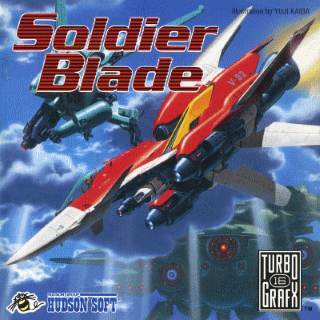
24-bit color is generally agreed to be 16,777,216 colors. There's been some kerfluffle since the debut of LCD monitors since most can apparently only represent 18-bit color. You have to buy the more expensive IPS displays, typically, to get a full 24-bit display. This is an issue for graphic designers and 3D professionals, but can actually cause some color banding in PC games and in digital images.
Now, to get back on topic, just because the Saturn has a full 24-bit palette doesn't mean that games use all those colors. It just means it has a lot available. It was certainly a step up from the 16-bit generation.
The 16-bit systems all had limited system palettes, limited colors per sprite or tile, and a limited number of active sprite and tile palettes (barring video trickery) which limited the total number of potential colors on-screen at a time. The Genesis, SNES, and TG-16/PCE all had 4-bit palettes for sprites and tiles, meaning 16 colors, one of which must always be transparent. The Genesis was the most limited color-wise. It could display 64 colors on screen out of 512 (9-bit) total due to palette limitations. The SNES had a 15-bit color system palette of 32768, but only up to 256 colors on the screen at once. The PC Engine/TG-16 had a 9-bit system palette like the Genesis (512 colors) but handled sprite and tile palettes ably and could display in excess of 256 colors on-screen at a time, more like the SNES.
The Saturn was only limited in what it could put on the screen by its display resolution. Once you have 16.7 mil colors available, that was pretty common. Most games used palette limitations in order to keep graphics data of a manageable size.
Now, to get back on topic, just because the Saturn has a full 24-bit palette doesn't mean that games use all those colors. It just means it has a lot available. It was certainly a step up from the 16-bit generation.
The 16-bit systems all had limited system palettes, limited colors per sprite or tile, and a limited number of active sprite and tile palettes (barring video trickery) which limited the total number of potential colors on-screen at a time. The Genesis, SNES, and TG-16/PCE all had 4-bit palettes for sprites and tiles, meaning 16 colors, one of which must always be transparent. The Genesis was the most limited color-wise. It could display 64 colors on screen out of 512 (9-bit) total due to palette limitations. The SNES had a 15-bit color system palette of 32768, but only up to 256 colors on the screen at once. The PC Engine/TG-16 had a 9-bit system palette like the Genesis (512 colors) but handled sprite and tile palettes ably and could display in excess of 256 colors on-screen at a time, more like the SNES.
The Saturn was only limited in what it could put on the screen by its display resolution. Once you have 16.7 mil colors available, that was pretty common. Most games used palette limitations in order to keep graphics data of a manageable size.

Re: EGM was right about one thing...
I do believe that the mantis shrimp is now one of my favorite animals.o.pwuaioc wrote:I think now is an appropriate time to link to the Oatmeal.
http://theoatmeal.com/comics/mantis_shrimp

Re: EGM was right about one thing...
Go find some videos of one wailing on something with that giant death claw. Pretty damn impressive.
-
SpaceBooger

- Moderator
- Posts: 4420
- Joined: Mon Mar 10, 2008 6:40 am
- Location: The AK-Rowdy
- Contact:
Re: EGM was right about one thing...
Seconded!Ack wrote:I do believe that the mantis shrimp is now one of my favorite animals.o.pwuaioc wrote:I think now is an appropriate time to link to the Oatmeal.
http://theoatmeal.com/comics/mantis_shrimp