I'm not terribly familiar with those games beyond the fact that they're platformers, but the We Were Here games have very little that requires much dexterity beyond just quick thinking and maneuvering in a first-person environment. Any puzzle that requires some kind of quick movement is something that just trying repeatedly will get you more comfortable with (and there's never any real consequence for failure), and even in a worst case scenario, nearly all of those sorts of puzzles across the series are only for one player while the other has more of a director role. Most (if not all?) of the games have a "swap role" feature on the game lobby that'll let you change who is in which position, so if she's having trouble, you could always back out of the match, re-enter it, and take over for her to let y'all progress (that that probably won't be *too* big an issue?).RobertAugustdeMeijer wrote: ↑Mon Jan 26, 2026 4:38 am Neat! Now my girlfriend finds Split Fiction / It Takes Two challenging enough, do you think she'd be able to pull off the puzzles that require dexterity?
Games Beaten 2026
-
PartridgeSenpai

- Next-Gen
- Posts: 3187
- Joined: Mon Dec 14, 2015 9:27 am
- Location: Northern Japan
Re: Games Beaten 2026
I identify everyone via avatar, so if you change your avatar, I genuinely might completely forget who you are. -- Me
Re: Games Beaten 2026
Previous Years: 2015 2016 2017 2018 2019 2020 2021 2022 2023 2024 2025
1. Dead Space (2023) - PC
2. Dead Space 2 - PC
3. Dead Space 3 - PC
4. The Legend of Heroes: Trails Beyond the Horizon - PS5
The latest in the "holy shit, how many games are in this?" RPG series, Trails Beyond the Horizon is the start of a second duology in the Calvard Republic. Like Cold Steel 3 and 4 before it, it picks up the lingering questions from the fairly complete pair of Daybreak 1 and 2, but this time it doesn't make it as obvious. In fact, it starts of feeling like one of the ensemble titles (Sky 3rd and Reverie).
With the Oct-Genesis collected, there is still the lingering question of the warning in Epstein's diary that they must be collected before the end of the year. But attention is drawn to Calvard's nascent space program. The game begins with the first satellite to be launched out of the atmosphere, with a goal of the first human in space soon thereafter. But as the date gets suddenly moved forward, things begin moving in the shadows that catch the eye of Van and his associates. And not just them; a group from Thors and a contingent from the church are also beginning to investigate.
Like Trails into Reverie, the game has you following three protagonists, with their stories interweaving as they explore different parts of the country. Van is the primary protagonist, getting six parts plus the endgame for himself and his crew. Rean and several members of Class VII are party two, while Kevin Graham from Sky the 3rd and the new characters from Reverie make up party three. These other two parties get three chapters each. In addition to their unique story points, you once again have access to the extradimensional dungeon that has become a staple of recent games, which allows you to mix and match everyone (barring certain restrictions due to story beats).
Mechanically, the game starts with the Daybreak games and iterates a bit on the combat. The non-combat portions have no new mechanics. In-combat they have adjusted the boost gauge usage. Now you only need a single pip to fully power your attacks, while activating it a second time will let you take two turns in a row (or effectively instant-cast a spell). This is to make room for the new option to use boost gauge for various full-party buffs. These last for several turns and often will have some kind of resource heal upon activation. There are some basic ones that are given based on the holo core you equip, while the more potent ones are locked to some special holo cores or specific characters in your party/support. These can be quite game breaking; one of them is an 8-turn buff that reduces damage to 10%. In fact, the bosses can be divided into two categories of difficulty: ones where this is available, and ones that are challenging. However, enemies can also overwrite this with a party-wide debuff of their own; overwriting it yourself costs an extra pip of meter, so you'll want to make sure you can properly fill your boost meter and extend the gauge using S-crafts.
The game is the point where many of the threads that have been slowly woven through the series start to come into focus; while we don't have answers yet, you can start making guesses that aren't just pulled out of your ass. And it ends on a cliffhanger even worse than the one from Cold Steel 3. We're definitely in the latter half of the story, but clearly there are several more games required to wrap things up. But first, the wait for Horizon 2 to resolve that cliffhanger.
1. Dead Space (2023) - PC
2. Dead Space 2 - PC
3. Dead Space 3 - PC
4. The Legend of Heroes: Trails Beyond the Horizon - PS5
The latest in the "holy shit, how many games are in this?" RPG series, Trails Beyond the Horizon is the start of a second duology in the Calvard Republic. Like Cold Steel 3 and 4 before it, it picks up the lingering questions from the fairly complete pair of Daybreak 1 and 2, but this time it doesn't make it as obvious. In fact, it starts of feeling like one of the ensemble titles (Sky 3rd and Reverie).
With the Oct-Genesis collected, there is still the lingering question of the warning in Epstein's diary that they must be collected before the end of the year. But attention is drawn to Calvard's nascent space program. The game begins with the first satellite to be launched out of the atmosphere, with a goal of the first human in space soon thereafter. But as the date gets suddenly moved forward, things begin moving in the shadows that catch the eye of Van and his associates. And not just them; a group from Thors and a contingent from the church are also beginning to investigate.
Like Trails into Reverie, the game has you following three protagonists, with their stories interweaving as they explore different parts of the country. Van is the primary protagonist, getting six parts plus the endgame for himself and his crew. Rean and several members of Class VII are party two, while Kevin Graham from Sky the 3rd and the new characters from Reverie make up party three. These other two parties get three chapters each. In addition to their unique story points, you once again have access to the extradimensional dungeon that has become a staple of recent games, which allows you to mix and match everyone (barring certain restrictions due to story beats).
Mechanically, the game starts with the Daybreak games and iterates a bit on the combat. The non-combat portions have no new mechanics. In-combat they have adjusted the boost gauge usage. Now you only need a single pip to fully power your attacks, while activating it a second time will let you take two turns in a row (or effectively instant-cast a spell). This is to make room for the new option to use boost gauge for various full-party buffs. These last for several turns and often will have some kind of resource heal upon activation. There are some basic ones that are given based on the holo core you equip, while the more potent ones are locked to some special holo cores or specific characters in your party/support. These can be quite game breaking; one of them is an 8-turn buff that reduces damage to 10%. In fact, the bosses can be divided into two categories of difficulty: ones where this is available, and ones that are challenging. However, enemies can also overwrite this with a party-wide debuff of their own; overwriting it yourself costs an extra pip of meter, so you'll want to make sure you can properly fill your boost meter and extend the gauge using S-crafts.
The game is the point where many of the threads that have been slowly woven through the series start to come into focus; while we don't have answers yet, you can start making guesses that aren't just pulled out of your ass. And it ends on a cliffhanger even worse than the one from Cold Steel 3. We're definitely in the latter half of the story, but clearly there are several more games required to wrap things up. But first, the wait for Horizon 2 to resolve that cliffhanger.
Blizzard Entertainment Software Developer - All comments and views are my own and not representative of the company.
-
RobertAugustdeMeijer
- 64-bit
- Posts: 328
- Joined: Fri Sep 02, 2022 10:15 am
Re: Games Beaten 2026
07: Egg (Terry Cavanagh)
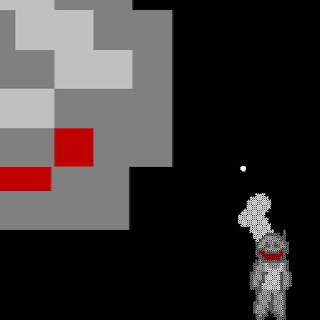
Cavanagh is still releasing free games on the web, and there's no excuse to not download this one, as it doesn't cost anything except an hour of your time (and perhaps your blood pressure). It's a rudimentary Mario 64 where you can't walk, but you can jump to get around. Exceedingly difficult platforms require you to execute your jumps with precision, and punishment is a good balance between excitement and agony. What the game also excels at, is giving an uncanny feeling adventure, as it doesn't explain much, while the low polygon world leaves gives the impression you can expect anything to happen. Excellent!
7/10
Cavanagh is still releasing free games on the web, and there's no excuse to not download this one, as it doesn't cost anything except an hour of your time (and perhaps your blood pressure). It's a rudimentary Mario 64 where you can't walk, but you can jump to get around. Exceedingly difficult platforms require you to execute your jumps with precision, and punishment is a good balance between excitement and agony. What the game also excels at, is giving an uncanny feeling adventure, as it doesn't explain much, while the low polygon world leaves gives the impression you can expect anything to happen. Excellent!
7/10
Last edited by RobertAugustdeMeijer on Mon Feb 02, 2026 7:57 am, edited 2 times in total.

Re: Games Beaten 2026
1. Dungeons & Dragons: Tower of Doom (SAT)
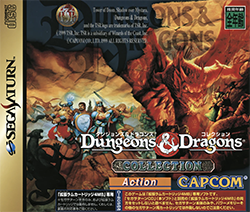
I initially played a bit of this game on the Chronicles of Mystara collection for the Xbox 360 Live Arcade; however, I've wanted to check out the Saturn version for quite some time. With the game being listed in the current Together Retro thread, I thought this would be a good time to pick up the JP Saturn release which includes both Tower of Doom and Shadow Over Mystara, and give it a go. For this playthrough, I played the game solo as the dwarf. The dwarf character has the shortest range, but the quickest attack speed.
Dungeons & Dragons: Tower of Doom is a Capcom beat 'em up, initially released in the arcades in 1994. Unfortunately for me, I never came across the game at any of the arcades I visited with family or friends around that time. Gameplay wise, Tower of Doom has some unique mechanics for a beat 'em up. For starters, you're able to equip different weapons that enemies drop or that you find in chests throughout the game. This brings us to the next aspect that should be mentioned, which is there are a good amount of branching paths throughout the game, and the choices you make in regards to navigating the game will also impact what weapons or items you come across in your playthrough. After each stage you'll have a chance to buy items at a shop, which is another nice addition, as you can purchase healing items to bring along your adventure. The item system is pretty intuitive as well, as it's a circular menu system, somewhat similar to the one found in Secret of Mana.
Graphics wise, Capcom did a great job with the sprite art here. The character sprites, enemy sprites, and background levels are all very well done. As a fan of pixel art, I'm really glad we got a handful of games with great 2D graphics on the 32-bit era consoles, and Tower of Doom is up there as well. The boss sprites are also impressive, I especially liked the look of the dragon boss that you fight in the swamp level. The level design and fog effect in this stage was also a treat to look at. In regard to the soundtrack, there are some energetic tunes here that fit well with an action packed beat 'em up. My favorite songs in the game are probably the first song you hear when the first level starts, which I believe is simply titled "BGM3" and the song that's playing in the ship level, "Battle Theme 4." Also, it's interesting that the music switches when a tougher fight sequence is about to begin. I can't think of another beat 'em up that does this for sections that aren't boss fights. The sound effects are pretty satisfying as well, which is another positive here, because I feel like this is an overlooked aspect in some games in the genre.
The only nitpick I have of the game is that the loading times are a little long, but for anyone that is used to games from this era, it's not a dealbreaker. I should also mention that for Saturn fans thinking of importing the game, all the cutscenes, dialogue choices, and item names are in Japanese here, so for anyone that doesn't understand the language, like myself, we'll be missing out on the story and possibly have a tough time with the in-game item menu. I'd like to try playing the game with the assistance of a translation app for the text on screen once I upgrade my phone.
Overall, Dungeons & Dragons: Tower of Doom is a really fun beat 'em up and definitely worth checking out any way that's accessible. I'd definitely recommend it. Other than the Saturn port, the Chronicles of Mystara collection is also available on Steam. I'd really enjoy playing this again with a friend in co-op and look forward to revisiting Shadow Over Mystara next.
Re: Games Beaten 2026
1.Dungeons & Dragons: Tower of Doom (SAT)
2. Castle Crashers Remastered (NSW)
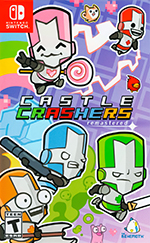
Castle Crashers came out at a time when gamers were in a bit of a drought for new beat ‘em ups. Although in general I don’t care for purchasing games through digital marketplaces, I was curious enough about this one to take the leap and purchase it through the Xbox Live Arcade years ago. I’m glad I did, because this game ended up being the first couch co-op game my fiancè and I ended up playing together. Because of that reason, I’m pretty fond of Castle Crashers. When I saw it was getting a remaster on the Switch, I definitely wanted to go for it and revisit it again in co-op mode. It took me some time to track down a copy, but I’m glad I eventually picked one up.
Castle Crashers was developed by The Behemoth, the company also behind Alien Hominid, and is a 2D beat ‘em up with a comedic flare. The players get to choose a knight to play as, each one with a different magic ability. For this playthrough, I chose the blue knight with ice magic, and my partner chose the green knight which has poison magic. The characters have a solid moveset with a light attack, heavy attack, jumping attacks, a diving attack, and multiple magic abilities. Your character also gains experience points as you go along, and additional moves are unlocked as you level up.
Castle Crashers also has an overworld map, which I found interesting for a game like this, but with the experience point system, it can be helpful to revisit stages. There are also shops to be visited throughout where you can restock on healing potions, arrows, bombs, and other items to aid you in your quest. Other than being able to have a weapon equipped, you have the ability to equip an animal orb, which is basically a small creature that hovers around you (kind of reminds me of the mags in PSO), and has a special ability. These are found throughout the game, with some being fairly obvious to come across and others taking more effort to track down. I had Rammy equipped for most of the game, who would randomly knock down enemies, which I found to be useful. For anyone else that’s played Castle Crashers, I’m curious as to which animal orb they prefer.
The graphics are quite eye-catching, as they are in a fun, bright, and cartoony style, in line with the other games released by The Behemoth. Each playable character has animations that are unique to that specific character. With that in mind, there are a lot of unlockable characters in the game, I believe there’s thirty in total. The bosses through Castle Crashers are really well done. I think the funniest were the Catfish and Corn Boss. The battle against The Painter is pretty memorable too, a unique concept for a boss fight, with some very strange looking enemies coming at you. In regard to the soundtrack, Castle Crashers has an epic set of songs, even starting at the title screen of the game. The overworld map has an upbeat tune, but many of the stage themes are on the darker side, which fits right in with the action.
Overall, I think Castle Crashers is a great beat ‘em up that’s definitely worth checking it out. It’s an entertaining and funny game and it offers a lot of replay value due to the variety of playable characters, animal orbs, weapons, and unlockables. I’m already looking forward to playing through it again. Definitely check this one out if you haven’t already!
2. Castle Crashers Remastered (NSW)
Castle Crashers came out at a time when gamers were in a bit of a drought for new beat ‘em ups. Although in general I don’t care for purchasing games through digital marketplaces, I was curious enough about this one to take the leap and purchase it through the Xbox Live Arcade years ago. I’m glad I did, because this game ended up being the first couch co-op game my fiancè and I ended up playing together. Because of that reason, I’m pretty fond of Castle Crashers. When I saw it was getting a remaster on the Switch, I definitely wanted to go for it and revisit it again in co-op mode. It took me some time to track down a copy, but I’m glad I eventually picked one up.
Castle Crashers was developed by The Behemoth, the company also behind Alien Hominid, and is a 2D beat ‘em up with a comedic flare. The players get to choose a knight to play as, each one with a different magic ability. For this playthrough, I chose the blue knight with ice magic, and my partner chose the green knight which has poison magic. The characters have a solid moveset with a light attack, heavy attack, jumping attacks, a diving attack, and multiple magic abilities. Your character also gains experience points as you go along, and additional moves are unlocked as you level up.
Castle Crashers also has an overworld map, which I found interesting for a game like this, but with the experience point system, it can be helpful to revisit stages. There are also shops to be visited throughout where you can restock on healing potions, arrows, bombs, and other items to aid you in your quest. Other than being able to have a weapon equipped, you have the ability to equip an animal orb, which is basically a small creature that hovers around you (kind of reminds me of the mags in PSO), and has a special ability. These are found throughout the game, with some being fairly obvious to come across and others taking more effort to track down. I had Rammy equipped for most of the game, who would randomly knock down enemies, which I found to be useful. For anyone else that’s played Castle Crashers, I’m curious as to which animal orb they prefer.
The graphics are quite eye-catching, as they are in a fun, bright, and cartoony style, in line with the other games released by The Behemoth. Each playable character has animations that are unique to that specific character. With that in mind, there are a lot of unlockable characters in the game, I believe there’s thirty in total. The bosses through Castle Crashers are really well done. I think the funniest were the Catfish and Corn Boss. The battle against The Painter is pretty memorable too, a unique concept for a boss fight, with some very strange looking enemies coming at you. In regard to the soundtrack, Castle Crashers has an epic set of songs, even starting at the title screen of the game. The overworld map has an upbeat tune, but many of the stage themes are on the darker side, which fits right in with the action.
Overall, I think Castle Crashers is a great beat ‘em up that’s definitely worth checking it out. It’s an entertaining and funny game and it offers a lot of replay value due to the variety of playable characters, animal orbs, weapons, and unlockables. I’m already looking forward to playing through it again. Definitely check this one out if you haven’t already!
-
TheSSNintendo

- 128-bit
- Posts: 669
- Joined: Mon Jul 11, 2011 10:27 pm
Re: Games Beaten 2026
1. Deja Vu: MacVenture Series
2. Deja Vu II: MacVenture Series
3. Earthworm Jim 2 (SNES/Switch Online)
4. Crash Banidcoot: The Huge Adventure (Gameboy Advance)
5. Metroid Prime 4: Beyond (Switch)
6. Lego Batman: The Video Game (Steam)
2. Deja Vu II: MacVenture Series
3. Earthworm Jim 2 (SNES/Switch Online)
4. Crash Banidcoot: The Huge Adventure (Gameboy Advance)
5. Metroid Prime 4: Beyond (Switch)
6. Lego Batman: The Video Game (Steam)
-
RobertAugustdeMeijer
- 64-bit
- Posts: 328
- Joined: Fri Sep 02, 2022 10:15 am
Re: Games Beaten 2026
08:
Fire Emblem Awakening
Since units can hardly be sacrificed, and their attacks are relatively simple, Fire Emblem has always been the less competitive brother to Advance Wars. What it does have is numbers going up. And in Awakening, relationship statuses play a key role. You can also redo previous fights. In turn, this one puts an emphasis on grinding away on all the parameters to your delight. But the before and after aren't optimized: setting up fights and carrying them out takes about half an hour per battle. And after winning you're "rewarded" with uninteresting dialogue. The overarching story isn't rememberable either. The extra XP is double-bladed sword: becoming too powerful trivializes the whole point of a strategy game. . What hurts more, is that this game's success has stopped Intelligent Systems from releasing new Advance Wars games. But in a vacuum, this is still a mildly entertaining experience thanks to high production values and the simple sensation of seeing your party become stronger.
5/10
Fire Emblem Awakening
Since units can hardly be sacrificed, and their attacks are relatively simple, Fire Emblem has always been the less competitive brother to Advance Wars. What it does have is numbers going up. And in Awakening, relationship statuses play a key role. You can also redo previous fights. In turn, this one puts an emphasis on grinding away on all the parameters to your delight. But the before and after aren't optimized: setting up fights and carrying them out takes about half an hour per battle. And after winning you're "rewarded" with uninteresting dialogue. The overarching story isn't rememberable either. The extra XP is double-bladed sword: becoming too powerful trivializes the whole point of a strategy game. . What hurts more, is that this game's success has stopped Intelligent Systems from releasing new Advance Wars games. But in a vacuum, this is still a mildly entertaining experience thanks to high production values and the simple sensation of seeing your party become stronger.
5/10
-
PartridgeSenpai
- Next-Gen
- Posts: 3187
- Joined: Mon Dec 14, 2015 9:27 am
- Location: Northern Japan
Re: Games Beaten 2026
Partridge Senpai's 2026 Beaten Games:
Previously: 2016 2017 2018 2019 2020 2021 2022 2023 2024 2025
* indicates a repeat
1. Final Fantasy XII (PS2)
2. We Were Here (Steam)
3. We Were Here Too (Steam)
4. Tales of Graces f (PS3) *
5. Retro Game Challenge (Switch) *
6. We Were Here Forever (Steam)
7. Tales of Hearts R (PSVita) *
After finishing Tales of Graces f last month, I was still super in the mood for more replaying of old Tales games. This is another one where I remember enjoying it, but it’s also been like 10 years, so I remember nearly nothing of it and was really excited to give it a look with more mature eyes. I planned to play this via my PSTV, as I remember all the American box art toting that this game is compatible with it, and I was then greatly upset when arrived and remembered that the *Japanese* version of Tales of Hearts R is NOT compatible XD. It was annoying to have to play the game on my Vita after all, but at least I had a Vita to play it on (and it ended up being time so very well spent!). It overall took me about 45 or so hours to beat the Japanese version of the game while not particularly bothering to be that exhaustive about extra content in the end game.
Tales of Hearts R follows the story of Shingu Meteorite (renamed “Kor Meteor”, in the English version) lives in a tiny seaside village with his grandfather. The two are very close, and they spend every day doing sparring practice. It just so happens that today is the day that Shingu finally performs well enough against his grandfather to be gifted with his grandfather’s Soma, a powerful, magical tool that channel’s one’s spiria (basically your soul) into a magical weapon. Fortunately and unfortunately for Shingu, however, today is also the day that he meets Kohaku and her older brother Hisui, who are both currently being chased by the powerful witch Incarose. That’s a lot of names to remember, but things get a lot more simple really quick, as Incarose strikes down Shingu’s grandfather and nearly gets Kohaku, too. However, due to Shingu’s brashness, Kohaku’s spiria ends up exploding and the shards of her soul are scattered all over the world. In an effort to make up for what he’s done, Shingu convinces Hisui to come along with him and the now nearly emotionless Kohaku to mend her spiria back together one emotion at a time.
A hunt for a new friend’s emotions is a very fantasy RPG premise for an adventure, no doubt, but Hearts R really makes this set up work. To tell the truth, I was frankly shocked at just how well it worked. I remembered Hearts R being an OK game with a fun but only alright story, and the latter couldn’t be further from the truth upon this replay. While the story starts out as a fun but shallow episodic adventure between towns with the gang (as many Tales games generally are at a minimum), when the story really starts kicking into gear, it really never lets up. While it’s not my favorite story in a Tales game, this Hearts R comes far closer to the top of the list than I ever thought possible. It was particularly interesting just how well this game is written given that I just finished playing Tales of Graces f, a game that shares its two main writers with this game (the main writer of Graces is the scenario support for this game, and the main writer of Hearts R is the scenario support credit for Graces f). The two share a lot of similarities in the broad strokes of their narratives (both from the types of characters present as well as general events that happen in the story), but the difference in the level of efficacy between the two is stark to say the least.
Much like Graces f, Hearts R is a story very concerned about the bonds between people and however messy and scary they can be, caring about other people is one of the most positive and powerful forces in the universe when applied the right way. However, Hearts R manages a lot of finer narrative points that Graces f struggles a lot harder with. In particular, we make much more stark the flaws in our main character(s) and how they drive the plot along rather than the main party being so reactive to things all the time like in Graces. Hearts R also manages to have succinct and clear connections between its personal stories and wider political themes, and it makes for much more impactful and effective writing overall as a result. This isn’t a comparative essay between the two, so I won’t go any further in depth on that point, but the whole experience really made me realize just how unfulfilled I was in retrospect with Graces with just how damn well written Hearts R is in its own right. To sum it up, this is one of the strongest entries in a franchise that’s no stranger to having some of the strongest RPG writing of its respective console generations in the first place, and if you’re a fan of entertaining characters with fun chemistry combined with well-executed themes in your games’ writing, then Hearts R is absolutely not one to miss out on.
As glowing as the praise is that I can give for the writing (especially in comparison to Graces), the comparison is honestly a lot less flattering when it comes to the mechanics. That’s not to say that Hearts R plays like crap or anything, but it’s definitely something I would’ve expected more from given that Hearts R came out in 2013 (years after the original Tales of Graces and several other mechanically ambitious and good flowing Tales games). The original Tales of Graces was a DS game released in 2008 (same year as Tales of Vesperia). While I’m unfamiliar with that DS original, if I had to wager, I’d say that it’s likely an attempt to bring the systems of Tales of Vesperia and other earlier 3D Tales games’ combat into a handheld format, because this Vita reimagining (what the “R” in Hearts R stands for) is remarkably backwards despite the year it came out.
Compared to the ambitious, well-executed combat systems of Tales of Graces or its successors the Tales of Xillia games, that have so much of their combat influenced by Namco’s fighting games, Tales of Hearts R feels like a glorified portable version of a game 6 or 7 years older than itself. Again, that isn’t to say the combat is bad. For all the very harsh criticisms I have of Tales of Versperia’s writing, I’ve always had praise for how fluid and intuitive its approach to the Tales combat of the time was, and that praise carries over to Tales of Hearts R as well. We’re back to viewing our characters in portrait rather than the behind-the-shoulder perspective that Graces has, and we’ve also got a good ol’ MP system to manage as well. Switching enemies you’re targeting is a little weirdly fiddly and slow at times, but other than that, the combat felt perfectly fine if unremarkable. It’s very much a “if it ain’t broke, don’t fix it” sorta thing, but it nonetheless still feels weird compared to all the other Tales games that’d come out since Hearts’s original release.
The other mechanical systems of Hearts R are interesting if ultimately not that complicated. Cooking is sadly just as over complicated, money-hungry, and ultimately simply not worth paying attention to as it was in most Tales games before Graces, but the leveling system has some neat bells and whistles to it. Each character upgrades their Soma with points acquired upon leveling up with 5 different areas to invest in. Each of the 5 different attributes will then boost corresponding stats for that character, and when a new level threshold is reached, a new passive skill or arte for combat will be unlocked. It’s a bit overwhelming to try and tackle at first, but the game thankfully has a “do it for me” auto feature you can use at your leisure that will automatically assign your yet unassigned Soma points to make the character a more like a fighter, a mage, a support, etc. The end result is hardly the most jaw-dropping or unique leveling system in the world, but it’s got enough going on for it to help it be memorable and differentiate it from how most other Tales games do things. Overall, the way the game plays is just fine, and the difficulty balancing is just right too (at least for a relative novice to technical 3D action games like me). Anyone familiar with how Tales of Vesperia or Tales of the Abyss play will feel right at home with Hearts R’s combat and mechanics, but anyone hoping that Namco Bandai Studios would bring Tales of Hearts’s gameplay more in line with its 2010’s contemporaries is going to be sorely disappointed.
The presentation of the game is very Tales-y, and it’s a pretty good conversion of the way that games like Tales of the Abyss looked for a handheld format. It’s certainly not going to turn any heads these days, much like even Tales of Graces f didn’t exactly impress when it was released on the PS3 only looking a little bit better than its original Wii version. Even still, the anime aesthetic that Namco Bandai had for these games still works as well as it always has, imo, with expressive, fun characters (especially in the skits), so if the way Tales games look hadn’t bothered you before Hearts R, then this game will likely be right up your alley too.
The music is good and the VA work is also very good as usual, but the main weird point to me is the lack of an English dub. This wouldn’t be the first Tales game that Namco (Bandai) published where the lack of confidence in its performance meant they kinda skimped out on the VA budget for the English release, but Hearts R is the sole Tales game to get an English release with no English dub of any kind. This isn’t a huge issue, as the Japanese dub is already great, but it’s mostly weird when you take into account that Shingu’s name is changed to the extremely different “Kor” in English. I still have memories of just how dissonant the text is versus the voice work in the English version when it’s very obvious that his name is totally different between versions, and I can only assume that whoever directed the translation was not aware that it wouldn’t be ultimately given a dub. It’s a relatively small gripe in the grand scheme of things, and it’s also not something that I experience in this playthrough of the original Japanese version, of course, but it’s something that I’d feel remiss for omitting from an English-language review of the game like this in any case.
Verdict: Highly Recommended. The beginning was so fun yet slow that I honestly considered dropping this game for later when I was more in the mood for this kind of thing, but I’m so very happy I didn’t. I was nothing but skeptical that Hearts R’s story would be anything to write home about, and I’ve scarcely been so happy to be this wrong. It’s easily one of my new favorite RPG stories, especially in this series. While the gameplay is just 3DTales.exe in a lot of ways, it’s still good, snappy, and intuitive, and it’d make for a great intro to the series for anyone not too familiar with 3D combat in games like this (even if it’ll still likely disappoint folks hoping for something as good feeling as Graces or Xillia’s). If you’re a fan of RPG writing, then this is absolutely one game you cannot afford to miss, because holy crap were Namco Tales Studio cookin’ somethin’ fierce in the mid to late-2000’s (save for Vesperia, of course ;b).
Previously: 2016 2017 2018 2019 2020 2021 2022 2023 2024 2025
* indicates a repeat
1. Final Fantasy XII (PS2)
2. We Were Here (Steam)
3. We Were Here Too (Steam)
4. Tales of Graces f (PS3) *
5. Retro Game Challenge (Switch) *
6. We Were Here Forever (Steam)
7. Tales of Hearts R (PSVita) *
After finishing Tales of Graces f last month, I was still super in the mood for more replaying of old Tales games. This is another one where I remember enjoying it, but it’s also been like 10 years, so I remember nearly nothing of it and was really excited to give it a look with more mature eyes. I planned to play this via my PSTV, as I remember all the American box art toting that this game is compatible with it, and I was then greatly upset when arrived and remembered that the *Japanese* version of Tales of Hearts R is NOT compatible XD. It was annoying to have to play the game on my Vita after all, but at least I had a Vita to play it on (and it ended up being time so very well spent!). It overall took me about 45 or so hours to beat the Japanese version of the game while not particularly bothering to be that exhaustive about extra content in the end game.
Tales of Hearts R follows the story of Shingu Meteorite (renamed “Kor Meteor”, in the English version) lives in a tiny seaside village with his grandfather. The two are very close, and they spend every day doing sparring practice. It just so happens that today is the day that Shingu finally performs well enough against his grandfather to be gifted with his grandfather’s Soma, a powerful, magical tool that channel’s one’s spiria (basically your soul) into a magical weapon. Fortunately and unfortunately for Shingu, however, today is also the day that he meets Kohaku and her older brother Hisui, who are both currently being chased by the powerful witch Incarose. That’s a lot of names to remember, but things get a lot more simple really quick, as Incarose strikes down Shingu’s grandfather and nearly gets Kohaku, too. However, due to Shingu’s brashness, Kohaku’s spiria ends up exploding and the shards of her soul are scattered all over the world. In an effort to make up for what he’s done, Shingu convinces Hisui to come along with him and the now nearly emotionless Kohaku to mend her spiria back together one emotion at a time.
A hunt for a new friend’s emotions is a very fantasy RPG premise for an adventure, no doubt, but Hearts R really makes this set up work. To tell the truth, I was frankly shocked at just how well it worked. I remembered Hearts R being an OK game with a fun but only alright story, and the latter couldn’t be further from the truth upon this replay. While the story starts out as a fun but shallow episodic adventure between towns with the gang (as many Tales games generally are at a minimum), when the story really starts kicking into gear, it really never lets up. While it’s not my favorite story in a Tales game, this Hearts R comes far closer to the top of the list than I ever thought possible. It was particularly interesting just how well this game is written given that I just finished playing Tales of Graces f, a game that shares its two main writers with this game (the main writer of Graces is the scenario support for this game, and the main writer of Hearts R is the scenario support credit for Graces f). The two share a lot of similarities in the broad strokes of their narratives (both from the types of characters present as well as general events that happen in the story), but the difference in the level of efficacy between the two is stark to say the least.
Much like Graces f, Hearts R is a story very concerned about the bonds between people and however messy and scary they can be, caring about other people is one of the most positive and powerful forces in the universe when applied the right way. However, Hearts R manages a lot of finer narrative points that Graces f struggles a lot harder with. In particular, we make much more stark the flaws in our main character(s) and how they drive the plot along rather than the main party being so reactive to things all the time like in Graces. Hearts R also manages to have succinct and clear connections between its personal stories and wider political themes, and it makes for much more impactful and effective writing overall as a result. This isn’t a comparative essay between the two, so I won’t go any further in depth on that point, but the whole experience really made me realize just how unfulfilled I was in retrospect with Graces with just how damn well written Hearts R is in its own right. To sum it up, this is one of the strongest entries in a franchise that’s no stranger to having some of the strongest RPG writing of its respective console generations in the first place, and if you’re a fan of entertaining characters with fun chemistry combined with well-executed themes in your games’ writing, then Hearts R is absolutely not one to miss out on.
As glowing as the praise is that I can give for the writing (especially in comparison to Graces), the comparison is honestly a lot less flattering when it comes to the mechanics. That’s not to say that Hearts R plays like crap or anything, but it’s definitely something I would’ve expected more from given that Hearts R came out in 2013 (years after the original Tales of Graces and several other mechanically ambitious and good flowing Tales games). The original Tales of Graces was a DS game released in 2008 (same year as Tales of Vesperia). While I’m unfamiliar with that DS original, if I had to wager, I’d say that it’s likely an attempt to bring the systems of Tales of Vesperia and other earlier 3D Tales games’ combat into a handheld format, because this Vita reimagining (what the “R” in Hearts R stands for) is remarkably backwards despite the year it came out.
Compared to the ambitious, well-executed combat systems of Tales of Graces or its successors the Tales of Xillia games, that have so much of their combat influenced by Namco’s fighting games, Tales of Hearts R feels like a glorified portable version of a game 6 or 7 years older than itself. Again, that isn’t to say the combat is bad. For all the very harsh criticisms I have of Tales of Versperia’s writing, I’ve always had praise for how fluid and intuitive its approach to the Tales combat of the time was, and that praise carries over to Tales of Hearts R as well. We’re back to viewing our characters in portrait rather than the behind-the-shoulder perspective that Graces has, and we’ve also got a good ol’ MP system to manage as well. Switching enemies you’re targeting is a little weirdly fiddly and slow at times, but other than that, the combat felt perfectly fine if unremarkable. It’s very much a “if it ain’t broke, don’t fix it” sorta thing, but it nonetheless still feels weird compared to all the other Tales games that’d come out since Hearts’s original release.
The other mechanical systems of Hearts R are interesting if ultimately not that complicated. Cooking is sadly just as over complicated, money-hungry, and ultimately simply not worth paying attention to as it was in most Tales games before Graces, but the leveling system has some neat bells and whistles to it. Each character upgrades their Soma with points acquired upon leveling up with 5 different areas to invest in. Each of the 5 different attributes will then boost corresponding stats for that character, and when a new level threshold is reached, a new passive skill or arte for combat will be unlocked. It’s a bit overwhelming to try and tackle at first, but the game thankfully has a “do it for me” auto feature you can use at your leisure that will automatically assign your yet unassigned Soma points to make the character a more like a fighter, a mage, a support, etc. The end result is hardly the most jaw-dropping or unique leveling system in the world, but it’s got enough going on for it to help it be memorable and differentiate it from how most other Tales games do things. Overall, the way the game plays is just fine, and the difficulty balancing is just right too (at least for a relative novice to technical 3D action games like me). Anyone familiar with how Tales of Vesperia or Tales of the Abyss play will feel right at home with Hearts R’s combat and mechanics, but anyone hoping that Namco Bandai Studios would bring Tales of Hearts’s gameplay more in line with its 2010’s contemporaries is going to be sorely disappointed.
The presentation of the game is very Tales-y, and it’s a pretty good conversion of the way that games like Tales of the Abyss looked for a handheld format. It’s certainly not going to turn any heads these days, much like even Tales of Graces f didn’t exactly impress when it was released on the PS3 only looking a little bit better than its original Wii version. Even still, the anime aesthetic that Namco Bandai had for these games still works as well as it always has, imo, with expressive, fun characters (especially in the skits), so if the way Tales games look hadn’t bothered you before Hearts R, then this game will likely be right up your alley too.
The music is good and the VA work is also very good as usual, but the main weird point to me is the lack of an English dub. This wouldn’t be the first Tales game that Namco (Bandai) published where the lack of confidence in its performance meant they kinda skimped out on the VA budget for the English release, but Hearts R is the sole Tales game to get an English release with no English dub of any kind. This isn’t a huge issue, as the Japanese dub is already great, but it’s mostly weird when you take into account that Shingu’s name is changed to the extremely different “Kor” in English. I still have memories of just how dissonant the text is versus the voice work in the English version when it’s very obvious that his name is totally different between versions, and I can only assume that whoever directed the translation was not aware that it wouldn’t be ultimately given a dub. It’s a relatively small gripe in the grand scheme of things, and it’s also not something that I experience in this playthrough of the original Japanese version, of course, but it’s something that I’d feel remiss for omitting from an English-language review of the game like this in any case.
Verdict: Highly Recommended. The beginning was so fun yet slow that I honestly considered dropping this game for later when I was more in the mood for this kind of thing, but I’m so very happy I didn’t. I was nothing but skeptical that Hearts R’s story would be anything to write home about, and I’ve scarcely been so happy to be this wrong. It’s easily one of my new favorite RPG stories, especially in this series. While the gameplay is just 3DTales.exe in a lot of ways, it’s still good, snappy, and intuitive, and it’d make for a great intro to the series for anyone not too familiar with 3D combat in games like this (even if it’ll still likely disappoint folks hoping for something as good feeling as Graces or Xillia’s). If you’re a fan of RPG writing, then this is absolutely one game you cannot afford to miss, because holy crap were Namco Tales Studio cookin’ somethin’ fierce in the mid to late-2000’s (save for Vesperia, of course ;b).
I identify everyone via avatar, so if you change your avatar, I genuinely might completely forget who you are. -- Me
-
Markies

- Next-Gen
- Posts: 1614
- Joined: Fri Mar 27, 2015 4:29 pm
- Location: St. Louis, Missouri
- Contact:
Re: Games Beaten 2026
Markies' Games Beat List Of 2026!
***Denotes Replay For Completion***
1. Mario & Luigi: Superstar Saga (GBA)
2. Knights of the Round (SNES)
3. Fight'N Rage (NS)
4. Time Stalkers (SDC)

I beat Time Stalkers on the Sega Dreamcast this evening!
Back in 2017, I completed Landstalker for the Sega Genesis. By the end of the game, I really began to loathe it and all of its Isometric Platforming. I then went looking for the next game in the series and I came across Time Stalkers for the Dreamcast. I had heard nothing about the game, but I know it didn't have any Isometric Platforming and that it was some sort of Rogue-like RPG, so I was at least mildly interested. Cut to 2023 and I'm at a local gaming convention when I come across a copy. Since my Dreamcast wishlist is getting very thin, I decided to jump on it just to own it. I kept putting it off because I was honestly a little afraid of the game. Well, the Backloggery Roulette decided I needed to tackle it this year and so I finally dove in.
Time Stalkers is one of the most unique games I have played in a while. It gathers up many characters from Climax Entertainment's games and throws them together like the Avengers. The Rogue aspect of the game is that you have Eight unique dungeons to explore that are randomly generated and you start each dungeon at Level 1. You can only bring a certain amount of items with you and your equipment counts as some of your items. Once you run into monsters, it turns into a turn based RPG where you level up stats. You can permanent skills and magic after beating each dungeon as well. It is an interesting system that is not as scary as it sounds. It took me a bit to get into it, but everything clicked right away. You also catch monsters as party members to add even more variety to the game.
The issues that plague the game have to do with that Rogue element. None of your characters learn Life, so if anybody dies and you don't have a Revive item, that's it. Also, you have to manage your hunger meter with all of your characters and those just stop appearing after a while. The battle stats are all over the place. You either miss all the time, take one damage from the enemies or one shot all of the monsters. But, the misses are way too frequent.
Overall, I enjoyed Time Stalkers more than I thought I would. I thought it was a game that I was happy to own with very little desire to play it. After being forced, I really began to enjoy it in the end. It is very clunky and could easily be streamlined today as I think this idea in a modern setting would work great. If you want to try a unique RPG, this is better than I had imagined!
***Denotes Replay For Completion***
1. Mario & Luigi: Superstar Saga (GBA)
2. Knights of the Round (SNES)
3. Fight'N Rage (NS)
4. Time Stalkers (SDC)
I beat Time Stalkers on the Sega Dreamcast this evening!
Back in 2017, I completed Landstalker for the Sega Genesis. By the end of the game, I really began to loathe it and all of its Isometric Platforming. I then went looking for the next game in the series and I came across Time Stalkers for the Dreamcast. I had heard nothing about the game, but I know it didn't have any Isometric Platforming and that it was some sort of Rogue-like RPG, so I was at least mildly interested. Cut to 2023 and I'm at a local gaming convention when I come across a copy. Since my Dreamcast wishlist is getting very thin, I decided to jump on it just to own it. I kept putting it off because I was honestly a little afraid of the game. Well, the Backloggery Roulette decided I needed to tackle it this year and so I finally dove in.
Time Stalkers is one of the most unique games I have played in a while. It gathers up many characters from Climax Entertainment's games and throws them together like the Avengers. The Rogue aspect of the game is that you have Eight unique dungeons to explore that are randomly generated and you start each dungeon at Level 1. You can only bring a certain amount of items with you and your equipment counts as some of your items. Once you run into monsters, it turns into a turn based RPG where you level up stats. You can permanent skills and magic after beating each dungeon as well. It is an interesting system that is not as scary as it sounds. It took me a bit to get into it, but everything clicked right away. You also catch monsters as party members to add even more variety to the game.
The issues that plague the game have to do with that Rogue element. None of your characters learn Life, so if anybody dies and you don't have a Revive item, that's it. Also, you have to manage your hunger meter with all of your characters and those just stop appearing after a while. The battle stats are all over the place. You either miss all the time, take one damage from the enemies or one shot all of the monsters. But, the misses are way too frequent.
Overall, I enjoyed Time Stalkers more than I thought I would. I thought it was a game that I was happy to own with very little desire to play it. After being forced, I really began to enjoy it in the end. It is very clunky and could easily be streamlined today as I think this idea in a modern setting would work great. If you want to try a unique RPG, this is better than I had imagined!

Re: Games Beaten 2026
- Link's Awakening (NSW on NSW2)
The Switch remake has a very distinct graphical style that's very shiny and plastic cartoony. But due to being created on the Unreal Engine, it reportedly had performance hitches on Switch and topped out at 30 FPS. 30 FPS isn't a killer for me, but hitching frame rate on a remake of such an old and venerable title did give me pause. So when I heard it ran smoothly on Switch 2 I decided it was time for my revenge and picked up a copy.
Even playing the DX version back on GBA I could see why the game was something people enjoyed. There's fun to be had, here. And while the remake is certainly polished in many ways, at least on Switch 2, it preserves a lot of the character of the original, which is both a positive and a negative. Mechanically it's sort of a midway point between the original Legend of Zelda and Link to the Past. The game introduces some elements that were not previously found in Zelda games like lots of things to collect. There's shells hidden all over that you can get out of chests and dig up with a shovel, there's random items that get swapped in a bit trading chain, and there's a new item which introduces a brand new mechanic which turns up again in the Oracle games and 4 Swords: the Roc's Feather, which enables a jump ability. It's impressive just how mechanically complex this game is on the Gameboy, in that now there's jumping, charging (running) and jumping, etc... But it's also inconsistent, because sometimes at the edge of a drop you cannot jump, you can only drop, and the game doesn't necessarily communicate that well. The game also introduces new obstacles that require new ways to surmount in addition to the classic rocks and whatnot.
The story of the game is that Link has washed up on the shore and discovers he's on an island (Koholint Island). He has to find his sword and venture forth, directed by a helpful (?) owl, to recover the Instruments of the Sirens to wake the Wind Fish from it's egg atop Mt. Tamaranch. There are lots of Mario references in the game, including a friendly chain chomp and goombas in underground passages. It makes the game feel a little surreal, which is intentional. A lot of people hold up that there is a really interesting and exciting twist, but I found it to be a little too blatantly telegraphed.
The problems I had with the game back in the day, and which persist throughout the remake, is that a lot of the additional roadblocks, like the weird inflatable "tents" you have to charge into with the pegasus boots to pop, just feel very arbitrary. Additionally there are lots of signposting issues. They tell you where generally to go, but you discover a dungeon and then learn you need a key to open the dungeon. So now it's not just a matter of finding and figuring out how to get to the entrance, you also have to figure out where the key is, and the keys are not as well sign-posted as the dungeons they open. Further, the dungeons themselves have a lot more stairs between levels and the more complicated later dungeons can be very confusing because when you finally find the dungeon item or the key you need you then have to remember which singular room or passageway you couldn't get through. I did not have this level of difficulty with any of the previous Zelda games, but this one (and the Oracle games) seem to delight in ratcheting up the confusion.
Ultimately I had fun, and I would hesitantly recommend (to steal Pidge's terminology) the game for Switch 2 owners, but the game does get frustrating and confusing at times, so there's no shame in looking online for a touch of help. I really think the 2D Zelda model requires a careful design balance and the GB Zelda games lean too hard into increasing the roadblocks and complexity to a point a bit past what's optimal, IMO. I don't know if they just wanted to resist the idea that a game on the Gameboy has to be simpler and more basic and over-corrected, or if they just were using it as an experimental platform for exploring new ideas and didn't use as much discretion in refining the final product. It's an ambitious game that attempts a lot but sacrifices a lot of clarity in doing so.