Alright, I'll keep that in mind. The series looks fun and the music I've heard from some of these games is amazing.ElkinFencer10 wrote:One of my friends started with Like a Dragon, but its worth noting that its the last so far in the timeline. I personally recommend stating with Zero or Kiwami.
Games Beaten 2021
-
Raging Justice

- Next-Gen
- Posts: 1878
- Joined: Sun May 30, 2021 2:11 pm
Re: Games Beaten 2021

Re: Games Beaten 2021
I started with Like a Dragon because I wasn't terribly interested in the combat gameplay of the other games but had seen that there was a lot of zaniness through watching clips that the universe sounded neat. So Like a Dragon's genre change gave me what I needed to jump in. It does have a lot of callbacks and cameos from the previous games and you should be at least aware of key players.
Blizzard Entertainment Software Developer - All comments and views are my own and not representative of the company.
-
Raging Justice
- Next-Gen
- Posts: 1878
- Joined: Sun May 30, 2021 2:11 pm
Re: Games Beaten 2021
Yeah, my understanding is that the series basically has a new protagonist starting with Like a DragonMrPopo wrote:I started with Like a Dragon because I wasn't terribly interested in the combat gameplay of the other games but had seen that there was a lot of zaniness through watching clips that the universe sounded neat. So Like a Dragon's genre change gave me what I needed to jump in. It does have a lot of callbacks and cameos from the previous games and you should be at least aware of key players.
There's something neat to me about doing a RPG combat system meshed with beat 'em up gameplay elements.
Re: Games Beaten 2021
All this talk about Yakuza reminds me of a meme I made ages ago.
- Yakuza.jpg (41.95 KiB) Viewed 6714 times
-
ElkinFencer10

- Next-Gen
- Posts: 8986
- Joined: Fri Aug 13, 2010 8:34 pm
- Location: Elkin, North Carolina
- Contact:
Re: Games Beaten 2021
Games Beaten in 2021 - 44
* denotes a replay
January (12 Games Beaten)
February (5 Games Beaten)
March (3 Games Beaten)
April (7 Games Beaten)
May (9 Games Beaten)
June (8 Games Beaten)
44. Neptunia Shooter - Playstation 5 - June 20
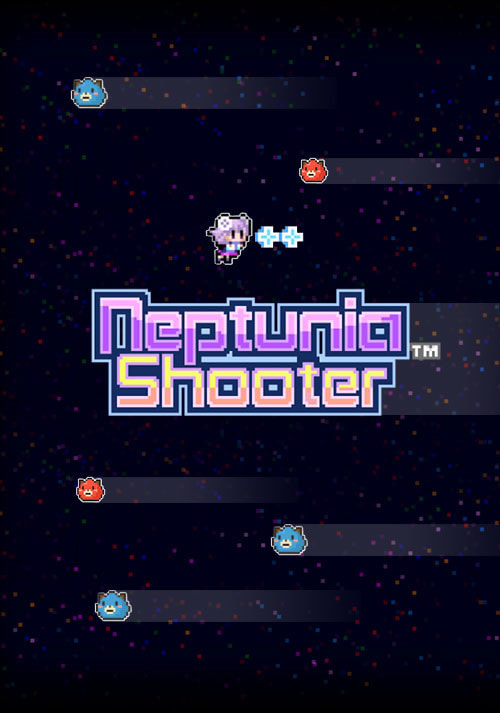
Neptunia Shooter is a short little bonus for Nep fans that was released on Steam in 2019 and then ported to PlayStation 5 as DLC for Neptunia ReVerse. What you see is what you get here; it's a 2D pixel art bullet hell shooter reminiscent of old school NES shooters. As such, it gets pretty hard.
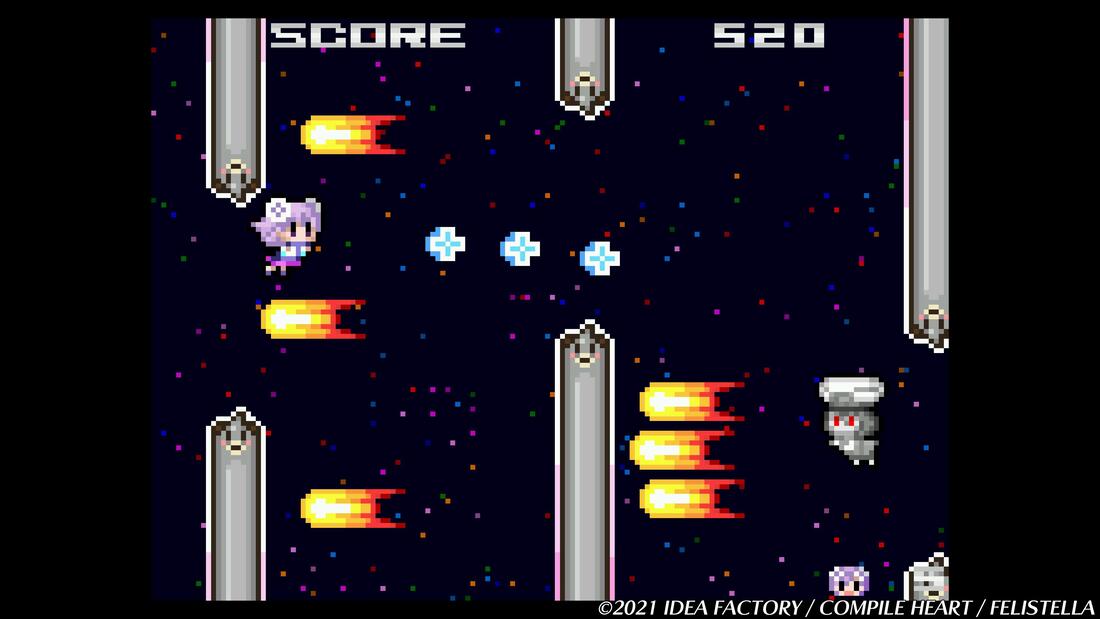
The isn't terribly long with only six stages. At the end of each stage is a boss; IF, Compa, the other three CPUs, and Arfoire as the final boss. The nice thing about the PS5 port is that you get a level select screen, so if you suck at this game like I do, you can just pick up where you lost once you get game over. The 8-bit-esque graphics and sprites look nice, and the sound design is decent, but you can definitely tell that this is a game that costs less than a fast food cheeseburger and started life as an April Fool's joke.
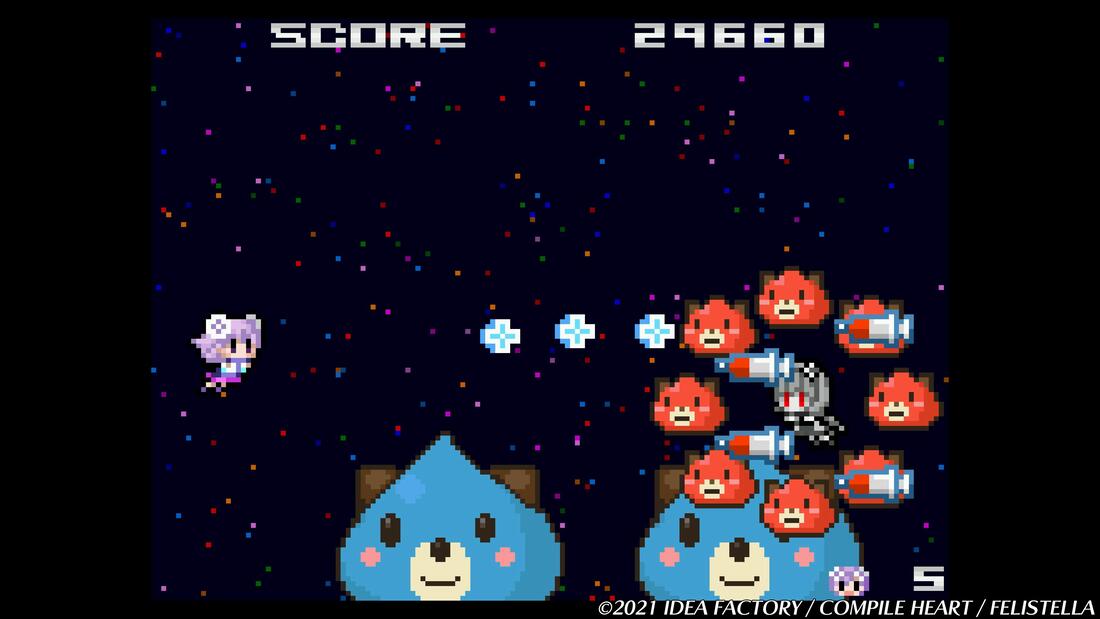
Despite being short and extremely simple, Neptunia Shooter is fun. Each boss you beat except for the final boss adds that character to your roster, and you cycle between your characters each of whom have a different weapon. Neptune shoots to the right, IF shoots to the left, Compa shoots below, so on and so forth. It's not what I'd call a good game, though. It's a fun time waster especially if you're a fan of the Neptunia series, but this is a game that would work far better for short burst play on Vita on Switch than on a console like Playstation 5 or a PC in my opinion because there's just not much meat to it. In short bursts of like ten or fifteen minutes, though, there's definitely some fun to be had.
* denotes a replay
January (12 Games Beaten)
Neptunia Shooter is a short little bonus for Nep fans that was released on Steam in 2019 and then ported to PlayStation 5 as DLC for Neptunia ReVerse. What you see is what you get here; it's a 2D pixel art bullet hell shooter reminiscent of old school NES shooters. As such, it gets pretty hard.
The isn't terribly long with only six stages. At the end of each stage is a boss; IF, Compa, the other three CPUs, and Arfoire as the final boss. The nice thing about the PS5 port is that you get a level select screen, so if you suck at this game like I do, you can just pick up where you lost once you get game over. The 8-bit-esque graphics and sprites look nice, and the sound design is decent, but you can definitely tell that this is a game that costs less than a fast food cheeseburger and started life as an April Fool's joke.
Despite being short and extremely simple, Neptunia Shooter is fun. Each boss you beat except for the final boss adds that character to your roster, and you cycle between your characters each of whom have a different weapon. Neptune shoots to the right, IF shoots to the left, Compa shoots below, so on and so forth. It's not what I'd call a good game, though. It's a fun time waster especially if you're a fan of the Neptunia series, but this is a game that would work far better for short burst play on Vita on Switch than on a console like Playstation 5 or a PC in my opinion because there's just not much meat to it. In short bursts of like ten or fifteen minutes, though, there's definitely some fun to be had.
Patron Saint of Bitch Mode
Re: Games Beaten 2021
Previous Years: 2015 2016 2017 2018 2019 2020
First 50:
51. Bug Fables: The Everlasting Sapling - Switch
Bug Fables is an indie RPG that starts off by the devs going "I wish we had the original two Paper Mario games again". While it doesn't indulge in the fancy papercraft stuff of the Paper Mario games it uses the same "everything is a 2D sprite in a 3D world" aesthetic, as well as the same battle system. The main new thing it does is have three characters in combat, rather than Mario and a partner. But given the formula it's using is solid it's a fun game overall.
The plot for Bug Fables is fairly straightforward. The titular everlasting sapling supposedly can bring bounty to the kingdom, so your party of adventurers is tasked by the ant queen to go find it. You need to collect several artifacts to unlock the way, but in the process you discover the wasp kingdom also seeks the sapling, and the wasp king is not a nice dude. You need to stop him from getting the sapling. The world of the game posits that an event happened that gave a bunch of the insects sentience, so you inhabit a world at insect scale.
As mentioned, the biggest thing the game does that sets it apart from Paper Mario is that you have three fully featured characters in your party. Each character can attack, use one of several skills, use items, or pass their turn onto another character; in the last scenario damage is reduced on subsequent turns by one each turn. The game makes use of various action commands for the attacks and skills, and the resource for skills is shared across the party. Each party member also has a specialty; the beetle can flip over some enemies to remove their armor, the bee can hit flying enemies and bring them to earth, and the moth can knock enemies out of the ground. And just like in Paper Mario there's also equippable badges that can provide various benefits, and at level up time you decide whether to buff party health, party magic, or badge points.
Like Paper Mario there's also a fair amount of puzzle solving in the overworld using your party abilities. The game wrings every possible use out of all of your abilities, often combining them across characters to fully pull off what you need to do. This is where one of the game's minor design weaknesses shows through; Paper Mario always restricted you to very fixed directions for field abilities, but Bug Fables expects you to do it in all directions. The problem is that the Paper Mario style does not work for that sort of precision; you will have a lot of trouble lining stuff up.
The game has a good amount of sidequests to keep you engaged with the world. The writing is solid, and overall it's a fun experience if you liked the first two Paper Mario games.
First 50:
Bug Fables is an indie RPG that starts off by the devs going "I wish we had the original two Paper Mario games again". While it doesn't indulge in the fancy papercraft stuff of the Paper Mario games it uses the same "everything is a 2D sprite in a 3D world" aesthetic, as well as the same battle system. The main new thing it does is have three characters in combat, rather than Mario and a partner. But given the formula it's using is solid it's a fun game overall.
The plot for Bug Fables is fairly straightforward. The titular everlasting sapling supposedly can bring bounty to the kingdom, so your party of adventurers is tasked by the ant queen to go find it. You need to collect several artifacts to unlock the way, but in the process you discover the wasp kingdom also seeks the sapling, and the wasp king is not a nice dude. You need to stop him from getting the sapling. The world of the game posits that an event happened that gave a bunch of the insects sentience, so you inhabit a world at insect scale.
As mentioned, the biggest thing the game does that sets it apart from Paper Mario is that you have three fully featured characters in your party. Each character can attack, use one of several skills, use items, or pass their turn onto another character; in the last scenario damage is reduced on subsequent turns by one each turn. The game makes use of various action commands for the attacks and skills, and the resource for skills is shared across the party. Each party member also has a specialty; the beetle can flip over some enemies to remove their armor, the bee can hit flying enemies and bring them to earth, and the moth can knock enemies out of the ground. And just like in Paper Mario there's also equippable badges that can provide various benefits, and at level up time you decide whether to buff party health, party magic, or badge points.
Like Paper Mario there's also a fair amount of puzzle solving in the overworld using your party abilities. The game wrings every possible use out of all of your abilities, often combining them across characters to fully pull off what you need to do. This is where one of the game's minor design weaknesses shows through; Paper Mario always restricted you to very fixed directions for field abilities, but Bug Fables expects you to do it in all directions. The problem is that the Paper Mario style does not work for that sort of precision; you will have a lot of trouble lining stuff up.
The game has a good amount of sidequests to keep you engaged with the world. The writing is solid, and overall it's a fun experience if you liked the first two Paper Mario games.
Blizzard Entertainment Software Developer - All comments and views are my own and not representative of the company.
-
ElkinFencer10
- Next-Gen
- Posts: 8986
- Joined: Fri Aug 13, 2010 8:34 pm
- Location: Elkin, North Carolina
- Contact:
Re: Games Beaten 2021
Games Beaten in 2021 - 45
* denotes a replay
January (12 Games Beaten)
February (5 Games Beaten)
March (3 Games Beaten)
April (7 Games Beaten)
May (9 Games Beaten)
June (9 Games Beaten)
45. Little Samson - NES - June 22
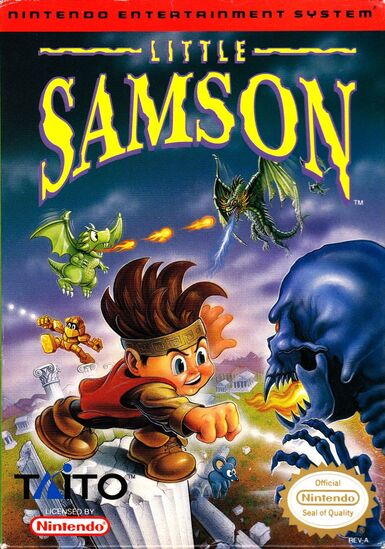
Little Samson is one of the holy grails of NES collecting with an average loose market value of around $2000. Naturally, I’ve been curious what a game this rare and valuable plays like. I will naturally never own a copy of this - it costs as much as a whole month’s salary for me - but through the wonders of the Everdrive, I’m still able to experience this game, and I’ve got to admit, it’s definitely an excellent game. Maybe not worth two grand but fantastic nonetheless.
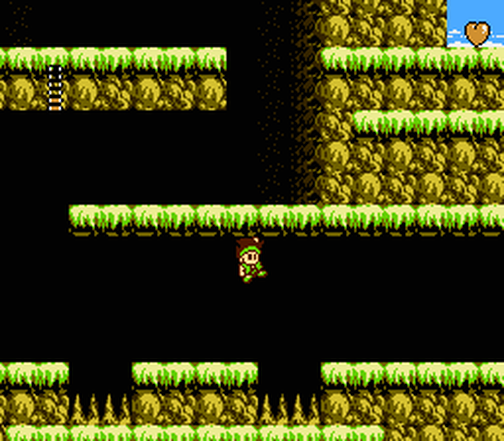
The game’s story is told through a series of short cutscenes with no text. I take this to mean that the game wants me to craft my own story. Either way, that's what I'm doing. In the year 3XXX, the world had been devastated centuries past by nuclear war plunging humanity into another dark age. The residual radiation caused dramatic mutations in much of the wildlife leading to lizards that sprouted wings and the ability to breathe fire, apes that grew skin as thick and tough as rock, and mice that could defecate bombs. In this post-apocalyptic world, medieval kingdoms rose up amid the power vacuum. Samson is a knight in the kingdom of Corndogstan, and the king has ordered him along with his dragon, Slobadon; his golem, Muammar; and his mouse, Turkmenbashy; to defeat the evil wizard, Elon, who threatens the peace of the realm. The four intrepid heroes must work together to clear obstacles, defeat Elon’s minions, and restore peace to the kingdom.
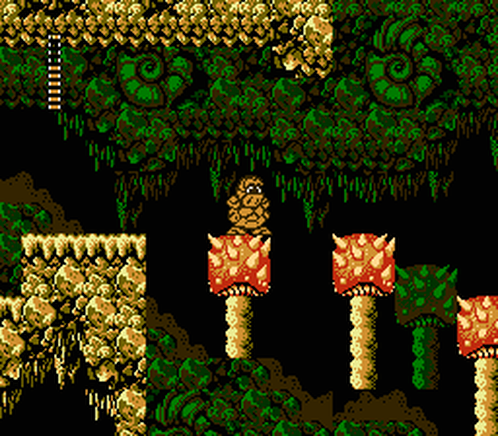
At its core, Little Samson is an action platformer somewhat reminiscent of Mega Man. Those games are a dime a dozen on NES, but what makes this one stand out is how tight and smooth the control is. Each of the four characters controls differently, but they all control well. Samson is your well-rounded character who has a sick looking spin jump and can shoot projectiles. He can also grab onto walls mid-jump and jump off from there. The dragon can fly short distances after a jump and shoot fire projectiles. The golem has a mid-range punch and is slow and has a super short jump that honestly feels pretty worthless most of the time, but his advantage is that he’s immune to damage from spikes, so he’s critical to traversing some of the spiked areas later in the game. The mouse is super weak with a fairly unhelpful attack (only pooping out bombs), but he can run up walls and along ceilings. Be careful, though, as that mouse will die if an enemy so much as sneezes in his general direction.
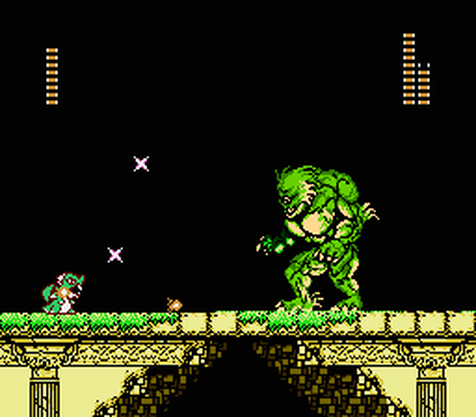
The levels are extremely well designed with a nice diversity and a pretty reasonable difficulty curve. The game never spikes in difficulty, but it definitely increases steadily. Fortunately, the game utilizes a password system, so when you get game over, you can pick up roughly where you left off as long as you were writing down passwords as you go. Or, since we’re in the 21st Century, have a password list from Google pulled up on your phone. I encountered very little slow down during my playthrough, and aside from some occasional sprite flicker, there really weren’t any performance issues that stood out to me.
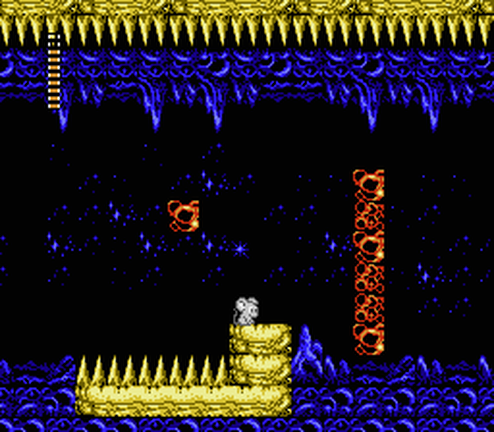
Little Samson’s price on the second-hand market may be due to its extremely limited print run late in the NES’s lifespan more than anything else, but this isn’t like Battletoads in Battlemaniacs on Master System where it’s a super rare and expensive but super crappy game; Little Samson is legitimately one of the best non-Mario platforms in the library. The sprite work is beautiful and colorful, the controls are tight and precise, and the level design is clever and doesn’t get stale. The game definitely gets tough, especially at the bosses, but it rarely feels unfair, and I never found myself getting tired of it. You definitely won’t be picking up a copy of this legitimately unless you’re a hedge fund manager or something, but if you’ve got an Everdrive or an emulator (or a reproduction cartridge), absolutely give this one a try.
* denotes a replay
January (12 Games Beaten)
Little Samson is one of the holy grails of NES collecting with an average loose market value of around $2000. Naturally, I’ve been curious what a game this rare and valuable plays like. I will naturally never own a copy of this - it costs as much as a whole month’s salary for me - but through the wonders of the Everdrive, I’m still able to experience this game, and I’ve got to admit, it’s definitely an excellent game. Maybe not worth two grand but fantastic nonetheless.
The game’s story is told through a series of short cutscenes with no text. I take this to mean that the game wants me to craft my own story. Either way, that's what I'm doing. In the year 3XXX, the world had been devastated centuries past by nuclear war plunging humanity into another dark age. The residual radiation caused dramatic mutations in much of the wildlife leading to lizards that sprouted wings and the ability to breathe fire, apes that grew skin as thick and tough as rock, and mice that could defecate bombs. In this post-apocalyptic world, medieval kingdoms rose up amid the power vacuum. Samson is a knight in the kingdom of Corndogstan, and the king has ordered him along with his dragon, Slobadon; his golem, Muammar; and his mouse, Turkmenbashy; to defeat the evil wizard, Elon, who threatens the peace of the realm. The four intrepid heroes must work together to clear obstacles, defeat Elon’s minions, and restore peace to the kingdom.
At its core, Little Samson is an action platformer somewhat reminiscent of Mega Man. Those games are a dime a dozen on NES, but what makes this one stand out is how tight and smooth the control is. Each of the four characters controls differently, but they all control well. Samson is your well-rounded character who has a sick looking spin jump and can shoot projectiles. He can also grab onto walls mid-jump and jump off from there. The dragon can fly short distances after a jump and shoot fire projectiles. The golem has a mid-range punch and is slow and has a super short jump that honestly feels pretty worthless most of the time, but his advantage is that he’s immune to damage from spikes, so he’s critical to traversing some of the spiked areas later in the game. The mouse is super weak with a fairly unhelpful attack (only pooping out bombs), but he can run up walls and along ceilings. Be careful, though, as that mouse will die if an enemy so much as sneezes in his general direction.
The levels are extremely well designed with a nice diversity and a pretty reasonable difficulty curve. The game never spikes in difficulty, but it definitely increases steadily. Fortunately, the game utilizes a password system, so when you get game over, you can pick up roughly where you left off as long as you were writing down passwords as you go. Or, since we’re in the 21st Century, have a password list from Google pulled up on your phone. I encountered very little slow down during my playthrough, and aside from some occasional sprite flicker, there really weren’t any performance issues that stood out to me.
Little Samson’s price on the second-hand market may be due to its extremely limited print run late in the NES’s lifespan more than anything else, but this isn’t like Battletoads in Battlemaniacs on Master System where it’s a super rare and expensive but super crappy game; Little Samson is legitimately one of the best non-Mario platforms in the library. The sprite work is beautiful and colorful, the controls are tight and precise, and the level design is clever and doesn’t get stale. The game definitely gets tough, especially at the bosses, but it rarely feels unfair, and I never found myself getting tired of it. You definitely won’t be picking up a copy of this legitimately unless you’re a hedge fund manager or something, but if you’ve got an Everdrive or an emulator (or a reproduction cartridge), absolutely give this one a try.
Patron Saint of Bitch Mode
-
ElkinFencer10
- Next-Gen
- Posts: 8986
- Joined: Fri Aug 13, 2010 8:34 pm
- Location: Elkin, North Carolina
- Contact:
Re: Games Beaten 2021
Games Beaten in 2021 - 46
* denotes a replay
January (12 Games Beaten)
February (5 Games Beaten)
March (3 Games Beaten)
April (7 Games Beaten)
May (9 Games Beaten)
June (10 Games Beaten)
46. Tiger-Heli - NES - June 23
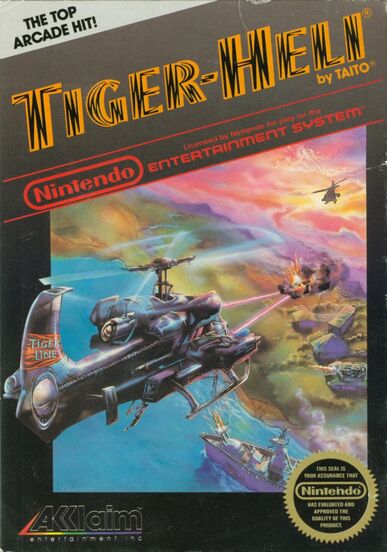
Tiger-Heli is a Toaplan vertical shooter, so I went into this expecting a really solid shooter. I mean, these are the guys who made Truxton and Zero Wing, so they’ve got a reputation for quality. What I found was certainly not a bad game, but it definitely wasn’t the fantastic experience I’d been expecting.
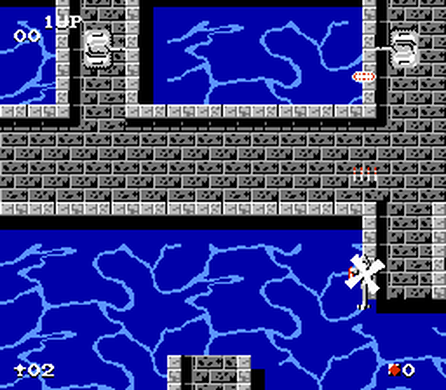
In Tiger Heli, you control a helicopter as the title makes pretty obvious. You then go through four different stages (they loop endlessly once you finish the fourth stage) trying to rack up the highest score that you can. You don’t really get a lot of power-ups along the way, but you do have two cluster bombs that can be useful for taking out groups of enemies, and you can get two “mini helis” that fly beside you and shoot either in front of you, to the left of you, or to the right of you depending on which heli power-up you get. That’s it, though; there are no power-ups to your actual weapon. That in itself was a bit of a surprise for me as most shooters let you collect power-ups to improve your weapon. Not a deal breaker, though.
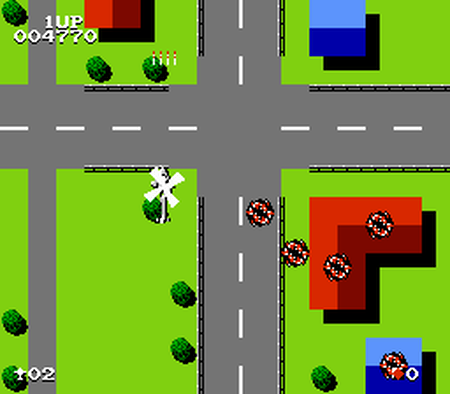
What did catch me much more off-guard, though, was how slow the game is. The helicopter moves slowly, your enemies move slowly, and even the enemy’s bullets feel like they move slowly although that may be psychological due to how relatively few are on-screen at once. This definitely isn’t a bullet hell shooter, and while it seems like that should make it easier, it actually ended up making it harder for me. With bullet hell games, there’s usually a pretty precise rhythm or pattern of the enemy shots,and once you get that figured out, weaving between them isn’t as hard as it seems. When there aren’t that many shots on-screen at once, though, it’s like my brain overcompensates and freaks out as if it’s trying to compensate for shots it can’t see. The result is that I actually end up dying a lot more often on shooters like this than I do in actual bullet hell shooters, at least until my brain has enough time to process what’s actually on the screen and not what it thinks should be on the screen.
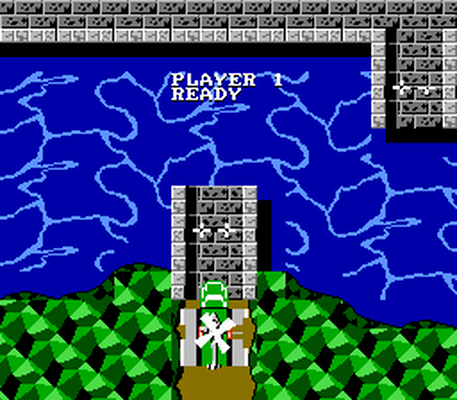
Tiger Heli is a pretty early NES game, and it shows both visually and with performance. It’s got some slow down and lot of sprite flicker, but it also just generally doesn’t look that good. It doesn’t look bad, per se, but seeing in later games what the NES was capable of and see those games not only look better but also run better, it’s hard not to be a little underwhelmed with Tiger Heli. It’s definitely not one of Toaplan’s more technically impressive works. All in all, Tiger Heli isn’t a truly bad game, and it’s definitely worth at least checking out for fans of vertical shooters, but it’s not one of Toaplan’s better works, it’s not one of the NES’s better games, and it’s not one of the 8-bit era’s better shooters.
* denotes a replay
January (12 Games Beaten)
Tiger-Heli is a Toaplan vertical shooter, so I went into this expecting a really solid shooter. I mean, these are the guys who made Truxton and Zero Wing, so they’ve got a reputation for quality. What I found was certainly not a bad game, but it definitely wasn’t the fantastic experience I’d been expecting.
In Tiger Heli, you control a helicopter as the title makes pretty obvious. You then go through four different stages (they loop endlessly once you finish the fourth stage) trying to rack up the highest score that you can. You don’t really get a lot of power-ups along the way, but you do have two cluster bombs that can be useful for taking out groups of enemies, and you can get two “mini helis” that fly beside you and shoot either in front of you, to the left of you, or to the right of you depending on which heli power-up you get. That’s it, though; there are no power-ups to your actual weapon. That in itself was a bit of a surprise for me as most shooters let you collect power-ups to improve your weapon. Not a deal breaker, though.
What did catch me much more off-guard, though, was how slow the game is. The helicopter moves slowly, your enemies move slowly, and even the enemy’s bullets feel like they move slowly although that may be psychological due to how relatively few are on-screen at once. This definitely isn’t a bullet hell shooter, and while it seems like that should make it easier, it actually ended up making it harder for me. With bullet hell games, there’s usually a pretty precise rhythm or pattern of the enemy shots,and once you get that figured out, weaving between them isn’t as hard as it seems. When there aren’t that many shots on-screen at once, though, it’s like my brain overcompensates and freaks out as if it’s trying to compensate for shots it can’t see. The result is that I actually end up dying a lot more often on shooters like this than I do in actual bullet hell shooters, at least until my brain has enough time to process what’s actually on the screen and not what it thinks should be on the screen.
Tiger Heli is a pretty early NES game, and it shows both visually and with performance. It’s got some slow down and lot of sprite flicker, but it also just generally doesn’t look that good. It doesn’t look bad, per se, but seeing in later games what the NES was capable of and see those games not only look better but also run better, it’s hard not to be a little underwhelmed with Tiger Heli. It’s definitely not one of Toaplan’s more technically impressive works. All in all, Tiger Heli isn’t a truly bad game, and it’s definitely worth at least checking out for fans of vertical shooters, but it’s not one of Toaplan’s better works, it’s not one of the NES’s better games, and it’s not one of the 8-bit era’s better shooters.
Patron Saint of Bitch Mode
-
prfsnl_gmr

- Next-Gen
- Posts: 12420
- Joined: Mon Jun 01, 2009 10:26 pm
- Location: Charlotte, North Carolina
Re: Games Beaten 2021
Counterpoint: Tiger Heli is a bad game. 
I’ve owned that game since, probably, before you were born, and I’ve never like it.
I’ve owned that game since, probably, before you were born, and I’ve never like it.
-
ElkinFencer10
- Next-Gen
- Posts: 8986
- Joined: Fri Aug 13, 2010 8:34 pm
- Location: Elkin, North Carolina
- Contact:
Re: Games Beaten 2021
lol I was trying to be nice....it had potentialprfsnl_gmr wrote:Counterpoint: Tiger Heli is a bad game.
Games Beaten in 2021 - 47
* denotes a replay
January (12 Games Beaten)
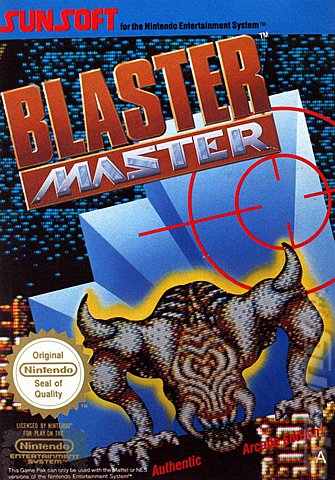
Blaster Master is a series that, despite having a couple of spin-off games after this NES hit, kind of flew under the radar for like thirty years. That is, until, Blaster Master Zero hit the Switch and 3DS and blew up in popularity. How does the NES game hold up, though? To put it simply, a lot better than I expected.
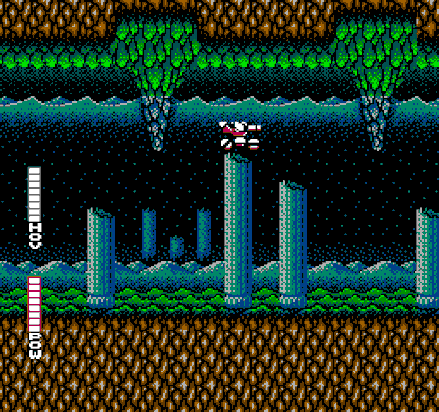
Blaster Master basically plays like part Xenophobe under a microscope and part Metroid but in a tank. The majority - I'd guess around 65% - of the game consists of exploring a side-scrolling overworld in your tank. A tank named Sophia III. There's a lot of platforming to do as you blast your way through this overworld giving it a feel extremely similar Metroid on NES. Your tank can jump, hover, point its cannon straight up, and even turn into a submarine. Clearly this is where the United States defense budget is going. Once you find the right part of the overworld, you have to exit your tank (which is super dangerous in the overworld because your on-foot gun is basically a peashooter) and enter the boss area. These areas are overhead rather than side-scrolling and feels a bit like if Xenophobe were zoomed in. These areas aren't too difficult for the most part, but your goal in these areas is to reach the boss room. The bosses are where the real difficulty here lay. The first few aren't too bad, but they get downright brutal and unforgiving.
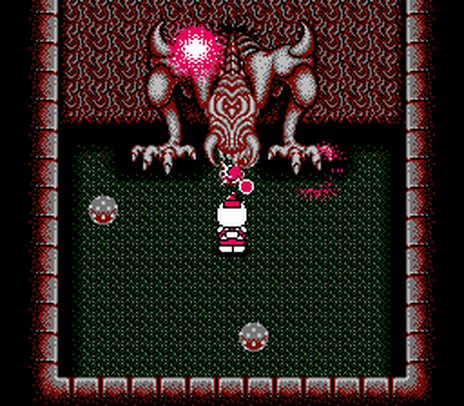
One of the other things that makes it similar to Metroid is that this isn't a strictly linear game. There's a lot of backtracking involved here; as you get an item from a boss, that gives you the ability to get to a different part of a previous area. In all, there are eight areas, but you'll be visiting the first few several times as you progress, backtrack, and progress again. This can be a little stressful as it's pretty easy to get lost, but it never feels truly tedious; the gameplay is a lot of fun, and each of the eight areas feel really unique, so the world never feels bland.
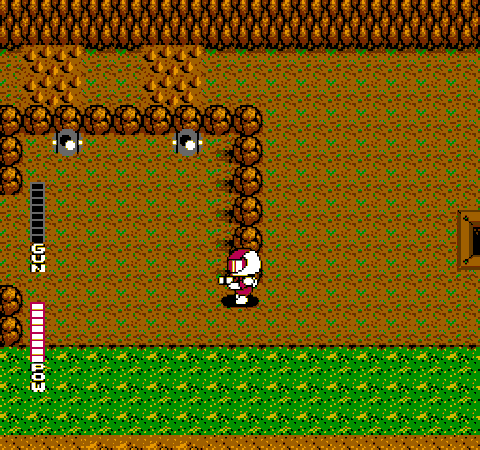
It's easy to see why Blaster Master has come to be so beloved. What I don't understand is why it spent so long in relative obscurity. I mean, ten years ago, only the dedicated 8-bit gamers probably knew what Blaster Master was. Today, most Switch gamers have at least heard of it through Blaster Master Zero, and given the similarity of gameplay, they'd probably enjoy playing it if they enjoyed that game. Blaster Master certainly isn't perfect; the controls felt a little clunky to me at times, and there's some pretty serious flicker and MAJOR slowdown. It is, however, an extremely fun game once you get into it, definitely fun enough to make up for those performance issues. If you've got a Switch, definitely check this one out on the NSO NES app.
Patron Saint of Bitch Mode