Games Beaten 2017
Re: Games Beaten 2017
Best game in the series IMO. Before the series abandoned it's gothic horror roots and became glam rock. Nice and gothic and linear as it should be.


Re: Games Beaten 2017
I've professed my love for Symphony of the Night (and pretty much all the Igavanias) more times than I can count. I think that SCIV might be my favorite Classicvania, though. Although all of the big hitters of the series can make claims to being the best in certain ways. Rondo is good, too, but I also think it's a smidge overrated.

Re: Games Beaten 2017
First 25:
Second 25:
51. Tron ni Kobun (PS1)
52. Tantei Jinguuji Saburou: Shinjuku Chuou Kouen Satsujin Jiken(via PS1 "Early Collection") (FDS)
To hell with this game. Earlier this year I played Cross Tantei Monogatari on the Saturn, and had a pretty great time with it. I found out that the director for that game later worked on Jinguuji Saburou Innocent Black (which I also own), and I decided that I should dive into the Tantei Jinguuji Saburou series. So, I picked up Tantei Jinguuji Saburou: Early Collection for the PS1, which has the first four games in the series (technically five, since the third entry is split across two releases) on one disc, with a bunch of little extras.
I had read before that the first game is kind of rough, but that's an understatement. It's basically a turd. I was interested in the series because I enjoy the hard boiled detective genre, and I presumed that the series was an influence for the Phoenix Wright games, but there's almost nothing good about the Shinjuku Chuou Kouen Satsujin Jiken. The interface is absurdly clunky, and what little there is for "artistic" graphics is almost comically bad. 1987 was a long time ago, but not so long ago that this should be acceptable:
The main issue I have with the game is that it's a pretty simple case, but they threw in the most impossible sequences of actions to actually get to the end of it. The entire 2D park area is basically one giant red herring, except that when you actually do have to go there to progress the story, it requires the most abstruse sequences of bullshit I've ever seen in an adventure game. Basically there's a police post in the top left corner of the park, with no indication that it's there, outside of one of the people in the park saying 'look around in the Northwest edge of the park'--even though there's a big, useless, fucking building, and a shrine that is both visible, and accessible (but just as useless) right in the same area! That's not enough, though: There are only two specific police officers there, who only show up on three of the 15 days over which the game takes place, who will actually have the information required to progress.
Fortunately, the Early Collection has some bonus hints and things that kind of outline that part of the game (I guess it's somewhat infamous), but it's not comprehensive, and before that, I had an issue with the boss of the Meijigumi, Gouzou. The Early Collection gives a hint to go back to the Meijigumi HQ to talk with the yakuza outside, and after doing that, I thought it would be reasonable to go back in to talk with the boss again about what I had found out. At which point Gouzou apparently doesn't know who the fuck Saburou is anymore, and orders that he be whacked for letting himself in. At this point I thought it reasonable that I couldn't go back in, but no, I just had to ask the dude outside about Gouzou, every time, before going inside. So, okay, I had Saburou take a smoke break, where he had an epiphany that takes me back to Gouzou (it was kind of fortunate that I even stumbled across this). I ask Gouzou some stuff about a loan that had been talked about earlier. He's like, 'It was 30 million,' and Saburou is like, 'you said it was 50 mill, last time, asshole,' and I'm thinking, 'okay, well what now, smart guy?' Turns out, the developer's think it is completely reasonable at this point for some freelance detective to threaten the head of a major Yakuza family, even though trying to threaten almost anyone else in the game is completely ineffective.
Basically, the game is just full of those kinds of nonsense patterns, that seem to be solely for the purpose of slowing the player down. Because, there's really not much to the actually 'mystery.' It's not that complicated, although this brings me to some issues I have with the explanation given at the end of the game:
Man, that game made me angry. Needless to say, I wouldn't recommend it. I'm just hopeful that the rest of these early games in the series don't have as much in the way of byzantine procedures for solving the mystery.
52. Tantei Jinguuji Saburou: Shinjuku Chuou Kouen Satsujin Jiken(via PS1 "Early Collection") (FDS)
To hell with this game. Earlier this year I played Cross Tantei Monogatari on the Saturn, and had a pretty great time with it. I found out that the director for that game later worked on Jinguuji Saburou Innocent Black (which I also own), and I decided that I should dive into the Tantei Jinguuji Saburou series. So, I picked up Tantei Jinguuji Saburou: Early Collection for the PS1, which has the first four games in the series (technically five, since the third entry is split across two releases) on one disc, with a bunch of little extras.
I had read before that the first game is kind of rough, but that's an understatement. It's basically a turd. I was interested in the series because I enjoy the hard boiled detective genre, and I presumed that the series was an influence for the Phoenix Wright games, but there's almost nothing good about the Shinjuku Chuou Kouen Satsujin Jiken. The interface is absurdly clunky, and what little there is for "artistic" graphics is almost comically bad. 1987 was a long time ago, but not so long ago that this should be acceptable:
Fortunately, the Early Collection has some bonus hints and things that kind of outline that part of the game (I guess it's somewhat infamous), but it's not comprehensive, and before that, I had an issue with the boss of the Meijigumi, Gouzou. The Early Collection gives a hint to go back to the Meijigumi HQ to talk with the yakuza outside, and after doing that, I thought it would be reasonable to go back in to talk with the boss again about what I had found out. At which point Gouzou apparently doesn't know who the fuck Saburou is anymore, and orders that he be whacked for letting himself in. At this point I thought it reasonable that I couldn't go back in, but no, I just had to ask the dude outside about Gouzou, every time, before going inside. So, okay, I had Saburou take a smoke break, where he had an epiphany that takes me back to Gouzou (it was kind of fortunate that I even stumbled across this). I ask Gouzou some stuff about a loan that had been talked about earlier. He's like, 'It was 30 million,' and Saburou is like, 'you said it was 50 mill, last time, asshole,' and I'm thinking, 'okay, well what now, smart guy?' Turns out, the developer's think it is completely reasonable at this point for some freelance detective to threaten the head of a major Yakuza family, even though trying to threaten almost anyone else in the game is completely ineffective.
Basically, the game is just full of those kinds of nonsense patterns, that seem to be solely for the purpose of slowing the player down. Because, there's really not much to the actually 'mystery.' It's not that complicated, although this brings me to some issues I have with the explanation given at the end of the game:
_____________________________________
Steam (and other) keys for trade/free: viewtopic.php?p=1189267#p1189267
B/S/T Thread: viewtopic.php?p=1188724#p1188724
Steam (and other) keys for trade/free: viewtopic.php?p=1189267#p1189267
B/S/T Thread: viewtopic.php?p=1188724#p1188724
-
BoneSnapDeez

- Next-Gen
- Posts: 20148
- Joined: Mon May 02, 2011 1:08 pm
- Location: Maine
Re: Games Beaten 2017
Boss post. Whenever I see the letters "FDS" I get a little tingly.
Re: Games Beaten 2017
1. Duke Nukem 3D: 20th Anniversary World Tour (PC)
2. Serious Sam HD: The First Encounter* (PC)
3. Serious Sam HD: The Second Encounter (PC)
4. D4: Dark Dreams Don't Die (PC)
5. Momodora: Reverie Under the Moonlight (PC)
6. Deadcore (PC)
7. Yakuza 4 (PS3)
8. Hyper Light Drifter (PC)
9. Doom 2: Valiant (PC)
10. Resident Evil 7 (PS4)
10. Doom 2: Ancient Aliens (PC)
11. Doom 2: Vanguard (PC)
12. Doom 2: Doom 2 The Way id Did (PC)
13. Doom 2: Community Chest Pack 4 (PC)
14. Doom: Doom The Way id Did (PC)
15. Sonic the Hedgehog 4: Episode 1 (PC)
16. Sonic the Hedgehog 4: Episode 2 (PC)
17. Legend of Zelda: Breath of the Wild (WiiU)
18. Dishonored 2 (PC)
19. Kirby's Dream Land (GB)
20. Kirby's Dream Land 2 (GB)
21. Super Mario Land (GB)
22. Super Mario Land 2 (GB)
23. Mighty Final Fight (NES)
24. Kirby's Dream Land 3 (SNES)
25. Trip World (GB)
26. Teenage Mutant Ninja Turtles: The Hyperstone Heist (Genesis)
27. Aladdin (Genesis)
28. Streets of Rage (SMS)
29. Bare Knuckle (Genesis)
30. Bare Knuckle 2* (Genesis)
31. Bare Knuckle 3* (Genesis)
32. Marchen Adventure Cotton 100% (SNES)
33. Earthworm Jim* (Sega CD)
34. Ghouls'n Ghosts (Genesis)
35. Contra (NES)
36. Super C (NES)
37. Final Fight 2* (SNES)
38. Contra III: The Alien Wars (SNES)
39. Final Fight 3* (SNES)
40. Operation C (GB)
41. Contra Hard Corps [End B] (Genesis)
42. Mega Turrican (Genesis)
43. Prey (PC)
44. Dark Souls 3 DLC: Ashes of Ariandel & The Ringed City (PS4)
45. Spec Ops: The Line (PC)
46. System Shock Enhanced Edition (PC)
47. Tekken 7 (PS4)
48. Nier Automata [Platinum] (PS4)
49. Nier (B) (PS3)
50. Drakengard 3 (A-C) (PS3)
51. FEAR Extraction Point* (PC)
52. FEAR Perseus Mandate* (PC)
53. Transmissions: Element 120 (PC)
54. Ratchet & Clank (PS4)
55. Rise of the Tomb Raider (PS4)
56. Sonic CD* (PC)
57. Alan Wake* (PC)
58. Deus Ex* (PC)
59. Momodora III (PC)
60. Mega Man 7* (PS4, MMLC2)
61. Mega Man 8* (PS4, MMLC2)
62. Mega Man 9* (PS4, MMLC2)
63. Mega Man 10* (PS4, MMLC2)
64. Rockman & Forte* (SNES)
65. Mega Man Legends (PSX)
66. Sonic Mania (PC)
67. Mega Man Legends 2 (PSX)
68. Dishonored: Death of the Outsider (PC)
69. Yakuza 0 (PS4)
70. Metroid Samus Returns (3DS)
71. Blue Revolver (PC)
72. Caladrius Blaze (PC)
73. Crimson Clover World Ignition (PC)
74. Deathsmiles (PC)
75. Ikaruga* (PC)
76. Jamestown (PC)
77. Metal Slug (PC)
78. Metal Slug 3 (PC)
79. Metal Slug X (PC)
80. Mushihimesama (PC)
81. Dead Space* (PC)
82. AM2R* (PC)
83. Trouble Witches Origin (PC)
84. Blaster Master Zero (3DS)
85. Legend of Zelda: Link Between Worlds (3DS)
86. Dead Space 2* (PC)
87. Yoshi's Woolly World (WiiU)
88. Crash Bandicoot HD (PS4, NST)
89. Crash Bandicoot 2 HD (PS4, NST)
90. Crash Bandicoot 3 HD (PS4, NST)
91. Cuphead (PC)
92. The Evil Within 2 (PS4)
* replay

Clear Time: 18:27, beefy game.
I am a big fan of The Evil Within but can acknowledge that it felt like a bit of a prototype that could have been more. It was kind of for the hardcore Shinji Mikami fans like myself or those who really really like survival horror action games. Something was missing and I think they found that spark with The Evil Within 2 here, which improves upon the original in a lot of ways. Most importantly, the overall gameplay and progression, along with the characters and storytelling. It's still a very bizarre series, mixing in horror with other dimensions with a Matrix gimmick, but that lets them go wild with creativity. Shinji Mikami is the executive producer on this one, taking a backseat from the director spot as his new apparent protege John Johanas has taken up that job. John worked on the previous games' DLC chapters. Shinji's mark is still all over this and the quality shows.
Visually, TEW2 uses the Stem Engine... which I am assuming is modified idTech5 or 6 work as it shares a lot of graphical qualities with new Doom, so it's often an incredible looking game and technically impressive. The transitions are flat out some of the coolest, surreal and uniquely obtuse transitions I've seen since the PS2 Silent Hill games. And the majority of it is incredibly seamless. As a huge horror game fan it was a real feast to see something in 2017 still bring a lot of creative ideas to the general look and style of a game. This of course, also goes along with some of the bosses and monster designs. Flat out incredible stuff and there was more than a handful of scenes that you would have guessed were rendered CGI, but it was all in game. I will not spoil the best ones, but here's a scary chainsaw lady made up of a bunch of bodies.

Gameplay wise it feels even more like the perfect marriage of Silent Hill and Resident Evil. There are a few hub town parts throughout the game even with a few side missions, but nothing too crazy. I think there was four total, so this is not open world at all with junk fluff. No worries! It felt very much like the town portions of Silent Hill 2. There was also The Marrow, an underground industrial lab (very much like RE labs) that was one of my favorite areas as well, that was like an underground connection of some of the hub areas. Then you have the more linear corridors moving the story forward. Everything was rotated in out and perfectly with great progression. I loved this change up in the gameplay, keeping it fresh and interesting from start to finish even for a game of its size. The combat is basically like the first but feels smoother and better, in the vein of RE4 and Dead Space, where every single bullet matters. The classic Shinji Capcom style of intricate character and weapon upgrades is still here too, which I love.
Most importantly though the story and characters are just flat out hugely improved. Sebastian has a new voice actor which is a little jarring at first, but then grew on me. The final stretch of the game and ending, was an emotional roller coaster and something I never would have predicted from The Evil Within series. It humanizes everyone really well and I really got into it. Even fans harsh on the first or whom completely ignored it, are turning around nicely on this installment. While most people will probably look to Resident Evil 7 this year for survival horror, I personally think The Evil Within 2 is the better game and more of what I wish Resident Evil was today.
A very impressive output from Tango, can't wait to see what they do next.
2. Serious Sam HD: The First Encounter* (PC)
3. Serious Sam HD: The Second Encounter (PC)
4. D4: Dark Dreams Don't Die (PC)
5. Momodora: Reverie Under the Moonlight (PC)
6. Deadcore (PC)
7. Yakuza 4 (PS3)
8. Hyper Light Drifter (PC)
9. Doom 2: Valiant (PC)
10. Resident Evil 7 (PS4)
10. Doom 2: Ancient Aliens (PC)
11. Doom 2: Vanguard (PC)
12. Doom 2: Doom 2 The Way id Did (PC)
13. Doom 2: Community Chest Pack 4 (PC)
14. Doom: Doom The Way id Did (PC)
15. Sonic the Hedgehog 4: Episode 1 (PC)
16. Sonic the Hedgehog 4: Episode 2 (PC)
17. Legend of Zelda: Breath of the Wild (WiiU)
18. Dishonored 2 (PC)
19. Kirby's Dream Land (GB)
20. Kirby's Dream Land 2 (GB)
21. Super Mario Land (GB)
22. Super Mario Land 2 (GB)
23. Mighty Final Fight (NES)
24. Kirby's Dream Land 3 (SNES)
25. Trip World (GB)
26. Teenage Mutant Ninja Turtles: The Hyperstone Heist (Genesis)
27. Aladdin (Genesis)
28. Streets of Rage (SMS)
29. Bare Knuckle (Genesis)
30. Bare Knuckle 2* (Genesis)
31. Bare Knuckle 3* (Genesis)
32. Marchen Adventure Cotton 100% (SNES)
33. Earthworm Jim* (Sega CD)
34. Ghouls'n Ghosts (Genesis)
35. Contra (NES)
36. Super C (NES)
37. Final Fight 2* (SNES)
38. Contra III: The Alien Wars (SNES)
39. Final Fight 3* (SNES)
40. Operation C (GB)
41. Contra Hard Corps [End B] (Genesis)
42. Mega Turrican (Genesis)
43. Prey (PC)
44. Dark Souls 3 DLC: Ashes of Ariandel & The Ringed City (PS4)
45. Spec Ops: The Line (PC)
46. System Shock Enhanced Edition (PC)
47. Tekken 7 (PS4)
48. Nier Automata [Platinum] (PS4)
49. Nier (B) (PS3)
50. Drakengard 3 (A-C) (PS3)
51. FEAR Extraction Point* (PC)
52. FEAR Perseus Mandate* (PC)
53. Transmissions: Element 120 (PC)
54. Ratchet & Clank (PS4)
55. Rise of the Tomb Raider (PS4)
56. Sonic CD* (PC)
57. Alan Wake* (PC)
58. Deus Ex* (PC)
59. Momodora III (PC)
60. Mega Man 7* (PS4, MMLC2)
61. Mega Man 8* (PS4, MMLC2)
62. Mega Man 9* (PS4, MMLC2)
63. Mega Man 10* (PS4, MMLC2)
64. Rockman & Forte* (SNES)
65. Mega Man Legends (PSX)
66. Sonic Mania (PC)
67. Mega Man Legends 2 (PSX)
68. Dishonored: Death of the Outsider (PC)
69. Yakuza 0 (PS4)
70. Metroid Samus Returns (3DS)
71. Blue Revolver (PC)
72. Caladrius Blaze (PC)
73. Crimson Clover World Ignition (PC)
74. Deathsmiles (PC)
75. Ikaruga* (PC)
76. Jamestown (PC)
77. Metal Slug (PC)
78. Metal Slug 3 (PC)
79. Metal Slug X (PC)
80. Mushihimesama (PC)
81. Dead Space* (PC)
82. AM2R* (PC)
83. Trouble Witches Origin (PC)
84. Blaster Master Zero (3DS)
85. Legend of Zelda: Link Between Worlds (3DS)
86. Dead Space 2* (PC)
87. Yoshi's Woolly World (WiiU)
88. Crash Bandicoot HD (PS4, NST)
89. Crash Bandicoot 2 HD (PS4, NST)
90. Crash Bandicoot 3 HD (PS4, NST)
91. Cuphead (PC)
92. The Evil Within 2 (PS4)
* replay
Clear Time: 18:27, beefy game.
I am a big fan of The Evil Within but can acknowledge that it felt like a bit of a prototype that could have been more. It was kind of for the hardcore Shinji Mikami fans like myself or those who really really like survival horror action games. Something was missing and I think they found that spark with The Evil Within 2 here, which improves upon the original in a lot of ways. Most importantly, the overall gameplay and progression, along with the characters and storytelling. It's still a very bizarre series, mixing in horror with other dimensions with a Matrix gimmick, but that lets them go wild with creativity. Shinji Mikami is the executive producer on this one, taking a backseat from the director spot as his new apparent protege John Johanas has taken up that job. John worked on the previous games' DLC chapters. Shinji's mark is still all over this and the quality shows.
Visually, TEW2 uses the Stem Engine... which I am assuming is modified idTech5 or 6 work as it shares a lot of graphical qualities with new Doom, so it's often an incredible looking game and technically impressive. The transitions are flat out some of the coolest, surreal and uniquely obtuse transitions I've seen since the PS2 Silent Hill games. And the majority of it is incredibly seamless. As a huge horror game fan it was a real feast to see something in 2017 still bring a lot of creative ideas to the general look and style of a game. This of course, also goes along with some of the bosses and monster designs. Flat out incredible stuff and there was more than a handful of scenes that you would have guessed were rendered CGI, but it was all in game. I will not spoil the best ones, but here's a scary chainsaw lady made up of a bunch of bodies.
Gameplay wise it feels even more like the perfect marriage of Silent Hill and Resident Evil. There are a few hub town parts throughout the game even with a few side missions, but nothing too crazy. I think there was four total, so this is not open world at all with junk fluff. No worries! It felt very much like the town portions of Silent Hill 2. There was also The Marrow, an underground industrial lab (very much like RE labs) that was one of my favorite areas as well, that was like an underground connection of some of the hub areas. Then you have the more linear corridors moving the story forward. Everything was rotated in out and perfectly with great progression. I loved this change up in the gameplay, keeping it fresh and interesting from start to finish even for a game of its size. The combat is basically like the first but feels smoother and better, in the vein of RE4 and Dead Space, where every single bullet matters. The classic Shinji Capcom style of intricate character and weapon upgrades is still here too, which I love.
Most importantly though the story and characters are just flat out hugely improved. Sebastian has a new voice actor which is a little jarring at first, but then grew on me. The final stretch of the game and ending, was an emotional roller coaster and something I never would have predicted from The Evil Within series. It humanizes everyone really well and I really got into it. Even fans harsh on the first or whom completely ignored it, are turning around nicely on this installment. While most people will probably look to Resident Evil 7 this year for survival horror, I personally think The Evil Within 2 is the better game and more of what I wish Resident Evil was today.
A very impressive output from Tango, can't wait to see what they do next.

-
Exhuminator
- Next-Gen
- Posts: 11573
- Joined: Tue Apr 30, 2013 8:24 am
- Contact:
Re: Games Beaten 2017
As much as I like the aesthetics of early Japanese adventure games, too often actually playing them is an extreme chore. The whole menu based control system + continuously/randomly choosing options until something happens = not a lot of fun. However, when it comes to the series you're talking about, I did have a pretty good time with this:pierrot wrote:Basically, the game is just full of those kinds of nonsense patterns, that seem to be solely for the purpose of slowing the player down. / Man, that game made me angry. Needless to say, I wouldn't recommend it. I'm just hopeful that the rest of these early games in the series don't have as much in the way of byzantine procedures for solving the mystery.


97. Contradiction: Spot the Liar! | 2015 | PC | 8/10
Gamers of a certain age may remember Tim Follins for his musical contributions to many classic games' OSTs. As it turns out in 2015, that same Tim Follins also produced a Kickstarter backed FMV adventure game. The story casts the player as Detective Jenks, who is conducting interrogations with various denizens of the small village of Edenton (in England). Jenks is there because a young woman has turned up drowned, his job is to find out how she died, and who's responsible for her death. It's not too long before Jenks discovers a hidden cult within the town that is having a profound effect on the local youth. Of course, the young woman was involved with said cult. The player must help Jenks gather evidence, question witnesses productively, and above all else, spot the liars. For it is only when a witness is caught in an undeniable lie, that they will they aid Jenks in his investigation, begrudgingly.

Unlike most FMV games, Contradiction is very interactive. The player is able to freely explore an entire village and nearby forest, search areas for evidence, solve item puzzles, and interrogate witnesses in an intricate fashion. Jenks records all witness testimony in his journal, allowing the player at any time to recall what any character said, and use that statement to find a contradiction in another recorded statement. It is very fun helping Jenks find the lies, and see the liars' reactions. However, the amount of statements that eventually become available for the player to search through, becomes exponential towards the end of the game. What was at first fun and simple, eventually becomes a nightmare to parse and keep track of in any relevant fashion for the player. Worse yet, there are often contradictions that are easily seen, yet cannot be initiated. Yet at other times, there are totally not obvious contradictions that must be formed from seemingly irrelevant statements. Combine the latter with the occasional obtuse item puzzle, or unintuitive location changes... and the player will likely be reaching for a walkthrough about halfway through Contradiction.

And that's okay, because Contradiction makes a better movie than it does a game. The actual plot, atmosphere, and brilliantly fun acting are the meat of the experience. I usually do not recommend people playing through games with walkthroughs, but I do with Contradiction, because doing so will increase the fun factor. It is quite fun to soak up the small town ambience as day turns to night, laughing at Jenks' wily antics, and slowly realizing the true amount of evil permeating Edenton. The cinematography is also excellent, with brilliant transitional effects between scenes. The OST although subdued, does capture the appropriate emotional moments as well. While I'll be the first to admit Contradiction: Spot the Liar! did not live up to its own expectations, the end result is still quite entertaining. Unfortunately while the ending does resolve the initial case, the overall plot ends on a cliffhanger. It's rather unlikely that Tim Follins will produce a sequel, based on his interviews. Nonetheless, Contradiction did do its part to push the FMV genre into a higher tier of quality. And that's no lie!
PLAY KING'S FIELD.
-
noiseredux
- Next-Gen
- Posts: 38148
- Joined: Fri Nov 14, 2008 1:09 pm
- Contact:
Re: Games Beaten 2017
Nice write up Xeo. Evil Within 2 is on my want to play list but you just bumped it up higher.

Re: Games Beaten 2017
Yes! Thought of you when I wrote that up, wondering if you were interested or would see that. I can't remember if you liked the first game or not (I don't think anyone here but me did...), but yeah the second is totally worth checking out regardless. I bet you'd dig it.noiseredux wrote:Nice write up Xeo. Evil Within 2 is on my want to play list but you just bumped it up higher.
-
ElkinFencer10

- Next-Gen
- Posts: 8989
- Joined: Fri Aug 13, 2010 8:34 pm
- Location: Elkin, North Carolina
- Contact:
Re: Games Beaten 2017
After being sick for a couple days and not feeling like doing any writing, I'm back playing catch up with my reviews!
Games Beaten in 2017 So Far - 117
* denotes a replay
January (10 Games Beaten)
February (12 Games Beaten)
March (6 Games Beaten)
April (9 Games Beaten)
May (14 Games Beaten)
June (10 Games Beaten)
July (20 Games Beaten)
August (9 Games Beaten)
September (14 Games Beaten)
October (7 Games Beaten)
November (6 Games Beaten)
117. Dear Esther - PlayStation 4 - November 5

Dear Esther is a game that I've heard people hotly debate. The main debate isn't over the game's visuals or story or voice acting but on whether or not it even deserves to be called a game. Dear Esther is the best example I've found of a relatively new genre - the "walking simulator." While opinions on the genre as a whole and this game specifically remain fairly divisive in a lot of circles, I was extremely satisfied with my experience with Dear Esther.
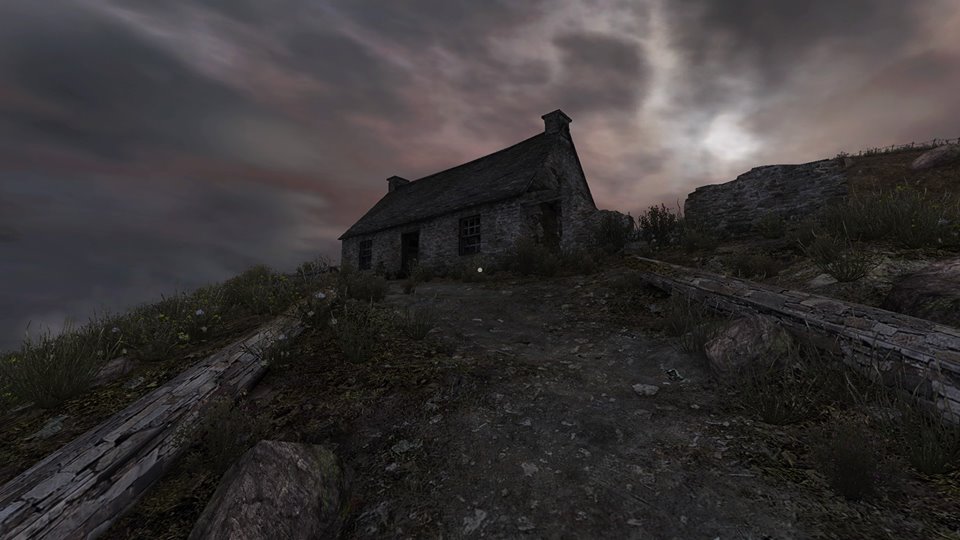
The "gameplay" in Dear Esther doesn't really exist, at least not in a traditional sense. The entire game consists of walking - not running or jogging, but walking - across a deserted island as an anonymous narrator reads letters to Esther. There's no context given to these letters, and they're triggered by reaching different parts of the island, meaning that the letters are often read in a different order each playthrough. That ambiguity is the game's strongest aspect because it leaves it up to the player's own mind and understanding to piece together the story. There are a few different people mentioned in the letters, but exactly who is who isn't made explicitly clear. It's a kind of agency that games rarely give players, and it serves only to deepen immersion.
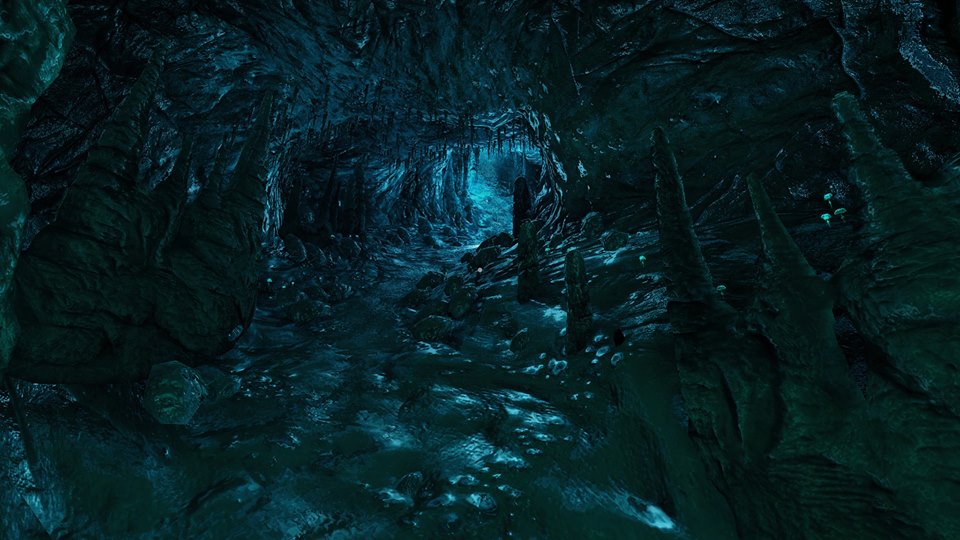
The most striking thing about Dear Esther early on is the visuals. The island is absolutely beautiful especially with respect to the lighting effects. On some of the higher areas of the island, it's an extremely rewarding view to just look over a cliff at the landscape below and the sea stretching out the horizon. It's not AAA game studio tier, but it is breathtaking, especially with the way the game is presented. That presentation is probably the game's strongest aspect. You're given no context, no prompting, and no goal. You just start walking and eventually hear the narrator. Then you keep walking, and you start to piece together the story little by little, always with enough gaps left to keep you interested and curious. I've never before had a game's story engross me in quite that way before.
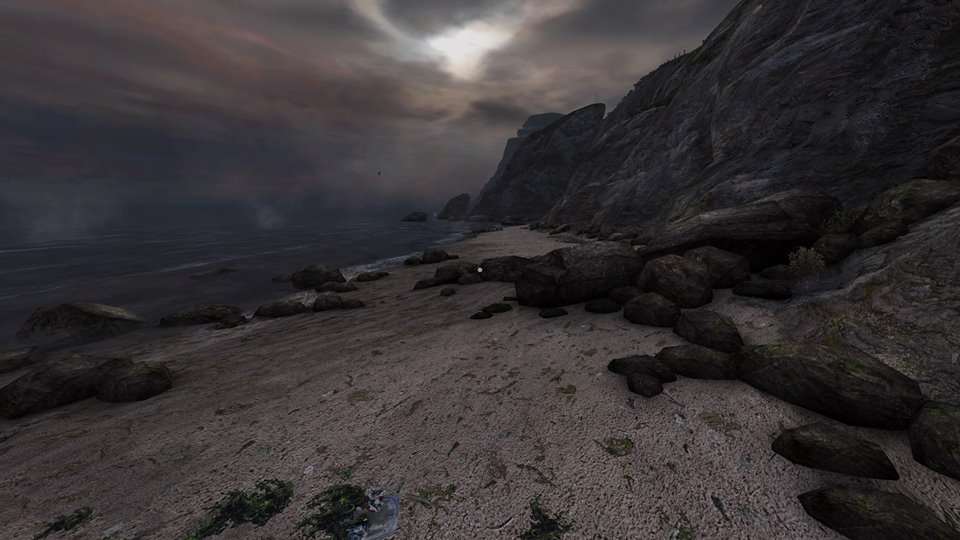
If the visuals are the most striking aspect of the game, the part of the game that will last the longest in players' memories is the way it makes you feel. Lots of game make you sympathize or even empathize with the characters, and there are some games with great storytelling. There are tons of games with voice acting so superb that the characters feel like real people. Dear Esther is something else. When I finished the game, I felt. I felt the sorrow of the narrator's loneliness. I felt the despair of his hopelessness. I felt the anguish of his mourning. Whoever did the voice acting for the narrator gave one of the most masterful performances in voice acting history, and I firmly stand by that statement. His voice is the only connection to the game's narrative that you get, and it alone is enough to make you feel every emotion, both fleeting and life changing, that the character felt. It's truly a marvelous performance.
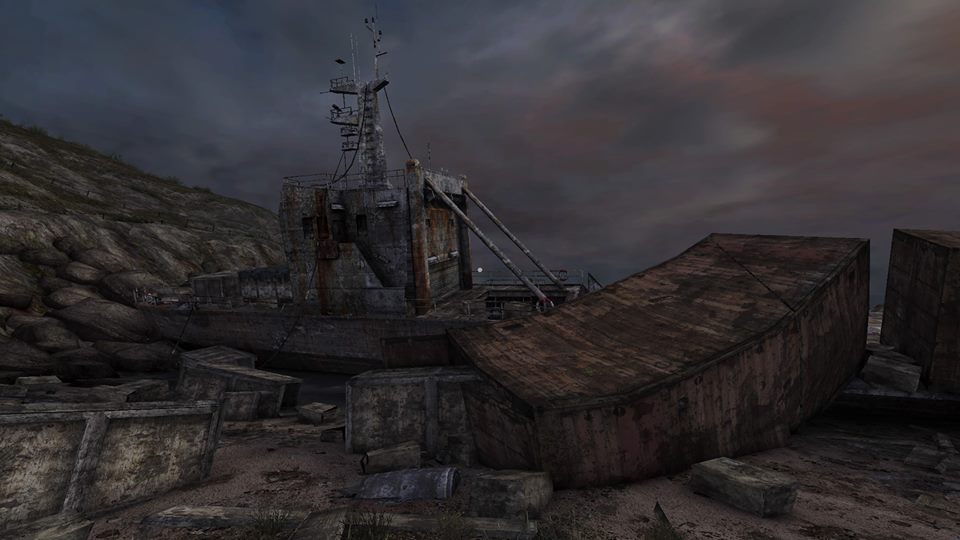
Dear Esther is, in a lot of ways, the finest of what the walking sim genre has to offer. I want to give it a perfect rating due to how brilliantly the game delivered its narrative, how perfectly balanced the ambiguity of the story is, and how emotionally powerful the presentation is. The only reason I can't is because it is a pure walking sim; most others incorporate some degree of puzzle solving to give the game a little more gameplay, and that little bit of interactivity is needed to push me over the edge. Even just finding a few ancillary documents throughout the island that give a little context. The fact that I'm so tempted to give it a perfect rating even with no actual interactive gameplay, though, should be a testament to how damn incredible the game's presentation and emotional impact are. If you're at all interested in powerful stories, you owe it to yourself to play Dear Esther.
Games Beaten in 2017 So Far - 117
* denotes a replay
January (10 Games Beaten)
Dear Esther is a game that I've heard people hotly debate. The main debate isn't over the game's visuals or story or voice acting but on whether or not it even deserves to be called a game. Dear Esther is the best example I've found of a relatively new genre - the "walking simulator." While opinions on the genre as a whole and this game specifically remain fairly divisive in a lot of circles, I was extremely satisfied with my experience with Dear Esther.
The "gameplay" in Dear Esther doesn't really exist, at least not in a traditional sense. The entire game consists of walking - not running or jogging, but walking - across a deserted island as an anonymous narrator reads letters to Esther. There's no context given to these letters, and they're triggered by reaching different parts of the island, meaning that the letters are often read in a different order each playthrough. That ambiguity is the game's strongest aspect because it leaves it up to the player's own mind and understanding to piece together the story. There are a few different people mentioned in the letters, but exactly who is who isn't made explicitly clear. It's a kind of agency that games rarely give players, and it serves only to deepen immersion.
The most striking thing about Dear Esther early on is the visuals. The island is absolutely beautiful especially with respect to the lighting effects. On some of the higher areas of the island, it's an extremely rewarding view to just look over a cliff at the landscape below and the sea stretching out the horizon. It's not AAA game studio tier, but it is breathtaking, especially with the way the game is presented. That presentation is probably the game's strongest aspect. You're given no context, no prompting, and no goal. You just start walking and eventually hear the narrator. Then you keep walking, and you start to piece together the story little by little, always with enough gaps left to keep you interested and curious. I've never before had a game's story engross me in quite that way before.
If the visuals are the most striking aspect of the game, the part of the game that will last the longest in players' memories is the way it makes you feel. Lots of game make you sympathize or even empathize with the characters, and there are some games with great storytelling. There are tons of games with voice acting so superb that the characters feel like real people. Dear Esther is something else. When I finished the game, I felt. I felt the sorrow of the narrator's loneliness. I felt the despair of his hopelessness. I felt the anguish of his mourning. Whoever did the voice acting for the narrator gave one of the most masterful performances in voice acting history, and I firmly stand by that statement. His voice is the only connection to the game's narrative that you get, and it alone is enough to make you feel every emotion, both fleeting and life changing, that the character felt. It's truly a marvelous performance.
Dear Esther is, in a lot of ways, the finest of what the walking sim genre has to offer. I want to give it a perfect rating due to how brilliantly the game delivered its narrative, how perfectly balanced the ambiguity of the story is, and how emotionally powerful the presentation is. The only reason I can't is because it is a pure walking sim; most others incorporate some degree of puzzle solving to give the game a little more gameplay, and that little bit of interactivity is needed to push me over the edge. Even just finding a few ancillary documents throughout the island that give a little context. The fact that I'm so tempted to give it a perfect rating even with no actual interactive gameplay, though, should be a testament to how damn incredible the game's presentation and emotional impact are. If you're at all interested in powerful stories, you owe it to yourself to play Dear Esther.
Patron Saint of Bitch Mode
-
noiseredux
- Next-Gen
- Posts: 38148
- Joined: Fri Nov 14, 2008 1:09 pm
- Contact:
Re: Games Beaten 2017
I still haven't played the first. I've meant to since release. And then I was planning to finally play it when the sequel came out, except the reviews of the second one have seemed much better, so I wasn't sure if I should just jump to the second first. Either way, I'm interested in both and do plan to get to them at some point for sure.Xeogred wrote:Yes! Thought of you when I wrote that up, wondering if you were interested or would see that. I can't remember if you liked the first game or not (I don't think anyone here but me did...), but yeah the second is totally worth checking out regardless. I bet you'd dig it.noiseredux wrote:Nice write up Xeo. Evil Within 2 is on my want to play list but you just bumped it up higher.