The "off the shelf" angle doesn't ring true for arcade parts. It shares practically nothing with Sega's arcade boards prior to the Saturn (the ST-V board is identical, but that showed up the year after the Saturn was already out).AppliCotton wrote: I find it funny that before, people would rag on the Saturn for being made of "off the shelf parts" as in bits and bolts just lying around from the arcade division. Today, if you're buying an arcade stick, it's the ones made of off the shelf parts that you want to splurge for, with the proprietary stuff considered cheap and undependable.
No wonder the Saturn is only now coming into its own. As RB noted, he can't believe how quickly prices are going up. And retro media from Japan to the UK are all over it.
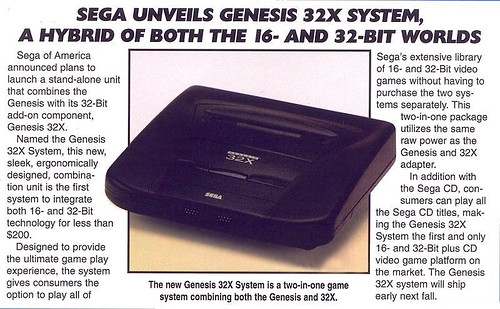
If you look at the kind of stuff it was made of, the main CPUs are fairly common for embedded applications, like engine control (and are basically just more advanced versions of what the 32X had as well).
It does have custom chips for video, but again, the way they did it favored 2D more than 3D. In plain English, the Saturn uses four sided polygons only, whereas nearly every other gaming-oriented 3D implementation uses triangles (for good reasons). That, combined with the multi-CPU setup that was both expensive to build and a pain to program, made it far less attractive to develop for.
It's been retro cool for a bit now, but other systems, like the SNES, have seen spikes in price as well.
Which is not to say it can't be a fun system to own or play, just that there were a lot of missteps on Sega's part.