ラケット
that says racket... strangely I was translating this on a different agenda then for this thread.
I'm attempting to find the way to write it in kanji instead of katakana though... as it is more compact. But it doesn't hold a phonetic way of spelling, but a more symbolic way of writing words (kinda like egyptian hieroglyphs... where different strokes and placement represent things instead of sounds)
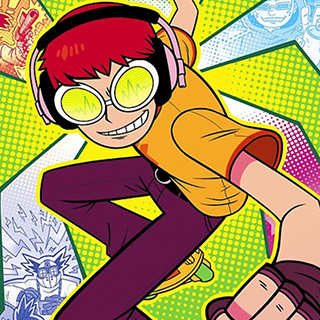
The Symbols on Beat's Shirt in Jet Grind Radio...
-
lordofduct

- Next-Gen
- Posts: 2907
- Joined: Sat Apr 01, 2006 12:57 pm
- Location: West Palm Beach
Last edited by lordofduct on Tue Oct 16, 2007 1:21 pm, edited 1 time in total.
It' takes four characters?lordofduct wrote:ラケット
that says racket... strangely I was translating this on a different agenda then for this thread.
I figured you would roughly need one per syllable...
Support Racketboy on Patreon
Follow Racketboy on Social: Instagram / Twitter / Facebook
Subscribe to Email Newsletter (Blog / Guide Updates Every Week or Two)
Follow Racketboy on Social: Instagram / Twitter / Facebook
Subscribe to Email Newsletter (Blog / Guide Updates Every Week or Two)
-
lordofduct
- Next-Gen
- Posts: 2907
- Joined: Sat Apr 01, 2006 12:57 pm
- Location: West Palm Beach
it's what I keep coming too... but I'm trying to find better symbols to represent it
the way katakana is set up their are a bunch of symbols for different consinent sounds. It isn't like English where a vowel placed around other vowels and consinents change it's sound. It has just one sound, so you need to find the proper form of it.
the way katakana is set up their are a bunch of symbols for different consinent sounds. It isn't like English where a vowel placed around other vowels and consinents change it's sound. It has just one sound, so you need to find the proper form of it.
-
lordofduct
- Next-Gen
- Posts: 2907
- Joined: Sat Apr 01, 2006 12:57 pm
- Location: West Palm Beach
ラ - is 'ra'
ケ - is 'ke'
ッ - is 'tsu'
ト - is 'to'
I would assume just ラケト would do fine, but when I compare it to other translations, they always are putting ッ in it... so I'm confused on the matter. I personally don't know japanese, I'm just running down comparisons in words and sounds and using a sound to character list (found on wikipedia) to do the translation.
I think the ッ is acting like a vowel in english... and that is why it is ending up in there.
...
aw, wikipedia explains it here
quote:
A small tsu ッ called a sokuon indicates a geminate consonant, which is represented in rōmaji by doubling the following consonant. For example, bed is written in katakana as ベッド (beddo).
so I was right, it is working like a vowel to modify the following consonant.
...
my agenda for translating racket is to put something on the shirt of the drawing my buddy is doing. I was thinking racket as it matches the site some, but it's kinda long.
then I thought maybe
セガ
or SEGA, as beat is from a SEGA dreamcast game... and I'm a Sega nerd.
... edit again:
OR
レトロ
which roughly translates to reh-tu-row... retro.
i think I like the latter most
ケ - is 'ke'
ッ - is 'tsu'
ト - is 'to'
I would assume just ラケト would do fine, but when I compare it to other translations, they always are putting ッ in it... so I'm confused on the matter. I personally don't know japanese, I'm just running down comparisons in words and sounds and using a sound to character list (found on wikipedia) to do the translation.
I think the ッ is acting like a vowel in english... and that is why it is ending up in there.
...
aw, wikipedia explains it here
quote:
A small tsu ッ called a sokuon indicates a geminate consonant, which is represented in rōmaji by doubling the following consonant. For example, bed is written in katakana as ベッド (beddo).
so I was right, it is working like a vowel to modify the following consonant.
...
my agenda for translating racket is to put something on the shirt of the drawing my buddy is doing. I was thinking racket as it matches the site some, but it's kinda long.
then I thought maybe
セガ
or SEGA, as beat is from a SEGA dreamcast game... and I'm a Sega nerd.
... edit again:
OR
レトロ
which roughly translates to reh-tu-row... retro.
i think I like the latter most
Last edited by lordofduct on Tue Oct 16, 2007 1:52 pm, edited 1 time in total.
I know for example in Saint Seiya, they do "Pegasasu" instead of Pegasus - it's that kind of stuff. I think they have trouble ending the words in consonants or something like that. So Racket is something like Raketu or something. See what Lord says above, I guess.racketboy wrote:It' takes four characters?lordofduct wrote:ラケット
that says racket... strangely I was translating this on a different agenda then for this thread.
I figured you would roughly need one per syllable...
Ivo.
-
lordofduct
- Next-Gen
- Posts: 2907
- Joined: Sat Apr 01, 2006 12:57 pm
- Location: West Palm Beach
I don't think it's a not liking to end in consonants... I think it's a lack of flat consonants.
The closest sound to 'ssss' is 'su'... so to get the sus, you actually have to repeat the 'su' twice to get the effect of the final 's'.
In this scenario it probably would look like a the character for su preceding by what I assume (remember I'm assuming here) the 'tsu' character to let you know to geminate the 'su' sound. Geminating is pronouncing a consonant for longer... like in the word 'calm, the m is actually geminated, you might notice it because it's such a basic word, but you actually pronounce the m for a moment longer instead of quickly cutting the m off fast.
same in pegasus, the first s is short and fast, the second one is pronounced longer to note the finalization of the word.
but when the katakana is probably translated it gets translated as susu instead... because they are geminating the sound 'su' and not the sound 'sssss'
The closest sound to 'ssss' is 'su'... so to get the sus, you actually have to repeat the 'su' twice to get the effect of the final 's'.
In this scenario it probably would look like a the character for su preceding by what I assume (remember I'm assuming here) the 'tsu' character to let you know to geminate the 'su' sound. Geminating is pronouncing a consonant for longer... like in the word 'calm, the m is actually geminated, you might notice it because it's such a basic word, but you actually pronounce the m for a moment longer instead of quickly cutting the m off fast.
same in pegasus, the first s is short and fast, the second one is pronounced longer to note the finalization of the word.
but when the katakana is probably translated it gets translated as susu instead... because they are geminating the sound 'su' and not the sound 'sssss'
There will probably be somebody in Japan that will read this thread and laugh at us.....
Support Racketboy on Patreon
Follow Racketboy on Social: Instagram / Twitter / Facebook
Subscribe to Email Newsletter (Blog / Guide Updates Every Week or Two)
Follow Racketboy on Social: Instagram / Twitter / Facebook
Subscribe to Email Newsletter (Blog / Guide Updates Every Week or Two)
-
lordofduct
- Next-Gen
- Posts: 2907
- Joined: Sat Apr 01, 2006 12:57 pm
- Location: West Palm Beach
yeah... most likely. I know I am.
but hey, I stress... I'm assuming/rationalizing here... not stating this is fact.... so don't hold me to it.
I'm basically basing this all on my understanding of language and love for etymology.
... but racket, which do you prefer?
racket
SEGA
retro
on the psuedo-beats shirt?
but hey, I stress... I'm assuming/rationalizing here... not stating this is fact.... so don't hold me to it.
I'm basically basing this all on my understanding of language and love for etymology.
... but racket, which do you prefer?
racket
SEGA
retro
on the psuedo-beats shirt?
-
extrarice

- 64-bit
- Posts: 318
- Joined: Fri Feb 23, 2007 7:44 pm
- Location: A Mountain Stronghold in Northern California
Correct, it doubles the leading consonant of the next kana.lordofduct wrote: aw, wikipedia explains it here
quote:
A small tsu ッ called a sokuon indicates a geminate consonant, which is represented in rōmaji by doubling the following consonant. For example, bed is written in katakana as ベッド (beddo).
so I was right, it is working like a vowel to modify the following consonant.
As for writing "Racket" as kanji instead of kana...I think the meaning of the word would be lost, if you could find a series of kanji that would approximate that sound at all.
As for ending words in consonants, it's almost impossible in Japanese. The only sound that springs to mind is "n" or "m" (ん).
I don't care about the meaning of the word as I never based my nickname off of the actual word "racket". "Racket" is just a nickname my college roomates gave me because it sounded a bit like a simplified version of my last name. So the sound is the only think I care about.extrarice wrote:Correct, it doubles the leading consonant of the next kana.lordofduct wrote: aw, wikipedia explains it here
quote:
A small tsu ッ called a sokuon indicates a geminate consonant, which is represented in rōmaji by doubling the following consonant. For example, bed is written in katakana as ベッド (beddo).
so I was right, it is working like a vowel to modify the following consonant.
As for writing "Racket" as kanji instead of kana...I think the meaning of the word would be lost, if you could find a series of kanji that would approximate that sound at all.
As for ending words in consonants, it's almost impossible in Japanese. The only sound that springs to mind is "n" or "m" (ん).
Support Racketboy on Patreon
Follow Racketboy on Social: Instagram / Twitter / Facebook
Subscribe to Email Newsletter (Blog / Guide Updates Every Week or Two)
Follow Racketboy on Social: Instagram / Twitter / Facebook
Subscribe to Email Newsletter (Blog / Guide Updates Every Week or Two)