Games Beaten 2025

Anything that is gaming related that doesn't fit well anywhere else
User avatar
RobertAugustdeMeijer
64-bit
Posts: 307
Joined: Fri Sep 02, 2022 10:15 am

Re: Games Beaten 2025

Post by RobertAugustdeMeijer »

Thanks for all the (N64) reviews, Senpei, I'm enjoying them!
User avatar
RobertAugustdeMeijer
64-bit
Posts: 307
Joined: Fri Sep 02, 2022 10:15 am

Re: Games Beaten 2025

Post by RobertAugustdeMeijer »

First six:
1. Assassin's Creed IV: Black Flag
Cynically, in the modern chapters, this game even admits that it's a commercially pedestrian blockbuster. It depicts history wrongly all the time, so there's little value in that. Purely as a game, it's mostly the same as the previous games, which means gameplay is automatic and shallow, while you hoover up symbols on your map. The only thing going for it would be the ship battles, which while sluggish and imprecise, are still somewhat novel and explosive. In about forty hours of play time, I think I had about an hour of fun being a pirate.
4/10

2. Minecraft
I was extremely pleasantly surprised at how much respect the game had for the player's ingenuity. The tutorial is merely some pages you can find in the options menu. You have minutes to set up a safe haven, preferably with a bed and torches, with little to no instructions. Dying halves your experience points and leaves all your gear scattered about. Although randomly generated, there's always a feeling you might find something unique. The final boss is a treat, being open ended and seemingly insurmountable at first. There's a lot of random stuff that can set you back a couple of hours back, which keeps the challenge honest and respectful. However, it is still a game about crafting, meaning half the time you'll be doing busywork and clicking around in menus.
8/10

3. Street Fighter 6
Link combos now have a three frame buffer, while the super meter(s) allow many alterations to your moves. Competitively, this means you'll spend less time practicing the same combos over and over, and instead practicing reading different situations. With less neutral and much more creativity, this makes Street Fighter more like the other anime fighters. Which while a good thing, makes me wonder why this should be played at all. The answer is the masses: the single player mode is a poor man's Yakuza, but nevertheless will feed the tournament scene with plenty of folks confident enough they'll want to compete.
8/10

4. Call of Duty 4: Modern Warfare
Is this a recruitment ad for the US Army? The production values are very impressive. Obviously, the game propels you forward, set piece to set piece, always giving you blockbuster flare. Occasionally, precision and strategy is required, and everything falls apart. Perhaps the lack of clarity and random nature of the enemies is realistic, but it does not make the challenge engaging. Luckily, it's over within a couple of hours. I hear the multiplayer was popular. Perhaps, but I doubt there's a reason to play this over Counter Strike or Quake.
3/10

5. Felvidek
A brisk 'Japanese' RPG instead located in Hungary, as its name implies. It delights in its historic background, where the church is at odds with cultists, and the monarchy at odds with the peasantry. The combat might just be barely strategic enough to keep the fights interesting, but this leaves more headspace for the eccentric narrative. Both silly and serious themes are explored, with intriguing writing and distinctive artistry. It's no Disco Elysium or Undertale, but if you want more in the same vein, a must play.
7/10

6. Blazing Lazers
Hectic and sharp, this is everything you could hope a 16-bit shmup can be. At times there might be too much going on, while you're bomb attack is too slow, but otherwise the difficulty is mostly fair. Space Megaforce has more interesting weapon choices, and MUSHA has more pizazz, but this one is still almost as good and definitely a step up from earlier Zanac/Aleste games.
7/10
7. Company of Heroes
On paper this sounds like any other RTS, but this one has a bombast to it that makes everything feel urgent, hence its popular appeal. The campaign benefits from high production values, enhancing the historic significance of the battles. There's an extra emphasis on controlling many different parts of the map for resources, and less on building structures, making skirmishes action packed. Still, I'd recommend only trying out single player, as CoH3 and SC2 have better competitive scenes.
8/10

8. Animal Crossing: New Horizons
The amount of personality is commendable, but that's really all this 'game' has to offer. You can't help but feel like half the time you're just doing mundane tasks. And for what? Happy emotes and the occasional joke? Perhaps being able to show off your creativity with online friends. Fundamentally, this genre is flawed due to being in a medium that limits expression to moving things around and making extremely simple dialogue choices. Still, picked up at the right time in small bursts, there's no denying it's a charming experience. And for what it's worth, there is more to see and do than in the prequels.
6/10

9. Shatterhand
The risk/reward element of short ranged attacks works better in Zelda II and Ninja Gaiden due to them having defensive options. Shatterhand relies a lot on speed and brute strength, which is exciting, but also tense. The upgrades are awkward to yield and keeping them around is even harder. There's a lot of potential here: think Mega Man with fists and body extensions. And while the execution is polished on a surface level, the combat is too frustrating to make it a classic.
5/10
User avatar
PartridgeSenpai
Next-Gen
Posts: 3173
Joined: Mon Dec 14, 2015 9:27 am
Location: Northern Japan

Re: Games Beaten 2025

Post by PartridgeSenpai »

RobertAugustdeMeijer wrote: Thu Feb 27, 2025 12:57 pm Thanks for all the (N64) reviews, Senpei, I'm enjoying them!
Aww, thanks! :D
I'm having a lot of fun playing and writing them~ ^w^
I probably won't have time to write more reviews for a couple more days now, but I've already got 3 more N64 reviews to write, so expect that over the course of next week at some point, I suppose! X3
I bought a bunch of cheap ones to play recently before spring break starts, and I move on to RPGs that take a lot longer, so it's N64-a-palooza right now~ :D
I identify everyone via avatar, so if you change your avatar, I genuinely might completely forget who you are. -- Me
User avatar
TheSSNintendo
128-bit
Posts: 666
Joined: Mon Jul 11, 2011 10:27 pm

Re: Games Beaten 2025

Post by TheSSNintendo »

Legend of Zelda: Echoes of Wisdom
User avatar
PartridgeSenpai
Next-Gen
Posts: 3173
Joined: Mon Dec 14, 2015 9:27 am
Location: Northern Japan

Re: Games Beaten 2025

Post by PartridgeSenpai »

Partridge Senpai's 2025 Beaten Games:
Previously: 2016 2017 2018 2019 2020 2021 2022 2023 2024
* indicates a repeat

1. Arc Rise Fantasia (Wii)
2. Return of the Obra Dinn (PC)
3. Battlefield: Hardline (PS3)
4. Call of Duty: Black Ops (PS3)
5. Call of Duty: Black Ops II (PS3)
6. Dead Nation (PS3)
7. Kileak, The Blood 2: Reason in Madness (PS1)
8. Paro Wars (PS1)
9. in Stars and Time (Steam)
10. Tetris Battle Gaiden (SFC)
11. Super Tetris 3 (SFC)
12. Battlefield 4 (PS3)
13. Call of Duty: Modern Warfare 2 (PS3)
14. Call of Duty: Modern Warfare 3 (PS3)
15. Call of Duty: Black Ops III (PS4)
16. Call of Duty: Infinite Warfare (PS4)
17. Call of Duty: WWII (PS4)
18. Resistance 3 (PS3)
19. Tearaway: Unfolded (PS4)
20. Grow Home (PS4)
21. Grow Up (PS4)
22. Ratchet & Clank (2016) (PS4)
23. Dark Sector (Steam)
24. Nagano Winter Olympics '98 (N64)
25. Multi-Racing Championship (N64)

26. Super Smash Bros. (N64)
This was a game I played at a cousin’s house a lot when I was little, but I never gave it all that much time once I finally owned my own copy when I was a bit older. I decided that it was high time I went and played through the stuff in the original entry of a series I love so much and have given so very much time to the other entries in. I was originally going to just buy this and wipe the original save data, but when I got it in my hands, I just couldn’t do it. Looking at the old Versus Mode records and seeing the stories the different KO numbers told of the previous owners’ habits (like clearly a skilled Samus player and a less skilled Pikachu player, perhaps an older and younger sibling), I didn’t have the heart to just wipe that solely so I could see the little “You unlocked [blank]!” screens. As a result, I just did the things that I would’ve otherwise had to do to unlock the stuff already unlocked. Doing all the conditions to unlock all four characters as well as doing single-player mode and both mini-games with everyone to unlock everything took me around 5.5 hours on the Japanese version of the game.

Most older fighting games have a pretty loose premise and/or story, and Smash Bros. has one of the loosest of all. The mysterious Master Hand has pulled their Nintendo character toys out of the toy chest and brought them to life so they can fight it out in all sorts of fantastical locations! A character can decide to take the fight to all the others and eventually the Master Hand itself via the single-player mode if they so wish, but that’s really all you get. But that’s all we need! Crossover stuff like this barely needs a premise, and as cool as some of the more recent story modes in Smash Bros. have been, I certainly appreciate how well this game understands that a big, overwrought narrative contrivance for the action is completely unnecessary when there’s fighting to be done~.

And what fighting it is! If you’re reading this review, then there is virtually no chance that you aren’t familiar with the general formula of Smash Bros. It’s not the *first* platform fighter, sure, but it may as well be with how much it did to popularize the genre. While this game does play a fair bit like the later games with its normal attacks, special attacks, shields, blocks, and smash moves, what’s most amazing about this game in retrospect is just how much it *lacks* compared to even the very next entry.

Anyone familiar with the first two Smash Bros. games will no doubt know very well that Melee adds a TON of content to the gameplay loop. On top of loads of new characters and stages, we’ve got new single-player modes like Adventure and All-Star, event matches, as well as the hundreds of collectible trophies. It’s a ton of stuff that adds a ton of longevity to the experience, and it also makes it a much more engaging single-player game, but that’s not what I mean here. What’s craziest about going back to the original Smash Bros. to me is just how many basic mechanics that Melee adds that this game lacks. Chargeable smash moves, side-special attacks, mid-air smash attacks, and even mid-air dodges are all completely absent here.

Mind you, I don’t mean to say that the original game is worse for lacking these things. If anything, I think a fighting system that lacks so many elements made so familiar in later entries gives the original Smash Bros. that much more charm and appeal. Because you’ve got *so* much less to work with mechanically, it forces you to play very differently than you otherwise would in later games. When this game is *such* a wimp in terms of available content (and especially characters) to play, this more unique set of fighting mechanics gives it some power nonetheless to stand out from the pack of other great Smash Bros. games released later on. Sure, it’s not as much of a pull feature as Brawl’s Subspace Emissary mode, but it’s something nonetheless! X3

The aesthetics of the game are excellent as you’d well expect a game from HAL Labs and published by Nintendo to be. Character portrayals are certainly more simple than they’d be in their own marquis games on the platform, but with so much more action going on, that’s only to be expected. Animations are fluid and well executed, and stages, characters, and items are all great looking too. The music offerings aren’t nearly as voluminous as later entries would give either, but those that are present here are still very well done renditions of the famous tracks they’re pulling from for each series. As a final note, the Japanese version I played does have a few small balance changes between the later English release. Nothing massive, but Mario and Luigi definitely do look funnier 12% shorter than they are in English x3

Verdict: Recommended. Going back to older versions of competitive games is always a difficult and weird thing to try recommending (especially on the N64 where it’s not like “best fighting game” is a title there’s all that much meaningful competition for). There are always going to be tons of people with very fair and valid reasons for enjoying the feel and quality of life features introduced in later entries, and I’m not here to start arguing that the original Smash Bros. is a “better” game than any of its successors. That said, what I will argue is that there is still good value in playing the original Smash Bros. The very different fighting mechanics compared to the later entries really do give this game a feel all its own, and it’s a really neat and interesting challenge to fight with those more restricted mechanics against a smaller roster. While it probably won’t replace any later Smash Bros. game as your personal favorite, this is still a game well worth checking out for any fan of the series, and it shouldn’t be written off as simply some inferior earlier version with nothing but less content to enjoy.
----

27. Puyo Puyo Sun 64 (N64)
I have always been *terrible* at Puyo Puyo. The chains you need to make to effectively fight opponents were never something my brain handled nearly as well as the far more straightforward experiences given by falling block-games like Tetris, so Kirby’s Avalanche always kicked my butt as a kid XP. That said, the tense and fun competitive puzzle action I enjoyed with Tetris Battle Gaiden earlier in the year gave me a hankering for some more good puzzle action, and I figured it was high time I grabbed this game from my local Book Off while it was still relatively cheap. It took me about 2 hours to beat all 3 story modes on easy difficulty as well as then beating the medium campaign on normal difficulty.

The story of Puyo Puyo Sun involves the titular Sun! Satan has cast some foul magic on the sun to enlarge it and focus it on one tropical island. Draco, Arle, and Schezo each have their own responses to this in the 3 difficulties of story mode. Draco just wants to get to the top of the hill to get some sweet rays and work on her tan, but Arle and Schezo are out to kick some butt! While they may not be the most competent heroes in the world, it’s up to one or the both of them to kick Satan’s butt and put the sun back to normal!... they hope ^^;. It’s a fun little story that’s good old Puyo Puyo silliness. There’s some very “of the time” homophobia present in the humor, but it’s more on the level of “ugh” than more unbearably gross like a series like the Ganbare Goemon games often have. I found it mostly a fun and silly time between story mode stages, and a great premise for the larger action at hand~.

The action at hand is, well, more Puyo Puyo! Anyone familiar with Kirby’s Avalanche, Dr. Robotnik’s Mean Bean Machine, or any of the other straight-up Puyo Puyo titles will already be very familiar with how things work here, and there’s really not much different at all compared to other titles. You have falling colored blobs of up to five colors, and matching four or more at a time makes them disappear. Matching blobs (the titular puyos) and especially chaining together several destructions sends trash puyos to your opponent, and making their board fill up makes them lose. The only thing really new here is that there will occasionally be random sun trash dropped on your board unrelated to trash your opponent sends your way. The game has some neat score attack and puzzle puyo modes packed in there as well, but it’s Puyo Puyo as good as its always been (if perhaps a little easier than some earlier titles, though it still has a TON of difficulty modes for someone cruising for a bruising XD).

My only real mechanical issue with the game is the conclusion that I’m just not much of a fan of Puyo Puyo ^^;. Compared to something like Tetris Battle Gaiden which has so much active competition for pieces and using of powers, Puyo Puyo is just so much more hands-off between opponents. While you *can* negate trash thrown your way by getting big chains in the turn or two after your opponent completes their most recent chain, that’s not much in terms of engagement between players. A lot of the time, it felt like they may as well have not even been there, and the game should just determine whether I win or lose at random. But then again, that’s not a very fair comparison. Nothing else really is like Tetris Battle Gaiden, after all XD.

What *is* a more fair comparison, I believe, is to something like Tetris Attack, Puzzle Fighter, or Baku Baku. In those games, the trash you receive from your opponent eventually turns into more blocks that you can incorporate into your game to try and swing the momentum back in your direction. In Puyo Puyo, trash is just an obstacle that needs to be cleared away as fast as possible if you want to dig down back to where the chain you’d been setting up was. Trash is purely punitive in Puyo Puyo, and it just makes for a very unforgiving experience where you’re punished *very* hard for not already winning (the “get good” of puzzle games, as my friend Maru called it). It’s not an invalid play experience of course, as the existence of Puyo Puyo’s many many fans demonstrably attests to, but it’s certainly one that I don’t particularly enjoy, and it definitely makes it much harder to enjoy than just about any other falling block-game that I’ve come across.

The aesthetics of the game are great just as you’d expect from an arcade port to a console more than powerful enough to handle a puzzle game like this. Sprites and characters are the colorful, silly, and well animated Puyo Puyo cast you know and love, and their comedy and charm are brought to life very well here. The music is also great, with the Puyo Puyo soundtrack once again being a force to be reckoned with.

Verdict: Hesitantly Recommended. As I already explained quite thoroughly, I find Puyo Puyo to be a pretty hard series to recommend in general compared to most any other competitive puzzle game. Regardless, this is still a great version of Puyo Puyo to play if you had to pick one. While it doesn’t have the four-player mode of the other Puyo Puyo game on N64, it’s still got more than enough features executed as deftly as ever to keep any fan of the series happy. Similarly, with the only other N64 puzzle game offerings being more standard Tetris versions, Dr. Mario 64, and Pokemon Puzzle League, there’s not all that much available in terms of competitive puzzling on your N64 (especially in Japan where the latter two of those never came out at all). If you’re into N64 puzzling as I am, then this is a pretty darn good choice, but if you’re just puzzling in general, then I’d recommend something else unless you’re already an established Puyo Puyo fan.
----

28. Shin Nippon Pro Wrestling: Toukon Road - Brave Spirits (N64)
Though that heck of a meaty title doesn’t exactly elude to it, this is actually one of Yuke’s earliest wrestling games (much more famous for their WWE wrestling titles these days). With the New Japan Pro Wrestling license, this was one of many similar titles that never made it out of Japan (though it’s not exactly like North America was starved for excellent N64 wrestling titles, after all :b ). With so many great wrestling games on the console, it felt like it was high time that I grabbed one. This is one of the cheapest ones available in Japan, and from my research it seemed like the control scheme was very interesting too, so I picked it up as soon as I found a copy. It took me around 2.5 hours to win a single-player title belt as Tiger Mask on easy mode to see the credits.

There’s not really a story as such to a wrestling game, as I generally understand it (at least not back in the N64 there wasn’t). There are 16 wrestlers from the New Japan lineup you can take out in singles or tag team matches to try and win the championship belt, but other than that premise, that’s all ya get. But this is a wrestling game! Wrestling games have always struggled with depicting the more engaging story-related parts of wrestling (I say as a very non-fan of wrestling with only a cursory knowledge of what fans tell me), so it’s hardly fair to knock this game for not solving that impossible problem. We’ve got wrestlers, we’ve got a ring, and we’ve got titles to be won! As far as I’m concerned, we don’t exactly need much else to get out there and give ‘em what for! X3

And giving ‘em what for is just what you can do! As said before, you’ve got a bit over a dozen playable versions of real New Japan wrestlers that you can go out and play in little tournaments to win the singles or tag team championship belts (and completing it with certain characters will even unlock a new character here and there). There’s even a very cool Title Match mode where you can fight against a friend’s memory card to win the title belt their wrestler won in their copy of the game! Not something many people are going to engage with these days, sure, but a very fun gimmick nonetheless. Aside from a remarkably intricate sound options menu, that’s pretty much it for options here. There’s no “create a wrestler” mode or anything like that because this game puts its development priorities elsewhere. The one final thing you do have (aside from a welcomely detailed in-game text explanation) is that you’ve also got a very nice inclusion of a sparring mode to learn the ropes, and let’s just say you’re really going to need it.

Compared to the AKI-developed titles like Virtual Pro Wrestling or Wrestlemania 2000, Yuke’s Brave Spirits games are very odd ducks when it comes to how they control. For example, pressing A once will do a standard punch, but pressing A twice in quick succession will do a heavy punch. The same goes for the B button for kicks, and holding Z and then pressing A and/or B will get you your various grapple options. Pressing them while your opponent is in various different states (standing, lying down, on the turnbuckle, their relative position compared to you) will result in a lot of different grapples and such. They’re animated quite well for the time, and they even have the name of the move as well as the buttons pressed to do them appear on the screen.

Those move names and button combos don’t just appear for show though. The way this game handles reversals is by anticipating what your opponent is going to do and pressing the same major button (A or B) just after they have but before the move is actually executed. It’s a very clever approach to reversals, and it adds a whole new layer of mind games to how the game is played. While it doesn’t add a ton of variety to fighting the computer (as it’s hard to exactly play mind games with them aside from timing your moves well and seeing which moves/buttons they favor compared to others), it’s something that adds a lot of depth and fun to playing against a friend. Given the N64’s relatively weak library of fighting games, this is an approach to gameplay that gives a really novel fighting experience that I think helps make up for the relatively meagre roster of playable wrestlers compared to later N64 entries in the genre.

The other thing that helps make up for that, at least at the time, is the sheer amount of voice acting present in the game. There’s a lot of color commentary as the matches progress, and there are even voiced descriptions of the match as it’s being set up just like you’d hear on TV (presumably). I have it on good authority from a New Japan-enjoying friend that the wrestlers’ respective entrances to the ring are also fairly good recreations of their on-TV counterparts complete with midi-fied versions of their themes to boot. While it’s not a very big selling point for a game these days, it’s something that would’ve been worth bragging about back when the game was new, so it’s something I can excuse to a point.

The graphics also look quite decent for the time, even if they’re hardly approaching things you’d be seeing in much later wrestling titles like No Mercy or Virtual Pro Wrestling 2. The main thing I can really criticize is the music, but only partly. Most of the music is actually really fun: the main theme, the credits theme, the menus, the wrestler entrances. All of these are fun and well composed tracks. The main stinker that’s only like a 4-second loop repeated for ages? The singular track that plays while you wrestle. I cannot imagine why this choice was made, but my only guess is that it must’ve been down to memory limitations. It really flattens a lot of the otherwise fun and well-presented aspects of the game, and it’s easily the singular aspect that makes the game hardest to recommend (unless you’d rather throw on your own tunes instead).

Verdict: Hesitantly Recommended. This is a pretty darn fun game and a very cool novelty. The controls make for a really unique fighting experience as far as wrestling games or fighting games go, at least so far as I’m aware, and that combined with the decently wide variety of moves varying by wrestler really helps make up for the tiny roster. However, most people don’t play wrestling games to mess about with them as more proper fighting games, and that’s where the really hard to recommend aspects come in.

While this is a fine and fun game in its own right, it really can’t hold a candle to the titans of the genre on this console in either approachability or sheer volume of content. If you’ve got this, No Mercy, or Virtual Pro Wrestling 2 to pick from, I cannot fathom a reason aside from pure novelty that you’d ever pick this over the latter two. That said, if you’ve been around the block quite a lot with other more major wrestling title of the time, then the unique playstyle found here might be just what the doctor ordered for you. If you’re up for something a bit different and don’t mind a very less than impressively sized roster, then this is a fun and novel gaming experience you can use to get your wrastlin’ on with.
----

29. Jikkyou Pawafuru Puroyakyuu 6 (N64)
I’m something of a fan of baseball games (I played the GameCube Mario baseball game a ton when I was little) despite being quite bad at them. This was a game I grabbed for less than 100 yen a year or so back because I’d always heard great things about Konami’s Pawa Pro series, but a cruddy, cheap replacement joystick on my N64 kept me from ever really sitting down with this. However, my recent investment in an 8bitdo hall effect replacement joystick ended up being well worth the money, as this both played perfectly with it and also served as a fairly definitive diagnostics test for it with how the batting mechanics work in this. I played the game for about 9 hours on real hardware, doing some practice games against the AI, doing 4 out of 12 scenario games (which are CRAZY hard), and then doing a couple runs through the Success mode, until I eventually got drafted into the big leagues out of Pawafuru University x3

The Pawa Pro games of this era all had vaguely similar premises to their “Success” modes (analogous to the “Road to the Show” or career modes in newer games like MLB the Show or 2K’s story modes). In Pawa Pro 4 you were a minor league player trying to get drafted into the major leagues. In Pawa Pro 5 you were a high school player, and in Pawa Pro 6 you’re a university baseball player trying to fulfill your dreams of getting drafted into the big leagues. It’s pretty weird for a baseball game to have, I suppose, but the Success mode is a pretty fun little life simulator! You have weirdo jerk friends to hang and play baseball with; girls to date and fall in love with; and team captains, coaches, and scouts to impress as you go through three years of university baseball.

It’s not an achievement of writing or anything, but I got a lot of laughs from the gags and funny dialogue, and the randomness used in the week to week activities you pick make for a ton of replayability beyond just how you’re playing baseball. The two big choices you can make are between being a hitter or a pitcher, and you only play the parts you’re up for when it’s baseball season (so a pitcher is playing a LOT more baseball than simple hitters/fielders are). That’s outside of the choice of which university you go to. I only did the initially available and easiest Pawafuru University, but there are actually six universities you can choose from with different difficulties to enrollment and success at their respective baseball programs.

You’re trying to impress the scouts, first and foremost, which involves playing and winning more baseball, so ideally you want to win the local university tournament so you can advance to the national one. The national tournament has all sorts of weird characters representing each individual team, and even though I only ever got to meet one of them, I’ll admit the temptation is very strong to hop into a different university and try my chances again! X3. Even just trying to balance practicing (you’ll never get on the proper team if you aren’t impressing the coach with your practicing), working (that tuition won’t pay itself, and it’s a good workout too!), and resting (even the best players gotta sleep sometime!) ended up being so much more important than I ever thought it’d be, it made every week a fun choice!

Even still, getting drafted and such ultimately fall down to how well you’re playing baseball. Your stats matter a lot, of course, but you can always try and turn around bad luck in real life with good skill on the field, and this ultimately comes down to getting good hits and pitching well. You even get to be team captain in your fourth year, so you get to decide how the team trains, who plays what position, everything! You don’t get to directly control them or anything, but you no longer have nearly as much excuse for losing when you’re playing well regardless anymore! X3. The game even accounts for you playing it a ton, and gives a “shortened dialogue” option at the start so you can skip past all that pesky life-sim dialogue and get down to playing baseball! X3.

The only real complaint I have about this mode is that you’re only ever playing on offense. Later baseball games (both in this series and others, as I understand it) would let you control your player when you’re fielding as well as when you’re on base to try and steal bases or throw good plays and such, but there are no such features in this game. It’s a pretty minor complaint given everything else this game does right, and I honestly kinda prefer it because it keeps the action moving so swiftly, but it’s certainly something that’d add to the experience for certain die-hard baseball fans. Be that as it may, the Success mode is just one mode of many that I nonetheless low-key fell in love with, and I’m already considering picking up more of these games at some point to mess around with what other entries’ story modes look like (on top of just playing more of this to see what the other universities are like! XD).

Outside of Success mode, you’ve got a fair bit of other baseball available to you with normal matches, leagues you can simulate, pennants you can play against your buddies’ memory cards with, and even specific “do or die” scenarios where you try and lead a team to victory based on a real event in the ’98 baseball season for each the 12 Japanese pro teams in this game (the same season this game is based on). The game has a ton of customizability too, with the ability to put together custom teams, and even have your players that have graduated from the Success mode take part in a special home run derby mode or just add them to a custom team of real pro players (or just all Success mode guys)! You even have the option to input exactly how your created player’s name is said right down to the length and intonation of specific syllables! One of my quiet favorite modes is the bespoke “spectator” mode with normal matches. It’s become a downright daily routine to throw on a 3 or 6 inning game between AI teams to watch while I eat my breakfast. It’s all the fun of watching baseball (something I absolutely never do) with none of the slow parts! XD

But of course, none of this would matter if the actual playing of baseball weren’t good. Lucky for us, though, the baseball plays fantastically. Even for someone who’s quite a baseball game newbie like me, I found the game pretty quick to learn thanks to the dedicated “camp” mode where you can practice batting, base running, pitching, and fielding with a high degree of customizability. You don’t even need a manual! The game has detailed but easy to understand descriptors of all the controls available at any time within the game for all four control styles available (two basic kinds that switch the functions of the joystick and C-buttons for directing your runners/throws respectively, and then two variants of each depending on if you prefer playing with the joystick or D-pad).

It’s a great “easy to learn, hard to master” kind of gameplay. You’ve got a great degree of control over how you swing the bat, and between the marker of the ball in the strike zone and the movement of the catcher’s mitt behind you, you’ve got to judge where it’s best to line up the bat to swing. At the same time, the pitcher has similar controls and special kinds of pitch (depending on the pitcher) for what kind of pitch they’ll throw and where they’ll throw it. This game-within-a-game of trying to outsmart and be outsmarted is a downright addicting part of playing both offense and defense.

If I had any complaints about the general gameplay loop, it’s that the AI is just too darn good, and a couple of related reasons to that. While I’m sure you could get used to it with enough (a lot of) practice, there’s something of a fish-eye sort of effect from the batter’s box compared to the actual view of the field. It makes trying to start moving as a fielder once the ball is hit much harder than it needs to be, because the speed and direction of the ball never seemed to make much sense once it went from one view to the other. It can similarly also be a bit tricky to guess which fielder you’ll be controlling once the ball is moving and making that split-second guess during the very small post-hit window is no easier when you’re playing against the quite skilled AI (who naturally never have these issues on account of being computers).

All that said, these would effectively never really be issues when playing against a human opponent. They’ll make life difficult for anyone mad enough to attempt to beat the whole scenario mode (which has minor unlock rewards for repeated clears) or anyone trying to get drafted in the first round in Success (or anyone just trying to cut their teeth against the “Pawafuru”-difficulty CPUs), but they’ll never make actual competitive play any less good at the very least. If I had buddies to do anything but listen to my mid-breakfast AI game commentaries with me, we’d have a grand old time because all of the minor annoyances and foibles of basic play affect every human the same, so it’s hard to get too upset there.

The aesthetics of the game are immensely charming. The Nintendo Mii-like proportions and designs of the players is super fun, and it lets them make some very fun faces and poses during the Success mode too x3. The game runs great, and different fields and players are portrayed well too. Different fields even have different mechanics to them as well just like their real-life counterparts, so the baseball field in Tokyo and the one in Hiroshima will have different distances from home plate to the fence as well as different fence heights just like in real life! The audio is also great. The music is very fun and energizing, and the little songs that play between side changes also really bring the vibe of a real baseball game to life that much more. There’s even color commentary from a real ABC (the Japanese TV agency, not the American one) sports caster!

Verdict: Highly Recommended. If you’re super into baseball games, then there’s basically a 0% chance that you are not already aware of the Pawa Pro series if you’re not deeply familiar with them in the first place. Regardless, for anyone not aware or perhaps someone skeptical of the quality of a game in the series this old, I can happily report that this game is still absolutely excellent. It is no surprise that Konami both still makes these and sells crap tons of copies of them, because they have clearly been hitting it out of the park (excuse the pun) with quality for decades now. This game helped reignite a joy for baseball games I’d totally forgotten I had, and I very seriously doubt that my time with this game or this series is over after just this first 9 or so hours. If you’re into baseball games and are willing to use some simple translation guides online, then there’s a TON to be found here that I’d be shocked if any other baseball game of the generation can compare to (as long as you don’t mind the lack of MLB players and teams, I suppose :b ).
Last edited by PartridgeSenpai on Mon Mar 10, 2025 5:17 am, edited 2 times in total.
I identify everyone via avatar, so if you change your avatar, I genuinely might completely forget who you are. -- Me
User avatar
Markies
Next-Gen
Posts: 1608
Joined: Fri Mar 27, 2015 4:29 pm
Location: St. Louis, Missouri
Contact:

Re: Games Beaten 2025

Post by Markies »

Markies' Games Beat List Of 2025!
***Denotes Replay For Completion***

1. Muramasa: The Demon Blade (Wii)
2. Mario Party 4 (GCN)
***3. The Lord of the Rings: The Third Age (PS2)***
***4. Pokemon Snap (N64)***
***5. Dead Or Alive (PS1)***
6. Rogue Galaxy (PS2)
7. Pokemon Blue (GBC)
8. Mario Kart 8 (Wii U)
***9. Eiyuden Chronicle: Rising (NSW)***

***10. Sonic The Hedgehog (GEN)***

Image

I completed Sonic The Hedgehog on the Sega Genesis this evening!

I got the Genesis new as a kid one Christmas and the game that came with it was Sonic the Hedgehog 2. I put so many hours into that game that I know it backwards and forwards. However, I never beat it until much later because of how brutal the final bosses were. I don't exactly know when, but I eventually picked up the original. After playing Sonic 2 first, going back to the original Sonic was an eye opening experience. I would only play it for a few levels and then kind of stop. Back in 2013/2014, I was going heavy on beating games from my childhood after discovering the Backloggery in 2011. One of those to finally fall was the original Sonic the Hedgehog. Now, almost 11 years later, I finally decided to go back and get all the Chaos Emeralds to complete the game.

The original Sonic the Hedgehog is a very different game compared to the entirety of the series. There is no emphasis on speed like in the later games. It's just a small part of the game that happens every now and then. The levels aren't as a wide open as other games as you mostly have a set path. Also, there aren't as many cheap deaths or sudden spikes that stop your momentum. It is a much slower game and one that is mostly pure platforming. It really feels like an ode to a Mario game in that sense, but it is just a classic platformer in every sense of the word. Though, the best part of the game is the music. Sonic has always been known for having great music and it starts in this entry. With bright colors and innovative levels, it is a mostly enjoyable game.

Sonic is a rather short game, so I don't understand why they decided to dedicate so much time to a water stage. Also, collecting air bubbles will always be very annoying. And even though there aren't as many cheap deaths compared to the later entries, they are still here. Add in the brutal final levels like in Sonic 2 and the game can be a little too frustrating for its own good.

Overall, despite all of its faults, I really enjoyed the original Sonic the Hedgehog. For nostalgia's sake, I would say Sonic 2 is my favorite, but I would put Sonic 1 as a solid number two. I found Sonic 3 and Sonic & Knuckles to be more annoying compared to the other games. However, the original Sonic the Hedgehog is just a classic platformer. It's not one of my favorite games on the system, but it is a solid game and it was fun to bo back to after all these years!

Image
User avatar
Note
Next-Gen
Posts: 1555
Joined: Thu Feb 05, 2009 4:39 pm
Location: NYC

Re: Games Beaten 2025

Post by Note »

1. Streets of Rage 3 (GEN)*
2. Iridion II (GBA)*
Image

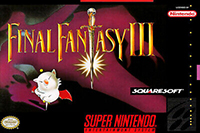
3. Final Fantasy III (SNES)

Final Fantasy III is a game I've had a long history with, as I remember watching my cousins and friends play it years ago around release, and I started it up a few times but managed to never beat it. Late last year, I felt up to giving FFIII another go but due to a few trips around the holiday season into January, I didn't get a chance to dedicate as much time to the game as I wanted. Well, I finally beat the game during the last few days of February. I ended up going for the best weapons and armor, along with recruiting all characters, and completing all the sidequests in the game.

Final Fantasy III is a great RPG for the Super Nintendo, and gets almost everything right that you could want in this style of game. The plot is intriguing, at times dark and at other times lighthearted and fun. The cast of characters is likable and it's interesting to see how different characters' arcs progress, and there's some funny interactions throughout the journey. The game also has some iconic moments, which are still discussed all these years later after release. The main villain is quite the memorable character as well. The gameplay is mostly straight forward, but there are a lot of nuances and details to watch out for -- in the combat, exploration, equipment, and the esper system for learning spells.

Graphics wise, the game still looks great and I think the visual style has held up well overall. The characters have well done portraits in the menu screen. The variety of environments for different towns and dungeons, and backgrounds during combat are all well done and add to the sense of the long journey these characters are on together. There are some amazing boss sprites here and some nice Mode 7 effects during cutscenes. In regards to the soundtrack, I think it's pretty outstanding and one of my favorite themes is the overworld music that plays when you reach the WOR later in the game. One of the only songs I didn't care for much was one I ended up hearing the most, due to the amount of time I spent grinding there, which was the song that played while on the Veldt.

Speaking of the Veldt, one of the few criticisms I have of the game is the Rage system for Gau. I just wish Gau had the ability to gain some of these attacks in a quicker or more organized manner, as I spent a ton of time grinding in the Veldt area to learn his stronger attacks. Even with a guide that helped me decipher when certain enemies would appear on the Veldt, it was quite time consuming, so I could understand why players may have decided not to use him. Another criticism I have here is the amount of mechanics the game throws at you. For veterans of the genre, this might not be a big issue, but for newcomers, I think it could be a lot to wrap your head around.

Overall, FFIII is a great RPG and of course it's highly recommended for any fans of the genre or SNES that have not played it yet. I'm glad to finally have finished all three FF games that were released on the SNES in the States, and eventually I'll give FFV a go too!
User avatar
TheSSNintendo
128-bit
Posts: 666
Joined: Mon Jul 11, 2011 10:27 pm

Re: Games Beaten 2025

Post by TheSSNintendo »

Teenage Mutant Ninja Turtles III: The Manhattan Project
User avatar
PartridgeSenpai
Next-Gen
Posts: 3173
Joined: Mon Dec 14, 2015 9:27 am
Location: Northern Japan

Re: Games Beaten 2025

Post by PartridgeSenpai »

Partridge Senpai's 2025 Beaten Games:
Previously: 2016 2017 2018 2019 2020 2021 2022 2023 2024
* indicates a repeat

1. Arc Rise Fantasia (Wii)
2. Return of the Obra Dinn (PC)
3. Battlefield: Hardline (PS3)
4. Call of Duty: Black Ops (PS3)
5. Call of Duty: Black Ops II (PS3)
6. Dead Nation (PS3)
7. Kileak, The Blood 2: Reason in Madness (PS1)
8. Paro Wars (PS1)
9. in Stars and Time (Steam)
10. Tetris Battle Gaiden (SFC)
11. Super Tetris 3 (SFC)
12. Battlefield 4 (PS3)
13. Call of Duty: Modern Warfare 2 (PS3)
14. Call of Duty: Modern Warfare 3 (PS3)
15. Call of Duty: Black Ops III (PS4)
16. Call of Duty: Infinite Warfare (PS4)
17. Call of Duty: WWII (PS4)
18. Resistance 3 (PS3)
19. Tearaway: Unfolded (PS4)
20. Grow Home (PS4)
21. Grow Up (PS4)
22. Ratchet & Clank (2016) (PS4)
23. Dark Sector (Steam)
24. Nagano Winter Olympics '98 (N64)
25. Multi-Racing Championship (N64)
26. Super Smash Bros. (N64)
27. Puyo Puyo Sun 64 (N64)
28. Shin Nippon Pro Wrestling: Toukon Road - Brave Spirits (N64)
29. Jikkyou Pawafuru Puroyakyuu 6 (N64)

30. Let's Smash (N64)
Also known as Centre Courts Tennis in PAL regions, this is one of three Japanese-developed N64 games that has the strange honor of being localized into English for PAL regions yet never released in North America. That wasn’t why I bought it though. It was 500 yen, the title is VERY funny, and that was really all the reason I needed to grab it even if I was never going to play it XD. That said, it felt bad to just *never* give a good try at playing it, so I finally sat down and tried to play the thing. The game doesn’t have any typical proper win condition to trigger the credits, and while it does have four different (copyright free <w> ) national tournaments in the single player mode, all four draw from the same player pools, so no one is any meaningfully harder than another (in theory). That being the case, I just went until I beat one of the tournaments and called it a day. It took me around 4.5 hours to finally beat the French tournament on normal difficulty on the Japanese version of the game.

This being a sports game, there is no story to speak of. You can make a character and save them to your memory card, and you can have them play until they’ve conquered every tournament ten times over, but it’s ultimately just down to what you find satisfactory at the end of the day. I must give props to the fact that there *are* a lot of clothing options to dress your player in for the time. Not only that, but there are also no gender locked clothing options at all! Beating tournaments, the special mini-games, and even a dedicated “beat the AI to steal a piece of their clothing” (something I call “strip tennis”) mode to get more clothes, so I suppose you *could* view beating or 100%-ing the game as getting all of the clothes, but that’s for the far more tennis-crazed than I <w>. As it is, it’s a lite-simulation-focused tennis game, and it really doesn’t need a story to deliver the experience it’s going for.

And what a simulation it is. It certainly still has *some* arcade-y and silly elements, but it’s far more of a skill-focused endeavor than something like Mario Tennis 64 at least. Upon creating your character, you can assign points into various attributes like serve, lob, forward/back and horizontal movement speeds respectively, and even whether you tend to hit the ball with more of a left or right spin on it. I’m not really familiar enough with the rules of tennis to appreciate how this affects your play style, but I did know that lobs and serves seemed to be cruddy ways to go for points, so I just ignored them and powered up everything else to max instead <w>

The tennis itself is pretty darn tough to get used to in a lot of ways. Unlike in Mario Tennis 64 (a game I keep comparing this to because it’ll likely be the biggest point of reference for anyone reading this in terms of tennis games on the N64), you have a *lot* more discrete control over where your hits send the ball. In Mario Tennis, if you crank the joystick all the way to the right before hitting it, it’ll just send a rightward hit to your opponent’s side of the court. Not so here. Let’s Smash will send that rightward hit as far to the right as it can every time, even if it’ll land the ball *way* out and score your opponent a point. There are even different types of courts with different amounts of bounce on the ball.

Getting used to all of that takes a good deal of time, especially if you’re more used to far more simple and casual tennis games like I am. Thankfully, there’s a relatively detailed training mode that will let you practice your serves, volleys, and smashes. Smashes happen if you happen to get close enough to under the ball to spike it on to your opponent’s court, but it mostly only just spiked the ball directly into my own net, and I largely hated when the game accidentally made me do them. It’s A to give a normal hit and B to give a lob hit, but I’ll be damned if I can figure out how to make the lobs useful against the AI. I’ll frankly be damned if I can figure out how to make most hits useful against the AI, because I’ve buried the lead here pretty deep.

While I’m far from the most experienced tennis game player, I like to consider myself a fairly experienced video game player. I hadn’t at the time I played this, but I’ve since played and beaten Mario Tennis 64 too, and that experience went a long way towards validating a lot of the negative feelings I had about this game. The actual mechanics of tennis in this, especially for hitting the ball, are terrible. It felt wildly inconsistent what A button presses would result in a returned hit and which would result in a missed swing. I’d easily estimate that a minimum of 70% of the points scored against me were ones I had no idea why my player didn’t hit the ball back for, and that makes for an incredibly frustrating tennis experience. While I was certainly improving my general strategies as I played (how to hit the ball in the court, what angles are safe and when, when it’s safe to approach the net), it always felt like I was merely reducing my chances of my skills failing me while still always being at the mercy of the bad game physics.

The tournaments draw seemingly randomly from the pool of possible AI opponents, and the champion of the English tournament kept happening to be one of the toughest opponents in the game. After two attempts longer than an hour to both get to him just to lose the best 2 out of 3 sets match against him, I just called it quits and did the French tournament for a change of pace. The French courts use a clay court with way lower bounce, and it was here that I learned that the AI clearly only have one set of protocols they draw from for how to play. For weaker opponents whom I’d played many times before (these matches are 1 set of 6 games so they take forever even if you’re doing well), they were suddenly losing points to missed serves against my created character with 0 points in their serve skill. I also got lucky, and the opponent I went up against in the championship was a far less skilled one than the one who kept pounding me into dust in the British tournament, so I was finally free of this frustration.

The aesthetics of the game are pretty nice, but they also seem to factor in to how badly it plays. You’ve got some good music (the few tracks that there are) and sound effects that sound very HudsonSoft-core. You’ve also got some quite nice human models that animate very well, and some good choice for camera angles to view the field of play from (even the impossible to use “ball” camera that focuses it solely on the ball). The models feel over animated though. The amount of animations they have to try and hit the ball are certainly impressive, I’ll give them that, but with the actual ball physics being so bad, it’s hard not to blame them at least in part for this. What hit your player will go for at any moment seemed extremely arbitrary, and there were countless points that felt unnecessarily missed for both the AI and myself because the wrong animation happened to trigger. Heck, there were even a few returns I hit where the ball was clearly slightly behind my character model, but with how hard this game was for me, it wasn’t something I was going to complain about.

Something I will genuinely complain about a lot is how the camera affects the field of play. While it’s really annoying to have to constantly swap back and forth so the camera is behind your character every time you change courts (unlike a later game like Mario Tennis that keeps it locked even after changes if you set it that way), there must be some kind of weird fish eye effect on the lens you’re seeing the game from. While the hits over to my side of the court were almost always clear and consistent, there were so *so* many balls I hit over to the opponent’s side that were clearly on the line but counted as out regardless. Heck, there were plenty that looked plainly out but still counted as in as well! This is something that’s somewhat endemic to the genre (even Mario Tennis struggles with this a bit), but it’s much more common here than in better tennis games, I found, and it’s just that much more insult to injury with how unreliable the physics of normal play already feel.

Verdict: Not Recommended. This is the first tennis game released on the N64, and despite that, it’s still got a lot going for it. The character customization, the weird mini-games, the quality of the music and animations. There’s a lot here to theoretically enjoy, but none of those cool or novel things about this game ultimately matter at all with how bad the actual gameplay is. I’m sure you could do worse on some system, but that is damning with faint praise. While I don’t generally like weighing the value of games strictly against other ones, the poor quality here is simply too great a factor to ignore. Especially with this game lacking a doubles mode (and therefore a proper 4-player mode), the weak aspects of it make it impossible to recommend when you could so easily be playing Mario Tennis 64 instead. It may be a weird and neat import, but it’s a blessing in disguise that North America never saw this title reach its shores.
----

31. Mario Tennis 64 (N64)
After suffering through Let’s Smash, I decided to take advantage of being used to playing tennis games to finally sit down and try and get to the credits in this game. I’ve heard nothing but good things about game for ages, so even if this was still a tough game on account of me not being great at tennis games, I figured it’d at the very least be a more tightly designed one. Even with the fair amount of completion done on the particular cart I have before it came into my possession, there was no way I was going to play it enough to unlock the second round of tournaments (and I frankly imagine I’d have a really hard time doing that even if I wanted to with how tough this game was ^^; ). I beat the star cup in singles with Peach (who didn’t have any cups completed yet) to get the credits, and I messed around with the doubles mode a bit but decided that it just wasn’t something that was fun enough to justify putting time into it to beat it. It all around took me about 3 or so hour to do it on the Japanese version of the game.

This is another sports game, so it’s another game with basically no story. Mario and friends are all getting together for a tennis tournament! That mean ol’ Wario and his new friend Waluigi are big jerks about it, but they’re just here for friendly competition at the end of the day. Heck, even Bowser and some of his minions are here to take a shot at the championship! It’s got a pretty darn impressive roster for the time, and it’s fun hearing referee Mario call out their Japanese names when they’re playing too (even if it is weird for him to be calling Bowser “Koopa” and Birdo “Catherine” x3).

The characters aren’t just cosmetic though. There are three general types of player, speed (who move around the court really fast), power (who can hit the ball really hard), and technical (who have a greater degree of control over where they hit the ball), as well as Mario and Luigi being a fourth type of all-arounder. Even still, you won’t need to play very long to see that there are still minor variations between the different players within the same player type, such as Bowser being able to hit the ball more hard than Wario, but Wario being just a bit faster than him despite them both being power hitters. Finding a player that fits how you play can be a lot of fun, and if you’re going for full completion (every cup completed with every character), then it’ll be quite the technical mountain to climb to learn the best strategies for each type to beat the hardest cups, because this game don’t mess around.

It took me a good while to learn the difference between hitting the ball with top spin or side spin (with the latter being more useful for spiking up close to the net and the latter being more useful for hitting from farther away), and it was also quite the learning process to get to grips when a charged shot is valuable and when it’s better to just go for the volley to simply survive instead. However, once I did, playing felt so awesome, and that was just on one technical character. The doubles mode is certainly neat in concept, and it’s a very natural way to have a tennis game take advantage of the 4-player capabilities of the N64, but it's just not as fun as the singles mode when you’re playing by yourself. Leaving half of your team’s power in the hands of an AI buddy got frustrating fast, though I’m sure a more dedicated tennis fan than myself might find it a fun challenge.

This is also a much more forgiving and arcade-y experience than other tennis games on the N64, so it’s far easier to just pick up and play (outside of just being able to save after every match in a tournament, so you don’t need to play several rounds all over again if you lose). While you *can* hit the ball out and score your opponent a point, it’s very hard to do it unless you’re whipping a heck of a charged shot from a position far too close to the net. This not only makes the game have a much better “easy to learn, hard to master” experience, but it also makes it a much better 4-player party game as a result.

The aesthetics of the game are just as great as you’d expect a Nintendo-published game this late in the console’s life to be. Character models and animations look great, and the game keeps a nice stable framerate too (as you’d hope would be the case for a tennis game). The voice samples for the referee’s dialogue are nice, and the music is great too (even if it can be more than a little anxiety inducing when it gets so much more tense upon reaching a match point XD). The only real slight downside (if you can call it that) is for the characters’ voice samples, as many of them are just reused sounds from Mario 64. This isn’t really a problem in and of itself, though, and it’s also very funny to hear Bowser making his “I’m fighting Mario!” sounds from Mario 64’s boss battles in the middle of a tennis match XD

Verdict: Highly Recommended. It’s certainly not the easiest game in the world, but even for a non-fan of tennis like me, this is a great time to play by yourself or with friends. This whole undertaking of playing just a couple N64 tennis games has frankly shown me that I don’t really like tennis games all that much. I find them too stressful, and I don’t really enjoy (though I do certainly appreciate) the element of skill that goes in to them. Even still, it’s hard to ignore just what a pillar of quality this game is as a sports game on the N64. Mario Tennis achieves what it sets out to do fantastically as not just a great sports game but a great party game too, and it easily deserves all the praise it’s gotten over the years.
----

32. Ucchannanchan no Honō no Challenger: Denryū Iraira Bō (N64)
This is a game that many of you likely know under the localized title of the PlayStation 1 version, “Irritating Stick”. It’s a game that I knew basically nothing about, but I ended up getting it virtually for free because it was just *so* cheap at Book Off a couple years back. At the time, I was happy just to have another weird, uncommon Japan-exclusive N64 game, but I prefer to actually play stuff I buy rather than just have it sit on a shelf forever. I sat down and finally beat the game this past weekend, or at least as close to “beaten” as I’m willing to call it. The game doesn’t have any kind of credits screen, but it has five normal levels and one secret ultra hard level. I decided to say to heck with the secret level, and if I could beat the other five levels at all, then I’d call this one beaten <w>. I beat the first four levels all in unbroken attempt, and then I eventually (after a lot of trying) managed to beat that fifth level with the practice stick. It took me around an hour and a half in total to beat the game, and boy was this ever a game that made me happy my new hall effect N64 joystick replacement works so well XD.

This game is based off of a segment on a Japanese game show hosted by the titular Utchan and Nanchan (two popular TV comedians of the time). If you managed to win the ridiculous challenge they gave you, you’d win (the yen equivalent of) $100,000. This was seemingly one of the show’s most popular segments, so it was ported to various home consoles so people could attempt the madness at home, and what madness it is <w>. There’s no prize money to be won here, however. The only achievements here are the sense of accomplishment that you’ll get from setting better and better times with bronze, silver, and gold times possible to win on each of the 6 tracks.

Each track sees you guiding a metal rod (or from your perspective basically a ball as you’re seeing a cross-section of it) through a winding, and sometimes moving, metal maze, and if it touches the walls or any obstacle at all, BAM, you’re out XP. There were a million flash games that used the same concept of safely guiding your mouse cursor through a maze, so if you’re a gamer of a certain age, there’s an extremely good chance you’ve already played something like this before. The aforementioned practice rod thankfully gives you three tries before you’re disqualified, but your times done with the practice rod won’t be saved (if you’re someone who cares about that). Your times aren’t just recorded for score purposes either. These are timed challenges, so even the practice rod won’t save you if you’re not fast enough after restarting from those checkpoints (because the timer never stops ticking down even between respawns of the same attempt).

This frankly makes practicing the later parts of harder levels really awkward and annoying to do, because you can’t choose where to start. You must always start from the beginning, so you’re forced to both get good at and constantly redo those earlier bits before the part you’re actually struggling on. This is tough enough on the fifth stage where a *very* good time is around a minute and ten seconds, but my final time on the fifth stage was over a minute higher than that. These attempts aren’t the longest thing in the world, but it’s something that really starts to ware on you because the concentration required to do it can be just so taxing. That secret sixth stage I said nuts to is not only *nails* hard, but a *good* time on that is around two and a half minutes. That’s all with zero faults too, mind you!

For those bold enough to play without the safety endowed by the practice stick, there are three speeds of normal stick other than the practice stick. However, the slowest of them is *so* slow that it actually is still impossible to beat the harder courses with it, so you’ll either be using the normal stick that’s just as fast as the practice one or the speed stick with is frankly pure sicko stuff for only the most hardcore of stick wielders XD. Thankfully, even with the slower sticks, you can hold A to move extra fast for as long as you’re holding it, and you’ll need to get very good at using that faster mode if you want to make it past the moving obstacles in the later harder stages. It’s a simple gameplay loop without a great deal of content, admittedly, but there is an undeniable addictive quality to trying to beat and master each stage. It’s something that’ll likely be too, well, irritating for most people to vibe with, but it’s certainly a fun and novel diversion if nothing else nonetheless XD

The aesthetics of the game are very simple yet still very effective. There’s not much music, but what we do have is a nice pumping track to help keep the tension of the moment up. The other main part of the soundtrack is the announcer. He’s constantly getting hype and excited the way you did and do so often see on variety shows in Japan, and while his commentary isn’t *too* dynamic, his descriptions are still so over the top that it’d still make me smile even on repeated runs of the same frustrating bit. Sure, those conveyor belt balls in the fifth stage are annoying, but it was still always funny to hear the announcer say, “A miserable section that makes only the devil smile! The devious Utchan Roller!” X3

The graphics are basically just the stick and course floating in a void (a skybox with some simple but dark patterns on it to keep it easily distinguishable from the shiny metal track and stick). This prioritizing of function over fashion is definitely to the game’s benefit, though. That said, I do wish the graphics and mechanics were tightened up just a bit. There were a few times where it seemed that the stick vs. course collision mechanics were just a touch inconsistent from place to place when you were getting *very* close up and personal with them, and that can be quite annoying in a time attack game with so many tight corridors and hairpin turns. It’s not a super consistent problem, but the same can’t be said for the larger moving obstacles. Especially in stages 5 and 6, the large moving obstacles and robots can be quite difficult to actually judge the position of in space, and I had many failed runs due to apparently failing to accurately decipher where the 3D objects were in space compared to me. It’s all practice makes perfect, at the end of the day, but it’s nonetheless one more thing that will be that much more “irritating” for you :/

Verdict: Hesitantly Recommended. This is a really weird game to recommend because it’s so particular. It’s effectively a game about annoying you into giving up via its very precise puzzle gameplay. A lot of people just aren’t going to find that fun in the first place, and if they do, the amount of content actually available here (and the sheer difficulty of it) will likely not keep them here too long. That said, if this *is* something you’re up for, then this is a pretty good way to play it. I certainly wish the hit detection were made a bit more visually clear and discrete, but it’s not an experience ruining flaw (necessarily at least ^^; ). If this sounds like something you’d dig, then it’s probably something at least worth trying out for you, but if it sounds miserable, then in all likelihood it probably will be XD
----

33. Jikkyou Pawafuru Puroyakyuu 4 (N64)
After playing and loving PawaPuro 6 a week or so earlier, I trawled my local recycle shops for as many other N64 PawaPuro games as I could, and this was one of them! It’s ultimately just more baseball, sure, but even this briefly earlier entry in the series was actually a fair bit more different than I would’ve first expected it to be, especially in the Success mode (this game’s career mode). It took me about 2 hours for my first successful run of Success mode, and then another hour for another successful (and very informative) run for about 3 hours in total, but as was the case with PawaPuro 6, I’ve spent a fair bit more time than that messing around in exhibition mode and also just watching the AI play games against itself x3

While this is just a sports game with no larger “story” to speak of really, the same cannot be said for the Success mode. PawaPuro’s Success modes are career modes that fuse the baseball with a kind of life simulator where you need to practice baseball every week to improve your stats towards and end goal, and this game has a Success mode quite different to how later games would come to do it. Where games like PawaPuro 5 or 6 follow a player working their way through a high school and university baseball program trying to get drafted, PawaPuro 4 follows a player who’s actually already on a Japanese major league team. The only thing is, you only just got drafted/traded on to the team, and you’re some unknown nobody on their second-string reserve team. Your goal is to get onto the real team, the first-string players, by the end of your third year! You have a weird amount of flexibility on how you do it, however, and that’s both a good thing and a bad thing in terms of the novelty and merits of this game versus later PawaPuro titles.

This game has a much less structured story than later entries do. You actually choose your background during character creation (were you drafted from high school or university, or were you traded/hired on to the team from another team entirely?). These effectively just decide your character’s age, and getting on to the team younger will mean your stats are lower, but getting on to it older will mean you’re *much* more likely to get injured while training. Being injured is *bad*, because being able to train effectively is a really big part of actually winning the mode even outside of naturally building your stats higher and higher. This means that staying well rested is even more important for an older player, so you're doing that much more time resting rather than training (and it doesn't help that this game lacks a discrete energy bar for your stamina either :/ ).

Whereas later games have one ultimate moment they’re building towards (such as the draft, which of course only happens once a year), so the goal of those games is to get the scouts’ opinion(s) of you high enough that a major league team decides to draft you by the end of your third year of school. The main time scouts are watching you is while you’re playing normal games, so what you outside of just playing in baseball games doesn’t really impact your chances of overall victory very much outside of how they affect your stats. In PawaPuro 4, however, this is just about a guy trying to get a promotion at work. The only thing that actually matters here is the opinion the head coach has of you.

As in other games, the other coaches/managers liking you more means you’ll actually be put into games more often, but unlike later games’ scouts, the head coach is here all the time. There’s even a kind of training you can do that directly increases his opinion of you, so if you’re struggling in baseball games, you can always just spam that kind of training to try and tilt the odds in your favor. The only victory condition is (seemingly) the head coach having a high enough opinion of you at *any* point in the third year, so it’s pretty trivial to game that system even if you’re not playing baseball very well (one of my runs ended with me getting out every time in my first game of the third year, the coach’s opinion of me dropping, and him still nonetheless offering me a spot on the normal team immediately after that).

This mode ends up feeling far more easily “solved”, so to speak, than later PawaPuro games have it. The ability to pick your background at the start may be a neat twist and all, but it’s really more of a difficulty slider than anything, as being an older player means you inherently *must* be a lot better at playing the baseball games because that’s effectively your only chance to impress anyone since normal training is so dangerous for you (it’s like a 20%+ chance to get injured at anything but the lowest possible training, and getting injured means you’re in the hospital doing squat for 1~4 weeks). The novelty of the more open start loses its charm pretty quickly when you realize just how much else we’re sacrificing compared to just playing a later PawaPuro title instead, and things unfortunately don’t stop there.

The more open start and following less structured story also means you’ve got far less random story events too. The life simulation stuff in general is frankly barely here compared to even just later games on the N64. Outside of your coaches, there are nearly no actual characters at all. Sure, your butthead friend Yabe and your rival both exist, but they’re barely in this at all. So far as I can tell, you can’t even get a girlfriend or try to go on dates in this, and there’s also no concept of things like money, having a part-time job, finances, or any of that stuff. The large sprites later games use are also absent here, so nowhere near the amount of funny faces or CGs showing special character interactions like you enjoy in later PawaPuro Success modes.

You can get perks and diseases from more or less well and just from random events, but the bad stuff is *so* mean in this. I had hay fever on my first character, which meant he basically couldn’t practice during May at *all* because his allergies were so bad. It’s a funny bit of scenario building, sure, but it’s not actually terribly fun, especially when you start the game with that kind of penalty. The long and short of it is that there just isn’t enough to differentiate one run from another beyond how well you manage to do. This Success mode was ultimately a very interesting change of pace from how later games do it, but I’d have a really hard time recommending it to anyone but someone like me who is just generally interested in how earlier PawaPuro games do their Success modes.

As for the rest of the game, it’s thankfully still PawaPuro as it’s ever been for the most part. There are some unfortunate downsides or parts somewhat lacking from later or even earlier titles in some cases though. While it’s still the case that any player you win Success mode with can be saved and then put into a custom team however you like, there’s not yet a home run derby mode to play around with them in. While that mode hadn’t yet been put into these games, we’re actually missing another mode that *had* been in PawaPuro 3: Scenario mode (where you get to play in particular “do or die” scenarios from the previous year’s real baseball season). I’m not a huge fan of that mode just because of how hard it is, but it’s interesting and odd to see this game lacking it when PawaPuro 3, the last Super Famicom game in the series, *did* have it.

Other than that, it’s all fairly minor complaints or aspects compared to later games. The AI’s tuning in lower difficulty modes is very weirdly done compared to later games, with them being weirdly afraid of swinging at the ball at all on even normal difficulty. There are also a few less features to set up games than later games had, so no option to have injuries on or to limit extra innings yet or not. No mascots present for a winning team either. There’s also the bummer lack of any save to cartridge for this game (which is honestly the other biggest reason I struggle to recommend it). While this game is kind enough not to demand an entire memory card’s storage like most sports games on the console, you’ll still need a nearly entirely empty one regardless, and that’s a big pain in the butt in current year when finding a working N64 memory card is getting harder and harder. It's so much more simple to just get a later PawaPuro game that saves to the cartridge that it ends up being a pretty significant strike against this game. However, that’s not going to be an issue for anyone who only wants this game for the baseball and not the Success mode, so it’s hardly the end of the world. These things are really all small potatoes compared to the stuff that really matters, though, and what really matters is as great as ever.

The control the batter have over the ball is still great and has a ton of depth to master if you’re so inclined. I’m still pretty trash at hitting power shots with the smaller targeting reticle, and I’m also pretty bad at fooling the AI with a pitch, but it’s still just as satisfying when I manage to do either! XD. The AI still being fiendishly good quite frequently, especially when fielding, is still as demoralizing as ever, but that’s all a part of learning how to baseball well <w>. The weird camera issues that make ball speeds and trajectories from home plate that later games have are absolutely present here though, so it makes fielding against the AI that much harder. That said, it’s nothing that’d be an issue when you’re playing against your buddies since you’re both playing with the same handicap, so it’s hard to be that mad about it.

The aesthetics are great as they’ve ever been, but they’re also very interestingly different from later N64 PawaPuro games too. This is the only game on the N64 to use digitized 3D models for its player sprites rather than traditional 2D sprites as the later games in the series on this console do. It really gives the game a look all its own, which is a fun novelty even if I still slightly personally prefer how later games look over this. The music is also as awesome as ever, with very fun and pumping versions of classic series songs that I honestly prefer over how several later N64 PawaPuro games do their scores. The announcer is still as great as ever too, though how his phrases are strung together feels *ever* so slightly more stilted than they do in later games, but that may just be my imagination playing tricks on me. Regardless, Konami had always been great at the music and graphics for these games, and PawaPuro 4 is no exception.

Verdict: Recommended. Even if things like the Success mode are notably less featured as later games and certain minor parts of the gameplay aren’t as detailed or tuned as later games on the N64, this is still the damn high bar for a baseball game that Konami were known for. If it’s your only option in the series compared to just about any other baseball game on the system, you really cannot go wrong with PawaPuro 4, and the only thing that’d keep me from recommending it would be its meaningful shortcomings in comparison to later entries in the series which are just as easily found for the N64. Even as a more casual fan of baseball video games, I’m still comfortable as ever saying that there’s still nothing better than PawaPuro on the N64 when it comes to baseball games (unless you just HAVE to have MLB teams and players in your baseball, I suppose :b ).
Last edited by PartridgeSenpai on Sat Mar 15, 2025 3:45 am, edited 1 time in total.
I identify everyone via avatar, so if you change your avatar, I genuinely might completely forget who you are. -- Me

User avatar
REPO Man
Next-Gen
Posts: 5093
Joined: Tue Jul 29, 2008 8:05 pm
Location: Outer Banks, NC

Re: Games Beaten 2025

Post by REPO Man »

Got 120% in the Reignited Trilogy version of Spyro the Dragon on PS4.
Post Reply